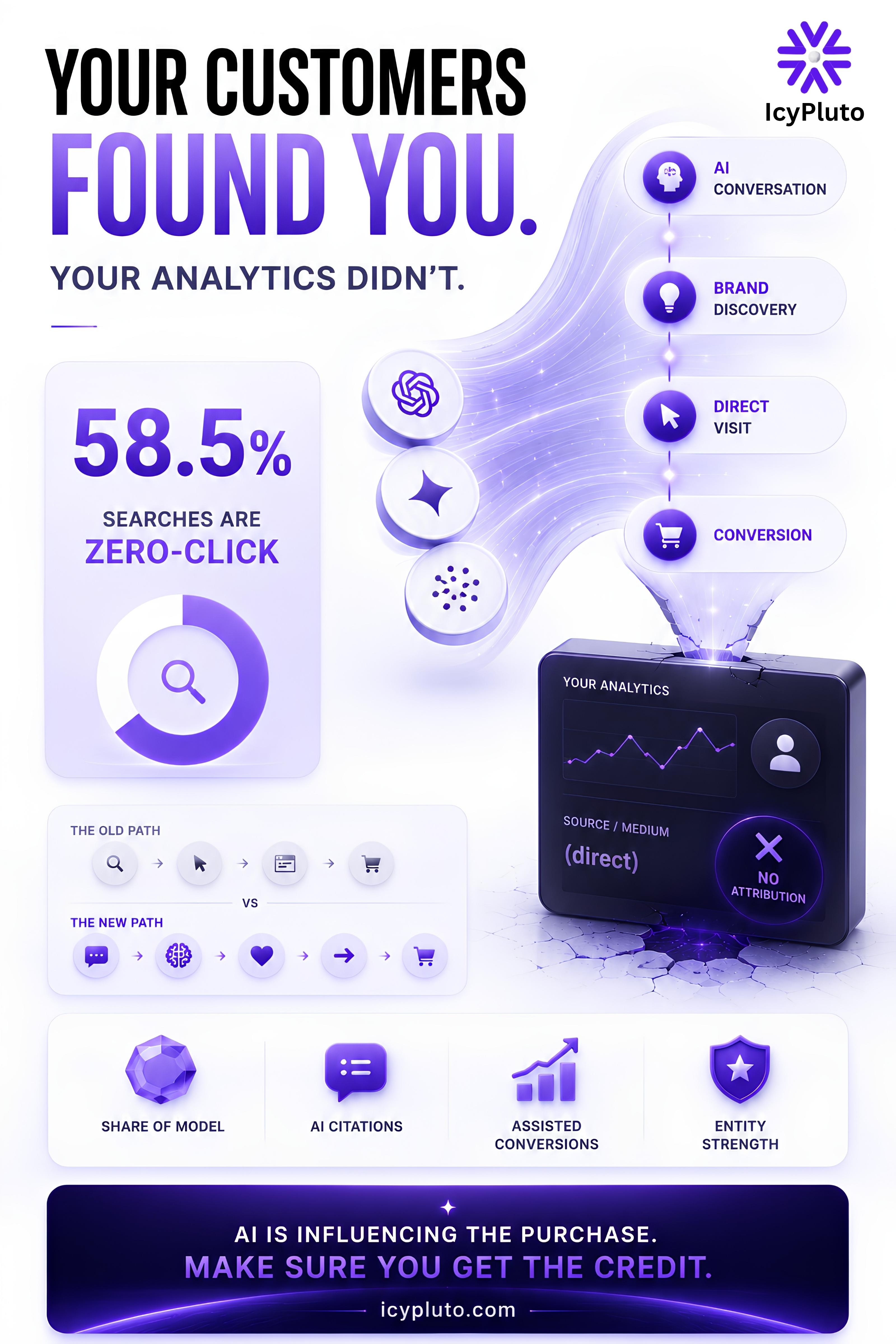
This blog reveals why traditional marketing attrib...
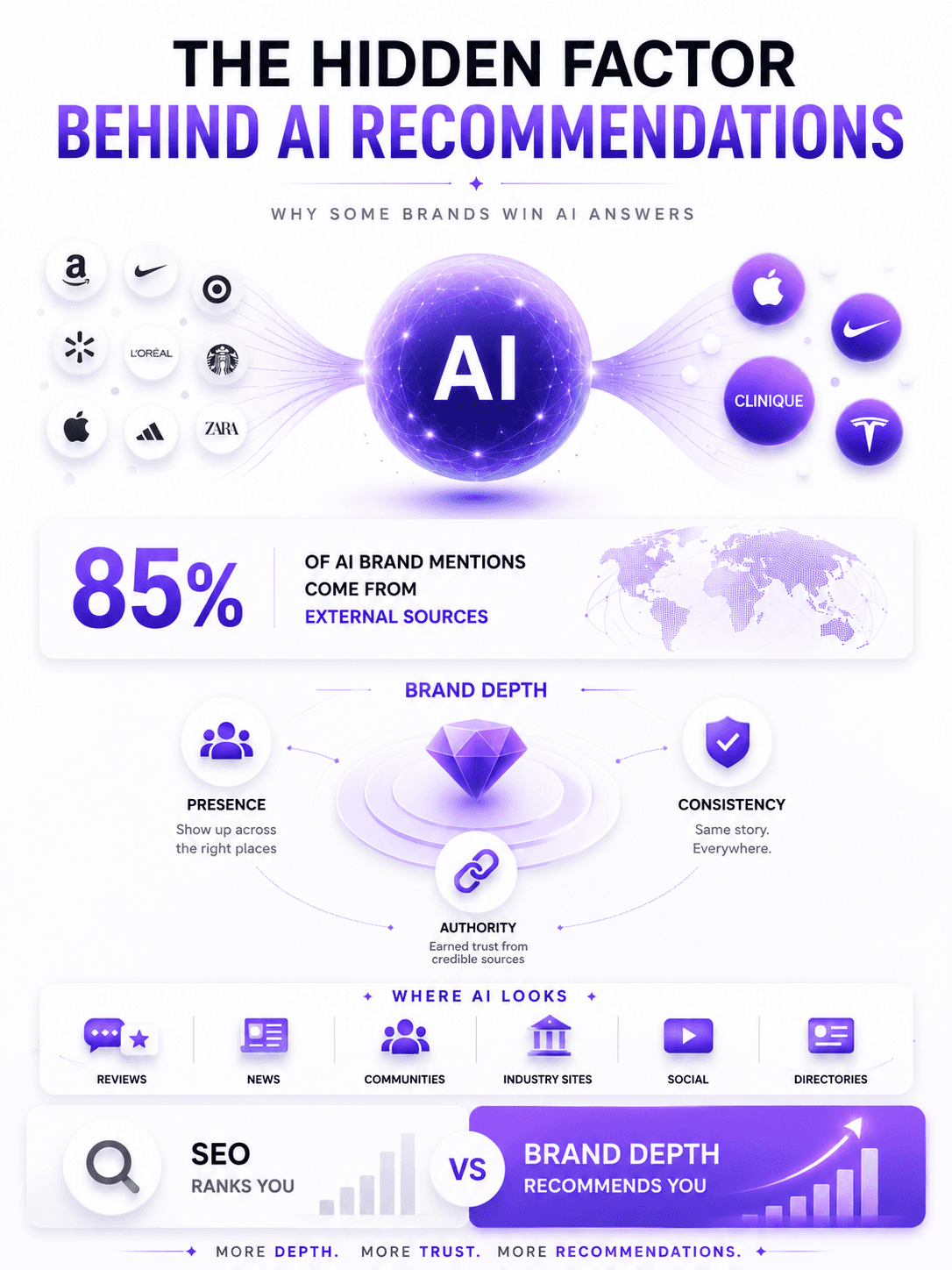
This blog post reveals why brand depth-the density...
This blog explores how the IT industry is being re...
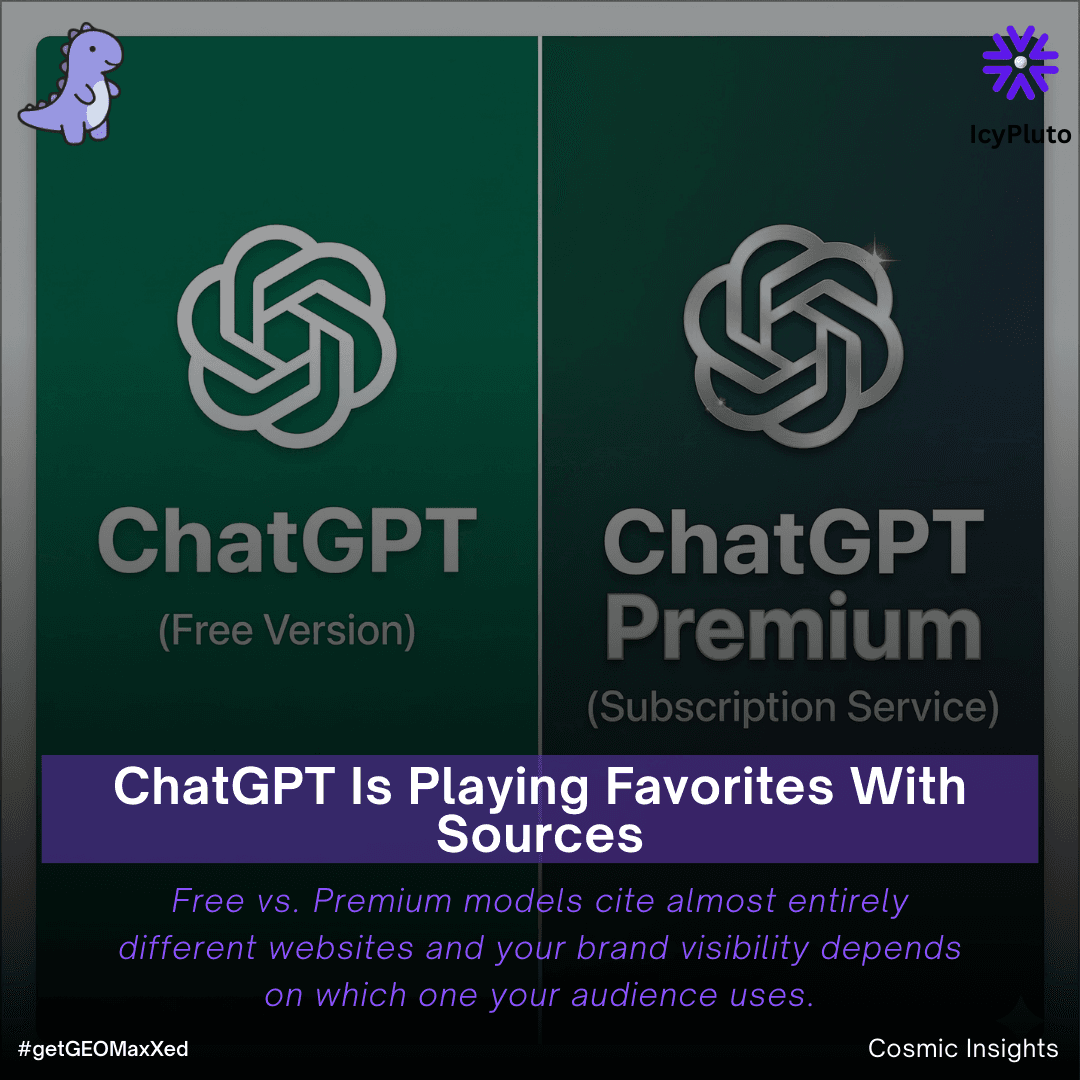
If you've ever wondered why ChatGPT seems to recommend certain websites over others, or why asking the same question on different ChatGPT plans gives you wildly different answers, there's a very real technical reason behind it. A detailed citation analysis tracking how different versions of ChatGPT pull information from the web has uncovered something that every marketer, SEO professional, and brand strategist absolutely needs to understand right now.
The default version of ChatGPT — the one that every logged-in user interacts with — and its premium counterpart don't just sound different. They actually go looking for information in fundamentally different ways. And when we at IcyPluto dig into what that really means for brand visibility in the age of AI-driven search, the implications are enormous.
Let's break it all down.
A comprehensive analysis of ChatGPT conversations examined how GPT-5.3 Instant (the default model available to all logged-in users) and GPT-5.4 Thinking (the premium version) retrieve and cite information from the web when responding to user queries.
The headline finding is striking: across all the prompts tested, the two models shared only 7% of their cited sources. That means for virtually the same question, the two versions of ChatGPT are pointing users toward almost entirely different corners of the internet.
This isn't a small gap. This is a canyon — and understanding which side of that canyon your brand currently lives on matters enormously for digital marketing strategy in 2025 and beyond.
GPT-5.3 Instant, which serves as the starting point for most everyday ChatGPT users, takes a relatively simple approach to web search. When it needs to find information, it tends to send a single broad query and then pulls citations from whatever shows up in those results.
Because of this, the model ends up leaning heavily on third-party content — think editorial roundups, review sites, comparison articles, and media coverage. Breaking that down further:
Blog posts and articles accounted for 32% of its citations
Top cited domains included well-known media properties like Forbes (15 citations), TechRadar (10), and Tom's Guide (10)
When given comparison prompts like "HubSpot vs Salesforce vs Pipedrive," GPT-5.3 never once cited a brand's own website
Only 4 pricing pages were cited across all 49 conversations that triggered a web search
What this tells us is that GPT-5.3 behaves a lot like a user who Googles something and reads the first few articles that come up. It trusts media outlets and review platforms, and it sends users toward the kind of content that has traditionally ranked well in search engines.
For brands, this means that your third-party presence — how often you're mentioned in Forbes, TechRadar, G2, Capterra, and similar publications — plays a massive role in whether the default ChatGPT model even knows you exist.
GPT-5.4 Thinking, on the other hand, operates like a seasoned researcher who actually knows which sources to trust for which types of information. Rather than firing off one broad query, it breaks its research process into multiple highly targeted sub-queries.
On average, GPT-5.4 sent 8.5 sub-queries per session, many of which were restricted to specific domains. Out of 423 total queries tracked, the model used site: operators in 156 of them — a technical search technique that restricts results to a specific website. No other ChatGPT model tested used site: operators at all.
Here's what that looked like in practice: when asked about CRM software, GPT-5.4 didn't just search broadly. It sent separate queries specifically targeting hubspot.com, salesforce.com, and attio.com for pricing information, and then separately queried g2.com and capterra.com specifically for reviews. It was surgical, deliberate, and methodical.
The results of this approach were dramatically different from GPT-5.3:
56% of GPT-5.4's citations pointed directly to brand websites — compared to just 8% for GPT-5.3
Brand homepages accounted for 22% of citations
Pricing pages made up 19% of citations
Product pages contributed another 10%
GPT-5.4 cited 138 pricing pages across the same prompts where GPT-5.3 cited only 4
On head-to-head comparison prompts, GPT-5.4 cited brand websites 83% to 100% of the time
This is a total reversal of the default model's behavior. Where GPT-5.3 trusts the media, GPT-5.4 goes straight to the source.
This isn't just an interesting technical quirk. It has real, measurable consequences for how brands appear — or fail to appear — in AI-generated responses that millions of people are increasingly relying on as their primary source of information.
Think about it this way: a massive portion of the internet's users are interacting with the free or default version of ChatGPT. For those users, whether your brand gets mentioned at all depends almost entirely on whether journalists, bloggers, and review platforms are writing about you. Your own website — your pricing pages, your product descriptions, your homepage — might as well not exist for GPT-5.3 purposes.
Meanwhile, premium users — typically more engaged, more likely to be making purchasing decisions, and more likely to be researching high-stakes topics — are being served content pulled directly from brand websites. For them, your first-party content is what drives the conversation.
The analysis went one step further by cross-referencing cited domains against actual Google and Bing search results for the same queries. The findings here add another important layer.
For GPT-5.3, roughly 47% of its cited domains also appeared in Google search results for the same query. This is a meaningful overlap — it suggests that traditional SEO and Google rankings still carry significant weight for influencing what the default model cites. If you rank well on Google, you have a decent shot at being cited by GPT-5.3.
But for GPT-5.4, the picture is almost completely inverted. 75% of the domains it cited did NOT appear in Google or Bing results for the same query. The premium model appears to be operating on its own logic, using domain-specific search techniques that bypass traditional search rankings entirely.
This is a genuinely important insight for the future of digital marketing. It means that optimizing purely for Google rankings may not be enough to ensure visibility in AI-driven search environments — particularly for premium AI models that are actively choosing their own sources through targeted queries.
So what should brands actually do with this information? At IcyPluto, we believe this data points to a clear strategic reality: the era of one-size-fits-all SEO is officially over.
Brands now need to think about content and visibility strategy across at least two distinct audiences: users interacting with default AI models and users on premium tiers. And those two audiences are being served information in fundamentally different ways.
For brands that want to show up when the default version of ChatGPT is answering questions, the strategy looks a lot like traditional PR and content marketing — but with an AI-driven twist.
Third-party coverage is king. If Forbes, TechRadar, G2, Capterra, Trustpilot, and similar platforms aren't consistently mentioning your brand, you are effectively invisible to the default model. This means investing seriously in:
Pitching and earning editorial placements in reputable media outlets
Getting listed and reviewed on major software review platforms
Building a reputation that makes third-party writers want to mention you in comparison articles and roundups
Maintaining an active presence in the kind of content that media properties naturally cite
Traditional SEO efforts — building domain authority, earning backlinks, ranking for competitive keywords — still have a role here because the default model shows meaningful overlap with Google rankings. If you rank on Google for relevant queries, there's a reasonable chance you'll be cited by GPT-5.3 as well.
For the premium audience — the users who are most likely already subscribed, engaged, and making considered purchasing decisions — the strategy shifts dramatically toward first-party content quality.
GPT-5.4 is actively going to your website, your pricing page, your product pages, and your homepage. It's reading them, pulling data from them, and using that data to answer user questions. Which means the quality, clarity, and completeness of your own content matters enormously.
Key areas to focus on:
Transparent pricing pages: The analysis found that GPT-5.4 cited 138 pricing pages. Brands that hide pricing behind a "contact sales" form give the premium model nothing to work with — and may effectively be excluded from comparison queries as a result.
Detailed product and feature pages: If your product pages don't clearly explain what your product does, how it compares to competitors, and who it's for, the premium model has little useful information to surface to users.
Clear, structured homepage content: Brand homepages were the single largest category of citations for GPT-5.4. Your homepage needs to clearly communicate your value proposition in a way that an AI model can understand and relay to a user.
Structured data and technical SEO: While GPT-5.4 appears to bypass traditional search rankings, ensuring your site is technically clean, fast, and well-structured still helps both AI crawlers and traditional search engines process your content accurately.
One genuinely practical takeaway from this analysis that deserves its own spotlight: most of the URLs cited in the test included a utm_source=chatgpt.com parameter.
This is significant because it means brands can actually measure how much referral traffic they're getting from ChatGPT citations — right now, using standard analytics tools. If you haven't already set up tracking for this referral source in Google Analytics, Adobe Analytics, or whatever platform your brand uses, that's a quick and actionable fix that should happen immediately.
Understanding where AI-driven traffic is coming from, which pages it's landing on, and what those users do next gives you real data to inform your AI visibility strategy. It's no longer hypothetical — ChatGPT citations are driving real, trackable web traffic, and brands that pay attention to this early will have a significant advantage as these models become even more widely used.
Stepping back from the specific findings, what this analysis really illustrates is that AI search is not a monolith. Different AI models — even different versions of the same AI chatbot — behave in fundamentally different ways, serve different audiences, and surface different content.
This is a profound shift from the traditional search landscape, where Google essentially operated as a single arbitrator of web visibility. Yes, different queries produced different results, but the underlying logic was the same engine. With AI search, the logic itself changes depending on which model a user is running.
For brands, for marketers, and for the SEO and content professionals who keep the digital wheels turning, this means that strategies need to become more nuanced, more segmented, and more adaptive. The brands that will win in this environment are the ones that understand not just how to rank on Google, but how to be seen, cited, and recommended across an increasingly complex ecosystem of AI models with their own distinct behaviors.
At IcyPluto, we think this is one of the most important strategic conversations happening in marketing right now. The companies that get ahead of this shift — that invest in both the third-party coverage that influences default models and the first-party content quality that earns citations from premium models — will be the ones building durable visibility in the AI-first search landscape that's rapidly becoming the norm.
The game has changed. The question is whether your brand's content strategy has changed with it.