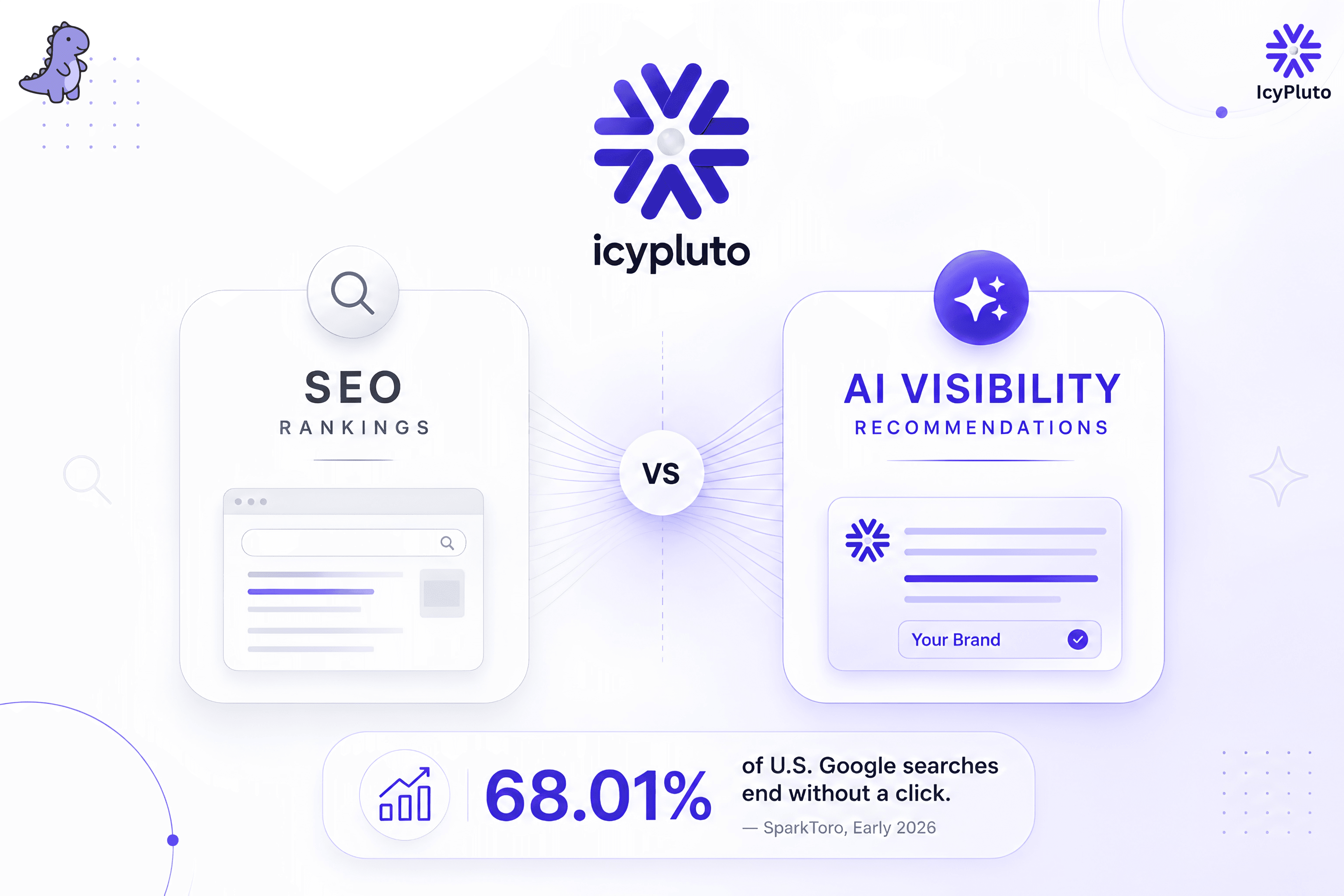
AI search is changing how brands get discovered, a...
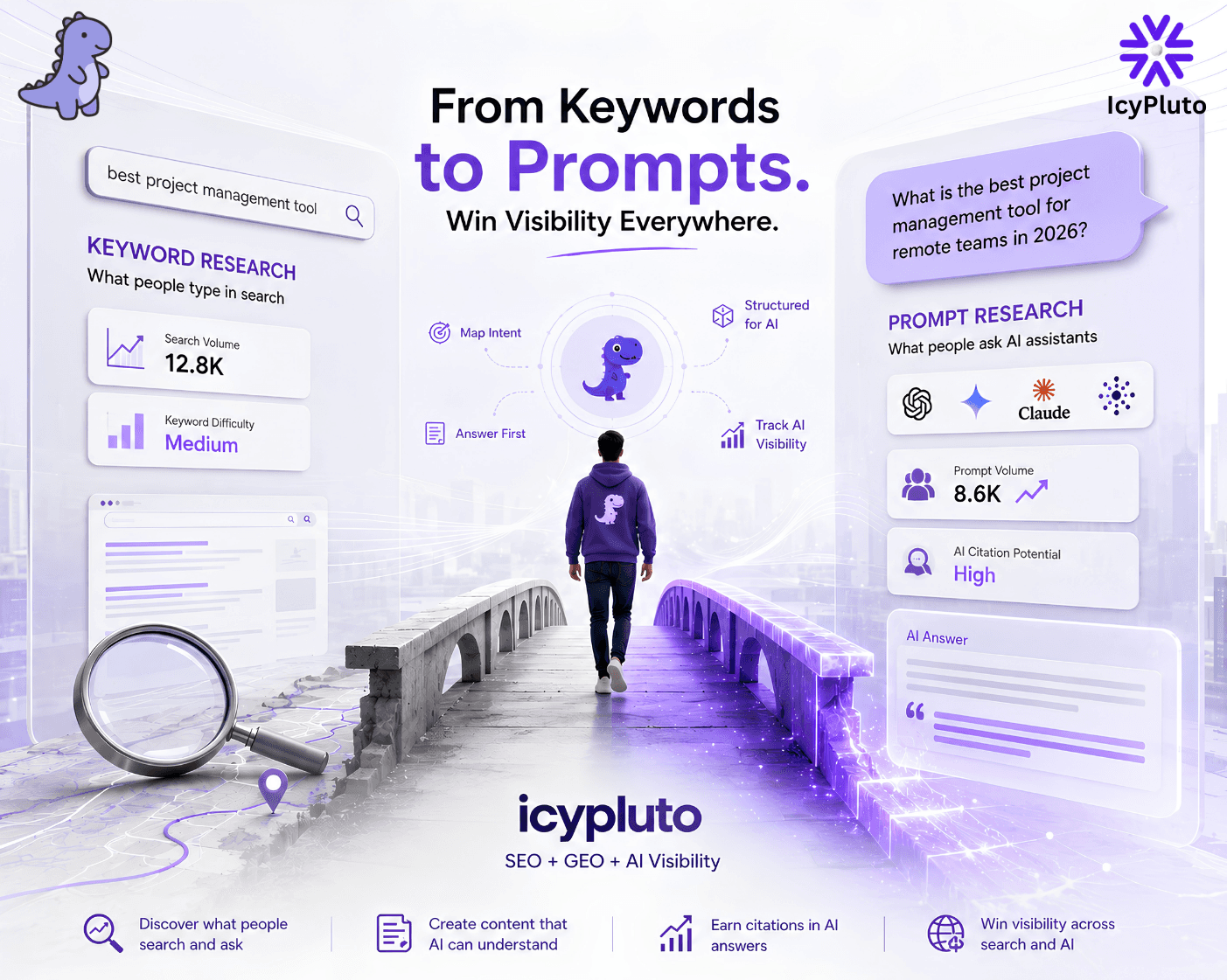
This blog explains how keyword research must now b...
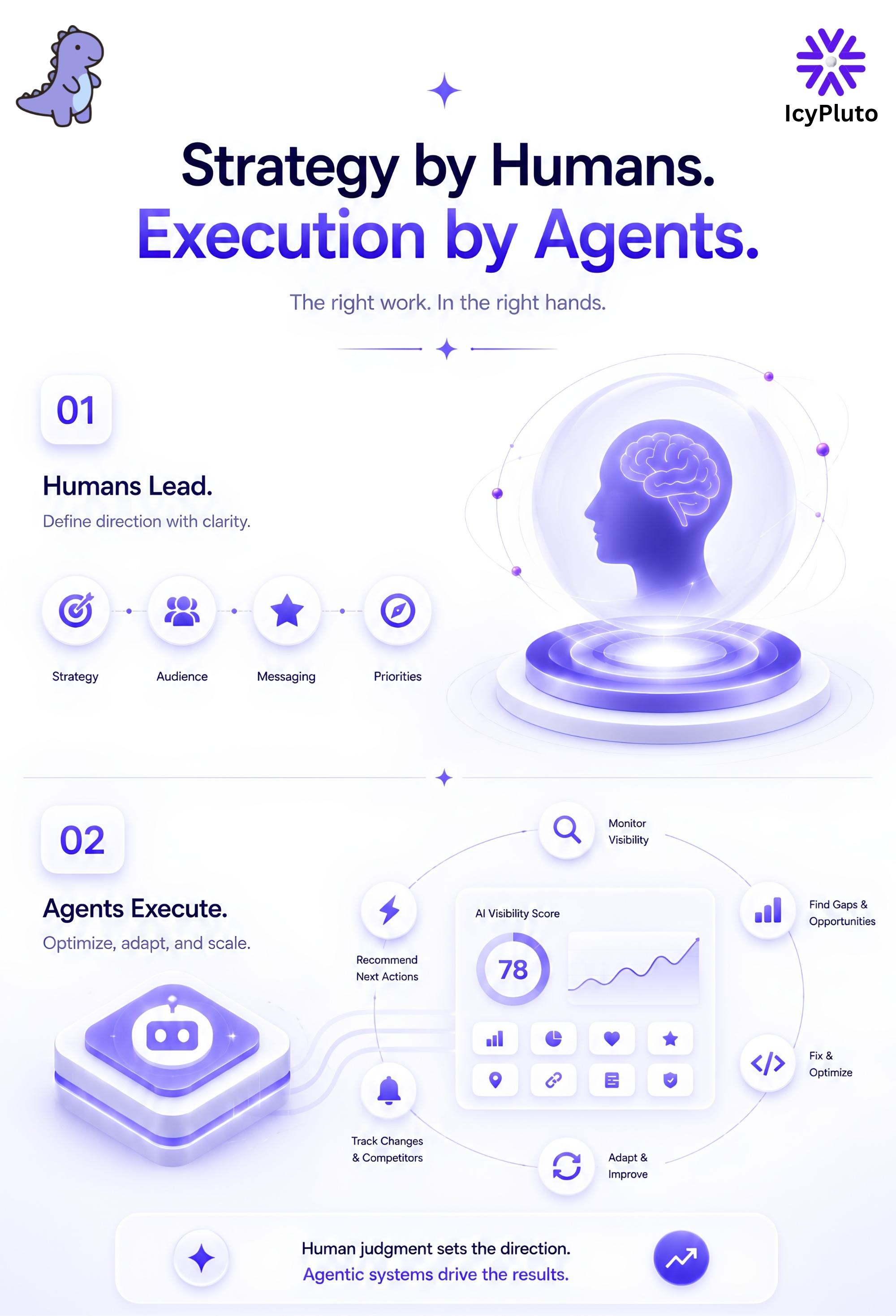
This blog explains how modern marketing teams can ...
Search is no longer about keywords. It is about meaning, relationships, and entities.
As AI-driven search systems like those powered by Google, OpenAI, and Microsoft evolve, traditional SEO is being rewritten in real time. Generative Engine Optimization, or GEO, is emerging as the new frontier, and entity optimization is its foundation.
According to industry data, over 65 percent of searches now result in zero clicks, largely due to AI-generated answers. At the same time, semantic search accuracy has improved by more than 40 percent in the past five years. This shift signals one thing clearly. Search engines no longer match words, they understand concepts.
If your content is not optimized for entities, it is already losing visibility.
Entity optimization is the process of structuring content around clearly defined concepts, people, places, and things that search engines can understand and connect.
Unlike traditional keyword optimization, which focuses on matching phrases, entity optimization focuses on meaning and relationships. For example, instead of optimizing for "best SEO tools," you optimize around entities like tools, brands, use cases, and categories.
Search engines now rely heavily on knowledge graphs. Google Knowledge Graph alone contains over 500 billion facts about 5 billion entities. This allows AI systems to connect information across the web and generate context-rich answers.
This is why GEO is fundamentally different. AI does not rank pages. It synthesizes answers. And it pulls from content that is entity-rich, structured, and contextually complete.
The shift from keyword-based indexing to entity-based understanding is not subtle. It is foundational.
A recent study by Gartner predicts that traditional search engine volume will drop by 25 percent by 2026 due to AI chat interfaces and generative search. Meanwhile, platforms like ChatGPT and Bing Copilot are increasing reliance on structured, entity-driven content.
This creates a new ranking reality. Content is no longer evaluated solely on backlinks or keyword density. It is evaluated on:
Entity clarity
Context completeness
Topical authority
Semantic relationships
In fact, pages that include structured entities and schema markup see up to 30 percent higher click-through rates compared to traditional pages.
If your content does not clearly define entities, AI cannot trust it enough to include it in generated answers.
To understand GEO, you need to understand how AI processes information.
AI search systems break down content into entities and relationships. They then map these into a semantic network.
For example, a query about "content marketing strategy" is not treated as a keyword string. Instead, it is interpreted as:
Entity: Content Marketing
Related Entities: SEO, Audience Targeting, Distribution Channels
Intent: Strategy, planning, execution
This is powered by Natural Language Processing models like those developed by OpenAI and Google DeepMind, which can understand context with over 90 percent accuracy in many cases.
The implication is massive. Content that explicitly connects related entities is far more likely to be selected and surfaced in AI-generated responses.
Every piece of content should map out its primary and secondary entities.
High-performing pages typically include 20 to 50 relevant entities depending on depth. This includes:
Core topic entities
Supporting concepts
Brands, tools, and frameworks
Industry terminology
Research shows that pages with broader entity coverage rank for 3 times more keywords than narrow-focused pages.
The key is not stuffing entities, but naturally integrating them into meaningful context.
Entities alone are not enough. Relationships between them define meaning.
Search engines analyze how entities connect within a piece of content. For example:
Cause and effect
Hierarchies
Comparisons
Processes
Content that clearly explains relationships sees up to 45 percent higher engagement metrics, including dwell time and scroll depth.
This is why shallow content fails in GEO. AI prioritizes content that explains, not just mentions.
Schema markup plays a critical role in helping search engines understand entities.
Websites that implement structured data see a 20 to 30 percent increase in visibility in rich results. Schema types like:
Article
FAQ
Organization
Product
help reinforce entity clarity.
For example, clearly defining your brand as an entity increases its chances of appearing in AI summaries and knowledge panels.
Topical authority is no longer about publishing volume. It is about entity depth.
A site that covers an entity comprehensively is more likely to be trusted by AI systems. According to HubSpot, companies that focus on topic clusters see 3.5 times more traffic than those that publish isolated content.
This means building interconnected content around entities, not standalone blog posts.
Start by identifying your primary topic and expanding it into a network of related entities.
For example, if your topic is "SEO," your entity map might include:
Technical SEO
On-page SEO
Backlinks
Search intent
Content optimization
This process ensures comprehensive coverage and improves semantic relevance.
Modern SEO tools now analyze entity coverage and semantic gaps.
Platforms like Frase and Surfer SEO use Natural Language Processing to identify missing entities and optimize content accordingly.
Content optimized with NLP tools has been shown to improve ranking positions by an average of 20 percent within weeks.
AI prefers structured, clear, and logically organized content.
This includes:
Clear headings
Defined sections
Contextual explanations
Natural language flow
Content that is easy for humans to read is also easier for AI to process. This directly impacts inclusion in AI-generated answers.
Internal links should reinforce entity relationships.
Instead of random linking, connect pages based on entity relevance. This builds a semantic network across your site.
Websites with strong internal linking structures see up to 40 percent better crawl efficiency and indexing.
Many brands attempt entity optimization but fail due to outdated thinking.
The most common mistakes include:
Over-reliance on keywords instead of concepts
Lack of depth in entity coverage
Ignoring semantic relationships
عدم استخدام structured data properly
Another critical mistake is treating AI search like traditional search. GEO requires a mindset shift, not just tactical changes.
The rise of GEO signals a fundamental transformation in how content is discovered and consumed.
By 2027, it is expected that over 70 percent of search interactions will involve AI-generated responses. This means fewer clicks, but higher competition for inclusion in answers.
Brands that adapt early to entity optimization will dominate visibility.
Those that do not will become invisible.
Entity optimization is not a trend. It is the new foundation of SEO.
It aligns perfectly with how AI understands the world, through entities and relationships, not isolated words.
If you want to win in GEO, your strategy must evolve from keyword targeting to knowledge building.
Because in the era of AI search, the best content is not the most optimized for keywords.
It is the most understood.