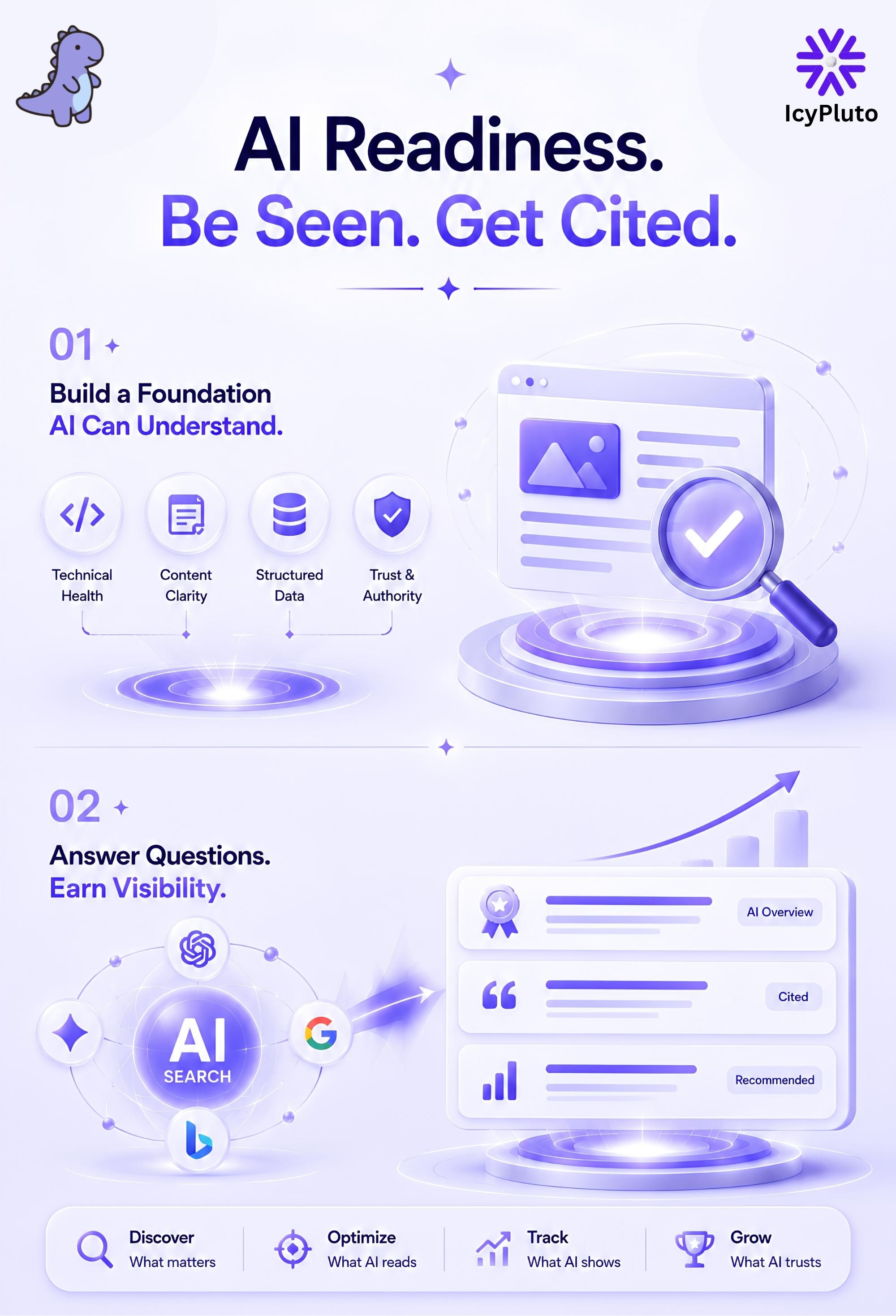
AI readiness is no longer just a technical concept...
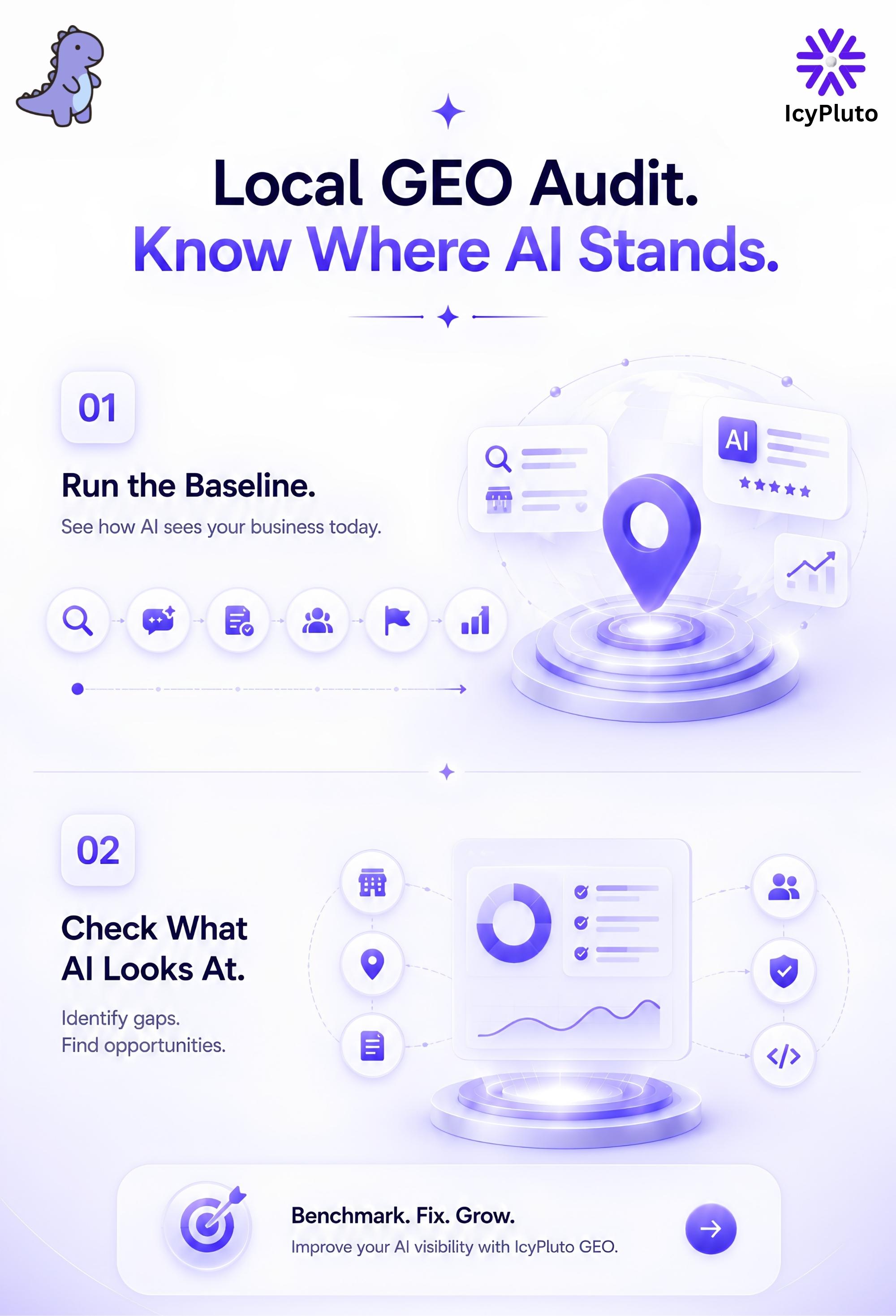
A local GEO baseline audit helps you understand ho...
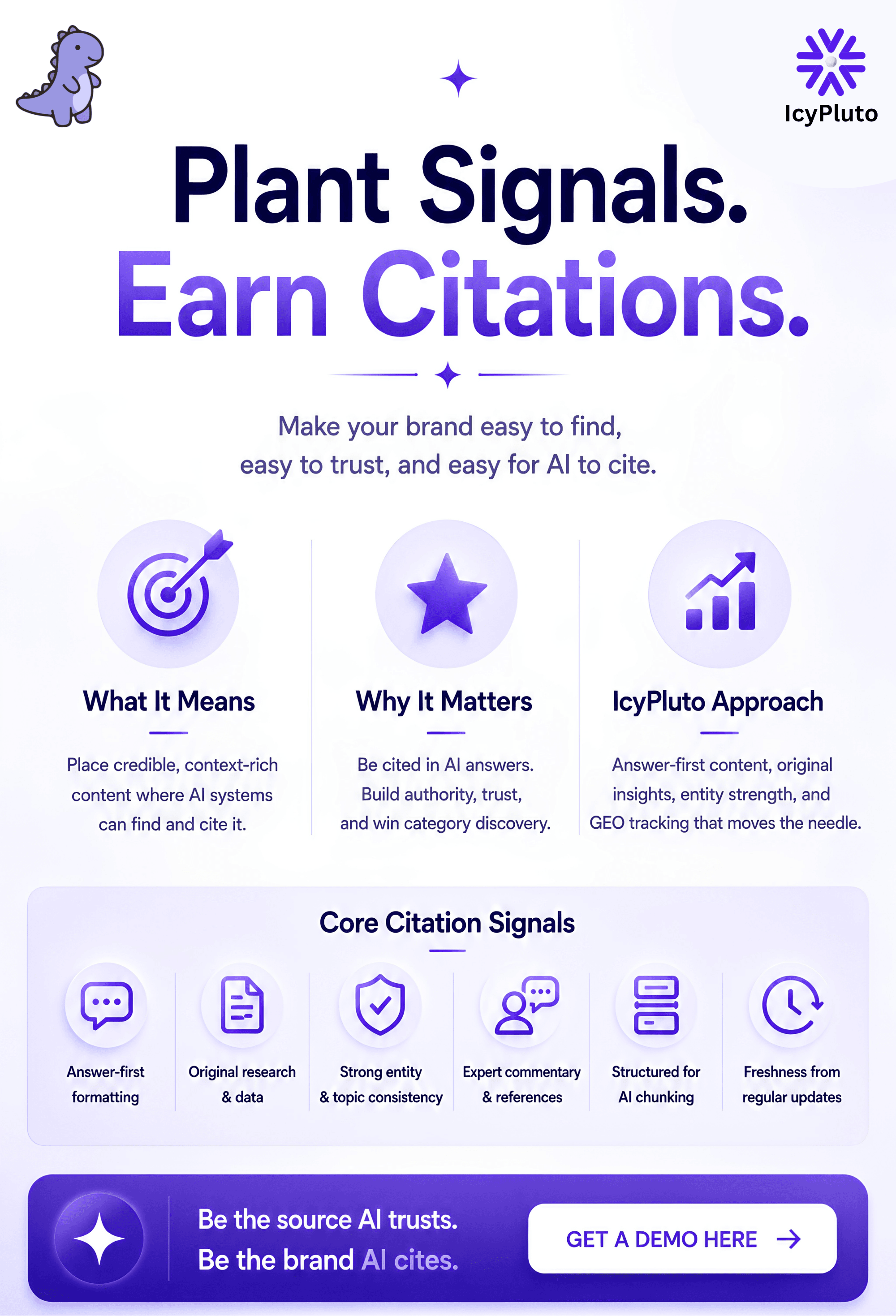
Citation seeding is becoming one of the fastest wa...
The way people interact with the internet is quietly undergoing a fundamental shift. Instead of typing queries and clicking links, users are increasingly delegating tasks to AI agents that can search, compare, decide, and even transact on their behalf. This is not a future trend, it is already happening.
A recent example illustrates this transformation clearly. A user asks an AI assistant to find a chair under a certain price with specific features. The AI does not return links. It evaluates options, checks availability, compares reviews, and completes the purchase.
This shift introduces a new layer in the digital ecosystem: agentic AI protocols. These protocols define how AI agents discover, interpret, and interact with your website. Just like HTTP enabled the web and SEO shaped search visibility, agentic protocols are becoming the infrastructure of AI-driven discovery.
And here is the uncomfortable truth. Most marketers and SEOs are not prepared for this shift.
Search engine optimization has always been about visibility. First for humans, then for search engines. Now, it is about visibility for AI agents.
Agentic AI systems are designed to act autonomously. They break down tasks, gather information, and execute actions without constant human input. This means your website is no longer just a source of information. It becomes a system that AI agents must understand and interact with programmatically.
Protocols play a critical role here. They determine whether an AI agent can:
Access your data in real time
Understand your product or service context
Take actions like booking, purchasing, or submitting forms
Without these protocols, AI agents are forced to “guess” how your site works. And guesswork leads to lower visibility, fewer recommendations, and missed transactions.
This is similar to the early days of SEO. Websites without structured data, sitemaps, or crawlable architecture struggled to rank. Today, the same principle applies, but the audience is no longer just Google. It is AI systems like assistants, copilots, and autonomous agents.
Another important data point highlights the urgency. Microsoft estimates that AI agents could grow to 1.3 billion by 2028, representing a 1000x increase in just a few years. That scale fundamentally changes how discovery works.
Agentic AI protocols are standardized communication frameworks that allow AI agents to interact with tools, systems, and other agents.
Think of them as the “language layer” of the agentic web.
Without protocols, AI systems would operate in isolation. With protocols, they can:
Discover services and data sources
Communicate across platforms
Coordinate complex workflows
Execute multi-step tasks
These protocols enable interoperability, which is essential for scaling AI ecosystems.
A simple analogy helps. The internet became scalable because of HTTP. APIs enabled software integration. Similarly, agentic protocols enable AI systems to collaborate and act.
And this is where SEO gets disrupted. Because visibility is no longer just about content. It is about compatibility with AI systems.
The Backlinko article highlights six key protocols that are redefining how AI agents operate. While the ecosystem is evolving, a few foundational categories are already emerging as critical.
The Model Context Protocol acts as a bridge between AI models and external tools or data sources.
It allows AI systems to access real-time information instead of relying only on pre-trained knowledge. This dramatically improves accuracy and decision-making.
For example, instead of guessing product availability, an AI agent can query live inventory data. This increases trust and usability.
MCP is often compared to a universal adapter for AI systems. It standardizes how models connect with APIs, databases, and services.
From an SEO perspective, this means structured, accessible, and real-time data becomes a ranking factor for AI agents.
A2A enables different AI agents to communicate and collaborate.
This is where things become exponentially more powerful. Instead of a single AI handling everything, multiple specialized agents can work together.
For example:
One agent handles research
Another evaluates pricing
Another executes transactions
This distributed approach increases efficiency and accuracy.
For businesses, this means your website may interact with multiple agents simultaneously. If your systems are not compatible, you risk being excluded from the decision-making chain.
ACP focuses on structured, secure, and persistent communication between agents.
Unlike simple API calls, ACP enables ongoing interactions. This is critical for complex workflows such as:
Multi-step purchases
Customer support automation
Enterprise decision systems
The ability to maintain context across interactions significantly improves outcomes.
For SEO and digital strategy, this means optimizing not just for discovery, but for continuous engagement with AI systems.
Speed is a competitive advantage in agentic systems.
Protocols designed for low-latency communication enable agents to:
Process events in real time
Respond instantly to changes
Coordinate actions dynamically
In high-stakes environments like eCommerce or finance, milliseconds matter.
This introduces a new optimization layer: performance for AI agents, not just human users.
These protocols define how AI systems interact with user interfaces.
They act as the bridge between humans and agents.
For example:
Voice assistants
Chat interfaces
Embedded copilots
These protocols ensure that user intent is accurately translated into agent actions.
For marketers, this means content must be structured not just for reading, but for interpretation by AI interfaces.
This is where the real disruption happens.
Agentic commerce protocols enable AI systems to:
Compare products
Evaluate reviews
Check shipping policies
Complete transactions
All without user intervention.
This fundamentally changes the conversion funnel. Instead of optimizing for clicks, brands must optimize for decisions made by AI.
And here is the key insight. If your product data is not accessible, structured, and compatible, AI agents will simply choose competitors.
The biggest mistake marketers can make right now is treating AI as just another traffic channel.
This is not about traffic. It is about control over decision-making.
In traditional SEO, ranking on page one increases visibility. In agentic search, being selected by an AI determines whether you exist in the buying journey.
This creates three major shifts:
Keywords still matter, but they are no longer enough.
AI agents prioritize:
Structured data
Real-time access
API compatibility
This means technical SEO evolves into system-level optimization.
Content is no longer just informational.
It must enable actions.
For example:
Can an AI book a service from your site?
Can it retrieve pricing instantly?
Can it complete a transaction?
If not, your content becomes passive, and passive content loses relevance.
AI systems do not show ten blue links.
They provide one recommendation.
This creates a winner-takes-most dynamic.
And that makes optimization significantly more competitive.
Agentic AI is not just changing search. It is transforming commerce.
AI agents reduce transaction costs by automating:
Research
Comparison
Decision-making
Execution
This creates a faster and more efficient buying process.
And the data supports this shift. AI-driven systems are already improving efficiency and reducing manual effort across industries.
The implication is clear. Brands that integrate with agentic ecosystems will capture more transactions.
Those that do not will lose visibility entirely.
This is where strategy becomes critical.
To stay competitive, businesses must start adapting now.
AI agents rely on structured data to understand content.
This includes:
Schema markup
Product feeds
API endpoints
The more structured your data, the easier it is for agents to use it.
Static content is not enough.
AI agents need:
Live inventory
Dynamic pricing
Updated availability
Real-time access increases trust and improves selection likelihood.
Websites must evolve into platforms.
APIs allow AI systems to:
Query data
Trigger actions
Integrate workflows
This is the foundation of agentic compatibility.
AI agents prioritize reliable sources.
This includes:
Reviews
Brand authority
Data accuracy
Trust becomes a ranking factor for AI decisions.
The shift to agentic AI is not incremental. It is structural. We are moving from a web of pages to a web of actions. From search engines to decision engines. From users clicking links to AI completing tasks. And protocols are the foundation of this transformation.
The brands that understand and adopt these protocols early will gain a massive advantage. Because in an agent-driven world, visibility is not just about being found. It is about being chosen.