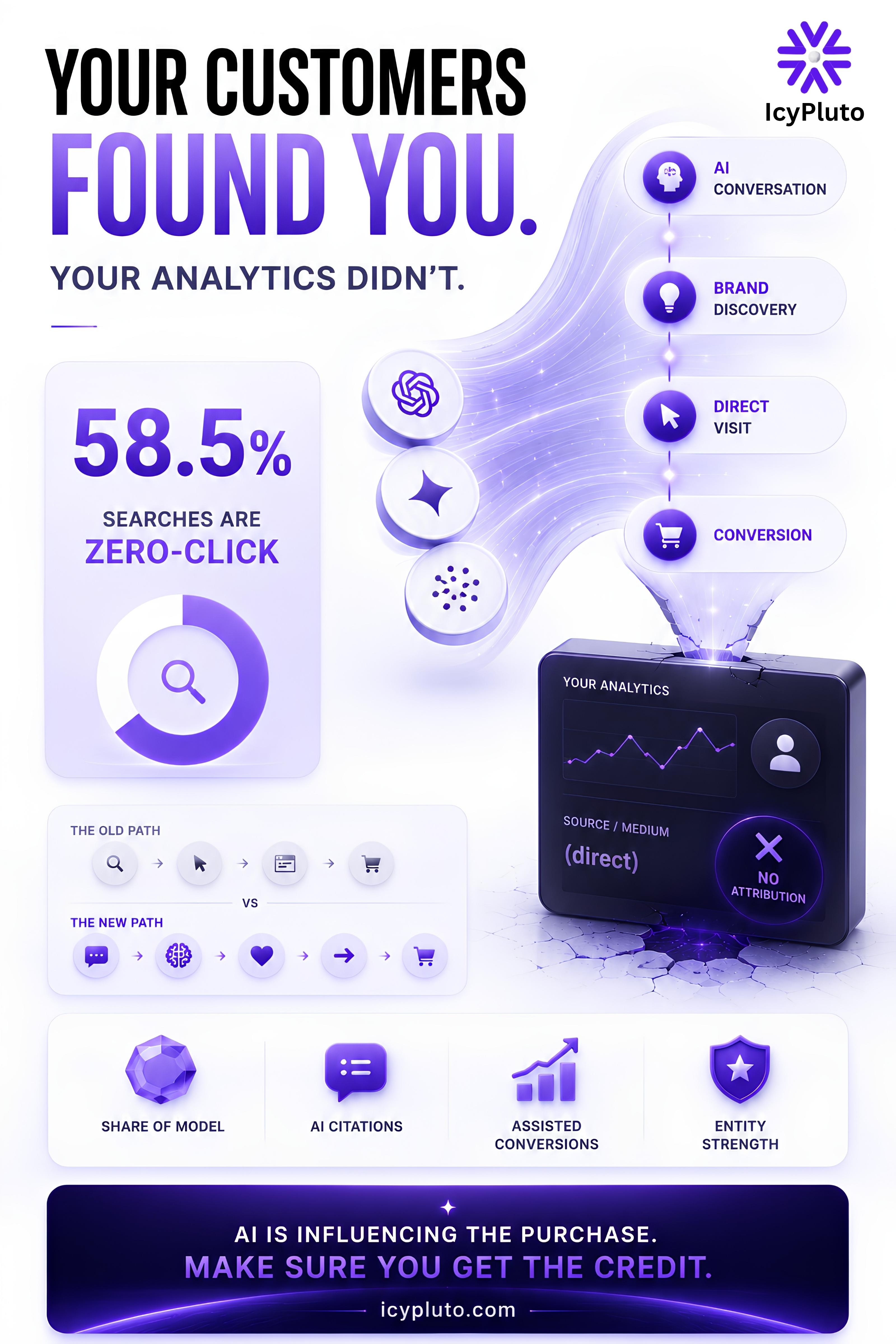
This blog reveals why traditional marketing attrib...
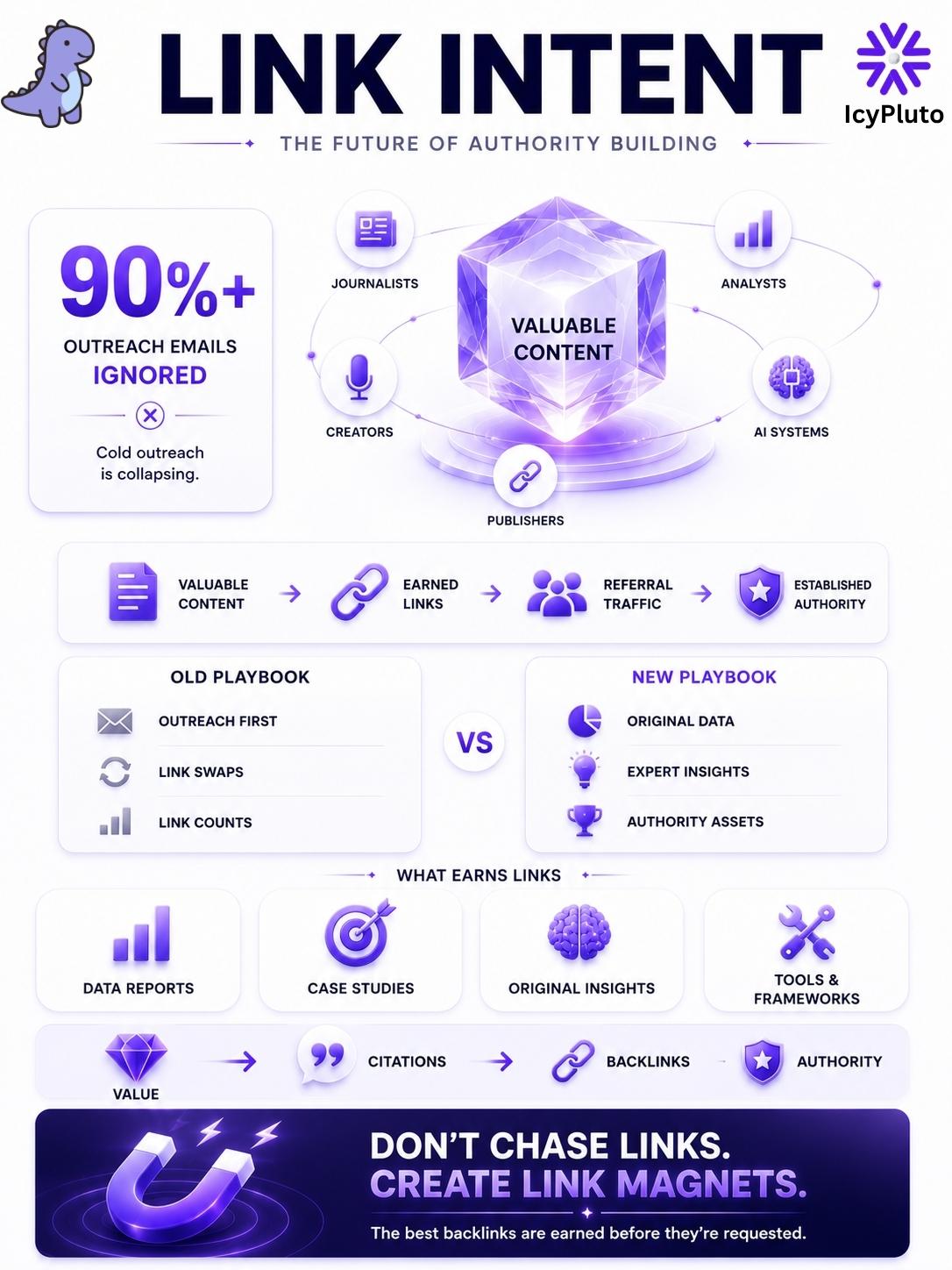
This blog explains how IcyPluto uses link intent—a...
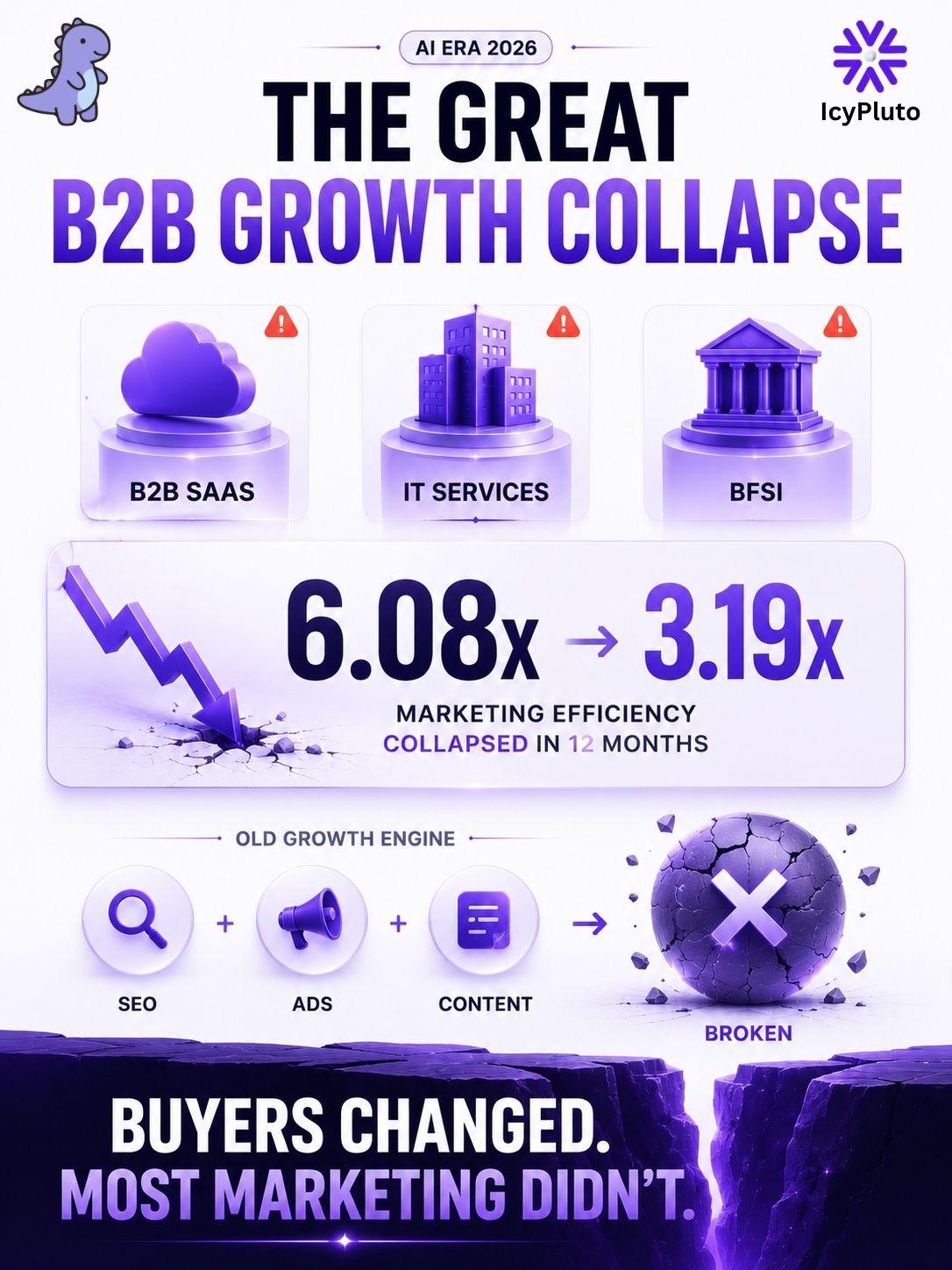
This hard-hitting blog reveals why IT, B2B SaaS, a...
LLM performance is quickly becoming one of the most important signals in digital marketing. It shows whether a brand is not just indexed, but actually understood, trusted, and surfaced by AI systems when people ask questions in plain language. That matters because discovery is shifting away from static search results and toward answer engines that summarize, recommend, and compare brands for the user.
For IcyPluto, this is not a side metric. It is a core part of how modern visibility works. When a brand appears inside AI-generated responses with strong sentiment and solid citation quality, it is usually a sign that the brand has built real authority across content, entities, and external signals.
Traditional SEO used to focus on rankings, clicks, and organic traffic. Those metrics still matter, but they no longer tell the full story. A brand can rank well and still miss attention inside AI answers, which is where many users now begin their research journey.
That shift has made LLM visibility a more practical business metric. It tells you whether your brand is being included in the places where people actually get answers. It also shows whether the model sees your brand as relevant enough to mention when competitors are in the same category.
Recent industry research supports this change. Studies on generative engine optimization show that structured content, original data, expert citations, and authority signals can significantly improve visibility in AI-generated answers. Another analysis found that expert quotations can improve AI visibility by 41 percent, while content with original statistics can improve it by 32 percent. Those numbers make one thing clear: AI systems reward credibility, not just keyword alignment.
Good LLM performance is not just about being mentioned. It is about being mentioned in the right way. A brand needs to show up with favorable sentiment, useful context, and enough consistency that the model sees it as a reliable option in the category.
That means visibility alone is not enough. A brand can appear often but still be framed weakly, or be cited without much authority. A stronger signal is when visibility, sentiment, citation quality, and share of voice move in the same direction. That combination usually indicates that the brand is building both recognition and trust.
This is where IcyPluto’s approach becomes useful. It does not stop at counting appearances. It measures the quality of those appearances and how they vary across different AI systems. That gives brands a much sharper view of where they stand.
Not all AI systems behave the same way. Some models reward certain content structures, while others appear more sensitive to freshness, citations, or prompt style. That makes cross-model analysis essential if a brand wants a realistic picture of its digital footprint.
The market is also moving fast. ChatGPT’s app market share fell from 69.1 percent in January 2025 to 45.3 percent in 2026, while Gemini’s share rose from 14.7 percent to 25.2 percent. That shift means brands cannot afford to focus on one assistant and assume the rest will behave the same way.
For marketers, this has a direct impact on strategy. If one model surfaces your brand frequently and another barely mentions it, the problem is not just visibility. It may be content structure, entity clarity, or insufficient external validation. Tracking across models helps you see those gaps early.
The same ingredients keep showing up in research. Structured content performs better than loose, unorganized material. Content with original data tends to get cited more often. Expert quotations and clearly sourced claims improve the chance of being surfaced by AI systems.
That makes sense when you think about how answer engines work. They need content that is easy to parse, easy to trust, and easy to reuse in a summarized response. If a page is vague, thin, or generic, it is less likely to become a useful source.
This is why IcyPluto’s performance framework is built around authority signals, not just traffic. It helps brands create content that can actually travel through AI systems and come out the other side with impact. That is a different goal from traditional SEO, and it requires a different measurement mindset.
A brand can show up in an AI answer and still lose value if the tone is weak or inconsistent. Sentiment helps reveal whether the model is presenting the brand positively, neutrally, or with hesitation. That matters because users often interpret AI answers as recommendations, not just references.
If sentiment is strong, the brand is more likely to be seen as a safe or credible choice. If it is weak, the brand may appear, but not in a way that helps conversion. This is why sentiment should always be read alongside visibility and citation quality.
IcyPluto’s approach is useful here because it treats sentiment as a strategic metric. It does not just ask whether the brand is present. It asks whether the presence is helping the brand build trust in the digital space.
IcyPluto uses LLM performance to understand where a brand stands in the AI discovery landscape. The goal is to find out how often the brand appears, how strongly it is represented, and how it compares across different systems. That creates a clearer view of brand authority than traffic reports alone.
This also helps with content planning. If one model responds well to a topic cluster and another does not, that gap can guide future content, citations, and entity work. If visibility is growing but sentiment is weak, the content may need stronger positioning or better supporting evidence.
That kind of analysis is what modern digital visibility now requires. Brands do not just need to rank. They need to be recognizable, credible, and repeated in the places where AI tools are answering user questions.
A useful way to think about LLM performance is through a few core dimensions. Visibility tells you whether the brand appears at all. Weighted visibility shows how important that appearance is when different models are considered by market share. Presence shows how often the brand enters the answer set.
Sentiment and citation quality add context. They show whether the model treats the brand as reliable and whether the source material supporting the mention is strong enough. Share of voice and share of answer influence tell you how much of the category conversation the brand actually owns.
AI systems are changing how people discover, compare, and choose brands. That means the brands winning today are often the ones that are most legible to machines as well as humans. If your content is clear, well sourced, and consistently reinforced across the web, you are more likely to be surfaced.
This is especially important in categories where users ask for recommendations, comparisons, or trusted options. In those cases, AI systems are acting like a front door to the buying journey. If your brand does not show up there, another one will.
Research on AI visibility keeps reinforcing the same pattern. Depth, freshness, expert signals, and structure all improve the odds of being cited or recommended. That is why brands that want digital visibility need to think beyond classic SEO and toward broader authority building.
Start with content quality. Build pages that answer real questions, not just pages that target keywords. Add original insight where possible, and support claims with citations, numbers, and examples.
Then work on entity clarity. Make sure your brand, product names, and leadership are consistently represented across your site and external profiles. AI systems rely on that consistency when deciding whether a brand is a real and relevant entity in a category.
Finally, strengthen your external signals. Mentions on credible websites, reviews, guest features, and third-party citations all help reinforce your authority. The more the web confirms your relevance, the more likely AI systems are to trust it too.
IcyPluto uses LLM performance as part of a larger visibility system. The aim is not just to get found once. It is to build a brand that appears repeatedly across AI systems, search engines, and digital channels with stronger authority over time.
That means combining content strategy, entity optimization, and citation building into one framework. It also means watching performance across multiple models rather than relying on a single source of truth. When the data is read properly, brands get a more accurate picture of where they are strong and where they need work.
This is what maximum visibility looks like in the AI era. Not just rankings. Not just clicks. Actual recognition inside the systems people are now using to decide what to read, trust, and buy.
LLM performance is becoming one of the clearest indicators of brand strength in digital marketing. It shows whether your content is visible, your authority is credible, and your brand is being surfaced by the systems shaping modern discovery.
For IcyPluto, that makes LLM performance a core strategic metric. It helps brands understand how they appear in AI-driven search, where they are gaining trust, and what they need to improve to stay visible as the landscape keeps shifting.
The brands that pay attention now will have a much stronger position later. They will not just be found. They will be recommended.