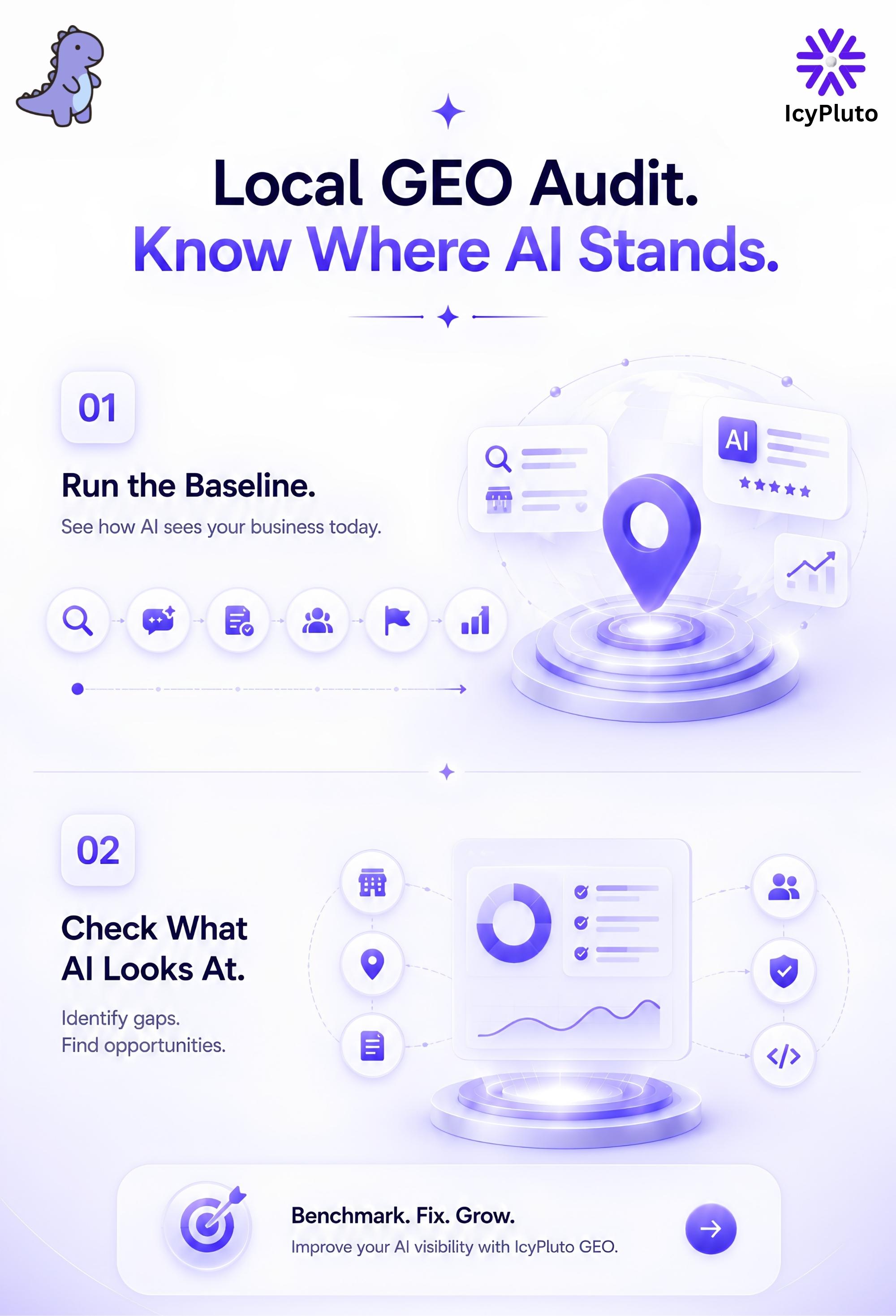
A local GEO baseline audit helps you understand ho...
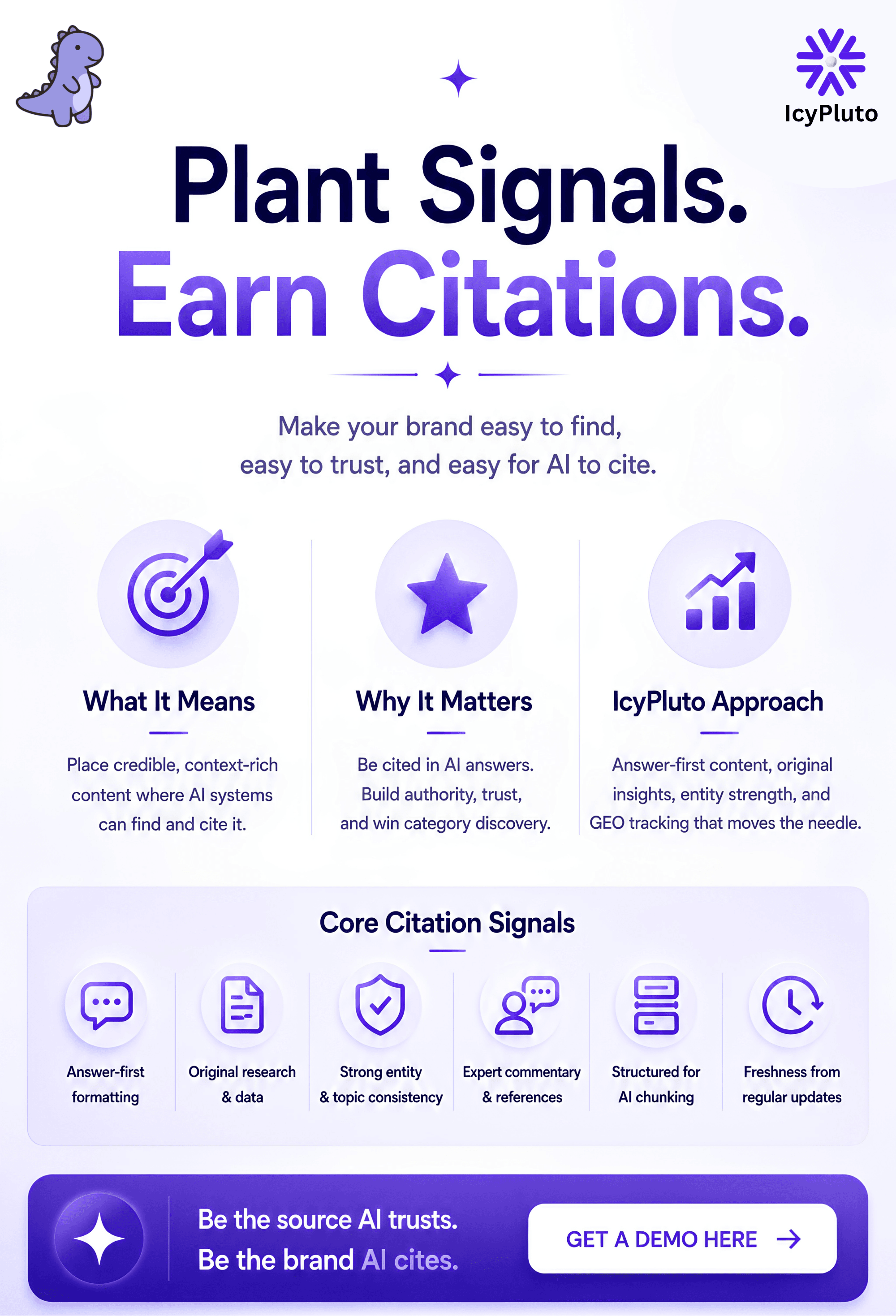
Citation seeding is becoming one of the fastest wa...
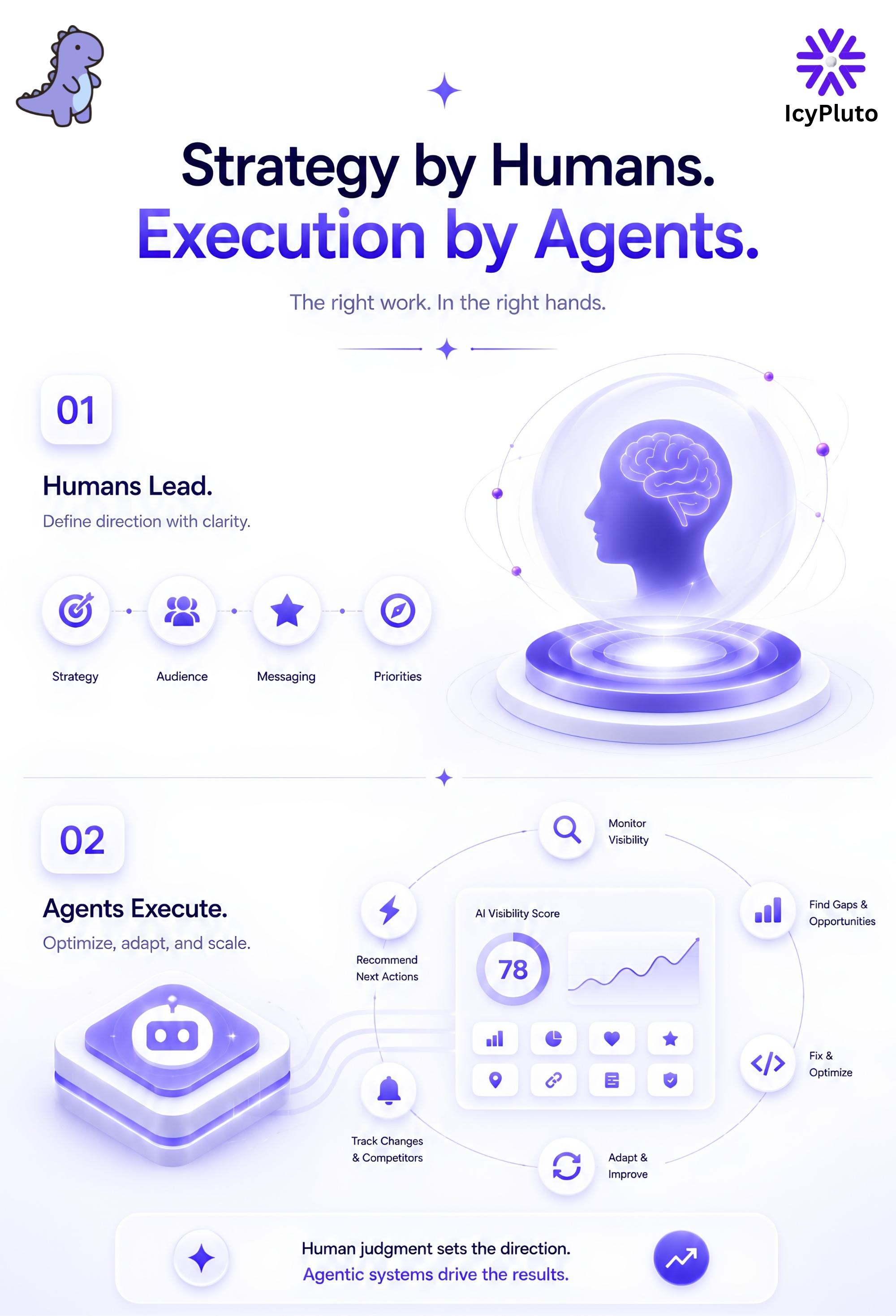
This blog explains how modern marketing teams can ...
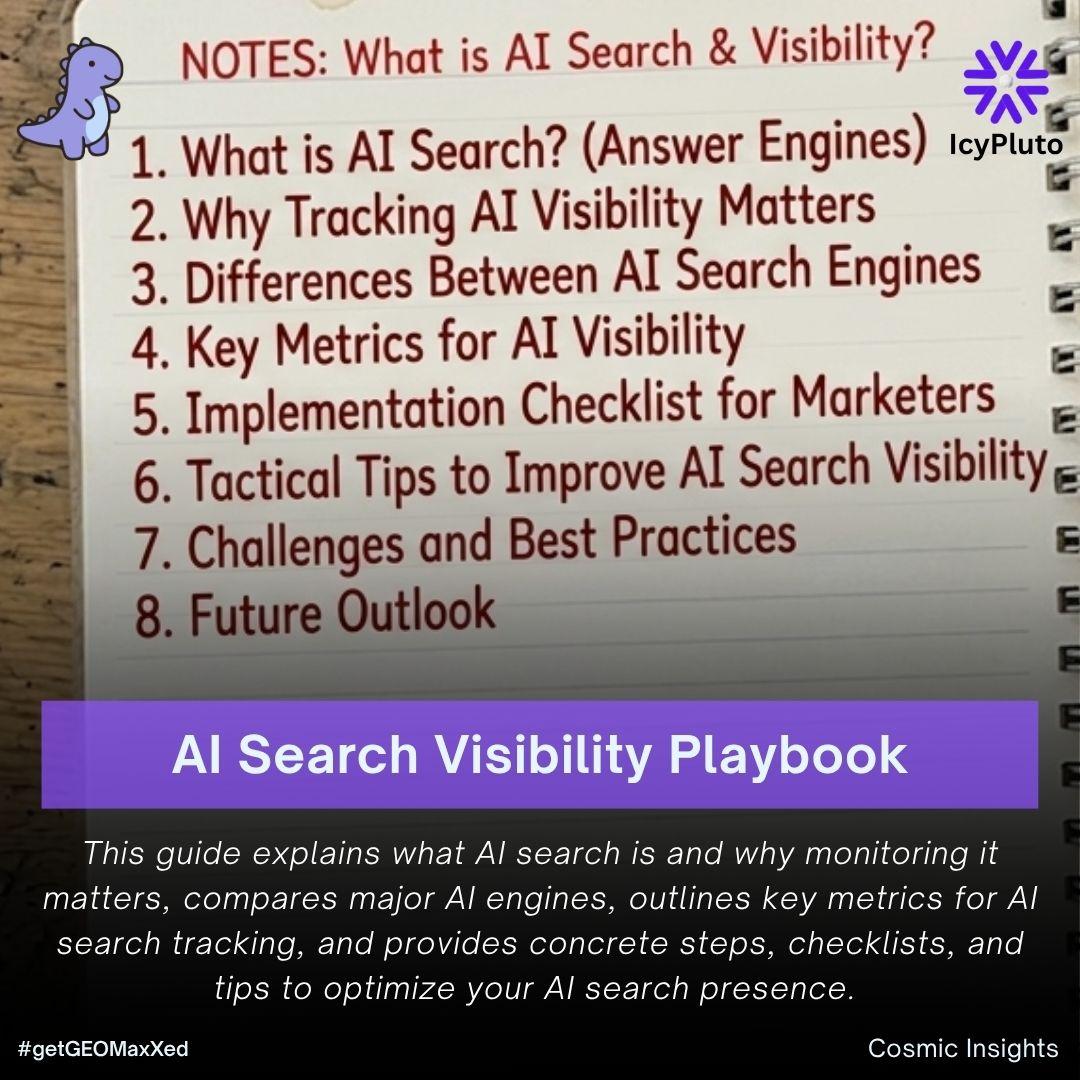
AI search (or “answer engines”) refers to systems where user queries are answered directly by AI models instead of a list of links. Instead of the classic “10 blue links,” AI search returns conversational answers that synthesize information from multiple sources. Examples include ChatGPT, Google’s Gemini-powered Bard (and its AI Overviews feature), Microsoft’s Copilot (Bing Chat), Anthropic’s Claude, and Perplexity. In these answer engines, brands appear as mentions (AI names your brand in its response) or citations (AI includes a clickable source link to your site).
This is a fundamental shift in the search experience. Conductor’s AI Search Performance team explains that AI visibility is “how a brand’s content, products, or offerings appear in AI-powered search experiences like Google Gemini, ChatGPT, Perplexity, and other answer engines”. Rather than ranking positions, AI visibility is about being part of the answer itself. In short, AI search means the AI “speaks” for your brand; if you aren’t cited or mentioned in AI answers, you may as well be invisible to a growing segment of users.
Key differences from traditional search: AI search engines use large language models to process queries, often accessing real-time web data or training knowledge to craft answers. They can answer natural, multi-turn questions in conversational style. Google, for example, now offers AI Overviews at the top of search results (synthesized by Gemini), as well as a new “AI Mode” chat interface. ChatGPT has evolved into a full AI search engine with live web browsing (called ChatGPT Search), powered by new GPT-5 models and even its own AI-native browser.
Search behavior is rapidly shifting to AI answer engines. By 2026, analysts estimate that AI assistants handle a majority of search queries. For instance, one analysis finds that AI assistants now account for about 56% of global search volume, and that a staggering 43% of Google searches end without any click to a website. This “zero-click” phenomenon is even more extreme: when Google’s full AI mode is active, up to 93% of sessions conclude without clicking any result. Similarly, a Pew Research study reported that when an AI summary (Google AI Overview) appears, users click a source link only about 1% of the time.
This trend has major implications: traditional SEO alone isn’t enough. If you only optimize for search rankings, you may miss traffic and awareness opportunities. AI answers often bypass the traditional search funnel by giving users instant answers, meaning that brand visibility in AI responses is the new battleground. A recent Conductor report warns that “the goal isn’t really traffic anymore” – with AI search, the funnel condenses. Now the immediate goal is for the AI to mention or cite your brand in its answer, prompting users to visit your site.
Data underline the stakes. Generative answer engines can drive highly engaged traffic. For example, ChatGPT referrals convert at significantly higher rates than organic search. One study shows ChatGPT-driven visitors have a ~14% conversion rate versus ~2.8% for Google search. Another found ChatGPT traffic converting at 6.7% compared to 3.9% for Google. In practice, even if AI search drives only ~1% of site traffic today, its 5× higher conversion means it can contribute as much revenue as a channel with 10× the visits.
Meanwhile, organic traffic is under pressure. As Google and others roll out AI answers, organic search clicks have dropped sharply. A Define Media Group report confirmed that Google’s AI Overviews caused about a 42% reduction in organic search clicks on queries where they appear. One high-profile case study is HubSpot, whose organic visits plunged ~80% year-over-year as AI answers proliferated.
In summary, without tracking AI search visibility, marketers are flying blind in a channel that is already growing and will only grow further.
Several AI platforms now compete to answer user queries. Each has unique strengths, so it’s important to treat them as separate “channels” of search. Here are the major ones:
Google Gemini (formerly Bard/PaLM): Google’s LLM (Gemini) powers Bard and Google’s new AI Overviews in search. Gemini’s outputs often show up as AI summaries above or alongside traditional results. Google Overviews now trigger on a large share of informational queries – one source estimates they appear in ~16% of all Google searches by late 2025. Gemini’s strengths are real-time web access and multimodal analysis (text, images, etc.). It’s tightly integrated with Google’s ecosystem (Search, Android, Google Workspace), making it pervasive. On the downside, Gemini answers can feel less conversational than ChatGPT, and the specific sources used may be opaque to the user.
Microsoft Copilot (Bing Chat): Microsoft’s AI assistant (originally “Bing Chat”) is now called Copilot and built into Windows and Edge. It uses OpenAI’s GPT-4.5/5 in combination with Bing’s search. Copilot can answer conversational queries and also pulls live web info. Its output is more text-and-web oriented. Early data suggest Copilot has a smaller share than ChatGPT or Google (around 10–15% of AI assistant traffic), but it benefits from seamless Windows integration and Microsoft’s enterprise tools. Like ChatGPT, Copilot’s citations and trust signals are still maturing.
ChatGPT (OpenAI): ChatGPT (now GPT-5 in 2026) remains the largest AI search platform by usage. It excels at conversational depth (long multi-turn chats) and creative tasks. Recent features (ChatGPT Search, GPTs/Plugins, Atlas browser) give it real-time web access and specialized citation tools. According to a recent study, about 60–65% of AI chatbot interactions go through ChatGPT. Its answers are highly engaging (sessions often >13 minutes). However, out of the box ChatGPT is less citation-focused – it requires explicit prompting to list sources, and the links it cites can lag those in Google results. For SEO, that means you may need to engineer prompts or fine-tune chat outputs to gain citations in ChatGPT.
Anthropic Claude: Claude is designed for careful, reliable answers and handles very long contexts. It’s positioned as a research and enterprise assistant. While smaller in market share (a few percent), Claude’s strengths are its high safety settings and ability to analyze large documents. It’s often used for summarization and reasoning tasks where accuracy is key. Claude isn’t typically the first choice for casual “search,” but it can cite sources and is increasingly integrated into workflows.
Perplexity: Perplexity positions itself as an AI search engine with a citation-first approach. It uses LLMs (like Mistral 7B or Llama 2) but always includes links in its answers. It’s optimized for factual accuracy and up-to-date info by searching the web live. Its market share is much smaller (around 5–7% of AI engine use), but it has a loyal audience for research queries. Perplexity’s quick, bullet-point responses and visible sources mean that for marketers, appearing on Perplexity can drive high-quality traffic.
Other specialized AIs (e.g. AI-native browsers, open-source LLMs) exist, but for visibility tracking the above cover the most important surfaces. In practice, think of each as a different search channel. ZipTie’s analysis notes that “Google now offers three distinct AI-powered search experiences”: the Gemini chatbot app, AI Overviews, and the new Google “AI Mode” chat interface. Similarly, Microsoft has both Copilot and Edge integration. For tracking, you’ll want to check all relevant surfaces.
Tracking AI search isn’t just about “rank.” It requires new metrics because AI answers are more nuanced. Important visibility metrics include:
Mentions: How often does an AI answer mention your brand or content? This is akin to share of voice. You may track “AI mentions per 100 queries” or similar. Mentions show brand presence even if no link is given.
Citations (Answer Sitelinks): How often does AI include a link to your site? Conductor defines a citation as “when the AI response includes a clickable link back to your website as a source”. This is like getting traffic from an AI answer. Many tracking tools count “AI answer citations” as a top metric. For example, Ahrefs found that 76% of Google AI Overview citations come from pages ranking in the top 10, but ranking alone is a weak predictor. Instead, measure your actual citation frequency in AI responses (absolute and relative to competitors).
Share of Voice: Compare your mention/citation volume to competitors. Some platforms calculate an “AI Share of Voice” – e.g. “your brand appeared in 30% of all AI answers in this category this month.” This helps identify if you’re losing ground or gaining.
Presence in Specific Features: Track presence in Google’s AI Overviews vs. regular search results. For example, record for which keywords your site is cited in an Overview card. Similarly, track whether your brand appears in Bing/Copilot chats or Siri/assistant answers.
Impression and Engagement: While hard to measure directly, some tools estimate how many “impressions” your brand gets in AI answers (e.g. number of times your content is served in an answer session). If possible, use analytics events or UTM tagging on link clicks from AI to see engagement time, pages per session, or conversions from AI channels (though this is often underreported, see “Dark Funnel” below).
Quality of Citations: Not all citations are equal. Monitor where you rank in the AI answer. E.g., being listed as the first source vs. third source. Or sentiment/context of mention (Conductor suggests analyzing mention tone – positive vs. neutral).
Traffic and Conversion (Off-AI Metrics): Even if users mostly read AI answers, check if AI-driven content boosts branded searches later (the “dark funnel”). Tools like GA4 or your CRM can look at lift in brand searches or conversions after AI engagement. Note, however, that analytics often lumps AI referrals into general organic, making this tricky.
In summary, moving beyond traditional rank to content-centric metrics – mentions, citations, share of voice – is key. Tracking should answer: When people use AI to ask a question, how often does your brand get named or linked?
Use this step-by-step checklist to get started with AI search tracking:
1. Define Goals & Queries: Identify the topics, questions, or keywords that matter for your brand. Think about typical user questions: product queries, information requests, etc. (e.g. “best CRM for startups,” “how to bake sourdough”). Include both branded and non-branded queries.
2. Select AI Platforms: Choose which AI engines to monitor. At minimum, include ChatGPT, Google Gemini (Bard/Overviews), Microsoft Copilot (Bing Chat), Claude, and Perplexity. If relevant, also track any industry-specific AI (e.g. Meta AI in social contexts).
3. Choose Tools/Method: Decide on your tracking approach:
DIY: Use APIs or manual testing if you have tech resources.
AI Visibility Tool: Sign up for a dedicated platform (e.g. Otterly.ai, ZipTie.dev, etc.).
Hybrid: Combine SEMrush/Conductor reports with occasional manual checks.
4. Set Up Prompts: Create a list of prompts or questions to test. These should represent your user intent and keywords. Standard SEO keywords can be adapted into conversational prompts (e.g. convert a question into a query ChatGPT would understand). Include different variants.
5. Run Tests & Gather Data: Use your chosen tool or process to submit these prompts to each AI engine on a regular basis (weekly or monthly). Record whether your brand is mentioned, and whether your URLs are cited. Also note position in answer (first, second source, etc.) and context.
6. Track Metrics: For each engine, log:
Mentions count (e.g. “Brand X mentioned 8 times this week”)
Citations count (e.g. “Brand X cited 3 times”)
Share of voice (your mentions vs. total queries)
Snippet visibility (percentage of answers where brand appears)
Traffic/conversion (if you can tag links and measure referrals).
7. Compare Competitors: Include competitor brands in your prompts. Many tools allow side-by-side. See where they outshine you. For example, Profound and Scrunch emphasize competitive benchmarking in AI.
8. Analyze Gaps: Identify queries where you’re missing visibility. Are there high-volume queries where your brand never appears? Use these to guide content creation.
9. Iterate & Report: Regularly review reports. Update prompts as products/services change. Share AI visibility metrics with SEO/marketing stakeholders as part of dashboard (e.g. in Conductor or your SEO platform’s analytics).
Write for Answers, Not Just Keywords: Structure content to directly answer user questions. AI models favor clear, concise answers. Use Q&A formats or bullet lists to front-load the answer. Start with a summary sentence. (Conductor notes that answering queries directly builds brand authority.)
Use Natural Language & Contextual Keywords: AI search is conversational. Include full question phrasing and synonyms in your content. For example, instead of just “CRM software,” answer “Which CRM is best for small startups?” naturally in your text.
Include Structured Data: Use schema markup (e.g. QAPage, FAQ) where applicable. Though AI bots don’t parse HTML like Google, structured snippets can help standard search and indirectly train AI models that rely on data feeds or crawling.
Optimize for Entities and Context: AI models make heavy use of knowledge graphs and entities. Mention relevant names, products, and concepts in your content so the AI can associate your brand with those topics. (E.g., in a travel post, mention city names, landmarks, etc.)
Cite Authoritative Sources: AI answers often compile information from top domain sources. Collaborate content with well-known references (studies, Wikipedia, news sites). Being cited by Wikipedia or authority sites can indirectly boost AI visibility, since these are heavily weighted in AI answers.
Leverage Freshness: Many AI platforms (ChatGPT plugins, Perplexity) use real-time search. Keep content updated. New developments (product launches, events) can be quickly picked up by AI crawlers, so having current info increases chances to appear in real-time queries.
Engage with the AI Community: Monitor SEO/AI forums (like r/SEO or industry Slack channels) to discover trending queries or prompts people use. Tools like Peec.ai provide insights on what to create next. Incorporate popular conversation topics into your content.
Monitor Conversational Extensions: Use conversational features like Google’s “People also ask” or “Follow-up” questions as inspiration. Ensure content covers related sub-questions, as AI chats often drill into follow-ups.
Use Concise, Well-Formatted Language: AI prefers succinct answers. Break content into short paragraphs or list items. Avoid jargon without explanation. A friendly, human tone can also make answers more readable to AI (and users).
Focus on Brand-Centric Queries: Track and optimize for queries that explicitly involve your brand or products. For example, prompt “What is Brand X?” or “Is Brand Y the best tool for Z?”. Ensuring your site is the top result in conventional search on-brand terms helps AI pick you up as authority.
By implementing these tactics, you align your content with how AI models retrieve and present answers, increasing your chances of being recommended or cited.
Data Variability: LLM outputs are non-deterministic. The same prompt can yield different answers. Studies show 40–60% month-to-month volatility in which sources AI cites. This means your visibility reports will fluctuate. Mitigate by averaging multiple runs and focusing on long-term trends rather than single-day results.
“Dark Funnel” Tracking: As noted, many users see the answer and may convert later via branded search. Standard analytics won’t link that back to AI. Best practice is to complement AI tracking with brand uplift analysis (monitor branded Google queries after a burst of AI visibility) and to incorporate UTM tags where possible on answer citations.
Prompt Dependency: AI tracking tools rely on pre-defined prompts. If your prompt list misses key queries, you’ll miss visibility. Continuously refresh your prompt list based on real user questions and industry trends. Use tools (like Conductor or even Google Search Console’s “People also ask”) to discover new question angles.
Engine Differences: Recognize each AI platform has its own crawl/update frequency and knowledge cutoff. For example, ChatGPT (without plugins) historically had data cutoffs, whereas Google Gemini is always up-to-date via Google Search. Know your sources: if you have very new content, Gemini/Perplexity might find it sooner than ChatGPT’s base model.
Measurement Limitations: As mentioned, GA4 and Search Console don’t yet distinguish AI referrals. Expect this gap and focus on proactive measures (like citations count) rather than waiting for perfect analytics. Also, define a clear methodology (e.g., count an AI “impression” if any response contained your brand) and stick with it for consistency.
Best Practices: Embrace a test-and-learn approach. Combine quantitative tracking with qualitative review. Periodically sample AI answers for important queries manually to verify tool data. Engage with user feedback – some customers may note that they found you through ChatGPT, validating the strategy. And, align AI optimization with traditional SEO: much of good SEO (relevance, authority, user focus) still applies. For instance, Ahrefs found that 76% of Google AI Overview citations are pages that rank in the top 10. So, keep building high-quality content that ranks well in organic search as a foundation; then layer AI optimization on top.
AI search is evolving fast. By 2026–2027, analysts predict answer engines will account for a quarter or more of all search interactions. We expect to see:
More Integration: AI agents will be embedded in cars, phones, and wearables, making voice- or assistant-based search even more common (Apple’s Siri now integrates ChatGPT, Google Assistant has Gemini, etc.).
Hybrid Search Models: Companies like Meta may enter AI search, and open-source LLMs might spawn new answer apps. We may also see more “AI modes” in existing engines (Google’s AI Mode, Bing’s Copilot are early examples).
Sophisticated Metrics: Analytics tools will mature. We already see early steps (Semrush’s AI Visibility Toolkit, Conductor’s AI Search feature, etc.). Soon, standard SEO platforms will include AI visibility scores alongside rank and traffic metrics.
User Behavior Shifts: As AI gets better, the line between search and conversation will blur. For marketers, this means optimizing for conversational user journeys – content may need to serve as both an answer and a next-step. Businesses may start creating content specifically tailored for AI training (clear FAQs, answer summaries).
Staying ahead means treating AI search visibility as seriously as traditional SEO. As experts observe, “the category of AI visibility is still young, but it’s a strategic reality”. Marketers should expect this field to become a core part of search strategy.
AI search engines have changed the game for content discovery. Instead of chasing blue-link rankings, brands must now ensure they are spoken of in AI-generated answers. This requires new metrics, new tools, and new tactics. In this guide, we’ve covered why AI visibility matters (higher conversions, shifting user habits), how AI engines differ, what metrics to track (mentions, citations, share of voice), and which tools and processes can help.
The takeaway: Start measuring today. Use prompt monitoring, specialized platforms, and analytics to get a baseline of your AI visibility. Analyze the data for gaps and opportunities. Optimize content with AI in mind – clear answers, high authority, conversational keywords. Apply the checklist and tips above to systematically improve.
By preparing now, you’ll ensure your brand stays visible as search evolves. The AI search world is still new and fluid, but one thing is certain: searchers are asking AI engines first, and brands must answer there.