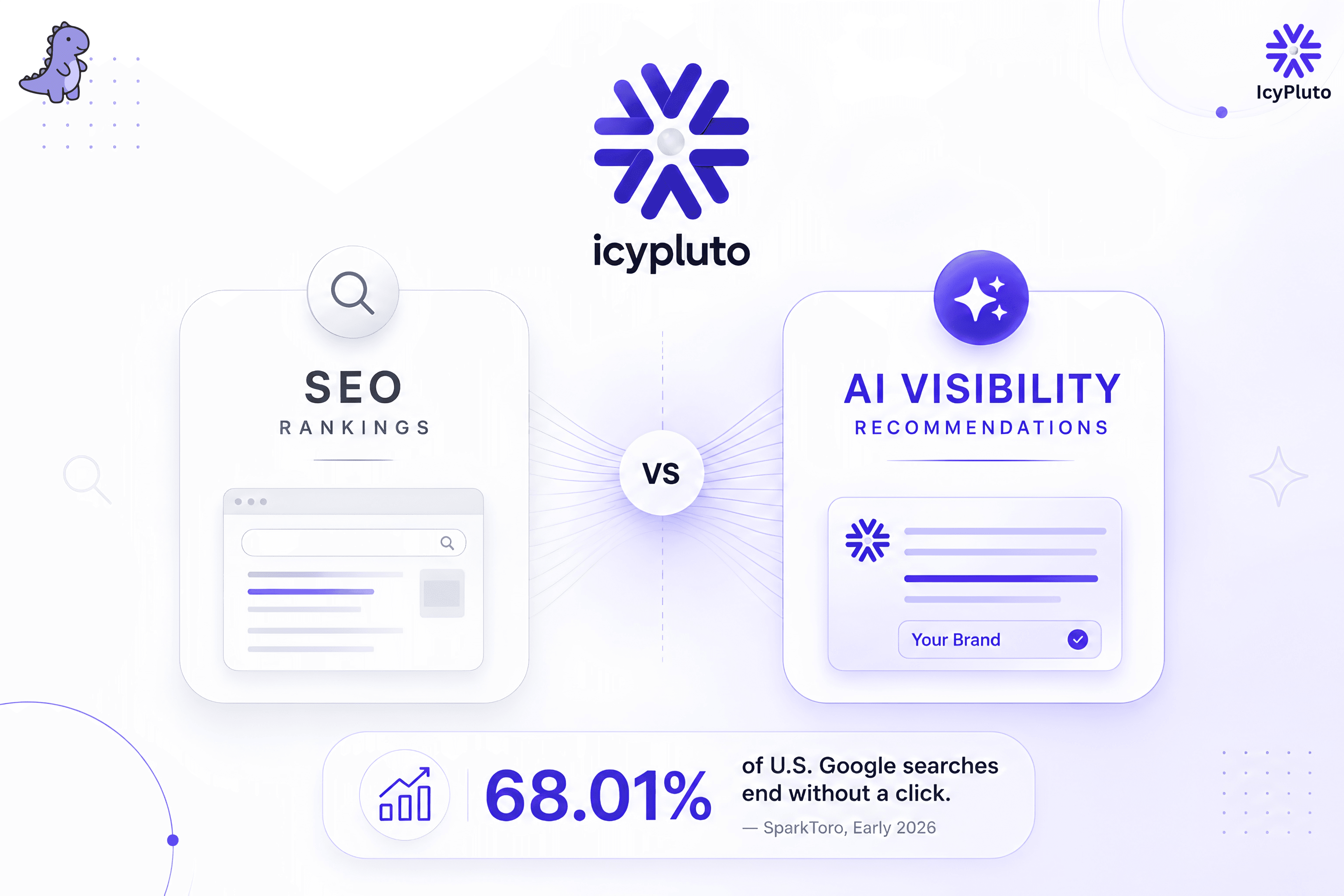
AI search is changing how brands get discovered, a...
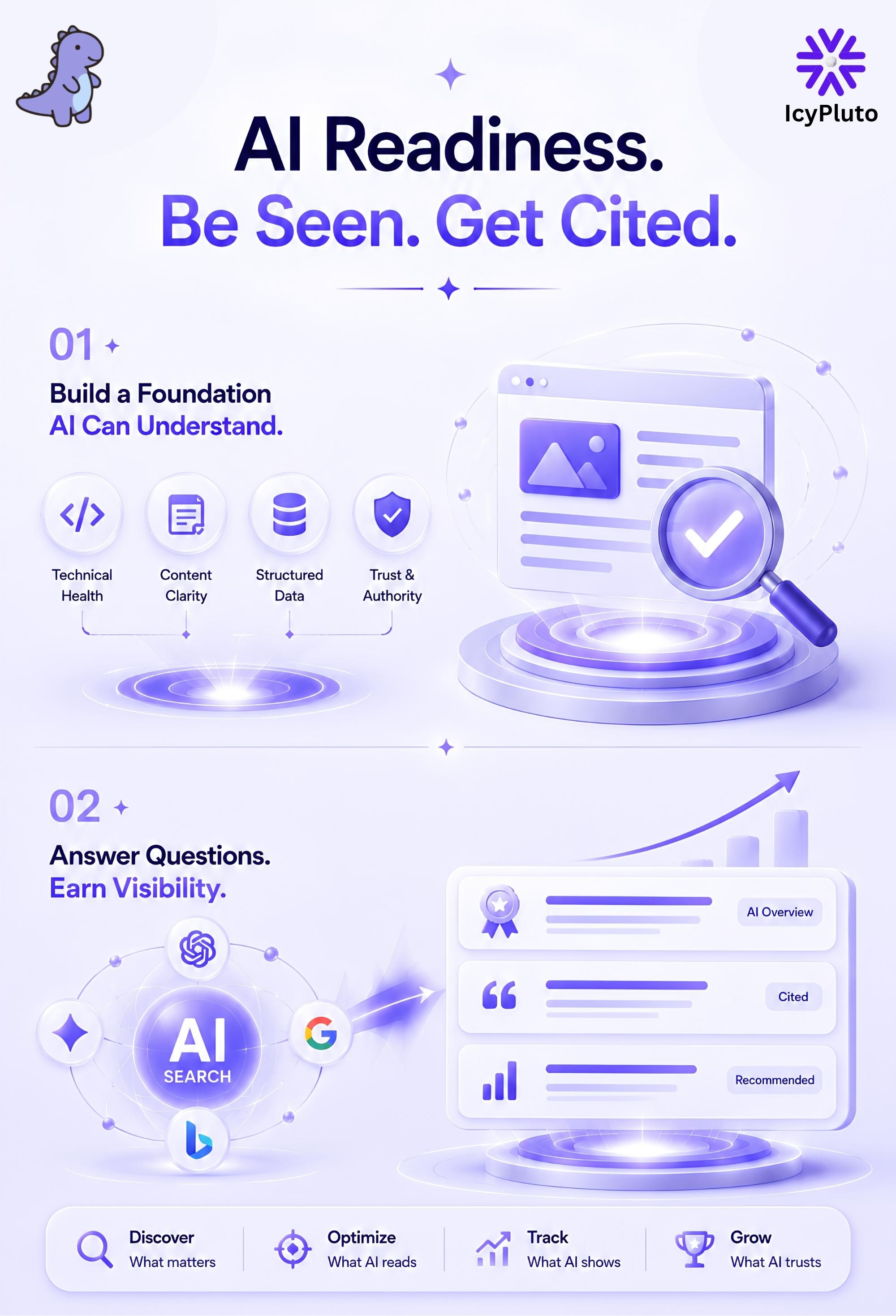
AI readiness is no longer just a technical concept...
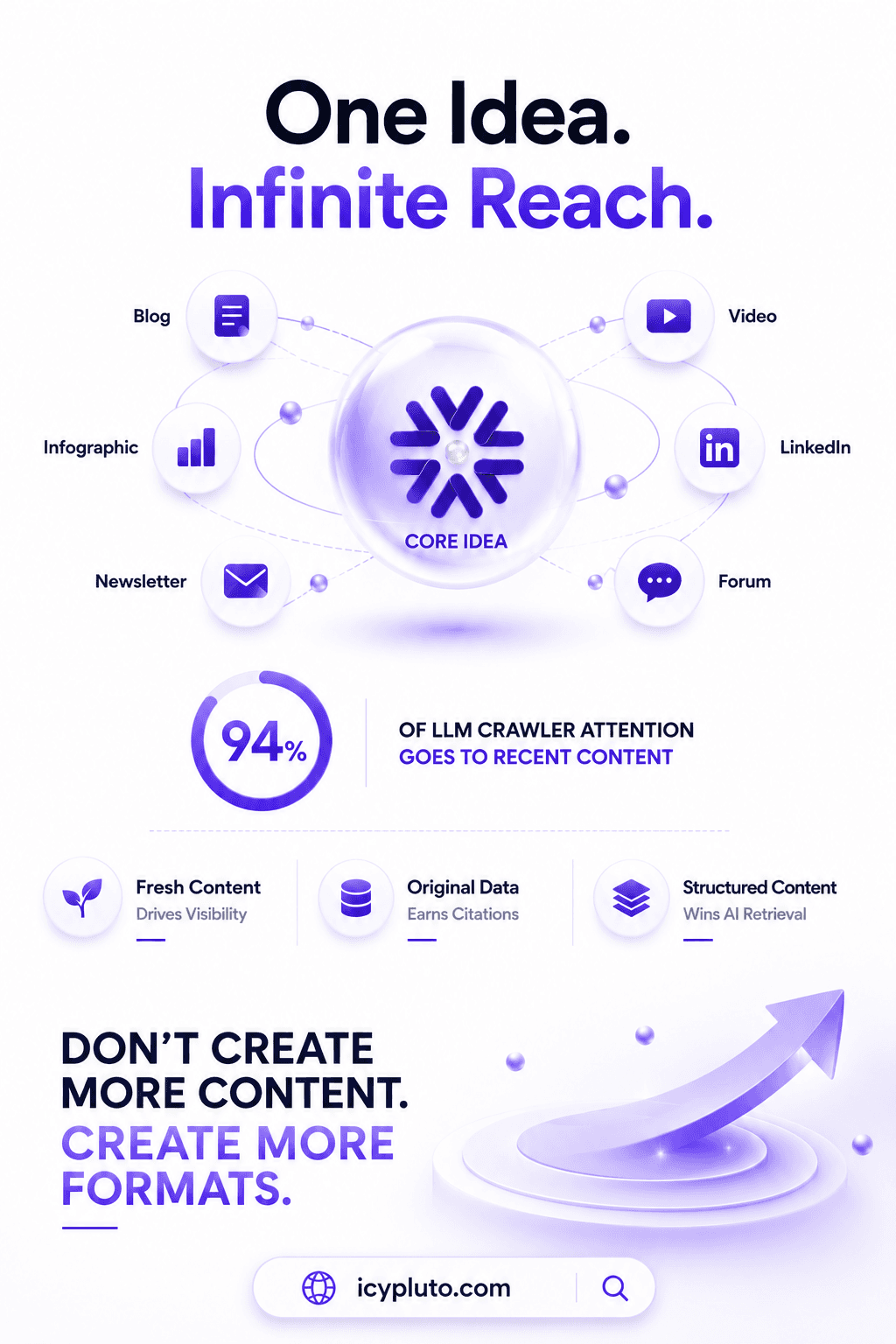
This blog reveals how to maximize visibility in tr...
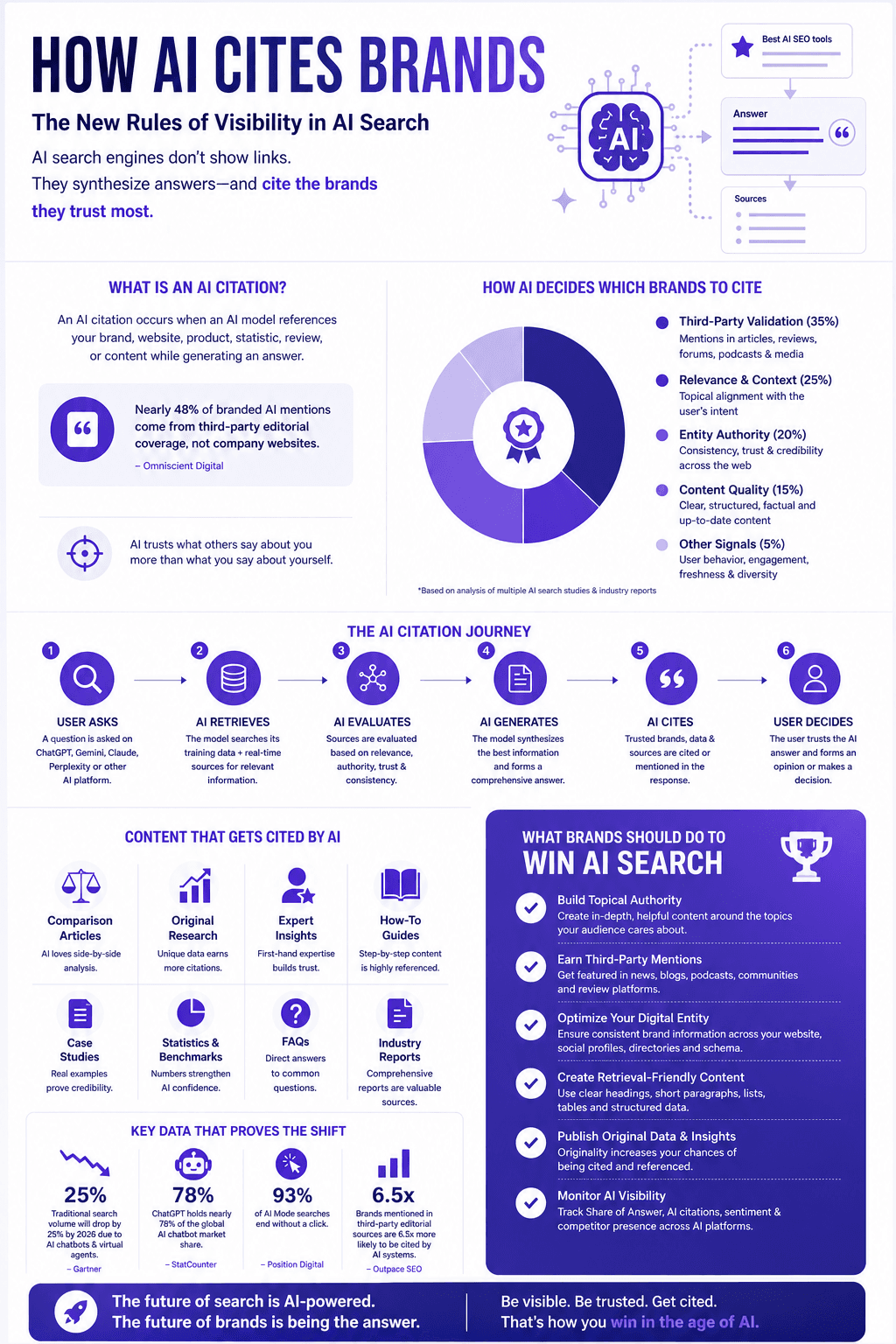
The way consumers discover brands online is changing faster than most businesses realize. For nearly two decades, traditional SEO focused on helping brands rank higher on Google search results pages through backlinks, keywords, domain authority, and technical optimization. But with the rise of AI-powered search engines and Large Language Models (LLMs) such as OpenAI ChatGPT, Google Gemini, Anthropic Claude, and Perplexity AI, users are no longer browsing ten blue links to find answers. Instead, AI systems now summarize information, compare products, recommend brands, and generate direct responses inside conversational interfaces. This shift has introduced a completely new layer of digital competition known as AI search visibility, where brands compete not just for rankings, but for mentions, citations, recommendations, and inclusion inside AI-generated answers.
This transformation is already impacting search behavior globally. According to Gartner, traditional search engine volume is expected to decline by 25% by 2026 as users increasingly shift toward AI chatbots and virtual agents for discovery and decision-making. At the same time, research from SparkToro and Datos shows that zero-click search behavior continues to rise, meaning users increasingly consume answers directly within interfaces without visiting websites. AI-powered discovery accelerates this trend even further because AI systems often summarize the final answer directly inside the conversation. For brands, this means visibility inside AI-generated responses may soon become more valuable than traditional website rankings themselves.
An AI citation occurs when a Large Language Model references a brand, company, website, product, statistic, review, article, or external source while generating an answer to a user query. Unlike traditional search results, where visibility depends on ranking position, AI search systems synthesize information from multiple sources and decide which brands deserve mention within the generated response itself. When a user asks an AI platform questions such as “What is the best AI marketing platform?”, “Which skincare brands have the best customer experience?”, or “What are the top SEO tools for enterprise businesses?”, the AI system selects brands based on relevance, authority, contextual trust, sentiment, entity recognition, and information consistency across the web.
This fundamentally changes digital marketing strategy because AI models do not simply rank pages; they interpret relationships between entities. Research analyzing AI search behavior found that earned media and third-party mentions heavily influence AI citations. According to analysis highlighted by Omniscient Digital, nearly 48% of branded AI mentions originate from third-party editorial coverage rather than official company websites. This indicates that AI systems place greater trust in independent validation, industry discussions, media coverage, expert commentary, and community conversations than in direct brand self-promotion. As a result, AI SEO, Generative Engine Optimization (GEO), Answer Engine Optimization (AEO), and AI brand visibility are rapidly becoming critical marketing priorities for companies seeking long-term discoverability.
AI-powered search engines rely on a combination of semantic understanding, retrieval systems, entity association, and probabilistic ranking models to determine which brands appear in responses. Unlike traditional SEO algorithms that heavily relied on backlinks and keyword matching, LLMs evaluate how consistently a brand is associated with specific topics, industries, and intent clusters across the internet. This means AI systems are constantly building contextual memory around brands based on articles, reviews, Reddit discussions, YouTube transcripts, LinkedIn conversations, podcasts, research papers, press mentions, and structured website data.
One of the strongest drivers of AI citations is entity consistency. If a company’s messaging, positioning, category definitions, and descriptions vary across platforms, AI confidence in understanding the brand decreases significantly. Consistent entity optimization across websites, schema markup, media coverage, author bios, social profiles, business directories, and product pages helps AI systems understand what the brand represents and when it should be recommended. Search Engine Land recently reported that brand mentions and entity authority are becoming major ranking signals for LLM visibility and AI search discovery.
Third-party trust signals also play a massive role in AI citation frequency. AI models are designed to prioritize information that appears repeatedly across authoritative and independent sources. Mentions in publications, review websites, comparison articles, forums, industry blogs, and research reports significantly increase the likelihood of being referenced by AI systems. This is why brands that dominate editorial conversations often perform better inside AI-generated recommendations than brands that only focus on traditional SEO optimization. AI systems interpret repeated independent mentions as validation of credibility, expertise, and market relevance.
AI systems retrieve and summarize information differently than traditional search engines. Rather than evaluating an entire webpage as a single document, LLM-powered retrieval systems extract smaller content chunks that best answer a user’s intent. Because of this, structured and context-rich content performs significantly better in AI search environments. Content formats such as comparison pages, FAQs, buyer guides, research reports, case studies, listicles, glossary pages, expert commentary, and industry explainers are highly effective because they provide concise, information-dense answers that AI systems can easily interpret and cite.
Research shared by marketers studying LLM optimization found that comparison-driven content and expert-led informational articles are among the most frequently cited formats in AI-generated answers. AI systems prefer content that contains clear topic alignment, contextual relevance, factual explanations, and semantic depth. Brands relying solely on promotional landing pages without educational or authoritative content are far less likely to become visible in AI search ecosystems.
Another important factor influencing AI citations is freshness and topical authority. AI search systems increasingly prioritize brands actively participating in ongoing industry conversations. Companies publishing original research, market reports, surveys, expert insights, benchmarks, trend analysis, and thought leadership content create stronger semantic authority around their brand. When AI models repeatedly encounter a brand associated with valuable industry knowledge, the probability of citation increases substantially.
Generative Engine Optimization (GEO) is emerging as the next evolution of SEO. Instead of optimizing solely for search rankings, GEO focuses on improving how AI systems discover, understand, trust, and reference a brand. GEO combines elements of technical SEO, digital PR, content marketing, entity optimization, semantic search, and AI visibility analytics into a unified strategy designed specifically for AI-powered discovery ecosystems.
Brands investing in GEO strategies are focusing on:
Increasing AI citation frequency
Improving Share of Answer across LLMs
Building strong semantic entity associations
Expanding third-party brand mentions
Enhancing structured content depth
Strengthening digital authority across platforms
Monitoring AI sentiment and perception
Optimizing retrieval-friendly content architecture
This shift is creating an entirely new competitive landscape where visibility inside AI-generated answers may influence purchasing decisions more than traditional rankings.
As AI-generated search becomes mainstream, traditional SEO metrics alone are no longer sufficient to measure discoverability. Rankings, impressions, and click-through rates do not fully capture how often AI systems recommend or summarize a brand. Modern marketers now need AI search analytics capable of measuring visibility across ChatGPT, Gemini, Claude, Perplexity, and other generative AI platforms.
Key AI visibility metrics include Share of Answer, AI Citation Frequency, AI Brand Sentiment, Competitive Mention Share, Discovery Presence, Retrieval Visibility, and AI Recommendation Rate. These metrics help brands understand whether AI systems recognize them as authoritative entities within their category. Companies failing to monitor AI visibility risk becoming digitally invisible in future discovery environments.
An academic paper discussing AI-mediated discovery introduced the concept of the “Existence Gap,” where brands absent from AI retrieval ecosystems gradually disappear from AI-generated recommendations entirely. This highlights the long-term importance of ensuring AI systems continuously encounter and understand a brand across multiple trustworthy sources.
The future of digital marketing will not be defined solely by Google rankings. It will be defined by which brands AI systems trust enough to recommend. As AI-powered search interfaces become the default discovery layer for consumers, businesses must evolve beyond traditional SEO and focus on AI visibility, entity authority, semantic relevance, and generative search optimization.
Brands that consistently appear in trusted publications, produce authoritative content, strengthen their digital entity footprint, and actively optimize for AI search ecosystems will dominate the next era of online discovery. In the age of generative AI, brand perception is no longer shaped only by advertising or website rankings. Increasingly, it is shaped by what AI systems say when consumers ask questions.