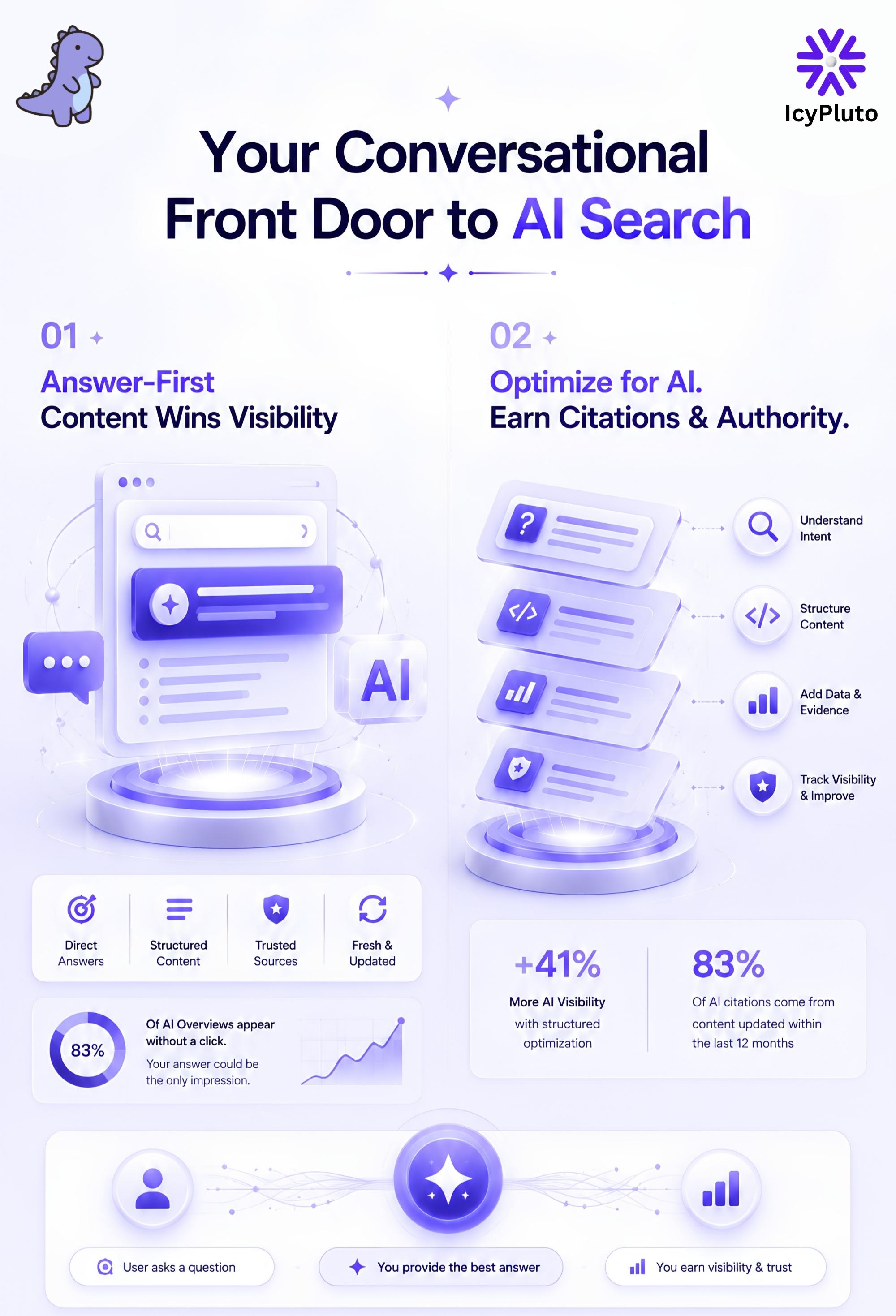
The way people search is changing fast, and conten...
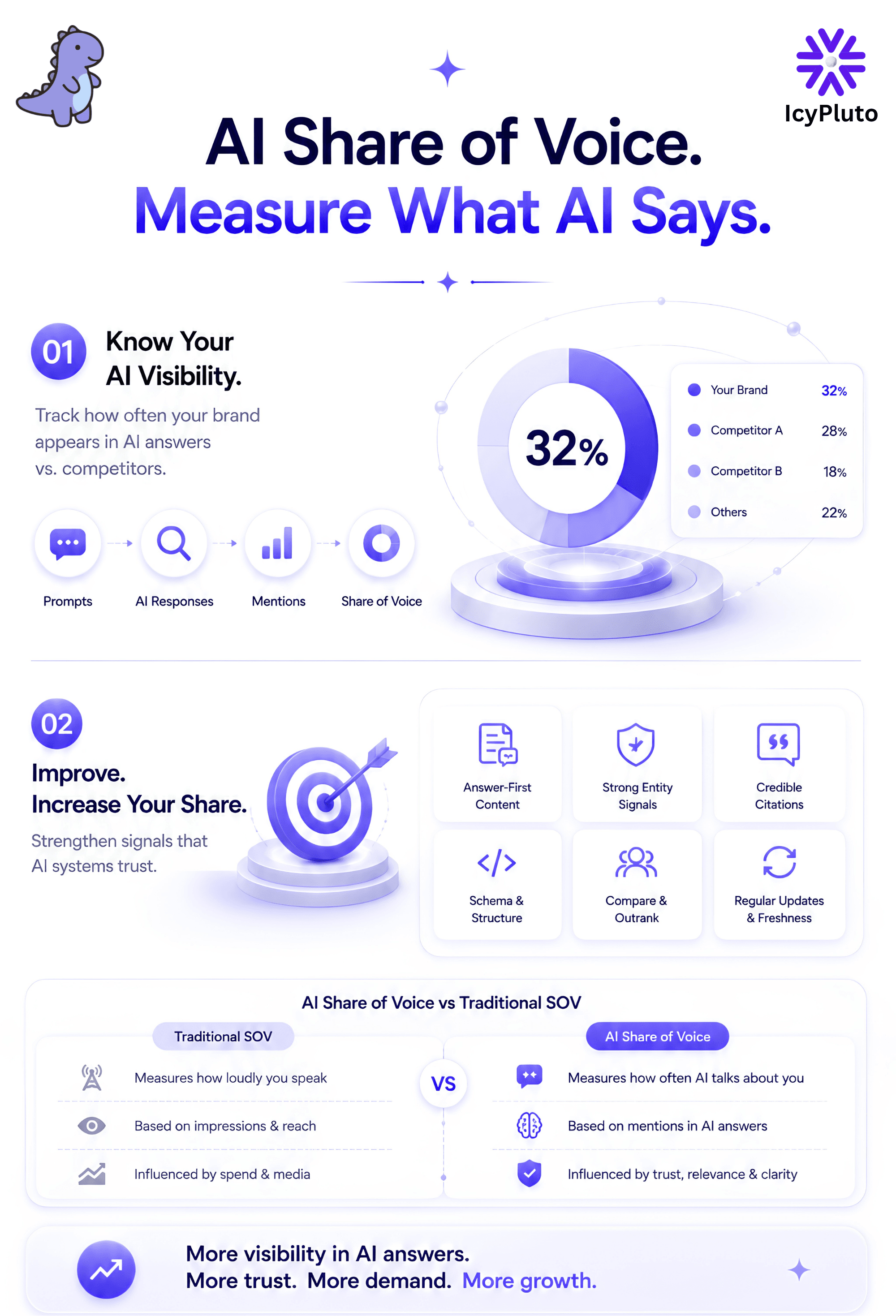
AI share of voice is the new visibility metric bra...
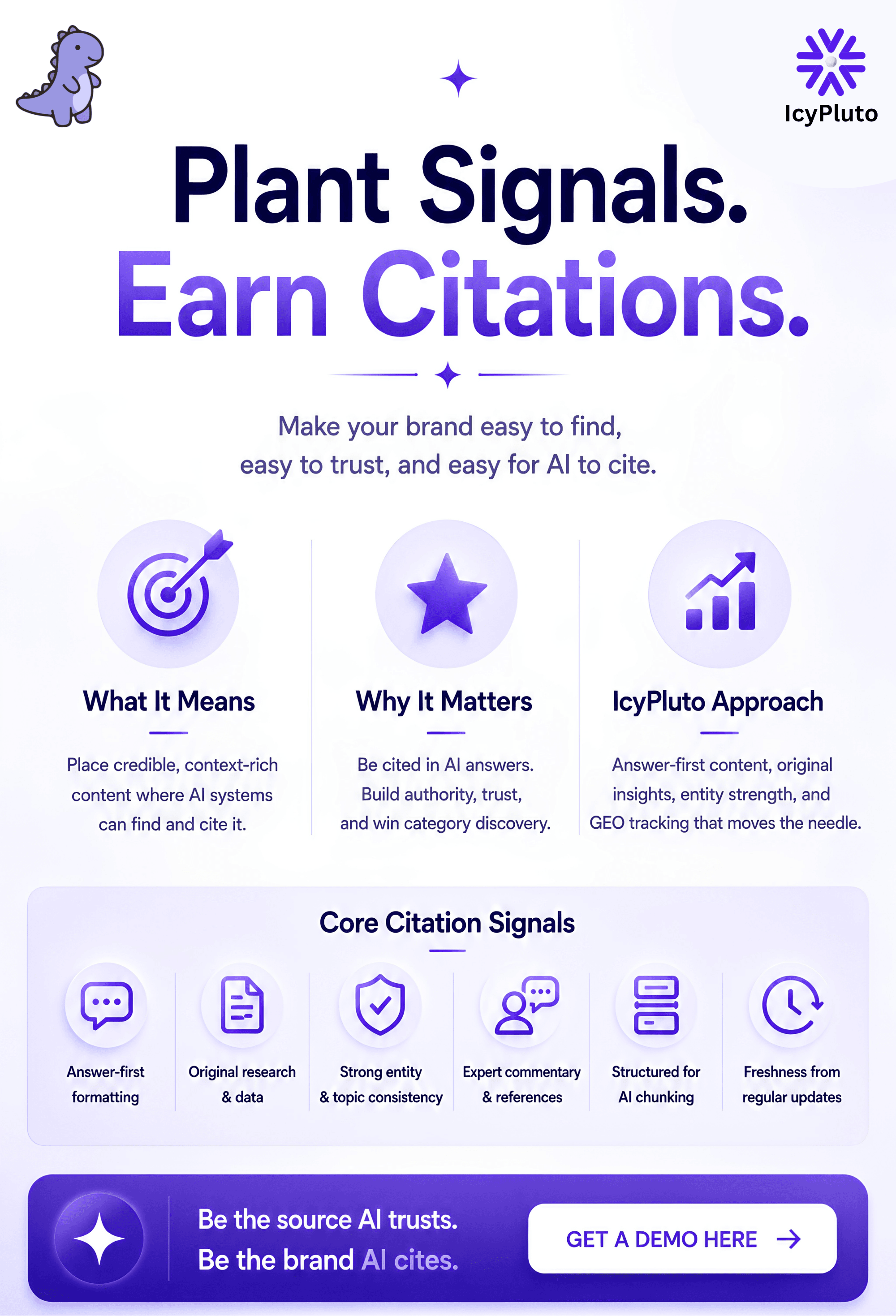
Citation seeding is becoming one of the fastest wa...
Traditional SEO audits were built for Google’s old ranking systems. They focused heavily on backlinks, metadata, and keyword density. But search has changed dramatically. Today, AI-driven search engines, generative search experiences, and answer engines evaluate brands differently. Visibility is no longer just about ranking pages. It is about whether AI systems trust, understand, and cite your brand.
This shift is creating a major problem for businesses. Many brands believe they are “SEO optimized” because they rank for a handful of keywords. Yet they remain invisible inside AI-generated answers, comparison results, conversational search, and recommendation engines. According to Gartner, traditional search engine volume is expected to decline by 25% by 2026 as users increasingly adopt AI assistants and conversational search experiences. That means brands relying only on conventional SEO signals are already falling behind.
This is where AI-powered brand analysis platforms like IcyPluto are changing the game.
Instead of focusing only on rankings, IcyPluto analyzes the broader trust, structure, technical, and content signals that AI systems use to evaluate a brand. The platform identifies weaknesses that directly impact discoverability across Google Search, AI Overviews, generative engines, and AI-driven recommendation systems.
The result is not another generic SEO report. It is an actionable AI visibility framework designed for the future of search.
Most SEO tools still operate using outdated frameworks. They track rankings, backlinks, crawlability, and metadata, which are still important, but incomplete. AI systems now evaluate context, authority, structured relationships, semantic completeness, and trust signals at a much deeper level.
Google’s Search Generative Experience, OpenAI-powered search experiences, and Perplexity-style answer engines prioritize brands that provide machine-readable clarity. According to Statista, over 68% of marketers now believe AI search optimization will become a core part of SEO strategy within the next two years.
This creates a massive gap between “search optimized” and “AI discoverable.”
For example, a company may:
Rank on page one for a keyword
Still fail to appear in AI-generated summaries
Lack structured data needed for AI interpretation
Miss trust indicators that influence citation selection
Have weak content architecture for semantic understanding
IcyPluto addresses these issues directly through AI-powered brand analysis.
The platform evaluates brands across four critical pillars:
Content
Structure
Technical SEO
Trust signals
This approach mirrors how modern AI systems interpret websites.
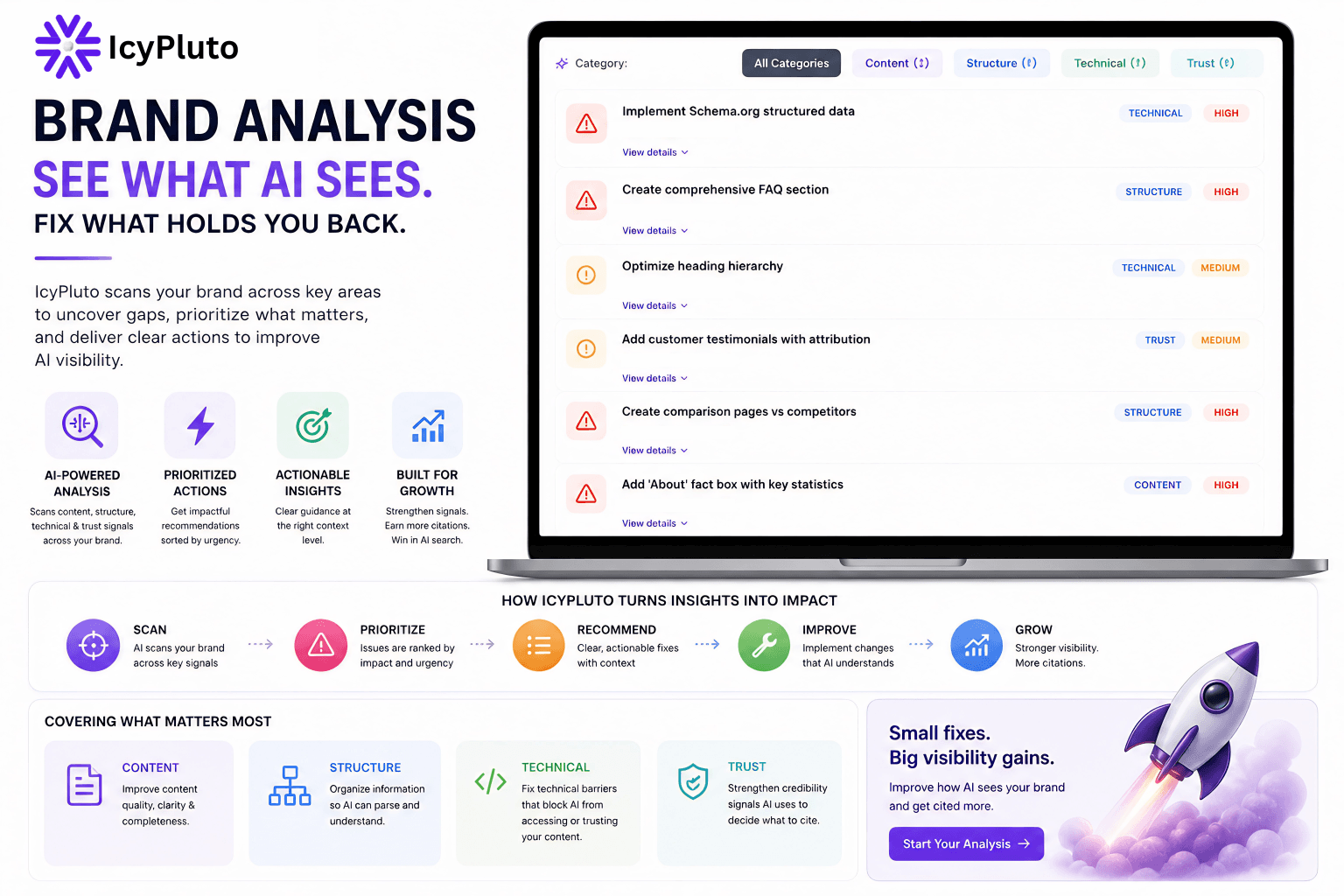
The infographic highlights several high-impact recommendations generated by the platform:
Implement Schema.org structured data
Create comprehensive FAQ sections
Optimize heading hierarchy
Add customer testimonials with attribution
Create competitor comparison pages
Add “About” fact boxes with key statistics
These are not random recommendations. They align directly with how AI models extract, validate, and prioritize information.
AI visibility optimization is rapidly emerging as the next evolution of SEO. Instead of optimizing only for clicks, brands now need to optimize for citations, contextual understanding, and machine trust.
Google AI Overviews already summarize information directly within search results. Microsoft Copilot, ChatGPT browsing experiences, Gemini, and Perplexity similarly generate synthesized answers instead of simple link lists.
Research from BrightEdge found that AI-generated search experiences can reduce traditional organic click-through rates by up to 30% for informational queries. This means brands that are not included in AI-generated responses risk becoming invisible even if they technically rank.
That changes the entire SEO strategy landscape.
Brands now need:
Strong entity recognition
Structured content organization
Semantic completeness
Credibility signals
Contextual clarity
Machine-readable data
This is precisely where IcyPluto positions itself differently from traditional SEO platforms.
The platform scans a brand across multiple AI-relevant dimensions and prioritizes improvements by urgency and impact. Instead of overwhelming users with hundreds of disconnected issues, it surfaces the changes most likely to improve visibility and trust.
This prioritization matters because most SEO teams suffer from execution paralysis. According to HubSpot, 63% of marketers say identifying high-impact SEO actions is more difficult than implementing them.
IcyPluto simplifies that process.
One of the most important recommendations shown in the brand analysis dashboard is implementing Schema.org structured data.
This is not a minor technical optimization anymore. Structured data has become foundational for AI discoverability.
Schema markup helps AI systems understand:
What your business does
Who your audience is
Which products or services you offer
How content relationships connect
Which information is authoritative
Without schema markup, AI systems rely on probabilistic interpretation. With structured data, brands provide explicit machine-readable meaning.
Google has repeatedly emphasized the importance of structured data for rich results and enhanced search visibility. Research from Milestone Inc. found that pages with schema markup can achieve up to 30% higher click-through rates compared to pages without it.
But the impact goes beyond CTR.
AI systems increasingly use structured data to:
Build knowledge graphs
Generate AI summaries
Validate brand credibility
Extract FAQs
Surface reviews and trust signals
The screenshot from IcyPluto specifically flags missing Schema.org implementation as a “high priority” technical issue. That reflects modern SEO reality.
In the AI search era, schema markup is no longer optional infrastructure. It is visibility infrastructure.
Another high-priority recommendation shown by IcyPluto is creating comprehensive FAQ sections.
This recommendation matters because FAQ content aligns perfectly with conversational AI search behavior.
Users increasingly search using:
Natural language
Full questions
Conversational prompts
Voice search queries
According to Google, over 27% of the global online population uses voice search on mobile devices. Simultaneously, conversational AI usage continues growing rapidly across search interfaces.
FAQ sections help brands:
Capture long-tail search intent
Improve semantic coverage
Increase topical depth
Create machine-readable Q&A pairs
Improve featured snippet opportunities
AI systems love structured question-and-answer formats because they mirror how generative models retrieve and synthesize information.
Yet most brands still underinvest in FAQs. They either create shallow sections or ignore them entirely.
IcyPluto recognizes this gap and prioritizes FAQ expansion because AI search rewards completeness.
The best FAQ strategies now include:
Customer objections
Industry comparisons
Pricing explanations
Technical implementation questions
Use case scenarios
ROI-focused queries
This type of depth improves both search visibility and conversion performance.
One of the most overlooked aspects of modern SEO is trust optimization.
AI systems increasingly evaluate:
Brand credibility
Expertise indicators
Real-world validation
Reputation consistency
Authoritativeness
This explains why IcyPluto highlights recommendations like:
Customer testimonials with attribution
About sections with statistics
Competitor comparison pages
These elements strengthen what Google calls E-E-A-T:
Experience
Expertise
Authoritativeness
Trustworthiness
A 2023 survey from Edelman found that 63% of consumers trust brands more when they provide transparent proof points, data, and customer validation. AI systems similarly favor content with verifiable trust indicators.
For example:
Testimonials validate claims
Statistics increase factual confidence
Comparisons improve contextual understanding
Attribution strengthens credibility
Most businesses focus heavily on publishing new content while ignoring trust architecture. That is a major strategic mistake.
AI search systems are not just ranking pages. They are evaluating confidence.
IcyPluto’s trust-focused analysis directly addresses this emerging SEO reality.
Modern AI systems process content differently from traditional search crawlers.
Heading hierarchy, semantic relationships, content grouping, and contextual organization now influence how AI models interpret information.
This explains why IcyPluto flags “Optimize heading hierarchy” as a medium-priority technical recommendation.
Poor content structure creates several problems:
AI struggles to understand topical relationships
Semantic interpretation weakens
Featured snippet eligibility drops
Information extraction becomes inconsistent
According to SEMrush, properly structured long-form content can improve engagement metrics by over 35% and significantly increase featured snippet acquisition rates.
Strong content architecture includes:
Clear H1-H2-H3 relationships
Semantic keyword clustering
Logical information flow
Structured subsections
Context reinforcement
AI models interpret content contextually, not just keyword-by-keyword.
This is why semantic organization matters more than ever.
IcyPluto’s analysis framework helps brands identify structural weaknesses before they impact visibility.
One particularly smart recommendation from the platform is creating comparison pages versus competitors.
Comparison content performs exceptionally well because it captures high-intent users already evaluating solutions.
Examples include:
“Platform A vs Platform B”
“Best alternatives to X”
“Why choose Y over competitors”
According to Gartner, B2B buyers now spend only 17% of the purchase journey speaking directly with vendors. Most research happens independently through search and AI-driven discovery.
That means comparison pages influence buying decisions earlier than ever.
Well-optimized comparison pages:
Improve commercial-intent traffic
Increase trust through transparency
Strengthen topical authority
Capture competitor-branded searches
Improve conversion rates
AI systems also frequently surface comparison-style content because users increasingly ask conversational questions like:
“Which SEO platform is best?”
“What are alternatives to X?”
“Which tool is better for AI visibility?”
IcyPluto recognizes this shift and prioritizes comparison content accordingly.
The biggest insight from IcyPluto’s brand analysis framework is that SEO is evolving into AI-native optimization.
The future belongs to brands that optimize for:
AI interpretation
Machine trust
Entity recognition
Semantic completeness
Conversational discovery
Citation likelihood
This is much broader than traditional keyword optimization.
AI systems increasingly evaluate whether your brand:
Explains concepts clearly
Supports claims with evidence
Organizes information logically
Demonstrates authority
Provides structured context
Small improvements in these areas can create significant visibility gains.
That is why IcyPluto positions its platform around actionable insights rather than vanity metrics.
The infographic captures this perfectly:
Scan
Prioritize
Recommend
Improve
Grow
This workflow reflects the new SEO reality.
Visibility today is not just earned through rankings. It is earned through machine understanding.
AI search is fundamentally changing how brands compete online. Traditional SEO alone is no longer enough to guarantee discoverability. Brands now need structured clarity, trust signals, semantic depth, and AI-readable content ecosystems.
IcyPluto’s AI-powered brand analysis platform addresses these emerging challenges directly. By identifying gaps across content, technical SEO, trust, and structure, the platform helps businesses improve how AI systems interpret and surface their brand.
The most important shift is this:
SEO is no longer just about optimizing for search engines.
It is about optimizing for AI understanding.
Brands that adapt early will gain disproportionate visibility advantages as AI-driven search continues to grow. Brands that ignore this transition risk becoming invisible inside the very systems shaping the future of discovery.