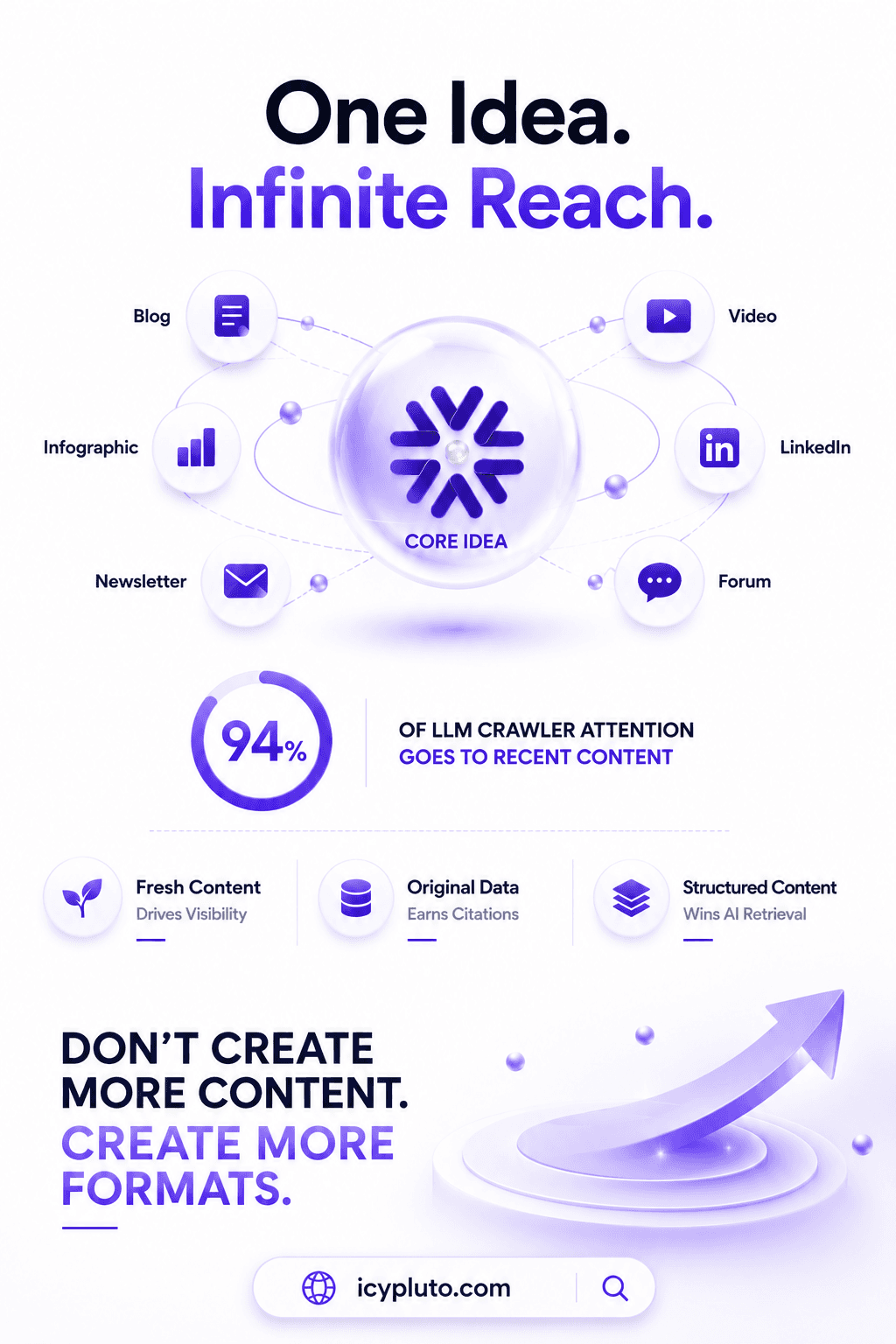
This blog reveals how to maximize visibility in tr...
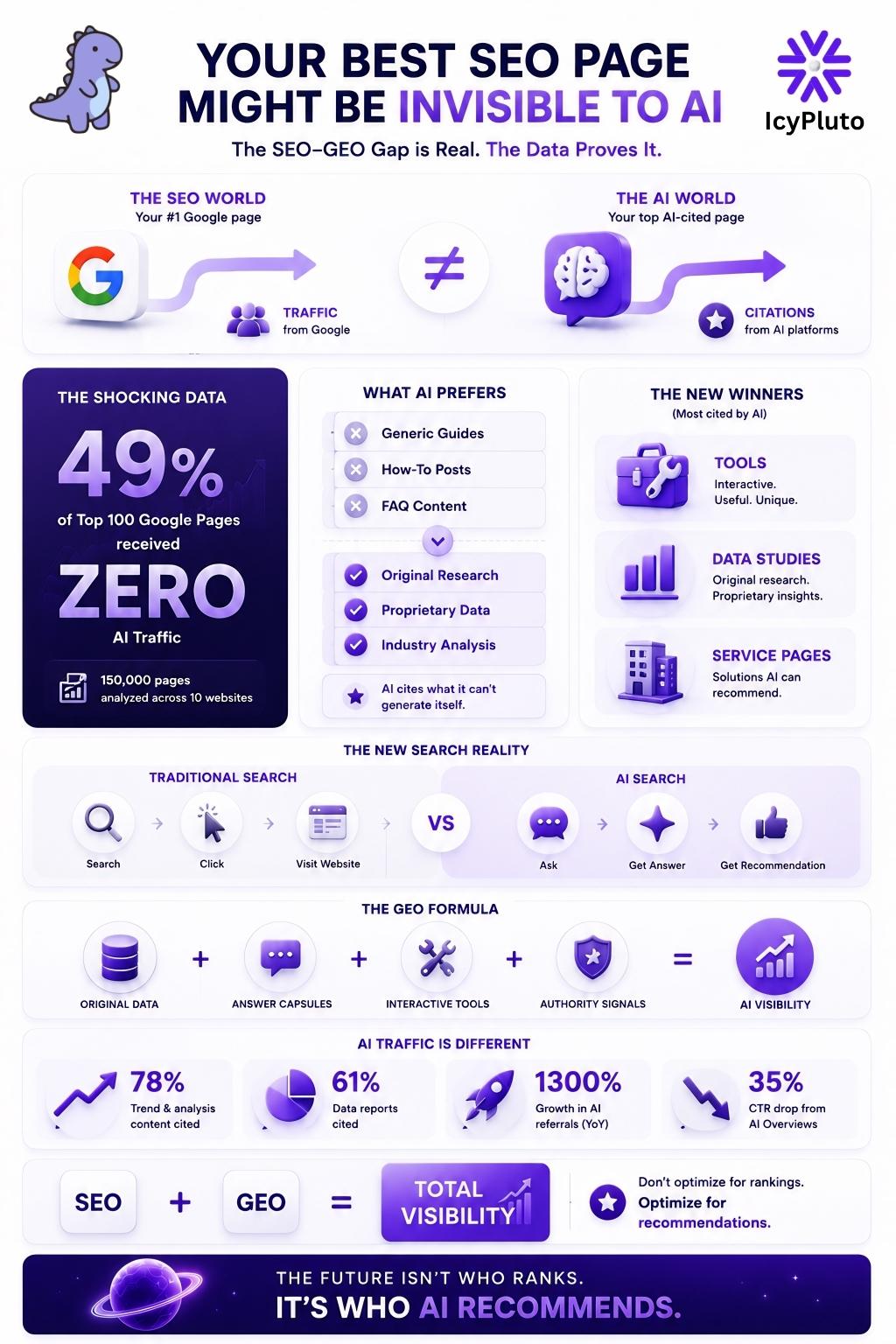
This comprehensive blog post explores the SEO-GEO ...
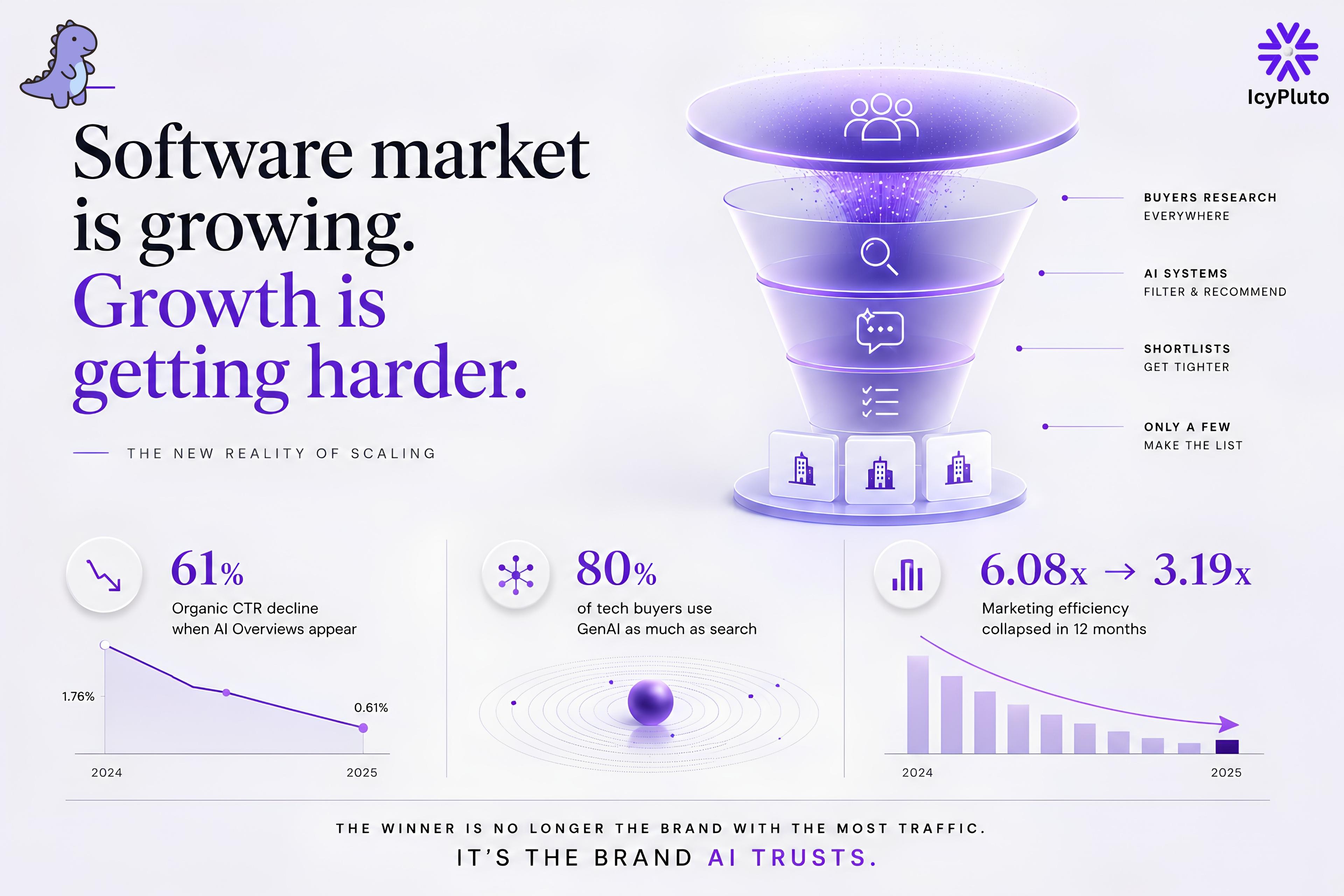
This blog explains how the old growth playbook is ...
For years, the SEO community has worked under the assumption that Googlebot is a single, well-defined crawler — something you can track in your server logs, block via robots.txt, and study in Google's official documentation. That assumption just got a major correction. Google's own Gary Illyes recently sat down for a candid and surprisingly detailed conversation about how Google's crawling infrastructure actually works, and the revelations are both eye-opening and a little unsettling for anyone who thought they had a complete picture of how Google crawls the web.
What emerged from that discussion is this: Googlebot is not one thing. It never really was. It's a name that stuck around from a much simpler era, and today it represents just one of potentially hundreds of crawlers operating across Google's vast internal ecosystem — most of which are never publicly documented, and most of which the average SEO professional has no idea even exist.
At IcyPluto, we keep a close eye on developments like these because understanding how search engines interact with your content is fundamental to any solid digital strategy. Let's break down everything that was shared and what it means for your website.
To understand the current state of Google's crawling, it helps to go back to where the name "Googlebot" came from in the first place. In the early days of Google — think early 2000s — the company had essentially one product and therefore needed just one crawler. That crawler was called Googlebot, and at the time, the name was perfectly accurate.
Things changed fast. Google launched new products one after another. AdWords was among the first to trigger the need for an additional crawler. Then came more products, and with each new product came a new crawler built for a specific purpose. The internal crawling infrastructure expanded dramatically, but the name "Googlebot" never got retired — it just became an umbrella term that increasingly failed to describe what was actually happening under the hood.
Gary Illyes described the situation plainly: Googlebot is technically just one client that communicates with a much larger, internal crawling service. Think of it like a single employee at a massive company — the employee has a name and a role, but the organization they work within is enormous, complex, and largely invisible from the outside.
The internal crawling infrastructure — which Gary jokingly suggested calling "Jack" since he wouldn't share its actual internal name — operates more like a Software-as-a-Service (SaaS) platform within Google. It has API endpoints that different teams across Google can call to request fetches from the internet. When a team makes one of these API calls, they pass parameters such as how long to wait for a response, what user agent to send, and which robots.txt product token to respect. There are default values for most of these parameters, which keeps things manageable, but the flexibility available to internal teams is significant.
This means that when you look at your server logs and see what you believe is "Googlebot," you may actually be seeing traffic from just one of dozens or hundreds of different internal systems — each operating under its own logic, purpose, and configuration.
Here is the part that should grab the attention of every SEO professional, website owner, and digital marketer: the vast majority of Google's crawlers are never documented publicly.
Gary stated outright that there are potentially dozens, if not hundreds, of different internal crawlers operating across Google's many teams and products. Each team that needs to interact with content on the web can essentially spin up a crawler using the internal infrastructure. The crawlers range widely in size and frequency — some are massive and consistent, while others are small and sporadic.
Google does maintain a public-facing page at developers.google.com/search/docs/crawling-indexing/overview-google-crawlers where it documents what it considers the major crawlers. But this list is far from complete, and Gary was transparent about the reason.
The documentation page, like any web property, has limited real estate. Listing every single internal crawler would be impractical. According to Gary, the policy Google applies is relatively straightforward: if a crawler is small enough that it doesn't generate a noticeable volume of traffic across the web, it generally won't be documented. The rationale is that if a crawler is barely touching the internet in any meaningful way, the chances of it being a significant concern for site owners are low.
However, once a crawler crosses a certain threshold — when it starts pulling enough URLs that its fingerprint becomes visible — Gary personally investigates. He mentioned having a monitoring tool that sends him alerts when a crawler or fetcher reaches a specific daily volume. When that alert fires, he reaches out to the team responsible, asks what the crawler is doing and why, and then makes a judgment call about whether it should be added to the public documentation.
This is a notably manual and reactive process for something as fundamental as web crawling. It also means that during the period between a crawler becoming active and Gary reviewing it, that crawler is operating without any public acknowledgment at all.
One of the more technical but genuinely useful pieces of information Gary shared was the distinction between what Google internally calls "crawlers" and "fetchers." These are not interchangeable terms, and understanding the difference helps clarify why Google's interaction with the web is so much more varied than most people realize.
Crawlers, in Google's framework, operate in batch mode. They run continuously for a particular team, pulling a constant stream of URLs from the internet over time. You don't hand a crawler a single URL — you set it running and it keeps going, processing a queue of targets based on whatever logic governs its operation. Crawlers are designed to be efficient at scale and to work without a human actively supervising each individual fetch.
Fetchers, on the other hand, operate on a one-URL-at-a-time basis. You give a fetcher a single URL, it goes and gets that URL, and returns the result. You cannot hand it a list and walk away — it's designed for individual, targeted retrieval.
The other key distinction Gary highlighted is intent and oversight. Fetchers, by internal policy, should always have a human on the other end waiting for the result. There is a person who triggered the fetch and is actively expecting a response. Crawlers, by contrast, are more autonomous — they run when resources allow and don't require anyone to be standing by for each individual request.
Both crawlers and fetchers fall under the broad umbrella of "Googlebot" as far as the outside world is concerned, but they serve entirely different purposes and operate in entirely different ways. Understanding this distinction can actually be useful when you're analyzing unusual traffic patterns in your server logs or trying to understand why Google is interacting with specific parts of your site.
Now that we have a clearer picture of how Google's crawling actually works, the question for anyone working in SEO or digital marketing is: what do we do with this information? At IcyPluto, we think there are several practical takeaways that should inform how you think about crawl management and technical SEO going forward.
One of the most immediate implications of Google running hundreds of undocumented crawlers is that your robots.txt file may not be doing as complete a job as you think. When you add a disallow rule for Googlebot, you are targeting the well-documented main crawler. But what about the dozens of other internal crawlers that don't share that user agent string? If those crawlers are using different product tokens or simply don't match the rules you've written, your directives may not apply to them.
This doesn't mean you should abandon robots.txt management — it remains an important tool. But it does mean you should think carefully about what you're actually trying to control and whether there are gaps in your current approach.
If you're not already performing regular server log analysis, the existence of undocumented crawlers is a compelling reason to start. Your logs will show you exactly what is hitting your site, at what frequency, and with what user agent. Unusual traffic that doesn't match known Googlebot user agents might previously have been dismissed as spam or irrelevant bots — now, some of that traffic might be legitimate internal Google systems that simply haven't made it into the documentation yet.
Identifying these patterns gives you a more complete picture of how Google is actually interacting with your content, not just how it's supposed to be interacting based on documentation.
Crawl budget has always been a concern for large websites, but it takes on a different dimension when you consider that multiple internal Google systems might be crawling your site simultaneously. If you have a large site and you're trying to optimize how efficiently Google crawls through it, you need to account for the possibility that different parts of your site are being accessed by different crawlers for entirely different purposes.
This reinforces the importance of a clean site architecture, fast server response times, and well-structured internal linking. These factors help all crawlers — documented or not — navigate your site efficiently.
There's a broader conversation to be had here about transparency between Google and the SEO community. Google has made real efforts over the years to document how its systems work, and Gary's candid discussion of the crawling infrastructure is genuinely appreciated. But the acknowledgment that hundreds of crawlers exist without any public documentation is also a reminder of how much we still don't know.
For brands, agencies, and independent SEOs trying to build sound technical strategies, this matters. Every time Google expands its internal toolset without documentation, there's a potential gap in the understanding that the broader community is working with. That gap can lead to misattributed traffic, incorrect crawl analysis, and strategy decisions based on an incomplete picture.
At IcyPluto: Cosmos' First AI CMO, we believe that staying informed about the technical realities of search is just as important as creating great content and building strong links. The search landscape is not static, and the players operating within it — even the major ones — are far more complex than they appear from the outside.
When Google's own team confirms that there are systems running at scale that aren't documented, that's not a reason to panic. It is, however, a very good reason to build technical practices that are robust, adaptable, and not overly reliant on any single assumption about how search engines behave.
Whether you're managing a small blog or a large enterprise website, the fundamentals remain the same: fast performance, clear architecture, relevant content, and a proactive approach to understanding how your site interacts with the broader web ecosystem. These foundations hold regardless of which specific Googlebot variant is doing the crawling.
To summarize the most important points from this development:
Google's crawling infrastructure is a large internal SaaS-style system that many different teams access via API. The name "Googlebot" is a legacy term that now refers to just one of many clients interacting with that infrastructure. There are potentially hundreds of internal crawlers and fetchers operating across Google's various products, and the overwhelming majority of them are never publicly documented.
Documentation decisions are made based on traffic volume thresholds. If a crawler is small, it won't be listed. When a crawler grows large enough to be noticeable, Gary Illyes investigates and decides whether to document it. The distinction between crawlers (batch, continuous) and fetchers (single URL, human-supervised) is also meaningful for understanding the variety of ways Google interacts with web content.
For SEOs, this is a reminder that the visible documentation is not the whole story, and that building technical strategies based solely on documented behavior may leave blind spots. Server log analysis, flexible robots.txt thinking, and strong site fundamentals are more important than ever.