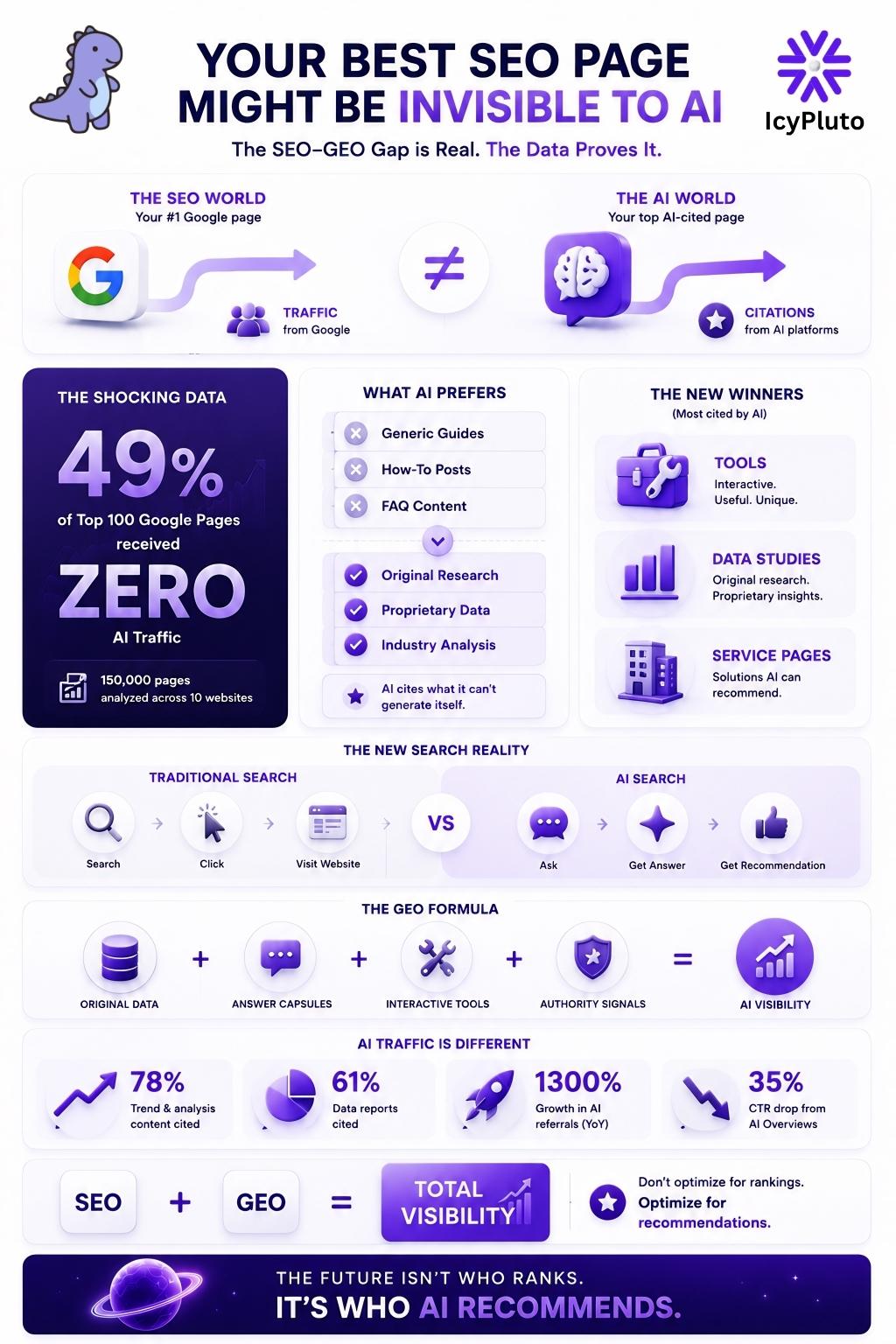
This comprehensive blog post explores the SEO-GEO ...

This blog explores the marketing gaps holding back...
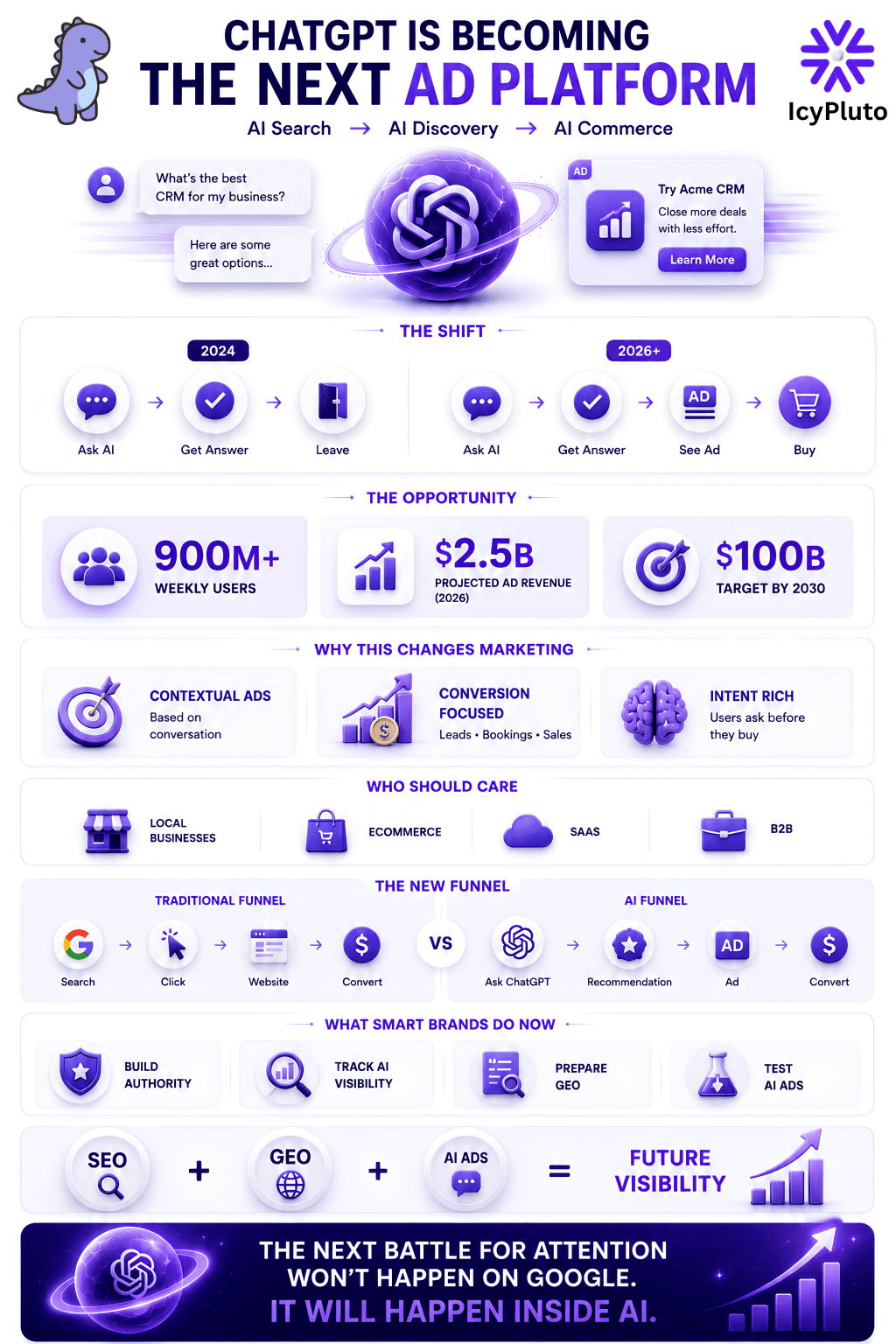
This blog post explores OpenAI's groundbreaking la...
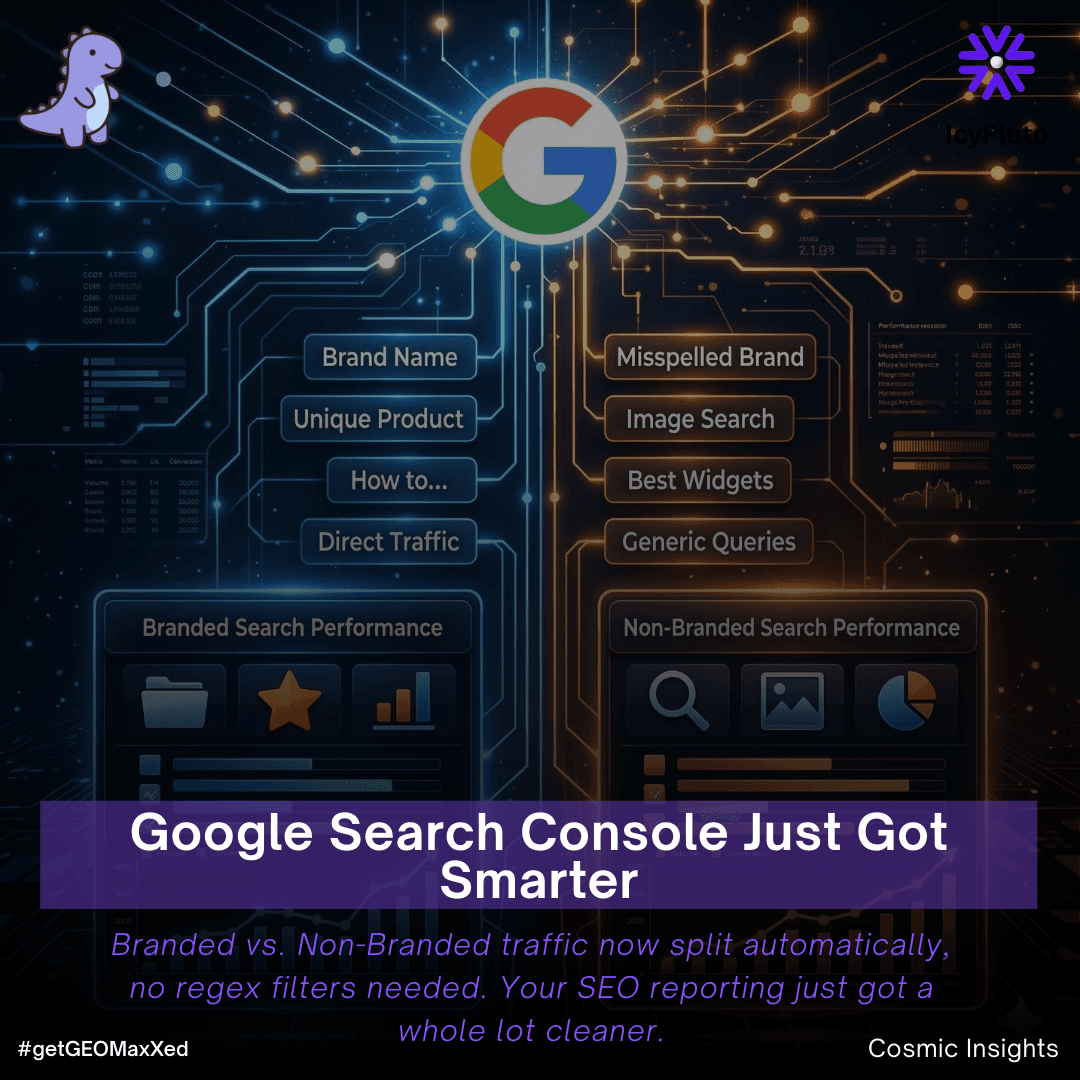
If you've spent any meaningful time managing SEO for a brand, you already know the frustration. You open Google Search Console, pull up the Performance report, and stare at a long list of queries — some featuring your brand name, some completely unbranded. You want to understand how your organic strategy is actually performing beyond just people Googling you by name. But separating those two buckets? Historically, it meant building clunky regex filters, maintaining ever-growing keyword exclusion lists, or just eyeballing the data and hoping for the best.
Well, that headache is now officially a thing of the past — at least for a large portion of webmasters and SEO professionals. Google has officially expanded its branded queries filter inside Search Console, rolling it out to all eligible websites. And if you're serious about understanding your brand's true organic footprint versus your broader content discovery performance, this is a significant development you need to pay attention to right now.
At IcyPluto, where we live and breathe AI-powered marketing strategy, we see this update as far more than a minor platform tweak. It represents a fundamental shift in how marketers can interpret organic traffic data — and we're breaking it all down for you right here.
Before we talk about why this rollout matters so much, it helps to understand exactly what the branded queries filter does and how it works inside Search Console.
Google's Performance report in Search Console shows you data about how your website performs in Google Search — things like the total number of impressions your pages received, how many clicks you earned, your average click-through rate (CTR), and your average ranking position for various search queries. This data is incredibly powerful, but it has always had a core challenge: it mixes together two fundamentally different types of search intent.
The first type is branded search traffic — these are searches where someone already knows your brand exists and actively types your brand name, a variation of it, a product tied specifically to your brand, or even a common misspelling of your name into the search bar. This traffic reflects existing brand recognition. It's people who are already in your orbit.
The second type is non-branded search traffic — these are searches where someone is looking for information, a solution, a product, or a service without specifically referencing your brand. They might find you, but they didn't set out looking for you. This is your true organic discovery traffic, and it's the traffic that most closely reflects how well your SEO strategy is actually performing in capturing new audiences.
Now, Google's branded queries filter allows you to cleanly separate these two groups directly within the Performance report interface. No third-party tools, no regex workarounds, no spreadsheet magic. Just native, built-in segmentation that makes life considerably easier for SEOs and digital marketers at every level.
One of the most interesting aspects of this feature is that Google doesn't rely on a simple keyword match to determine whether a query is "branded" or "non-branded." That approach would be far too blunt and would miss a lot of nuance — think of brand names that are also common words, or brands that operate in multiple languages across international markets.
Instead, Google uses an internal AI-assisted classification system designed to recognize the true intent behind a search query and determine whether it relates to a specific brand. This system is capable of handling a range of complexities that a rule-based approach simply couldn't manage effectively.
For starters, it can recognize brand names in multiple languages. If your brand operates across markets in Europe, Asia, or Latin America, the system understands that users in different regions may refer to your brand differently — and it accounts for those variations. This is a notable capability, particularly for internationally active brands that otherwise struggle to get clean data across multi-language Search Console properties.
The system can also recognize misspellings and common variations of your brand name. If people frequently misspell your company name but still find your site, those queries will still be classified correctly as branded traffic rather than being lumped into the non-branded pool incorrectly. This alone eliminates a significant source of data noise that SEOs have dealt with for years.
Beyond that, the AI can detect queries that refer to unique products or services that are distinctly associated with your brand — even if your brand name doesn't explicitly appear in the query. Think of product names, service names, or campaign-specific terms that, while not your brand name per se, are so closely tied to your brand identity that the system correctly identifies them as branded in nature.
That said, Google has been transparent about one important limitation: some queries may still be misclassified due to the inherently contextual nature of brand detection. Language is complex, context shifts constantly, and even the most sophisticated AI model will occasionally get it wrong. Google acknowledges this openly, which is worth keeping in mind when you're analyzing your segmented data. Don't treat the split as 100% perfect — treat it as a strong signal with a small margin of error.
One more crucial point: this filter is strictly a reporting feature. It has absolutely no effect on how Google ranks your pages. The classification exists purely to help you understand your data better. Your rankings are not touched by anything happening inside this filter.
Now let's talk about the practical implications of this feature — because the real value isn't just in having a cleaner interface. It's in what the data actually tells you once you can separate the signal from the noise.
When you apply the branded filter inside the Search results Performance report, Search Console restricts all the core metrics — clicks, impressions, CTR, and average position — to only the selected query group. You can flip between "Branded" and "Non-branded" views with a few clicks, and the entire report updates to reflect only that segment of traffic. This works across all search types as well, including Web, Image, Video, and News, meaning your segmentation is consistent no matter which content type you're analyzing.
Here's why this matters at a strategic level:
Measuring true SEO performance. One of the most common problems in SEO reporting is that branded traffic inflates the overall performance numbers in a way that masks real SEO health. If your brand is well-known and runs a lot of TV, outdoor, or social media advertising, you're going to generate a large volume of branded searches. Those branded searches are likely to have excellent CTRs and strong positions. But if you're lumping all of that together with your non-branded performance data, you could be telling yourself a very rosy story about your SEO program when the underlying non-branded performance is actually mediocre.
Now that you can cleanly separate the two, you can report on your non-branded performance with precision. You can track how your informational content, product pages, and landing pages are actually performing with audiences who didn't already know you existed. That's the real test of your SEO program.
Understanding brand equity growth over time. On the flip side, tracking your branded traffic separately over time gives you a genuine measure of brand equity growth. Are more people searching for your brand name month over month? Is branded search volume trending upward after a marketing campaign, a product launch, or a PR initiative? This data becomes a leading indicator of how well your brand-building efforts are working in the real world. For teams at agencies or in-house marketing departments trying to quantify the ROI of brand marketing, this is genuinely powerful.
Spotting unexpected branded queries. When you dig into the branded query list, you might discover that people are searching for brand-adjacent terms you hadn't thought about — things like your brand name combined with a competitor comparison, or your brand name paired with a specific use case. These queries are golden because they tell you exactly what's on the minds of people who are already aware of you. You can use that intelligence to shape content, FAQ pages, or even product positioning.
Improving CTR strategies for non-branded pages. Once you can isolate non-branded performance, you'll get a clearer view of which pages have low CTRs relative to their positions. If a page ranks in position 3 for a non-branded query but has a CTR that's well below average, that's a clear signal to test a new meta title and description. This level of granularity simply wasn't accessible before without a lot of manual filtering effort.
Beyond the changes to the Performance report itself, Google has also added a new card to the Search Console Insights report that specifically surfaces a breakdown of clicks between branded and non-branded traffic. This is a welcome addition because the Insights report is designed to give webmasters a high-level, digestible view of their site's performance without requiring them to dive deep into filters and segments.
The new card presents this brand vs. non-brand click split in a way that makes it easy to quickly assess the health of your organic presence. More specifically, Google frames this data in the context of brand recognition — helping site owners understand the ratio of traffic coming from users who already know the brand versus traffic coming from users who are discovering the site for the first time through a generic, non-branded search.
This distinction is fundamental to how you should be thinking about your content strategy and your marketing spend allocation. A site that receives 90% of its organic clicks from branded queries is essentially living off its existing reputation — it's not building a new audience through search. Conversely, a site skewed heavily toward non-branded traffic may have excellent content reach but a weaker brand presence. The sweet spot, naturally, is a healthy and growing mix of both.
For brands working with agencies or using reporting tools to communicate performance to executives, this new Insights card provides a clean, simple visual that tells a compelling story without requiring a 10-minute explanation of how to read the Performance report.
At IcyPluto, we believe this kind of at-a-glance intelligence is exactly where digital marketing analytics should be heading — less noise, more signal, and data that connects directly to business outcomes rather than just platform metrics.
Google has confirmed that the branded queries filter is now live for all eligible sites, but that word — eligible — carries some important weight. Not every website that uses Search Console will automatically have access to this feature. There are minimum thresholds in place relating to query volume and impression counts that a site needs to meet before the filter becomes available in its account.
The reason for these thresholds is fairly straightforward: for the branded vs. non-branded classification to be statistically meaningful and accurate, there needs to be a sufficient volume of data for Google's AI system to work with. A website that receives only a handful of search impressions per month simply doesn't generate enough signals for the system to make reliable classifications. In those cases, surfacing the filter could actually be misleading rather than helpful.
If you're managing a relatively new site, a niche property with low search volume, or a local business with limited organic reach, you may not see the filter appear in your Search Console just yet. That doesn't mean you never will — as your site grows in search visibility and accumulates more data over time, you should eventually cross the threshold into eligibility.
For those of you managing larger properties — established brands, e-commerce platforms, media publishers, or multi-location businesses — there's a good chance you already have access or will see the filter activated in the very near future if it hasn't appeared already. The rollout is live and ongoing.
The most practical advice here is to check your Search Console Performance report today. If the branded filter option is available, start using it immediately to establish a baseline. The sooner you start tracking this segmented data, the more meaningful your trend analysis will be six months from now.
At IcyPluto, we've always believed that the future of marketing lies at the intersection of AI intelligence and human strategy — and Google's expansion of the branded queries filter is a perfect example of that philosophy in action. Google is using machine learning to do something that used to require manual effort, specialized tools, and significant analyst time. And it's making the output available natively, for free, inside a platform that virtually every webmaster already uses.
That democratization of data is significant. It means smaller teams, independent creators, early-stage startups, and growing brands now have access to a level of search intelligence that was previously the domain of well-resourced enterprise SEO teams working with expensive analytics platforms.
But having access to the data is only half the battle. The other half is knowing what to do with it. That's where an AI-first marketing approach becomes your competitive edge. When you understand your branded vs. non-branded performance split, you can feed that understanding back into your content strategy, your paid media decisions, your PR planning, and your brand investment choices in ways that compound over time.
Think of it this way: if your non-branded organic traffic is declining while your branded traffic holds steady, that's a signal that your content and SEO program needs attention — even if your overall traffic numbers look fine on the surface. Conversely, if your branded traffic is stagnant despite heavy marketing investment, that might tell you something important about brand recall and search behavior that your campaign metrics alone aren't surfacing.
The brands and marketing teams that learn to read these signals intelligently — and act on them quickly — will be the ones that build durable, compounding organic growth rather than constantly chasing algorithm updates.
Google's decision to roll out the branded queries filter to all eligible sites in Search Console marks a genuinely meaningful moment for the SEO and digital marketing industry. It removes a long-standing data challenge that required workarounds, simplifies a crucial segmentation that every brand should be doing, and layers in AI-assisted classification that handles the hard parts automatically.
For SEO professionals, this is a tool you should integrate into your regular reporting workflow immediately. For CMOs and marketing leaders, this is a new lens through which to evaluate the real health of your organic channel — separate from the brand equity you've already built. And for everyone in between, this is a reminder that Google continues to invest in making Search Console a genuinely useful tool for understanding how the world finds your business.
Stay tuned to IcyPluto for more breakdowns, strategies, and AI-powered insights that keep you ahead of the curve in the ever-shifting world of digital marketing.