
This blog explains how the old growth playbook is ...
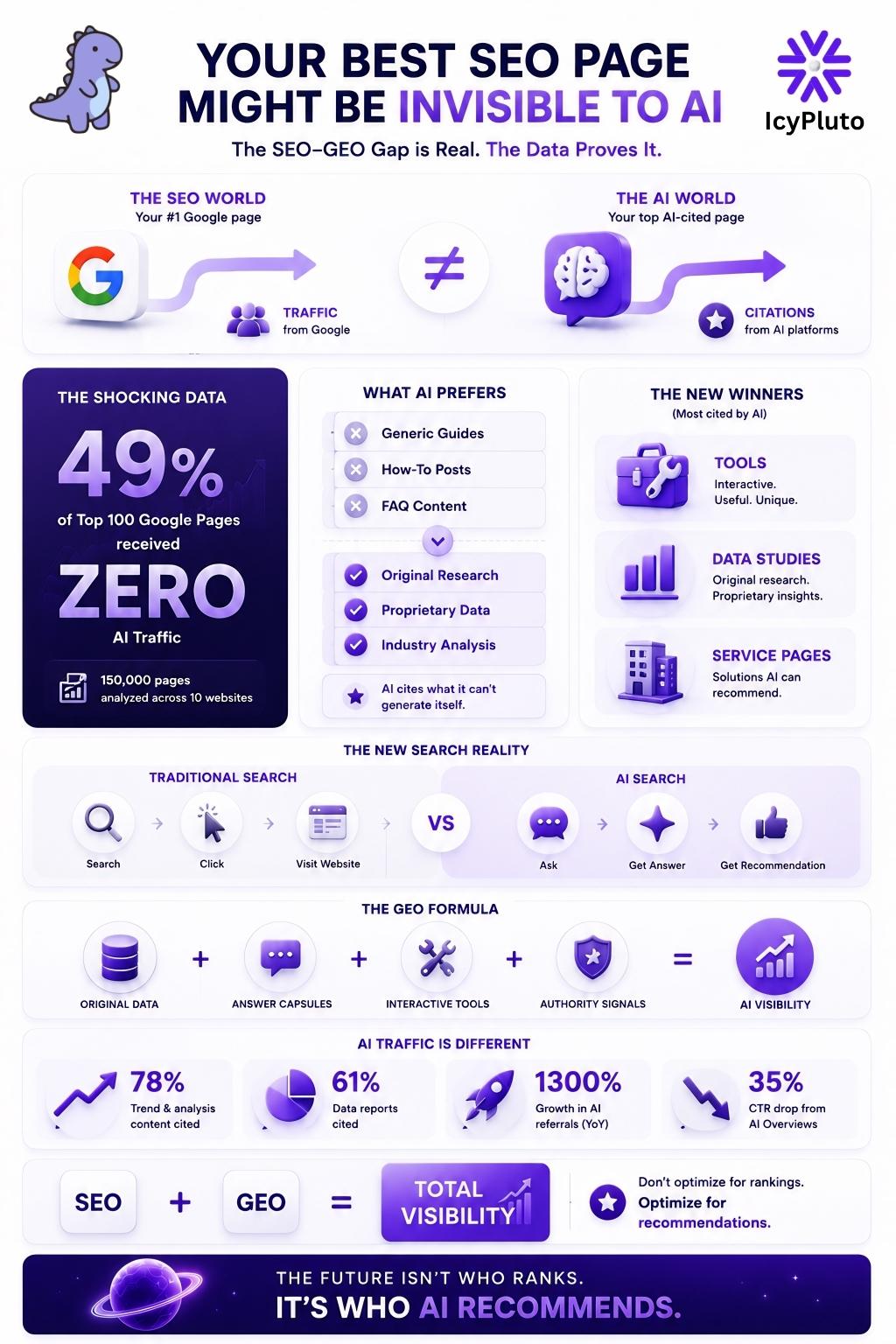
This comprehensive blog post explores the SEO-GEO ...
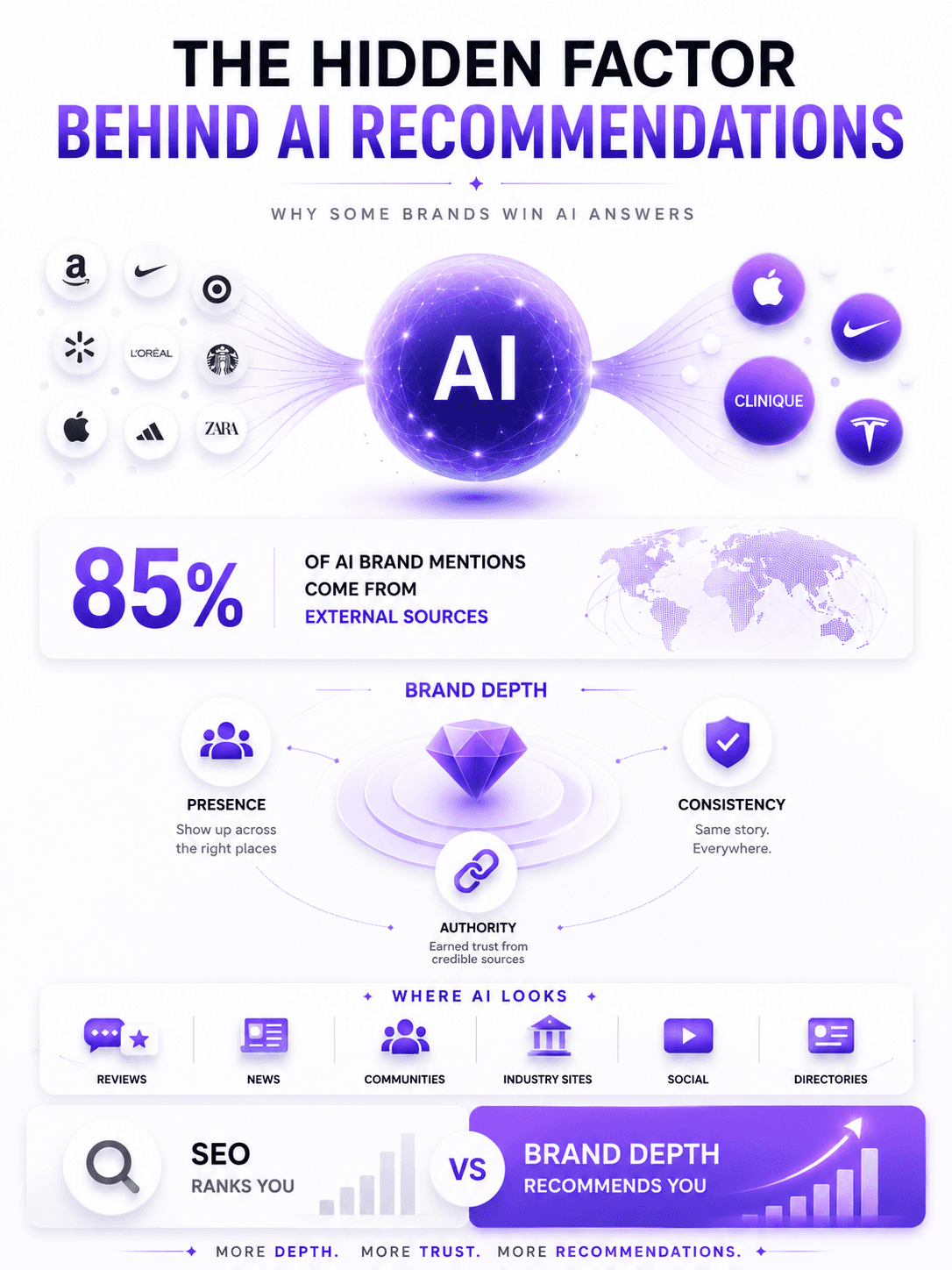
This blog post reveals why brand depth-the density...

For years, web developers and SEO professionals operated under a cautious assumption — that using JavaScript heavily on a website could negatively affect how Google crawled and indexed their pages. That concern was not baseless; it came directly from Google's own documentation. However, Google has now officially removed that warning, calling it "out of date," and the ripple effects of this decision are already being felt across the SEO and web development communities worldwide.
This isn't just a minor documentation cleanup. It's a signal — a clear, deliberate signal — from Google about how far its crawling and rendering technology has advanced. And for anyone building or optimizing a website in 2026, understanding this shift is not optional. It is essential.
At IcyPluto, where we operate at the intersection of AI-powered marketing intelligence and digital strategy, we believe staying ahead of search engine evolution is one of the most powerful competitive advantages a brand can possess. This update is one of those moments that separates the brands who adapt from the ones who lag behind.
Google recently made a significant update to its JavaScript SEO Basics documentation page — and this was no routine edit. The company removed an entire section that had been titled "Design for Accessibility," a segment that had long advised developers to build pages with the assumption that some users — and search bots — might not be using a JavaScript-capable browser.
The removed section carried advice that many in the development community had internalized as best practice: test your site with JavaScript completely disabled, view your website through text-only browsers like Lynx, and be mindful that content loaded via JavaScript might be invisible or difficult to process for Google Search. That last point — the idea that JavaScript could make content "harder for Google to see" — was particularly influential in shaping how developers and SEO specialists approached site architecture for over a decade.
Google's explanation for the removal was direct and clear. In its documentation changelog, the company stated:
"The information was out of date and not as helpful as it used to be. Google Search has been rendering JavaScript for multiple years now, so using JavaScript to load content is not 'making it harder for Google Search'. Most assistive technologies are able to work with JavaScript now as well."
This is a major clarification. Google is explicitly saying that loading content via JavaScript no longer handicaps your website in search rankings. The crawling and rendering engine that powers Google Search has matured to a point where JavaScript-heavy pages are processed with the same reliability as static HTML pages.
To truly appreciate why this removal is significant, it helps to understand what the old section was really saying. The "Design for Accessibility" section in Google's JavaScript SEO documentation was based on an era when JavaScript rendering was unreliable, resource-intensive, and often incomplete. Googlebot, Google's web-crawling bot, used to struggle with content that was loaded dynamically through JavaScript — meaning if your navigation menu, product descriptions, or blog content only appeared after JavaScript executed, there was a very real chance Google simply wouldn't index it.
The advice to use text-only browsers like Lynx was essentially a diagnostic tool: if your content appeared in a text-only browser, it would likely be indexable. If it didn't, you had a problem. This made logical sense in 2015 or even 2018. But it's 2026 now, and Google's rendering capabilities have undergone a complete transformation.
One important nuance in Google's changelog is the mention of assistive technologies. The company noted that "most assistive technologies are able to work with JavaScript now as well." This is a critical distinction — the removal of this section doesn't mean Google is deprioritizing accessibility. Rather, it signals that the technological landscape has shifted. Screen readers, browser extensions, and other assistive tools have evolved dramatically in recent years, and they no longer falter in the way they once did when encountering JavaScript-rendered content.
This is a win for inclusive web design. Developers no longer need to choose between a feature-rich, JavaScript-powered experience and an accessible one. Modern web standards have closed that gap considerably.
This update didn't happen in isolation. It is the fifth update to Google's JavaScript SEO Basics page since December 2024 — and each revision has followed a clear and consistent direction: removing broad, cautionary warnings and replacing them with specific, actionable technical guidance.
Understanding this trajectory helps paint a clearer picture of where Google's documentation philosophy is heading.
When Google first published its JavaScript SEO Basics page, the goal was to educate a developer community that was still grappling with how search engines interacted with modern web frameworks like React, Angular, and Vue.js. The documentation was filled with warnings, red flags, and cautionary notes — all of which were valid at the time.
But documentation that warns developers away from JavaScript-based architectures becomes counterproductive once Google's crawlers can handle that architecture just fine. Keeping outdated warnings in official documentation doesn't just cause confusion — it actively misdirects developers toward unnecessary workarounds, increases development complexity, and can even lead to architectural decisions that reduce site performance for end users.
Google has clearly recognized this. Each of the five updates since December has pruned another layer of outdated caution, leaving behind documentation that reflects the actual capabilities of Googlebot in 2026 rather than the limitations of Googlebot from years prior.
While the specific details of all five updates are technical in nature, the overarching theme is consistent: Google is aligning its public-facing documentation with its actual, current rendering capabilities. Broad statements like "JavaScript can prevent Google from indexing your content" have been replaced — or removed entirely — in favor of guidance that addresses specific edge cases, performance considerations, and tooling recommendations.
This matters enormously for the SEO community, which has long operated partly on the basis of Google's official guidance. When that guidance is updated to remove outdated cautions, it validates practices that developers and SEOs had already been adopting based on practical experience — and gives clearer direction to those who were still holding back.
If you manage a website, run an SEO campaign, or build digital experiences for clients, this change has direct implications for your workflow, your technical strategy, and potentially your entire approach to site architecture.
For years, there was a persistent debate in SEO circles: should you build your website with a server-side rendered (SSR) framework, or is a client-side rendered (CSR) JavaScript-heavy site acceptable for search? Many SEO professionals defaulted to recommending server-side rendering — or at least hybrid approaches like Next.js with SSR — specifically because of concerns about how well Google would handle pure client-side rendering.
Google's updated stance doesn't entirely eliminate that debate, but it substantially shifts the weight of the argument. Developers working with React, Vue, Angular, or similar frameworks can now build client-side rendered sites with far more confidence that Google will render and index their content effectively.
This opens up new possibilities for performance optimization, user experience design, and development efficiency — areas where JavaScript-first frameworks have always had advantages, but where SEO concerns often created friction.
One of the key technological underpinnings of this entire conversation is how Googlebot renders pages. Googlebot today uses a modern Chromium-based rendering engine — a significant upgrade from the older, more limited rendering approach it used in years past. This modern rendering engine can execute JavaScript in much the same way that a regular user's browser does, meaning it processes dynamic content, executes event listeners, and renders components that rely on JavaScript to display.
This is the technical reality that makes Google's documentation removal not just reasonable, but overdue. The rendering gap that once existed between static HTML pages and JavaScript-heavy pages has, for all practical purposes, closed — at least as far as Google Search is concerned.
For SEO professionals conducting technical audits, this update has practical consequences. The checklist item of "disable JavaScript and review the page" — which was essentially Google's own recommended diagnostic — is now officially outdated as a primary SEO concern.
That doesn't mean JavaScript-related checks disappear from audits entirely. But their framing changes. Instead of asking "can Google see this content if JavaScript fails?", the more relevant questions become:
How long does JavaScript execution take? Core Web Vitals, particularly Largest Contentful Paint (LCP) and Interaction to Next Paint (INP), are directly affected by JavaScript performance.
Are there rendering bottlenecks in the JavaScript execution? Excessive JavaScript bundles, render-blocking scripts, and inefficient component hydration can still hurt user experience and indirectly affect rankings.
Is critical content available quickly in the render tree? Even if Google can eventually render everything, content that takes too long to appear may be weighted differently in crawl priority.
These are the nuanced, technically precise questions that reflect where Google's documentation is heading — and where SEO professionals should be directing their attention.
While Google's rendering capabilities have advanced significantly, it would be a mistake to treat this update as an all-clear signal and stop paying attention to JavaScript's role in your SEO strategy. There are several important caveats and ongoing considerations that every digital marketer and developer needs to keep in mind.
Google's advancements in JavaScript rendering are impressive — but they are specific to Google. Other search engines, including Bing, DuckDuckGo, and various regional search platforms, may not render JavaScript with the same reliability or completeness. If your SEO strategy involves multi-engine visibility, or if you operate in markets where alternative search engines hold meaningful market share, JavaScript-related accessibility is still a legitimate concern.
Similarly, third-party bots — including social media crawlers that generate link previews (Open Graph scrapers for platforms like LinkedIn, X, and Facebook), SEO crawlers like Screaming Frog and Ahrefs, and uptime monitoring tools — may not render JavaScript either. Content that relies entirely on JavaScript for its initial display may not preview correctly when shared on social media, which can indirectly harm click-through rates and brand perception.
One of the most practical pieces of advice for anyone managing a JavaScript-heavy website is to use Google Search Console's URL Inspection tool regularly. This tool allows you to see exactly what Googlebot sees after it has rendered a page — including whether all content has loaded correctly, whether there are any rendering errors, and whether the page has been indexed successfully.
The URL Inspection tool essentially gives you a window into Googlebot's perspective on your site, which is invaluable for diagnosing any remaining JavaScript-related indexing issues that may still exist despite Google's improved rendering capabilities.
JavaScript performance isn't just an indexing concern — it's a ranking signal through Core Web Vitals. Large JavaScript bundles, slow Time to Interactive (TTI), and high Total Blocking Time (TBT) can all hurt your Core Web Vitals scores, which Google uses as part of its Page Experience ranking signals.
Removing outdated warnings about JavaScript accessibility doesn't change the fact that bloated, unoptimized JavaScript can degrade user experience and, by extension, search performance. Efficient JavaScript execution, code splitting, lazy loading, and performance budgeting remain just as important as they have always been.
At IcyPluto, as the cosmos' first AI CMO, we've always believed that the brands and marketers who win in search are the ones who understand not just the rules, but the direction the rules are heading. Google's removal of its JavaScript SEO warning is a perfect example of this forward-looking mindset.
The SEO landscape in 2026 is fundamentally different from what it was even three years ago. Artificial intelligence is reshaping how search engines understand content, how marketers strategize for visibility, and how brands connect with their audiences. Google's continuous refinement of its documentation — stripping away outdated cautions and aligning guidance with actual technological capabilities — is part of a broader evolution that benefits everyone who builds and optimizes for the web.
For brands leveraging AI-powered marketing tools and platforms like IcyPluto, this update reinforces a principle we champion consistently: build for users first, and trust that modern technology — including Google's rendering engine — will keep pace. The old paradigm of constraining your website's design and functionality to accommodate the limitations of an outdated crawler is giving way to a new paradigm where rich, dynamic, JavaScript-powered experiences are not just acceptable but encouraged.
This is good news for AI-driven marketing campaigns that rely on dynamic content personalization, real-time data rendering, and interactive user experiences. With Google's rendering capabilities now capable of processing these experiences reliably, the visibility gap that once existed between static and dynamic content no longer applies.
One of the most underutilized competitive advantages in SEO is the habit of monitoring Google's official documentation and changelog regularly. Google's documentation changelog, where this update was announced, is a publicly accessible resource that most marketers never check. But buried within those changelog entries are insights that can reshape strategy, invalidate outdated practices, and reveal emerging priorities that others won't discover until months later.
At IcyPluto, staying on top of these shifts is part of what we do — so that your brand doesn't just keep up with the search landscape, but stays consistently ahead of it.
Google's decision to remove its JavaScript accessibility warning from its official SEO documentation is more than a housekeeping update. It is a declaration that web technology has matured, that the barriers between JavaScript-powered experiences and search visibility have been dismantled, and that the SEO guidance of the past must evolve to reflect the realities of the present.
For developers, this means more freedom to build the kind of rich, interactive experiences that users actually want — without constantly second-guessing how a search bot will interpret the page. For SEO professionals, it means recalibrating audit processes and advisory guidance to move away from JavaScript-as-risk and toward JavaScript-as-performance-variable. And for brands and marketers, it means that a JavaScript-heavy website built for a stellar user experience is no longer inherently an SEO liability.
The message from Google is clear: their technology has caught up. Now it's time for the industry's practices and assumptions to catch up as well.