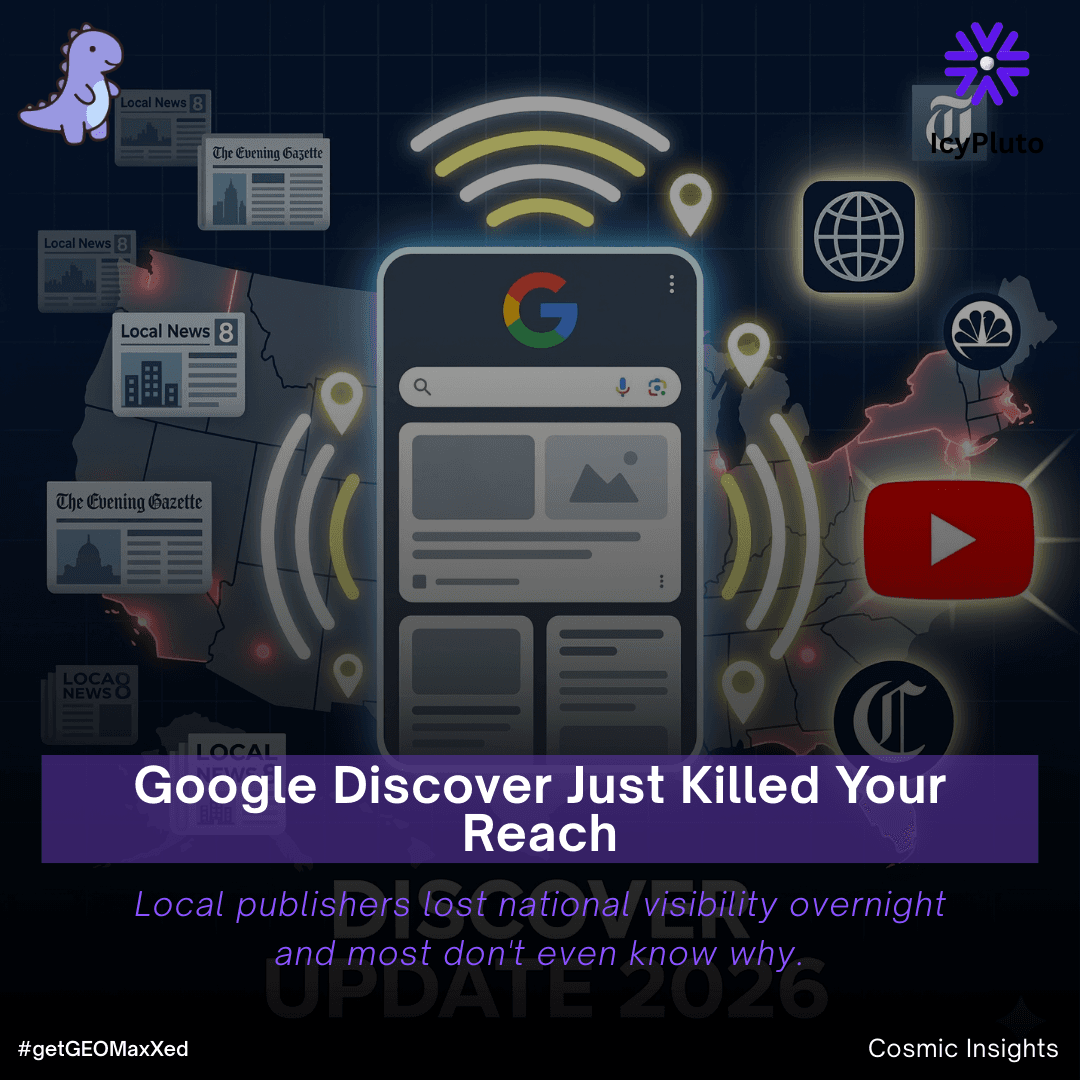
When Google rolled out its February 2026 Discover core update, most of the initial conversation circled around which big-name publishers won or lost visibility. But buried inside the freshest wave of third-party tracking data is a story that deserves far more attention — one that directly impacts regional and local news publishers who had spent years quietly building audiences far beyond their home turf.
Fresh analysis from Discover tracking platform DiscoverSnoop has shed new light on exactly what happened after the update completed, and the picture it paints is nuanced, a little unexpected, and genuinely important for anyone in the content publishing space. At IcyPluto, we've been closely watching how AI-driven platform decisions reshape the content discovery landscape, and this update is a textbook example of algorithmic change creating ripple effects that extend well beyond the intended targets.
The analysis compared publisher performance metrics across two specific time windows — the week immediately before the update kicked off (January 26 to February 1) and the week after the update had fully completed (March 2 to March 8). This is worth noting because a separate earlier dataset, captured mid-rollout, told a slightly different story in some areas — and that difference ends up being quite important when we try to make sense of conflicting data points.
DiscoverSnoop tracked both article placement counts and audience scores for a wide range of publishers. While some platforms saw modest shifts, others experienced dramatic swings that fundamentally changed their standing in the Discover feed.
Among the publishers that suffered the steepest drops, Yahoo stood out the most. The platform lost nearly half of its article placements in the Discover feed and its audience score collapsed by around 62%, sending it tumbling from its former third-place ranking all the way down to ninth. What makes this particularly interesting is that Yahoo's decline in Discover didn't actually begin with this update — the data suggests the downward trend had already been underway since September of the prior year, with the core update effectively accelerating a fall that was already in motion.
Fox News, Fox Business, and Fox Weather all experienced visibility drops exceeding 40%, pointing to a broader systemic shift affecting the Fox property ecosystem rather than isolated incidents. Similarly, Forbes saw a 21% reduction in article placements and a staggering 67% drop in its audience score again, a trend that had been building before the update formally landed.
X (formerly Twitter) also found itself on the wrong side of this update, with article placements falling by roughly 22% and audience engagement declining by about 32%. This is particularly noteworthy because mid-rollout data from a different tracking tool had suggested that X.com posts from institutional accounts were actually climbing in Discover's top 100 during that earlier window. The divergence between the two datasets underscores just how volatile and timing-sensitive these measurements can be.
In stark contrast to the publishers that suffered, YouTube emerged as a clear beneficiary. Article and video placements on the platform grew by approximately 15% in the post-update window. This isn't entirely surprising — it's a well-observed pattern that Google's own properties tend to hold their ground or actively gain ground when core updates shake up the ecosystem. Whether you view that as smart product integration or a structural advantage is a separate conversation, but the data is consistent.
Here is where the story takes a genuinely fascinating turn, and it's the part that should get the most attention from regional publishers, local SEOs, and content strategists alike.
Syracuse.com, a well-known regional news outlet based in New York, lost 36% of its article placements and saw its overall audience score drop by 80%. On the surface, that sounds catastrophic. But when DiscoverSnoop broke the numbers down at the state level, a much more specific pattern emerged. The New York-based audience for Syracuse.com held relatively steady. The losses were almost entirely concentrated in out-of-state feeds — particularly in Florida and California.
A similar pattern showed up for cbs6albany.com, another regional outlet that experienced national reach losses while maintaining a comparatively stable presence in its home-state feed.
When Google announced the Discover core update back in February, the official framing was clear: the update was designed to surface more locally relevant content for users based on where they are. In other words, someone in Texas should see more Texas-focused news in their Discover feed, rather than national outlets dominating the experience.
That part of the intent appears to have worked. But the DiscoverSnoop data suggests the update went further than simply adding local content to regional feeds. It appears to have actively reduced the national reach of publishers whose content is inherently local or regional in scope. There's a meaningful difference between those two outcomes. One adds local content to feeds; the other penalizes local publishers for being local in the first place — at least when it comes to reaching audiences outside their home geography.
This aligns closely with an earlier wave of data, which found that New York-local domains were appearing roughly five times more frequently in New York-based Discover feeds compared to California-based feeds. DiscoverSnoop's post-completion analysis now fills in the other half of that equation: the national visibility that those same publishers had previously enjoyed appears to have dropped sharply once the update concluded.
For publishers who built part of their traffic strategy around being discovered nationally through Discover whether for broader stories, trending topics, or evergreen content — this represents a real strategic recalibration moment.
One of the more intellectually honest aspects of the DiscoverSnoop report is that it directly acknowledges areas where its findings conflict with earlier data from another tracking tool. Understanding these conflicts is essential for anyone trying to make data-driven decisions based on post-update reporting.
One of the more puzzling findings in the DiscoverSnoop data involves a website called Geediting.com. According to DiscoverSnoop's post-completion analysis, this site saw its article placements skyrocket by over 531% and its audience score climb by approximately 900%, making it one of the biggest apparent winners of the entire update.
The catch? More than three-quarters of Geediting's article titles apparently follow the template of "Psychology says…" — a repetitive, formulaic framing that does not easily fit the profile of the kind of expert, authoritative, and trustworthy content that this update was reportedly designed to reward. The site doesn't clearly demonstrate the kind of E-E-A-T (Experience, Expertise, Authoritativeness, Trustworthiness) credentials that align with Google's publicly stated goals for improving content quality in Discover.
The earlier mid-rollout data, on the other hand, had shown a Geediting article dropping from roughly 14th place in the pre-update feed all the way down to around 153rd position. That's a dramatic decline that paints a completely different picture from the post-completion data.
The most plausible explanations are either that the site experienced a mid-rollout dip before recovering significantly once the update fully settled, or that the two tracking platforms are measuring slightly different aspects of Discover distribution and are therefore capturing different realities. Both possibilities are real.
Beyond the confusing case of Geediting, DiscoverSnoop identified several publishers that posted strong gains in the post-update window. Parade.com saw article placements climb by over 200% and audience scores surge by approximately 1,300%. Axios, Fortune, Newsweek, and the Wall Street Journal all posted gains as well, suggesting that established, editorially credible publications with strong brand recognition may have benefited from whatever quality signals the update amplified.
The broader implication is that if you're a publisher looking to understand who this update was designed to elevate, the answer seems to be: trusted, well-established editorial brands with clear expertise signals, strong audience loyalty, and a recognized identity — rather than content farms or formulaic click-oriented sites. Though the Geediting anomaly complicates that narrative meaningfully.
So beyond just understanding what happened, what does any of this mean in practical terms for publishers, SEOs, and content marketers navigating the Discover ecosystem going forward?
If you run a local or regional publication and you've noticed a drop in Discover traffic since the update, the first thing to do is dig into your analytics and break that traffic down by geography. The Syracuse.com case study suggests that the damage may be concentrated in out-of-state audiences rather than being spread evenly across your total Discover performance.
That distinction matters enormously. If your home-state Discover traffic is holding steady while national reach has pulled back, your content quality likely isn't the issue. The algorithmic lens has simply narrowed, and your content is now being filtered by relevance to geography in a more aggressive way than before.
One of the clearest takeaways from the conflict between DiscoverSnoop and earlier mid-rollout data is that measurement timing matters enormously when assessing update impact. A tool that captured data halfway through the rollout may have measured a temporary algorithmic state that shifted again before the update fully settled. A tool measuring post-completion data is working with a more stable picture, but it may miss the full story of volatility that played out during the rollout itself.
Before drawing hard conclusions about winners and losers — whether for competitive benchmarking or strategic planning — always check which measurement window each data source used. Treating any single third-party report as definitive is a mistake; treating post-update data as directional, rather than precise, is the more grounded approach.
Even with the anomalous winners, the broader pattern of who lost visibility — Yahoo, Fox properties, Forbes, formulaic content sites — points toward a continued algorithmic preference for content that demonstrates genuine expertise, editorial credibility, and trustworthy sourcing. This isn't a new theme in Google's algorithm updates, but the Discover-specific application of it is becoming more clearly defined with each successive update.
For brands and publishers investing in content strategy — particularly those building content ecosystems with the help of AI tools and smart editorial frameworks — the signal here is consistent: depth, clarity, and authentic subject-matter authority are what move the needle over time.
Google has not publicly committed to making Discover-specific core updates a regular feature of its algorithm calendar. The February 2026 update remains in a relatively early stage, currently affecting only English-language users in the United States. Google has acknowledged plans to expand the update's reach to additional countries and languages, but no concrete timeline has been provided for that expansion.
For now, the data we have is US-centric, and the patterns we've identified — local content gaining home-region prominence, national aggregators and large media properties losing ground, and YouTube continuing to expand its Discover footprint — reflect a US-specific algorithmic reality. As the update rolls out globally, those patterns may shift, and new winners and losers will almost certainly emerge in different markets.
At IcyPluto, we'll be tracking these developments closely as they evolve. The intersection of AI-driven content distribution, platform algorithmic changes, and content discoverability is exactly the kind of space where staying ahead of the curve gives publishers and brands a meaningful edge. Understanding how Google's Discover feed works — and more importantly, how it's changing — is no longer optional for anyone serious about content reach and organic audience growth.
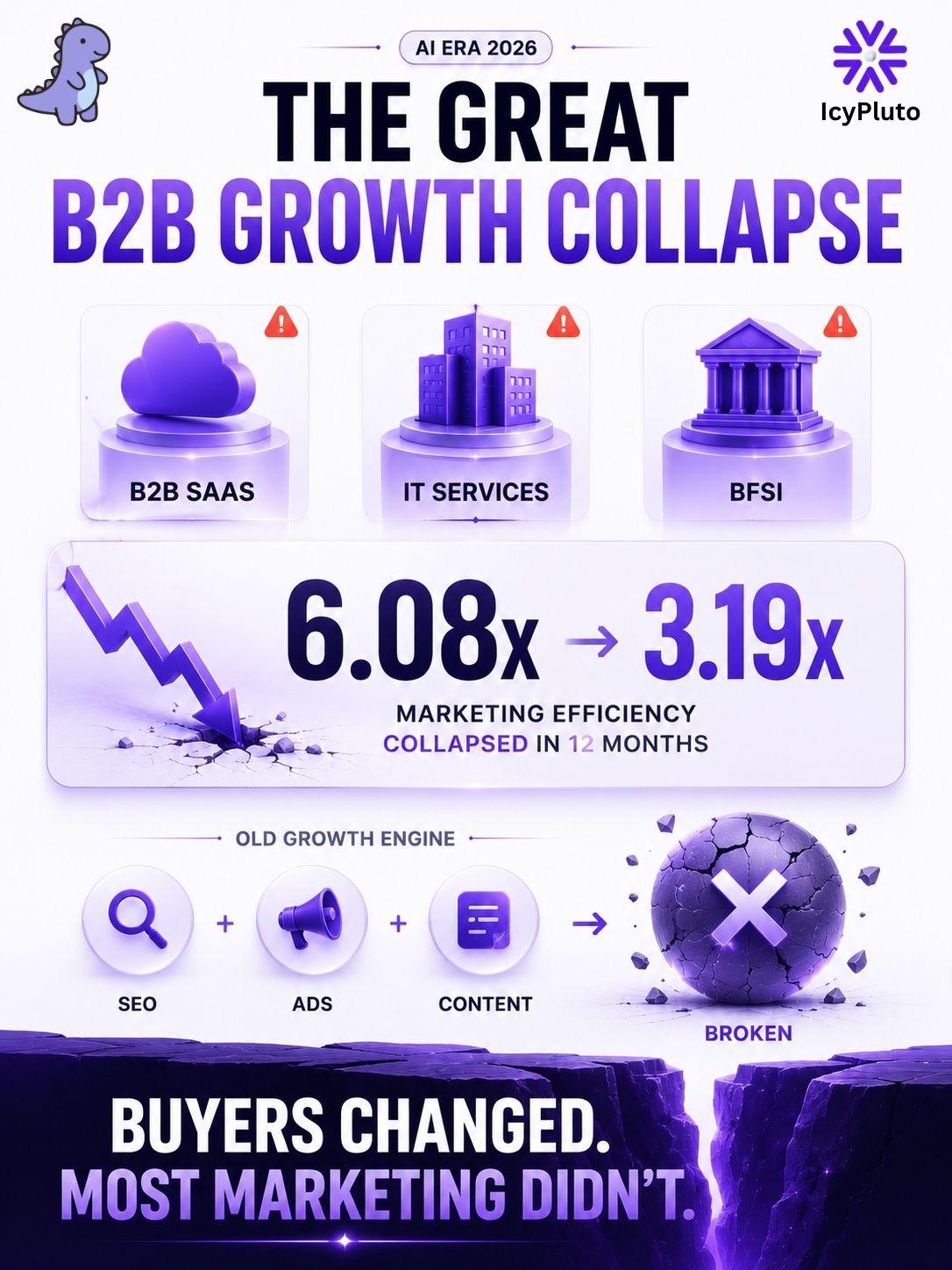
This hard-hitting blog reveals why IT, B2B SaaS, a...
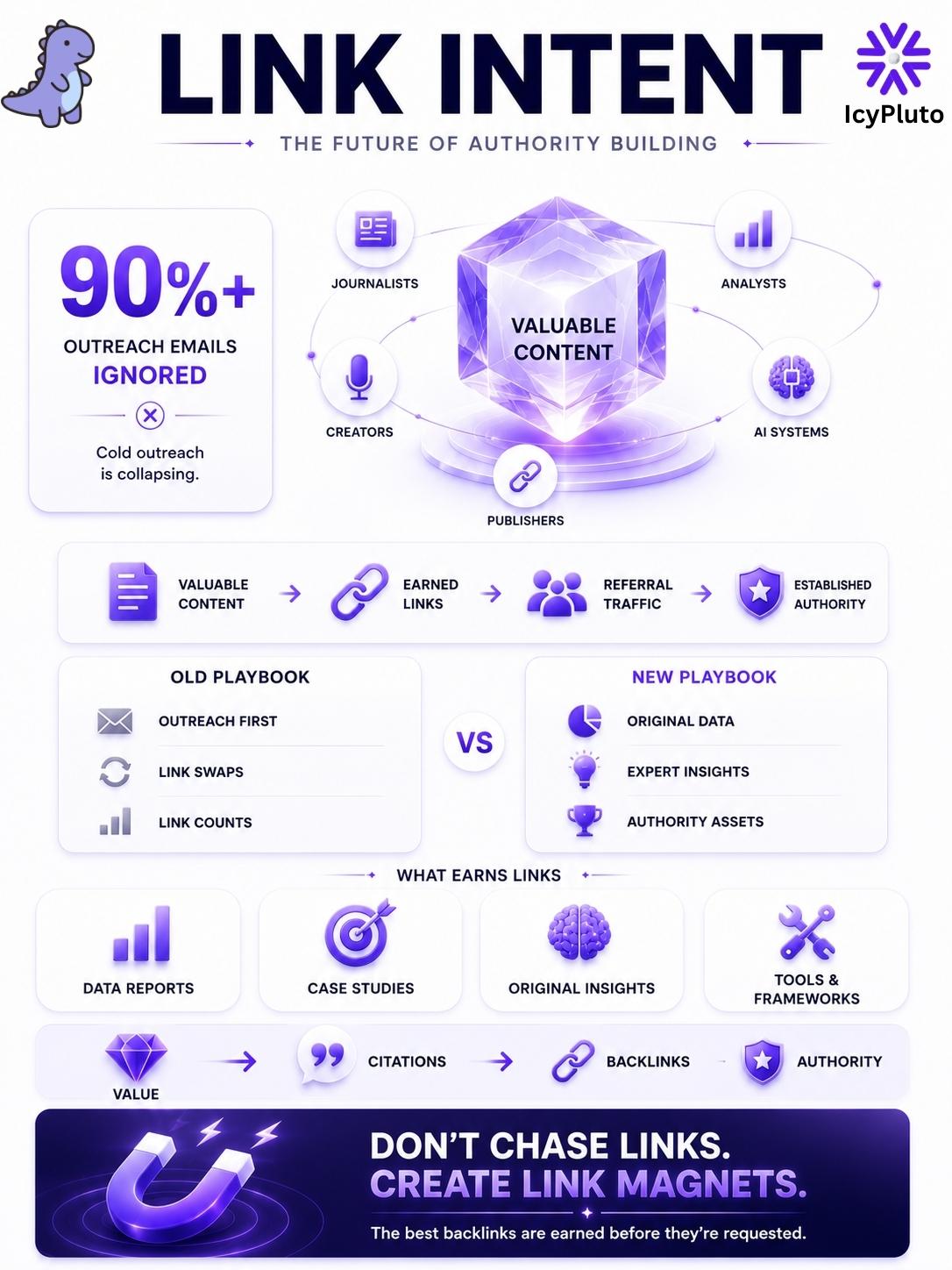
This blog explains how IcyPluto uses link intent—a...
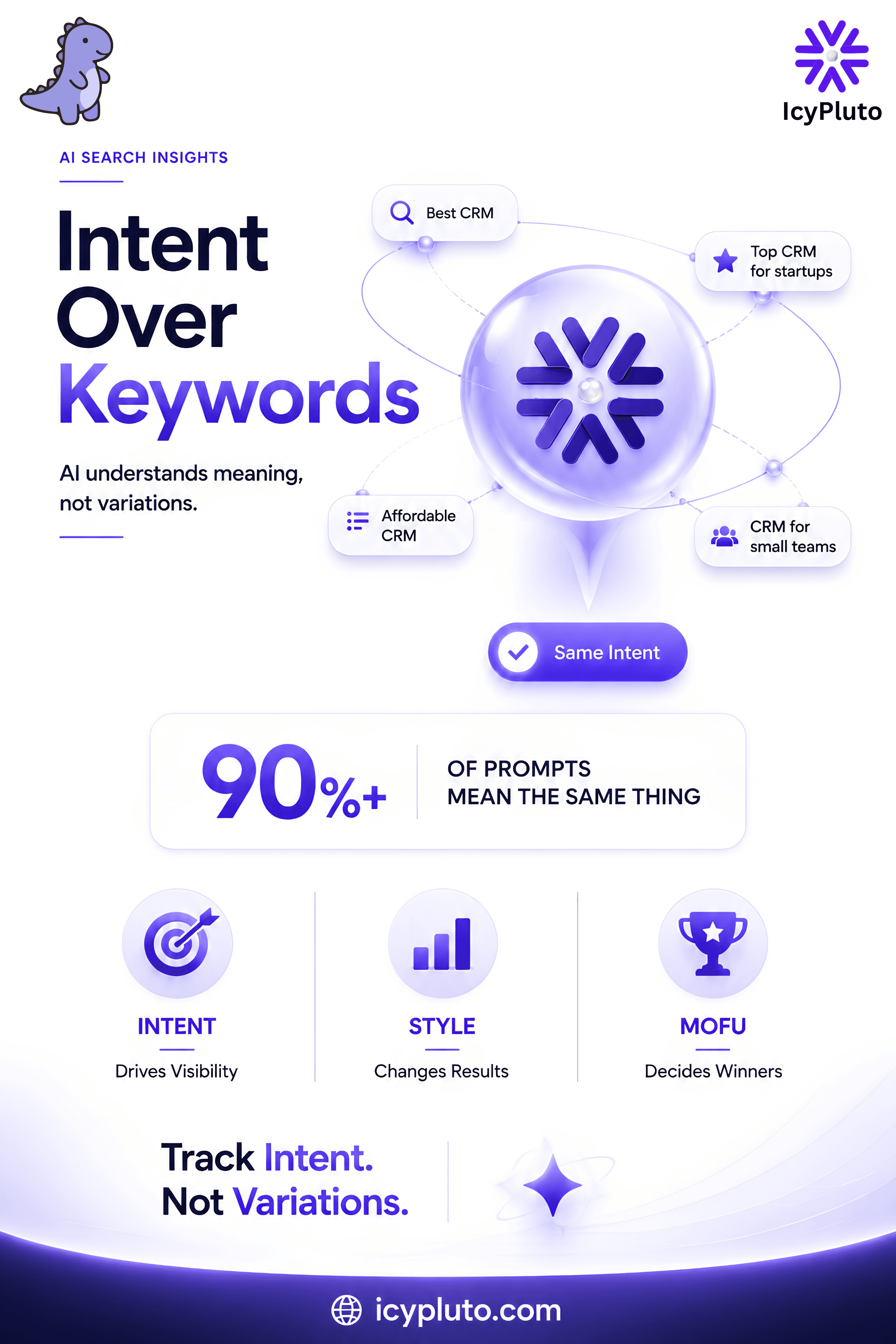
This blog reveals what a massive 37,804 AI respons...