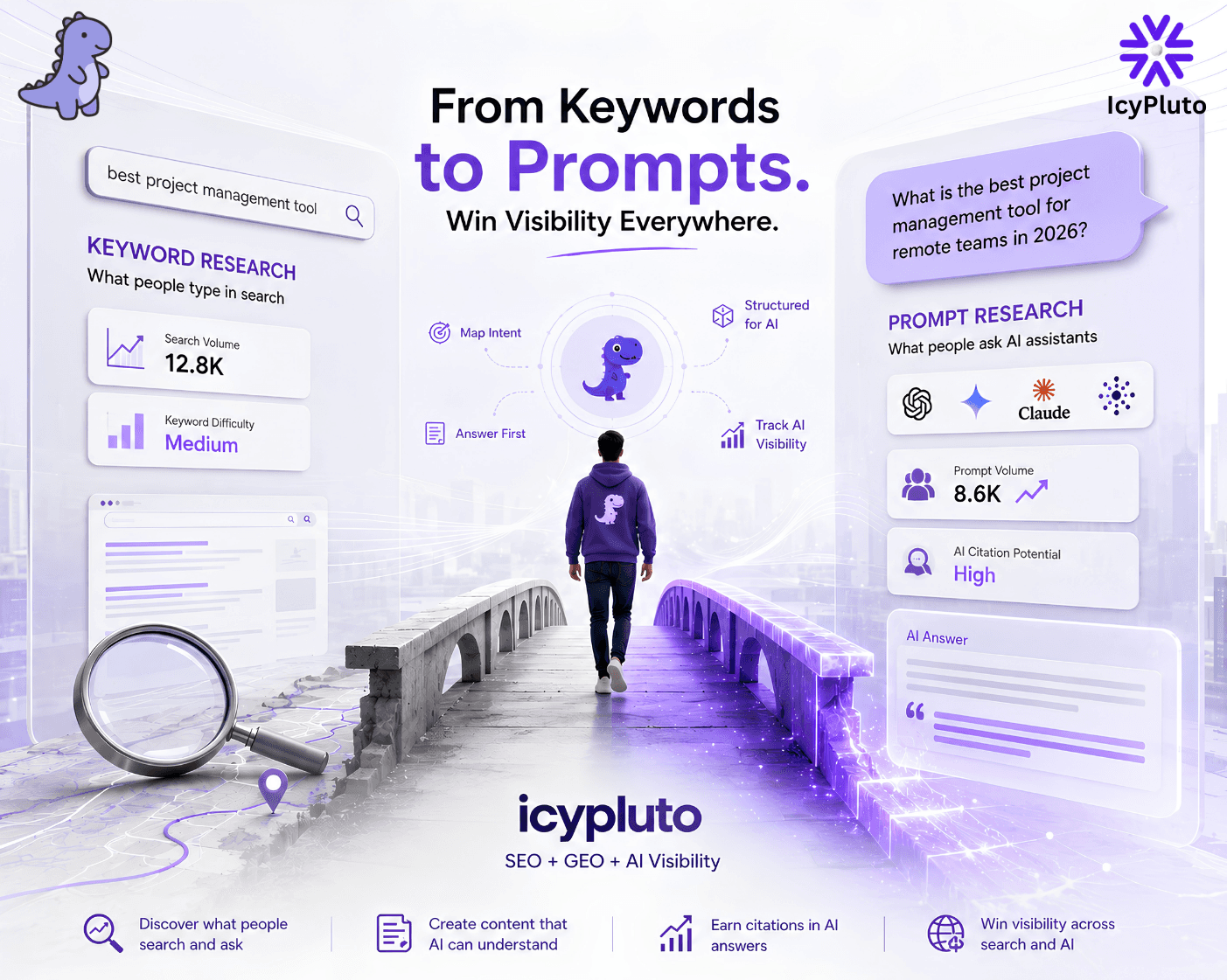
Keyword research is no longer enough. In 2026, a second demand signal has emerged: prompt research, which captures what people ask AI assistants when they describe a problem in full sentences. That shift matters because Google AI Overviews now appear in 43% of searches, ChatGPT has 900 million weekly users, and 68% of U.S. Google searches end without a click. For brands that want visibility across both surfaces, the gap between keyword demand and prompt demand often determines what kind of content to build — and this is exactly where IcyPluto’s GEO and AI visibility strategy creates an advantage.
Search behavior has changed faster than most content strategies have adapted. Traditional keyword research still shows what people type into search boxes, but it does not fully capture how people ask AI assistants for help. When users open ChatGPT, Perplexity, or Google’s AI Mode, their queries often look like full questions, not short keywords.
That difference is creating a new strategic layer for SEO and GEO. Some topics look small in Keyword Planner but dominate AI conversations, while others still live mostly in classic search. IcyPluto helps brands navigate this by combining prompt-aware content planning with AI visibility tracking, so teams can prioritize topics that win in both search and AI answers.
Prompt research is the process of studying the questions and instructions people give to AI assistants, not just the keywords they type into search. It focuses on prompts that lead AI systems to explain topics, compare options, or recommend tools, products, or brands. This changes the research process because it reveals demand that keyword tools often understate or miss entirely.
For IcyPluto, this aligns with its GEO and answer-engine approach. The platform already emphasizes content that is structured for AI chunking, Q&A scaffolding, and clear answer blocks. Prompt research simply adds another layer of clarity of intent on top of that foundation.
The gap between keyword volume and prompt volume tells you what kind of content a topic actually needs. Some topics are keyword-strong but prompt-weak, which means they still reward classic SEO pages. Others are prompt-strong but keyword-weak, which means they are better suited for answer-focused, citation-ready content.
IcyPluto uses this logic in its content and visibility strategy. Instead of treating all topics the same, it helps brands identify which ones should be built to rank in search, which ones should be built to be cited, and which ones deserve flagship investment on both surfaces.
IcyPluto’s approach to prompt research is built around making content more useful to both humans and AI systems. Instead of only optimizing for keywords, it helps teams structure pages around the questions people actually ask AI assistants. That makes the content easier to parse, easier to cite, and more likely to appear in AI-generated answers.
The platform supports this by:
- Mapping topics to high-intent questions.
- Encouraging answer-first formatting.
- Strengthening entity and topic consistency.
- Tracking how content performs in AI visibility over time.
This turns prompt research from a one-time exercise into an ongoing strategy.
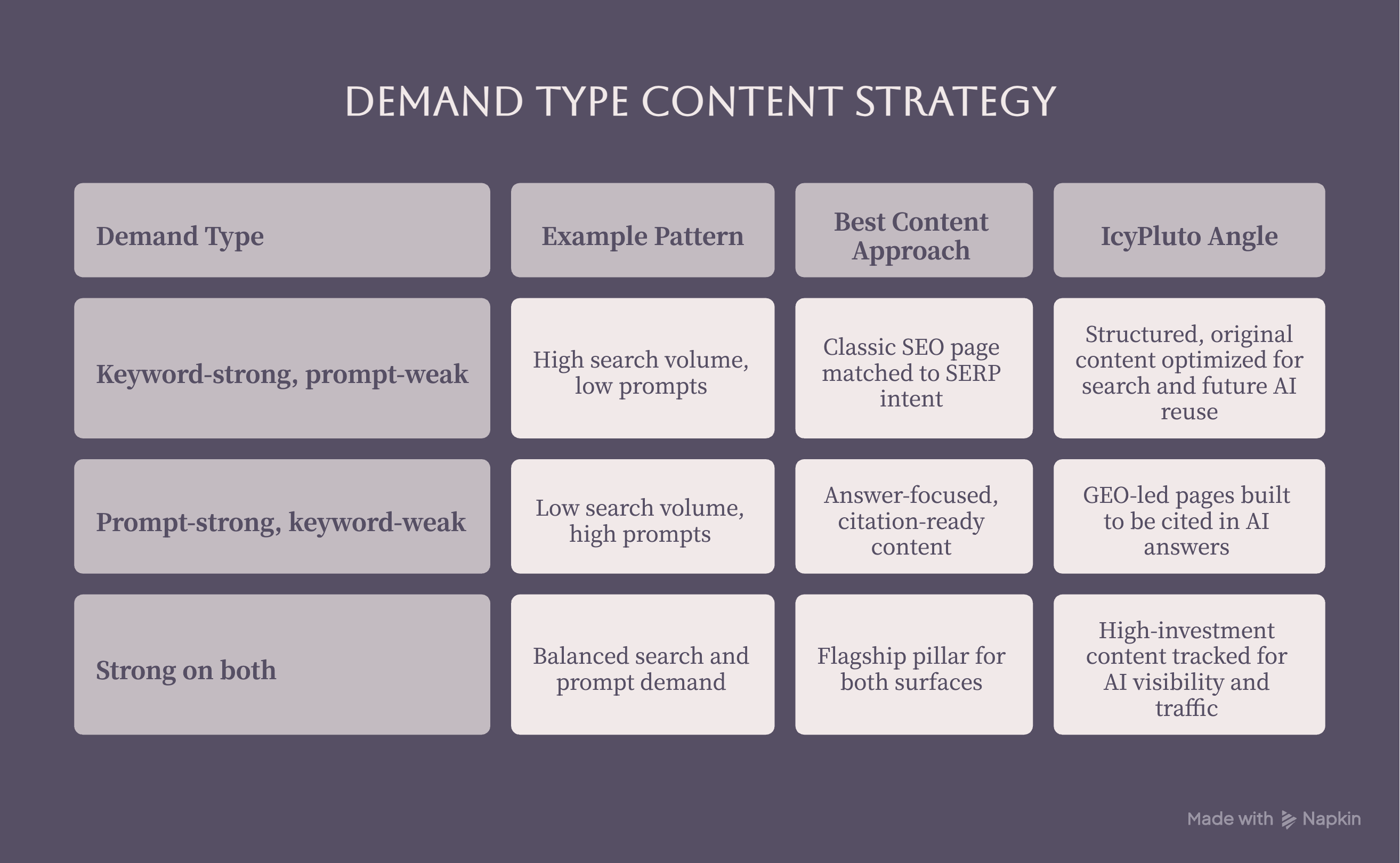
This table shows how IcyPluto can help teams decide where to invest effort based on the demand pattern, not just the keyword volume.
Turning Research Into a Roadmap
A prompt-aware research model only works if it changes what you publish. Once topics are sorted by demand type, the roadmap becomes clearer:
- Keyword-strong topics feed the traditional SEO queue: pages built to rank for search intent.
- Prompt-strong topics feed the answer-engine queue: referenceable, extractable content designed to be cited.
- Strong-on-both topics become flagships: pages worth building for both search ranking and AI citation.
IcyPluto supports this by helping teams track AI visibility, monitor citation performance, and refine content based on what actually earns mentions in AI systems.
IcyPluto adds value by connecting prompt research with execution and measurement. Instead of only identifying topics, it helps teams create content that is structured for AI chunking, entity clarity, and answer extraction. Then it tracks how that content performs in AI search, so teams can learn and iterate. This is especially useful for brands that want to move beyond “SEO vs GEO” thinking. In reality, the best strategy is to use both signals together and build content that performs across surfaces.
Many teams still treat keyword research and prompt research as separate exercises. That creates blind spots where high-prompt, low-keyword topics get ignored, even though they may represent real buyer demand. Another common mistake is creating a single type of content for every topic, rather than matching the format to the demand pattern.
Other frequent errors include:
- Prioritizing only high-volume keywords.
- Ignoring prompt demand signals.
- Writing generic content that is hard for AI to cite.
- Failing to track AI visibility separately from organic traffic.
- Not updating content as prompt behavior evolves.
These mistakes reduce the chance of earning citations and make it harder to understand what is actually driving visibility.
Prompt research is quickly becoming a core part of modern SEO and GEO strategy. It helps brands see where demand actually lives, not just where it looks strong in Keyword Planner. For IcyPluto, this fits naturally into its broader mission of helping brands win visibility across search engines and AI systems . The brands that win in 2026 will be the ones that treat keyword research and prompt research as complementary signals, not competing ones. They will build content that ranks in search, gets cited in AI answers, and earns trust in both environments. That is where IcyPluto’s content and visibility strategy creates a clear competitive edge.
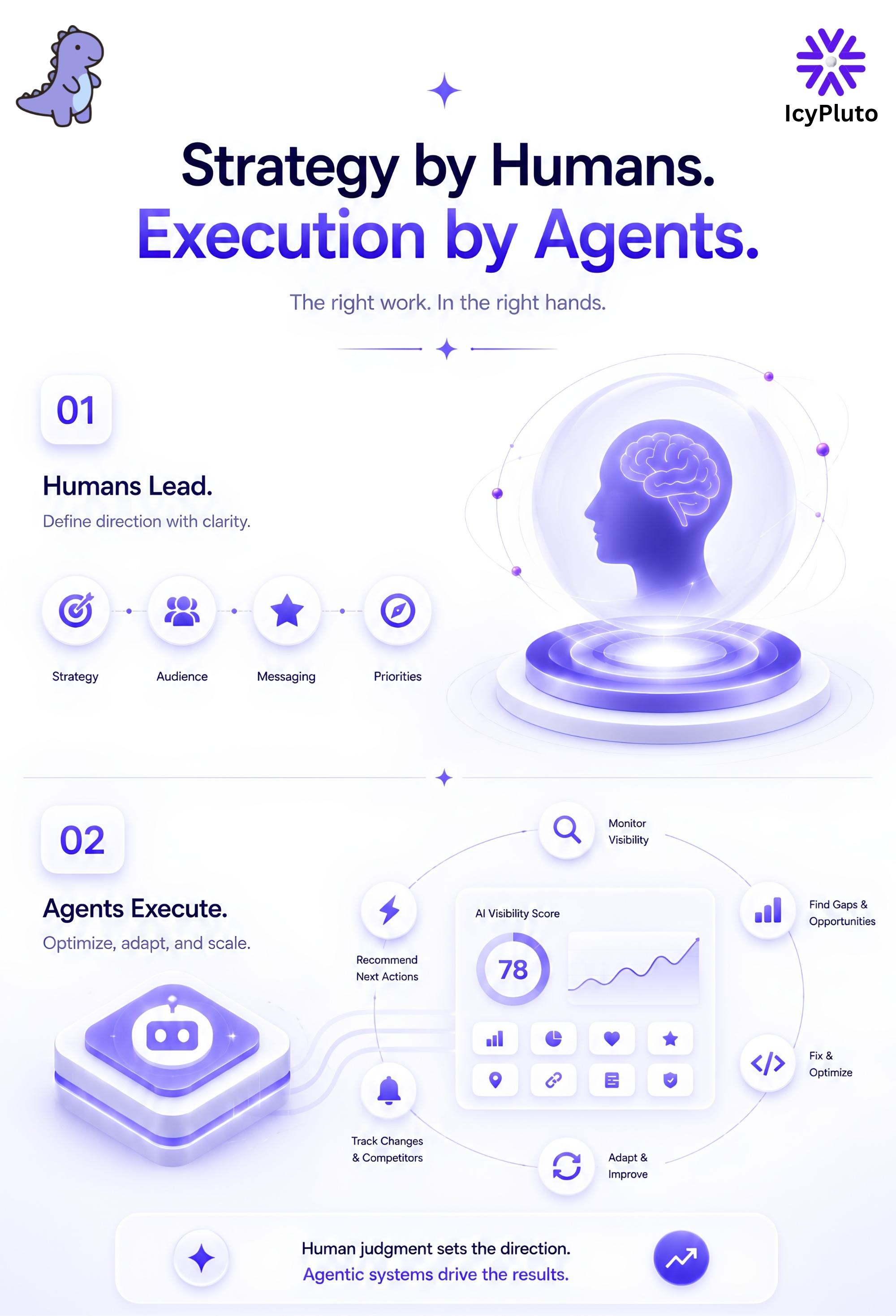
This blog explains how modern marketing teams can ...
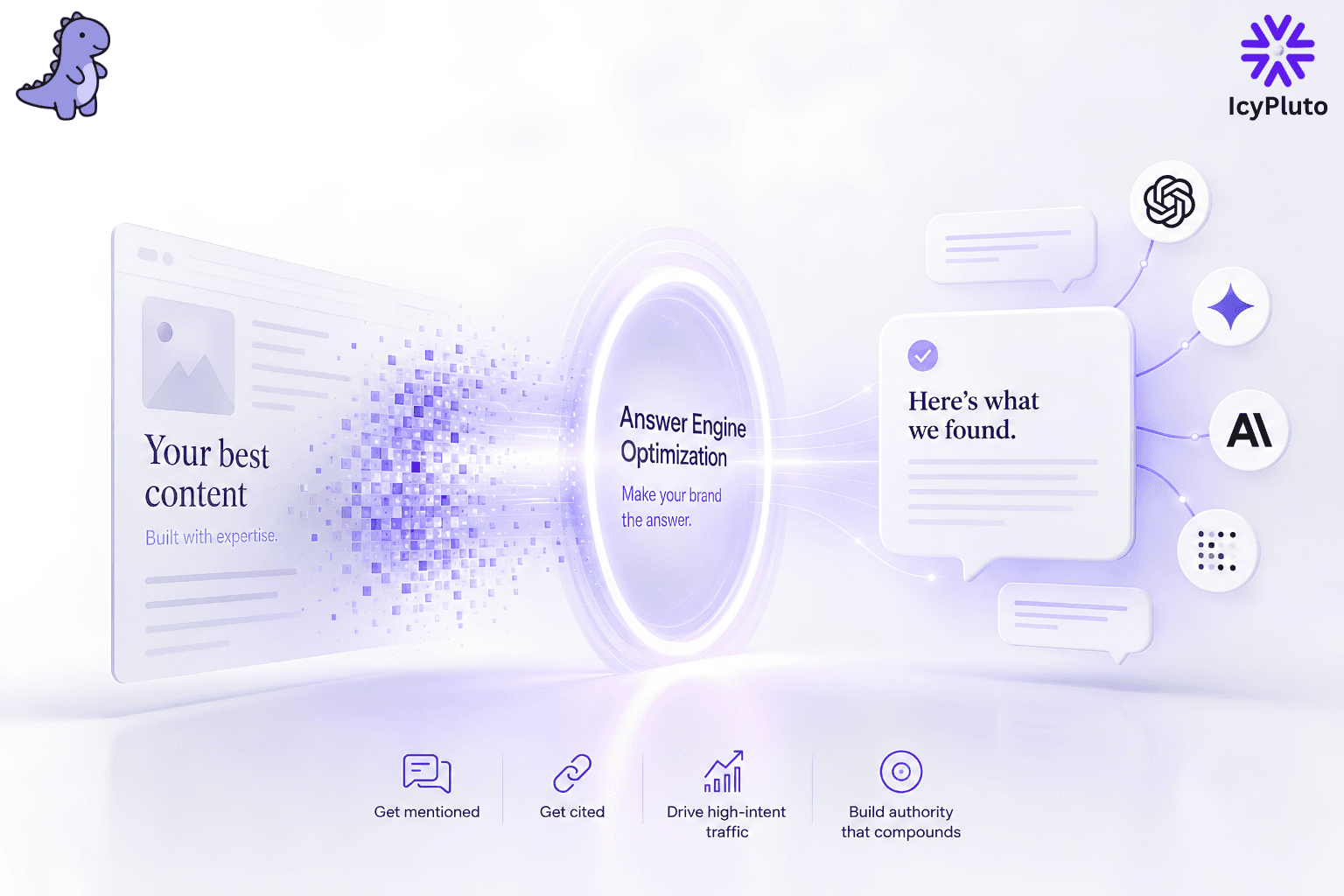
This blog breaks down why Answer Engine Optimizati...
This blog explains why traditional, traffic-focuse...