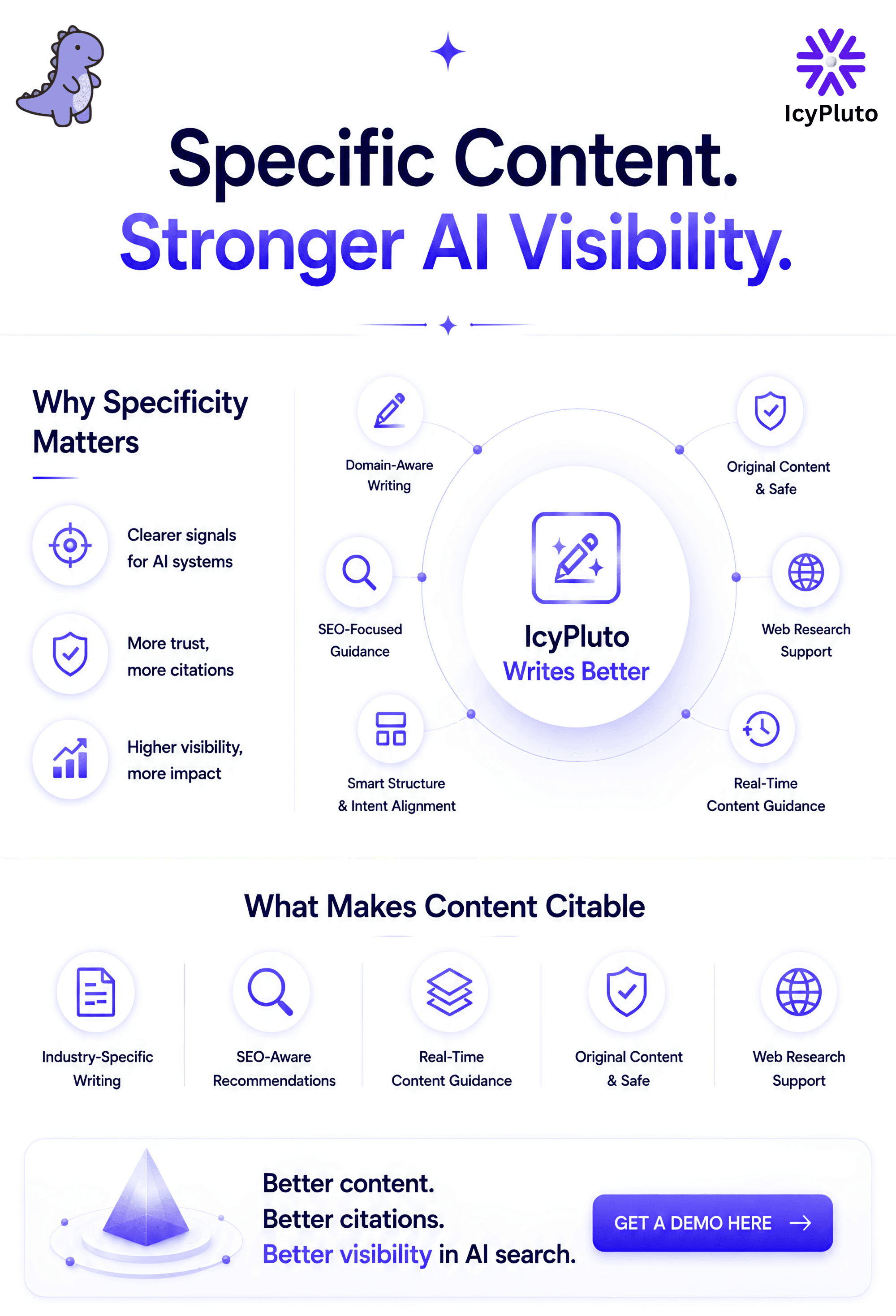
AI SEO writing is getting more specific, and that ...
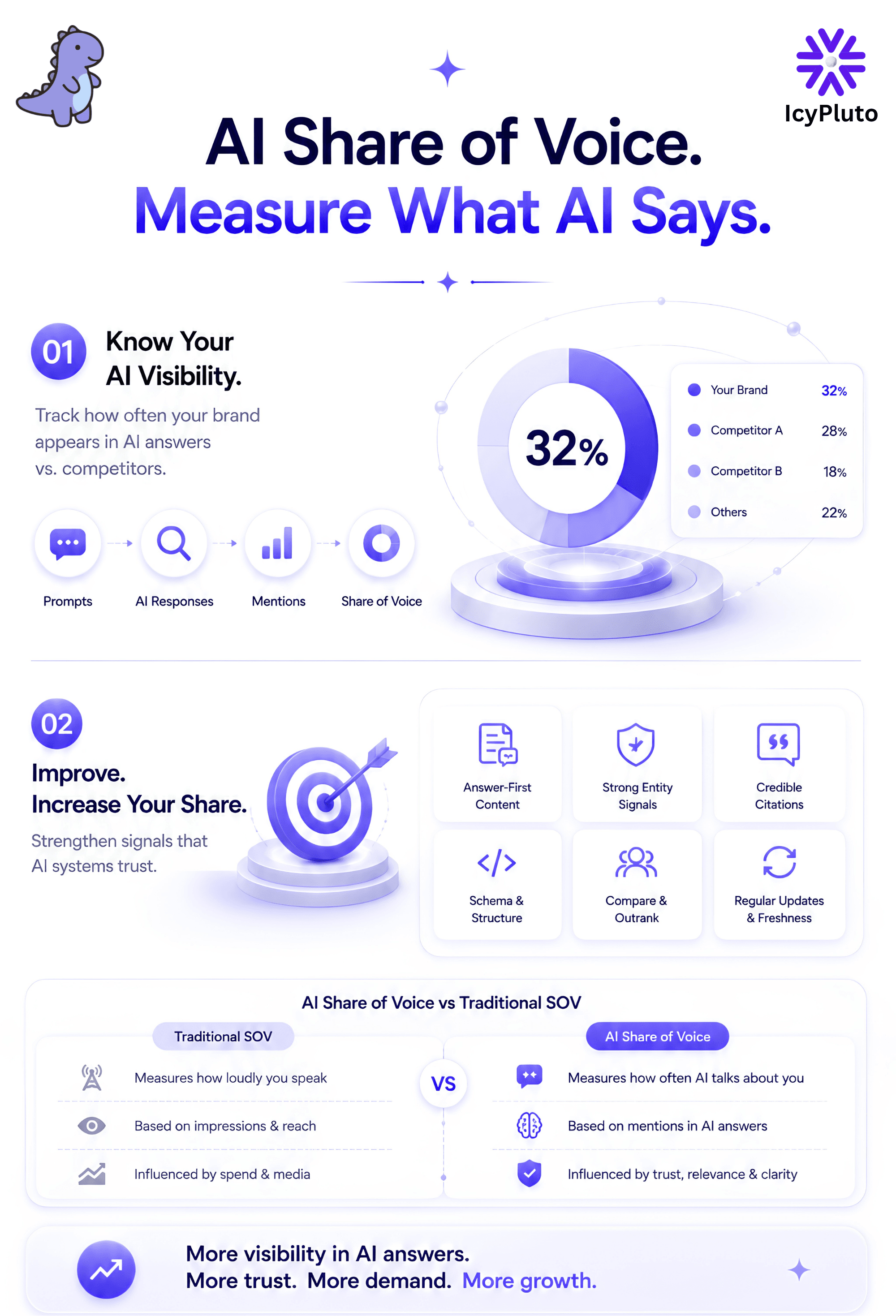
AI share of voice is the new visibility metric bra...
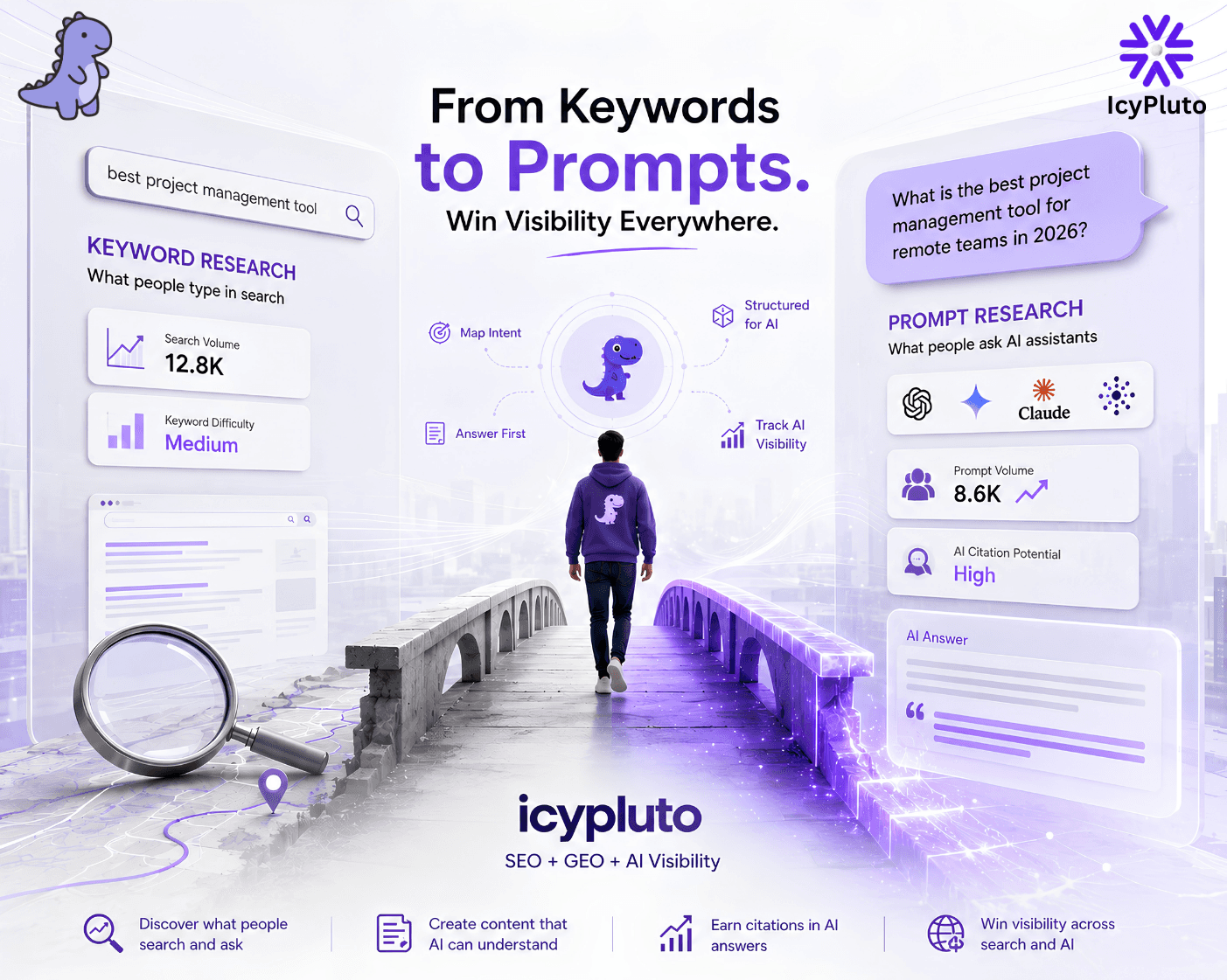
This blog explains how keyword research must now b...
If you have been tracking which brands show up in ChatGPT, Google AI Mode, and Perplexity answers, you have probably noticed something strange. The same brands keep appearing over and over again, while others seem invisible no matter how hard they try to optimize their content.
This is not random. It is not luck. And it is definitely not just about having more backlinks or better on-page SEO.
There is a hidden factor that determines whether AI systems recommend your brand or skip right past it. Experts call it brand depth, and it is becoming the most important competitive advantage in the age of AI search.
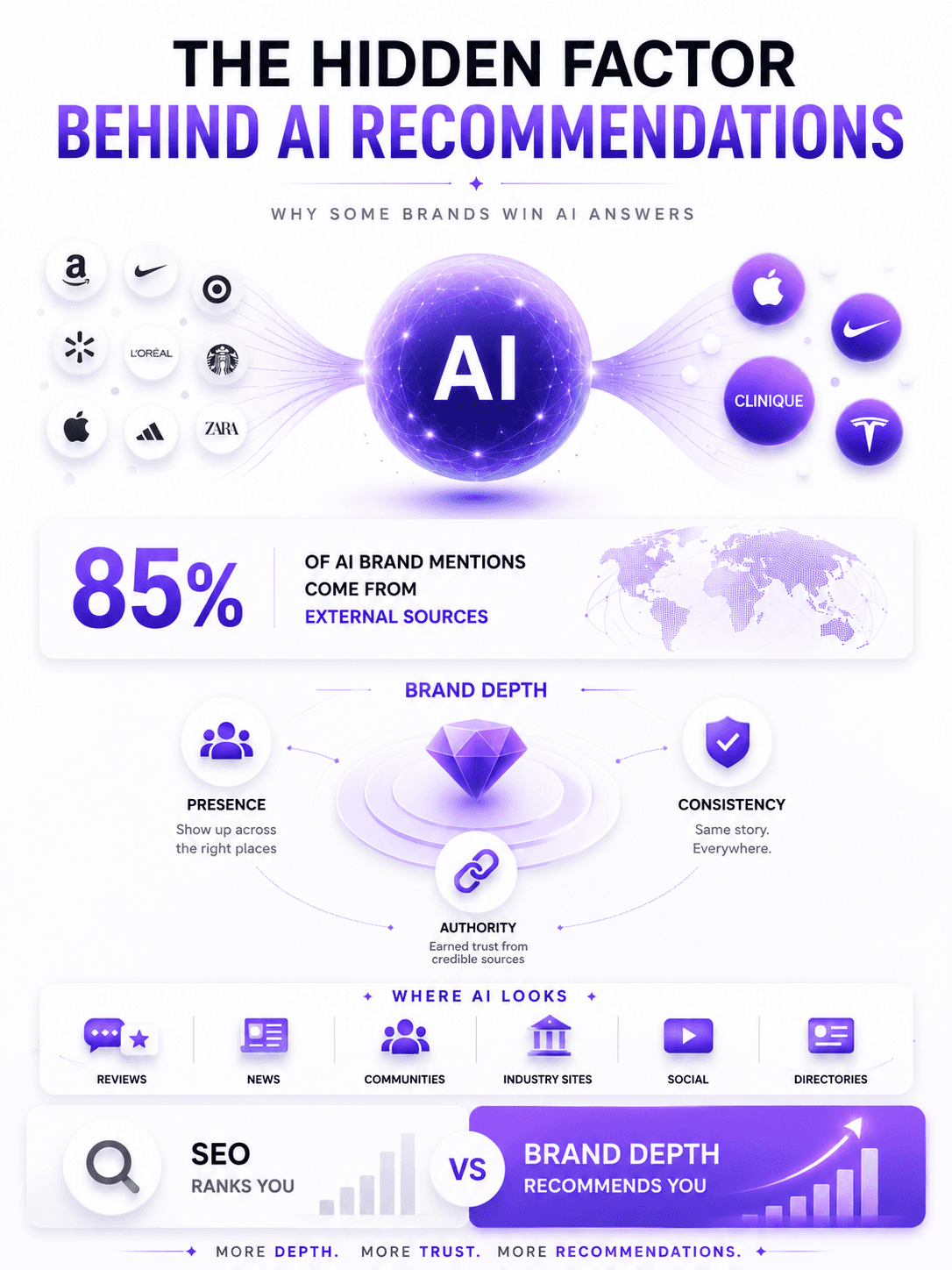
Brand depth is how prominently, consistently, and densely your brand exists across the information that AI systems learn from. Think of it as the weight your brand carries inside an AI model's memory.
When you query an LLM about a trend or product category that a brand absolutely owns in a specific space, brand depth determines whether that brand surfaces as the obvious answer. A brand with high depth gets retrieved, recognized, and recommended. A brand with low depth gets forgotten, even if it ranks well in traditional Google search.
The difference shows up clearly in real-world examples. Ask any AI system what the best universally flattering lipstick is, and Clinique's Black Honey will almost certainly appear. Ask about viral makeup trends from the 2020s, and Black Honey shows up again. Ask about iconic beauty products from the 1970s, and you will get the same result.
This happens because Black Honey has deep co-occurrences across multiple dimensions. It connects to concepts like universally flattering and my lips but better. It links to trends like TikTok virality from 2021. It associates with competitors and dupes like e.l.f. Black Cherry dupe. It has cultural anchors like actress Liv Tyler and her character Arwen from Lord of the Rings. It has historical depth dating back to 1971.
This density makes Black Honey the statistically low-risk answer for AI systems. When a model needs to recommend a universally flattering lipstick, Black Honey has enough statistical weight to surface reliably across a wide range of queries.
Generative Engine Optimization, or GEO, is actually two visibility challenges happening at once. Most brands focus on only one of them, which is why they fail to build lasting AI visibility.
The first game is parametric weight. This is the density and consistency of signals about your brand in AI training data. Brands act as coordinates in an LLM's embedding space, defined by how frequently and consistently they appear across the web.
Parametric weight builds slowly over months and years through consistent presence across external domains, reviews, media coverage, and interconnected web entities. If your messaging is inconsistent, your brand's vector becomes fuzzy, which reduces recall and confidence when AI systems try to retrieve you.
A brand with little parametric weight is functional, forgettable, and interchangeable. The problem is that you cannot easily alter what a model has already internalized during training. Most efforts focused on parametric weight are directed toward future training cycles, not immediate results.
The second game is retrieval survival. When a system like Google AI Mode or ChatGPT Search fires its retrieval pipeline, does your content make it through the gauntlet?
About 85 percent of brand mentions in AI search come from external domains, not the brand's own website. This single statistic changes everything about how you think about AI visibility. You cannot rely on your own content alone. You need third-party validation across the web.
Every major AI search system starts with retrieval, but each handles it differently. Perplexity retrieves, ranks, and embeds citations into the context window before the LLM generates a single token. The model synthesizes answers from retrieved evidence rather than directly from training data.
Google AI Mode decomposes a single query into 8 to 12 parallel subqueries across the live web, Google's Knowledge Graph, and specialized data sources before synthesizing a response. Google calls this query fan-out. When you search for something, you are actually competing across 8 to 12 parallel subqueries simultaneously.
ChatGPT search expands a query into five or six semantic variations, retrieves 35 to 42 candidate URLs, disqualifies 83 percent before extraction, and synthesizes three to five citations in the final response. This means only about 6 to 7 URLs make it through to the final answer from an initial pool of 40 candidates.
Here is where most brands get confused. Getting cited in AI answers is becoming a common visibility metric, but citations alone do not explain why certain brands consistently appear while others do not.
Citations reflect visibility outcomes, not the underlying systems that produce them. They are receipts, not the purchase itself. Optimizing for citations focuses on the receipt rather than the underlying driver.
The data shows that only 6 percent to 27 percent of frequently mentioned brands are also top-cited sources. Models can know a brand without citing it. Citation frequency tracks output presence, not the retrieval and synthesis decisions that surfaced the brand in the first place.
Brand depth, built through density, consistency, and cross-source coverage, is what makes a brand the statistically low-risk answer before a citation is ever generated. When your brand has enough depth, it becomes easier for AI systems to retrieve, synthesize, and recommend consistently.
To understand brand depth at a technical level, you need to understand three concepts that Google's Knowledge Graph and AI models use to evaluate brands.
Entity salience measures how prominent and distinct your brand is within a specific topic cluster. Google asks how prominent is this brand within a topic cluster. LLMs ask a similar question at inference time: which entities have enough statistical weight to surface when a topic is queried.
Low salience means you are retrievable only through exact branded queries. If someone searches for your brand name specifically, you will appear. But if they search for your category without your name, you disappear.
High salience means you appear when the topic comes up, not just when your name is searched. If you sell CRM software and have high entity salience, you will appear when someone asks what is the best CRM for startups, even if they never mention your brand name.
Google evaluates salience through systems that map the latent entities a brand co-occurs with. The more co-occurrences you have with relevant topics, the higher your mutual information score, and the more often you appear in answers.
Entity coherence is the consistency of your brand's identity across all retrieved contexts. Inconsistent naming, conflicting positioning, and contradictory dates signal that an entity is unreliable.
LLMs trained on that same corpus learn a fragmented, low-confidence representation when entity coherence is weak. The model fills gaps created by entity incoherence, leading to brand drift where the model's version of your brand slowly diverges from reality because the training signal was never stable enough to anchor it.
If your company name appears differently across different websites, if your founding date varies by a year or two, if your positioning shifts between different channels, AI systems will struggle to build a stable, high-confidence representation of your brand.
Inter-entity relationship density measures the strength and number of connections between your brand and other authoritative entities, including products, concepts, and proofs.
This density influences associative retrieval paths. In agentic systems like Deep Research, AI Mode, and Perplexity Pro, each reasoning step is a retrieval event. Relationship density determines whether your brand survives hop two and hop three.
A brand that only exists at the center of its own graph disappears the moment the query moves one step sideways. If someone asks what CRM integrates with Salesforce and HubSpot, and your brand only connects to itself with no connections to those platforms, you will not survive the retrieval chain.
Google's systems map these inter-entity edges through databases that track relationships between entities. The denser your network of connections to authoritative entities, the more retrieval paths lead back to your brand.
Before any of these factors matter, your site needs to pass a basic quality threshold. Mark Williams-Cook documented a site quality score in December 2024 that uses a 0-to-1 scale.
Sites scoring below roughly 0.4 are not retrieved as candidates, regardless of optimization efforts. This matters because retrieval eligibility influences which entities and sources repeatedly enter AI systems in the first place.
The quality score is calculated on a subdomain level based on brand visibility, user interactions, and anchor text relevance around the web. Brand visibility includes branded searches or searches that include the brand's name. User interactions include clicks, including when the site does not rank in Position 1.
If your site does not reach the 0.4 threshold, you are ineligible for enhanced search features like featured snippets, People Also Ask boxes, and AI Overviews. You can optimize your content all you want, but if your site quality score is too low, retrieval systems will not even consider you as a candidate.
Brand integrity becomes an infrastructure problem. You cannot optimize your way into LLM citations if you have not first built the entity coherence and relationship density that make your brand consistently retrievable.
The good news is that brand depth is something you can build systematically. It requires shifting your thinking from content creation to entity building.
Specific, data-rich, hard-to-reproduce content gets retrieved and cited. Academic literature refers to this as adaptive retrieval. Generic, predictable content gets skipped because the model can generate it on its own.
When you write content, anchor named entities including a variety, an organization, a location, and quantitative values. These are details the model cannot plausibly generate without a source. A generic statement like we help businesses save money will not get cited. A specific statement like we helped 47 mid-market companies reduce customer acquisition costs by 34 percent in 2025 will get cited.
Add high-density assets including company history, team bios, and ISO certifications designed to serve as grounding data for retrieval-augmented generation systems. These pages provide the factual anchors that AI systems need to build reliable representations of your brand.
Your website functions like a knowledge graph. AI systems use internal links to build a semantic map of your domain. Embed links that define logical relationships between entities and create clear paths for crawlers to follow.
Structure links around the user's decision journey, which often mirrors AI retrieval paths. Link from topic to subtopic for broad context. Link from subtopic to product for specific solution. Link from product to review for social proof. Link from review to return policy for trust signal. Link from return policy to organization for entity credibility.
This creates a coherent graph that AI systems can navigate and understand. Each link represents a relationship that strengthens your entity network.
Pages with no meaningful incoming anchors are likely demoted in processing. They do not accumulate site authority or navigation boost signals. Google and AI systems may not even discover these pages reliably.
The fix is to give these pages strategic internal links that connect them to the graph, or delete them. If a page is not worth linking to, is it worth human or bot attention? Every page on your site should serve a purpose in your overall entity architecture.
Since 85 percent of brand mentions in AI search come from external domains, you cannot rely on your own website alone. You need to build presence across reviews, media coverage, industry directories, and third-party platforms.
Get mentioned on authoritative sites in your industry. Build reviews on platforms like G2, Capterra, or Trustpilot depending on your category. Secure press coverage on industry publications. Build profiles on relevant directories and platforms where your customers look for recommendations.
Each external mention strengthens your parametric weight and improves your chances of surviving retrieval pipelines. The more trusted sources that mention your brand consistently, the more likely AI systems are to retrieve and recommend you.
Citation frequency studies are symptom trackers, not diagnostic tools. They can tell you that certain brands appear more often. They cannot reliably explain whether that visibility comes from training data, retrieval-augmented generation, entity salience, or category dominance.
Build the thing that causes citations, not the thing that imitates them. Focus on building the underlying foundation of brand depth through density, consistency, and cross-source coverage.
When your brand is specific, consistent, and densely connected across topical clusters, it becomes easier for AI systems to retrieve, synthesize, and recommend. Preference is what survives. Build for the layer that determines synthesis weight and for what happens inside the retrieval funnel.
Your customers search everywhere. They use Google, but they also use ChatGPT, Perplexity, and other AI systems. Make sure your brand shows up across all of them by building the entity depth that makes you the obvious, low-risk recommendation.
The brands that win in the AI era will not be the ones with the most content. They will be the ones with the deepest brand presence across the information ecosystem. Start building that depth today, before your competitors do.