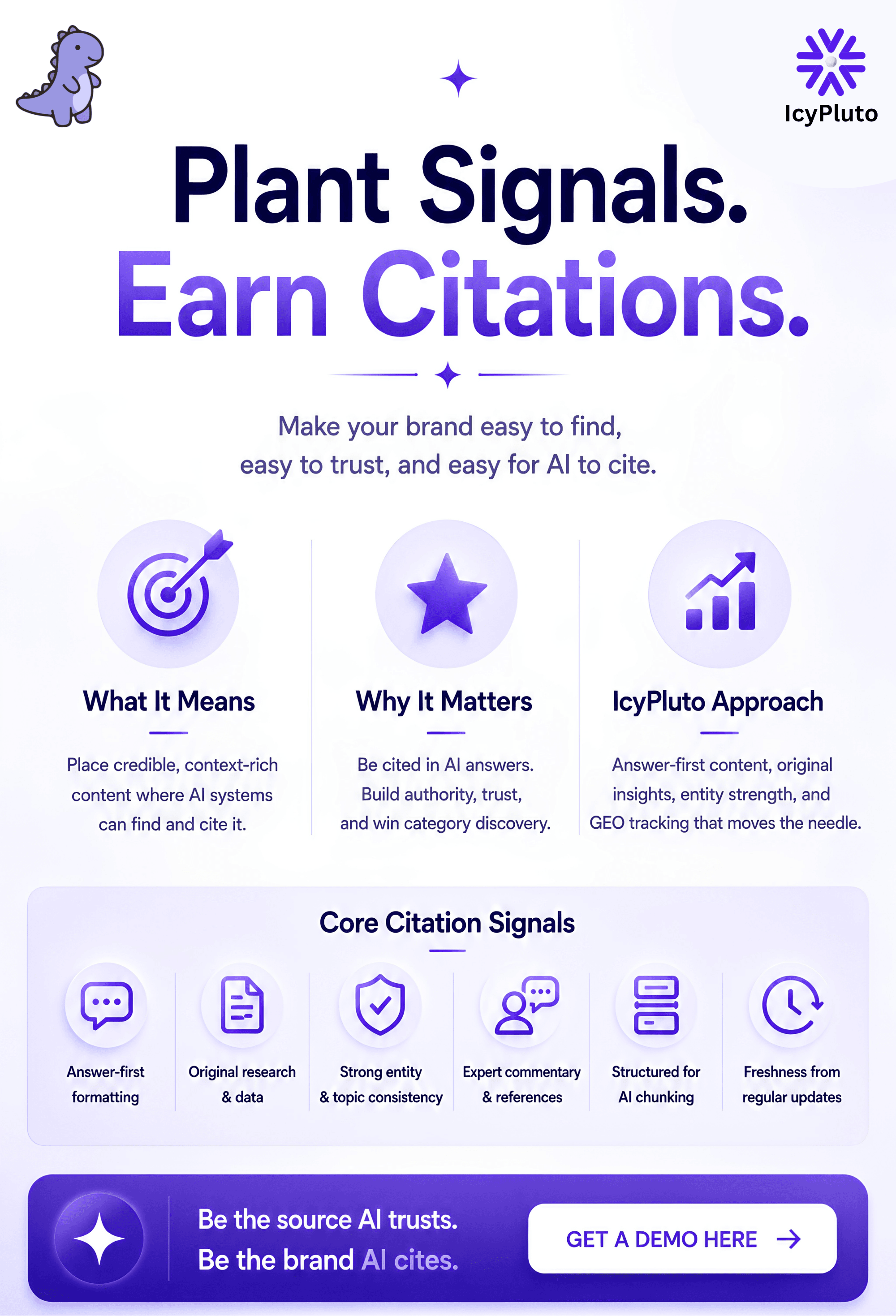
Citation seeding is becoming one of the fastest wa...
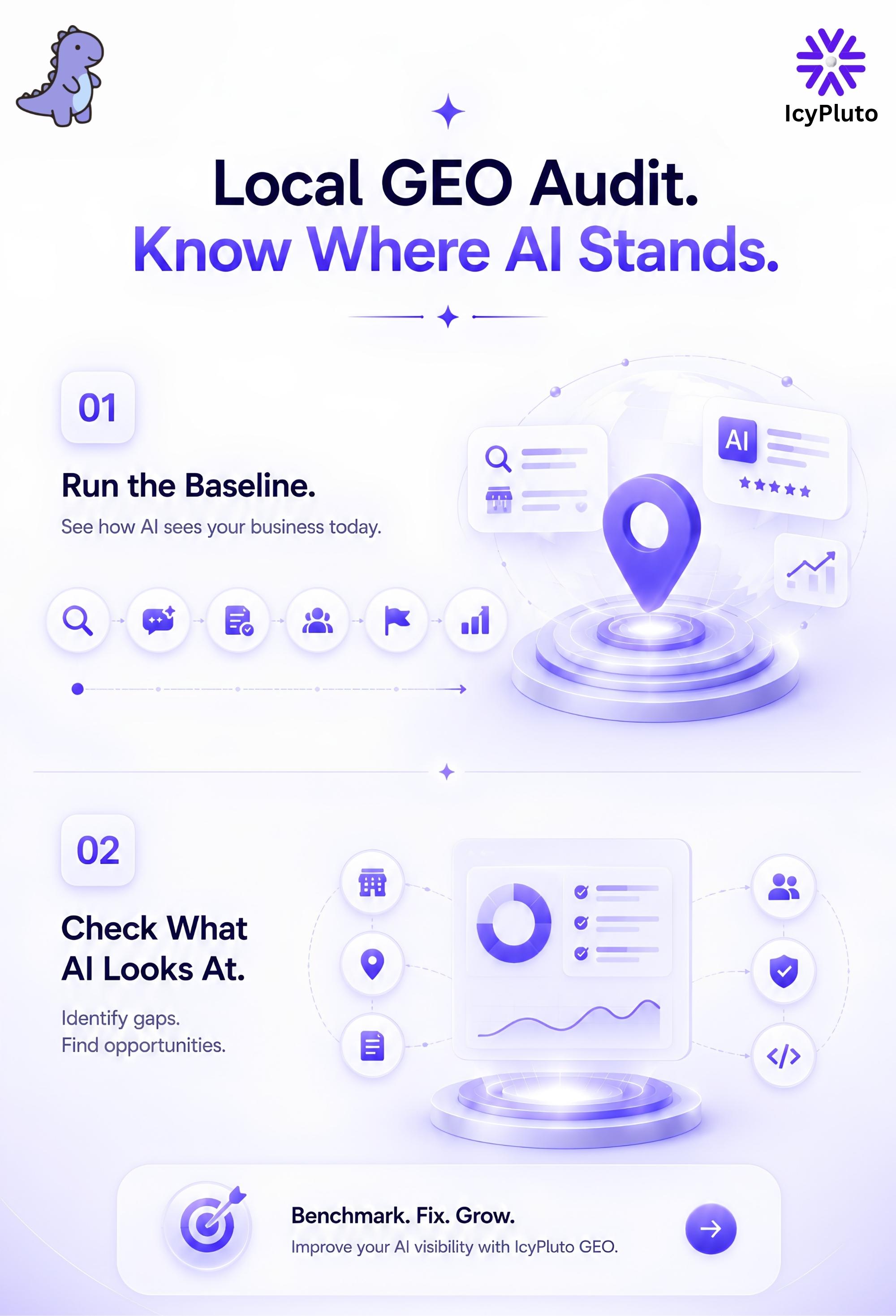
A local GEO baseline audit helps you understand ho...
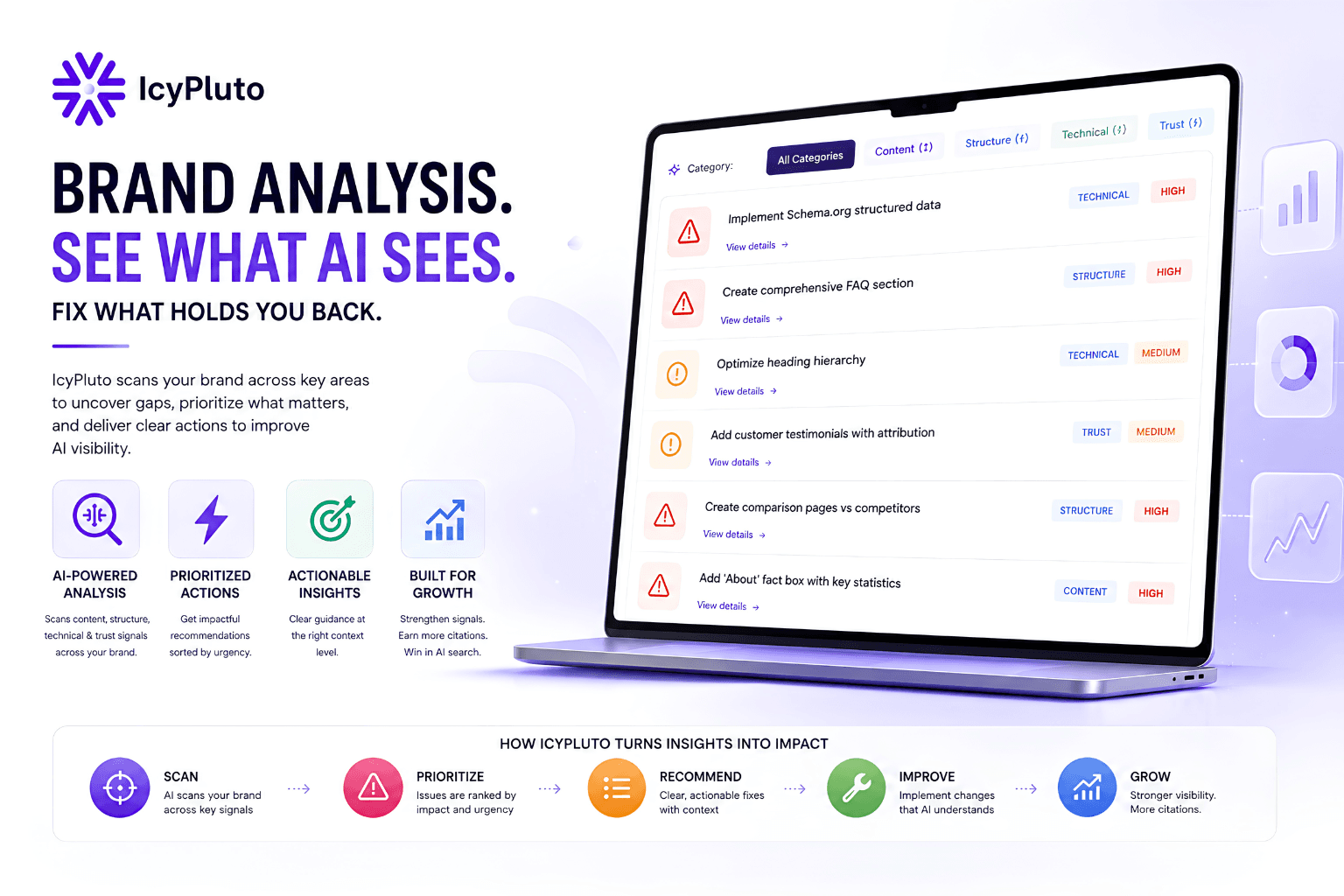
This blog explains why brands are losing visibilit...
AI search is no longer an experimental channel. ChatGPT reached 900 million weekly active users in early 2026, Google AI Overviews now reach around 2 billion people per month, and AI-driven search interfaces are already influencing a major share of product and vendor research. At the same time, research shows that 50% of B2B buyers now start their vendor research in AI chatbots, while only 16% of Fortune 500 companies actively track AI search performance, creating a major visibility gap for brands that have not yet adapted.
That gap is exactly why AI share of voice matters. It measures how often your brand appears in AI-generated answers compared with competitors, giving you a clearer view of category presence, recommendation frequency, and overall AI visibility. For IcyPluto, this metric is especially useful because it turns AI search from a vague trend into something brands can benchmark, improve, and tie directly to growth
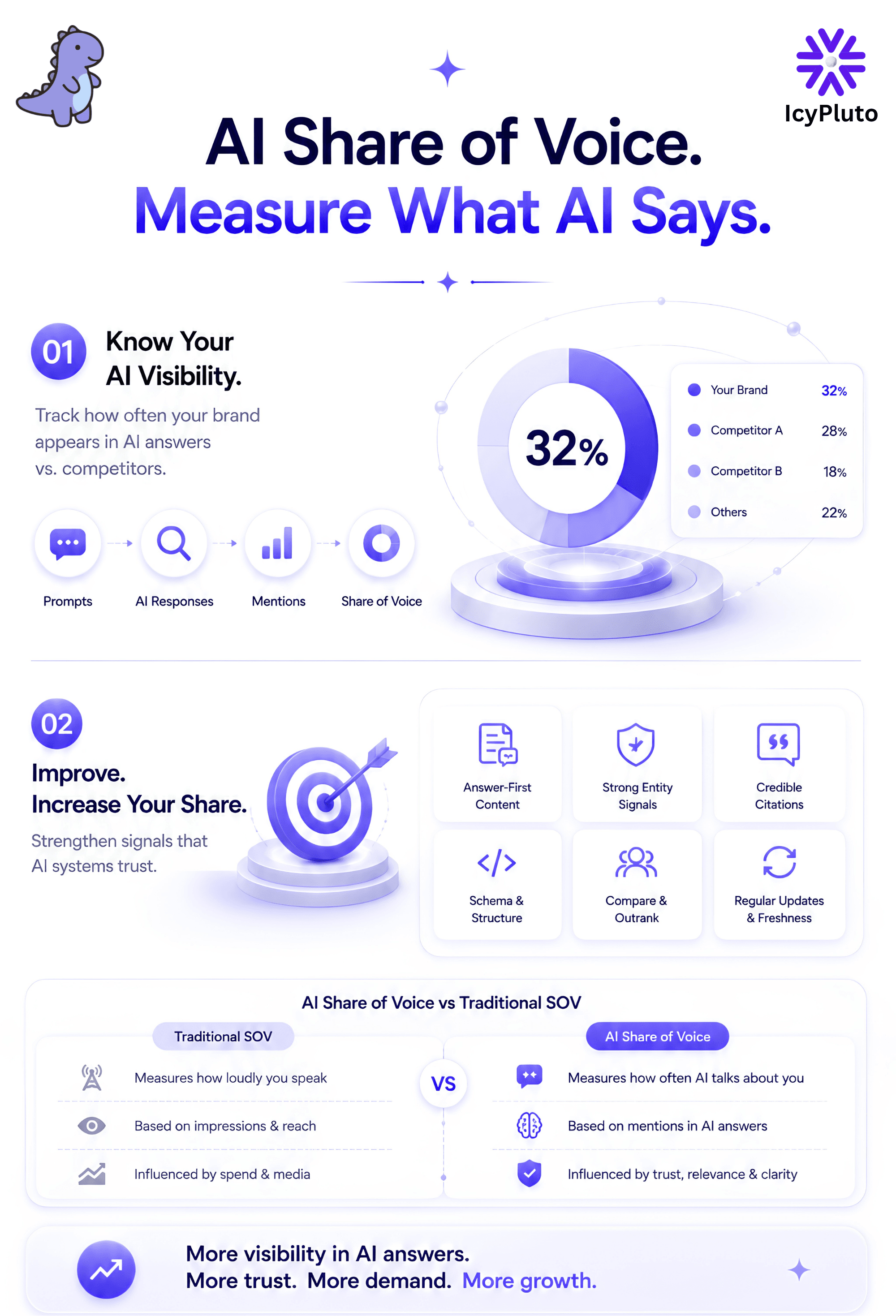
AI share of voice is a comparative metric that measures how frequently your brand appears in AI-generated answers relative to competitors. In practical terms, if AI systems mention your brand 30 times out of 100 relevant responses, your AI share of voice is 30%. That number becomes more meaningful when it is tracked across a defined set of prompts and compared over time.
Unlike traditional SEO metrics, AI share of voice is not stable across all queries or platforms. The same prompt can produce different answers depending on the model, wording, recency, and retrieval behavior. That is why a single snapshot is not enough; you need repeated measurements to understand true visibility.
AI share of voice matters because buyer research is shifting into AI conversations. If a user asks for the “best” tool, service, or provider, the brands named in the response get an immediate advantage. That visibility can shape perception long before a user visits a website or speaks to sales.
It also matters because AI systems do not simply repeat whatever ranks highest in search. They tend to favor brands with strong entity signals, credible citations, and consistent representation across the web. That means your visibility in AI is a reflection of more than ranking; it is a reflection of trust, clarity, and relevance.
Measuring AI share of voice starts with choosing the right prompts. These should represent the questions real buyers ask, such as comparisons, recommendations, and category explanations. Once those prompts are defined, the responses are analyzed to see which brands are mentioned, how prominently they appear, and whether the mention is positive, neutral, or negative.
A stronger measurement model goes beyond raw mention counts. Some frameworks track citation frequency, narrative inclusion, sentiment, and weighted placement because each one tells a different story. For example, a brand mentioned first in an answer often has more influence than one mentioned only at the end.
AI share of voice should be treated as a multi-part visibility system, not a single number. The most useful signals usually include how often you are mentioned, how often you are cited, and whether AI accurately describes your brand. You also need to know which competitors are showing up instead.
Use this checklist:
Brand mention frequency.
Citation frequency.
Position in the answer.
Sentiment or framing.
Competitor comparison.
Prompt-level visibility across categories.
These metrics matter because they help you understand whether AI sees you as a leader, a fallback option, or not at all. The more clearly you can isolate those signals, the easier it becomes to improve them.
Improving AI share of voice starts with improving the content and entity signals that AI systems rely on. That means creating content that answers questions directly, uses clear definitions, and builds topical authority around your category. It also means making your brand easier to recognize across your own website and third-party sources.
Here are the most effective improvement levers:
Publish answer-first content around category questions.
Strengthen brand consistency across the web.
Add credible citations and references.
Build comparison and decision-stage content.
Improve structured data and schema markup.
Refresh content regularly so it stays current.
These steps help AI systems trust your brand more often and surface it more consistently. Over time, that can shift your share of voice from occasional mention to category dominance.
Traditional share of voice and AI share of voice are related but not the same. Traditional SOV measures how loudly a brand speaks across ads, media, or impressions, while AI share of voice measures how often AI systems speak about the brand in relevant answers. That distinction matters because AI visibility is not bought in the same way as paid media.
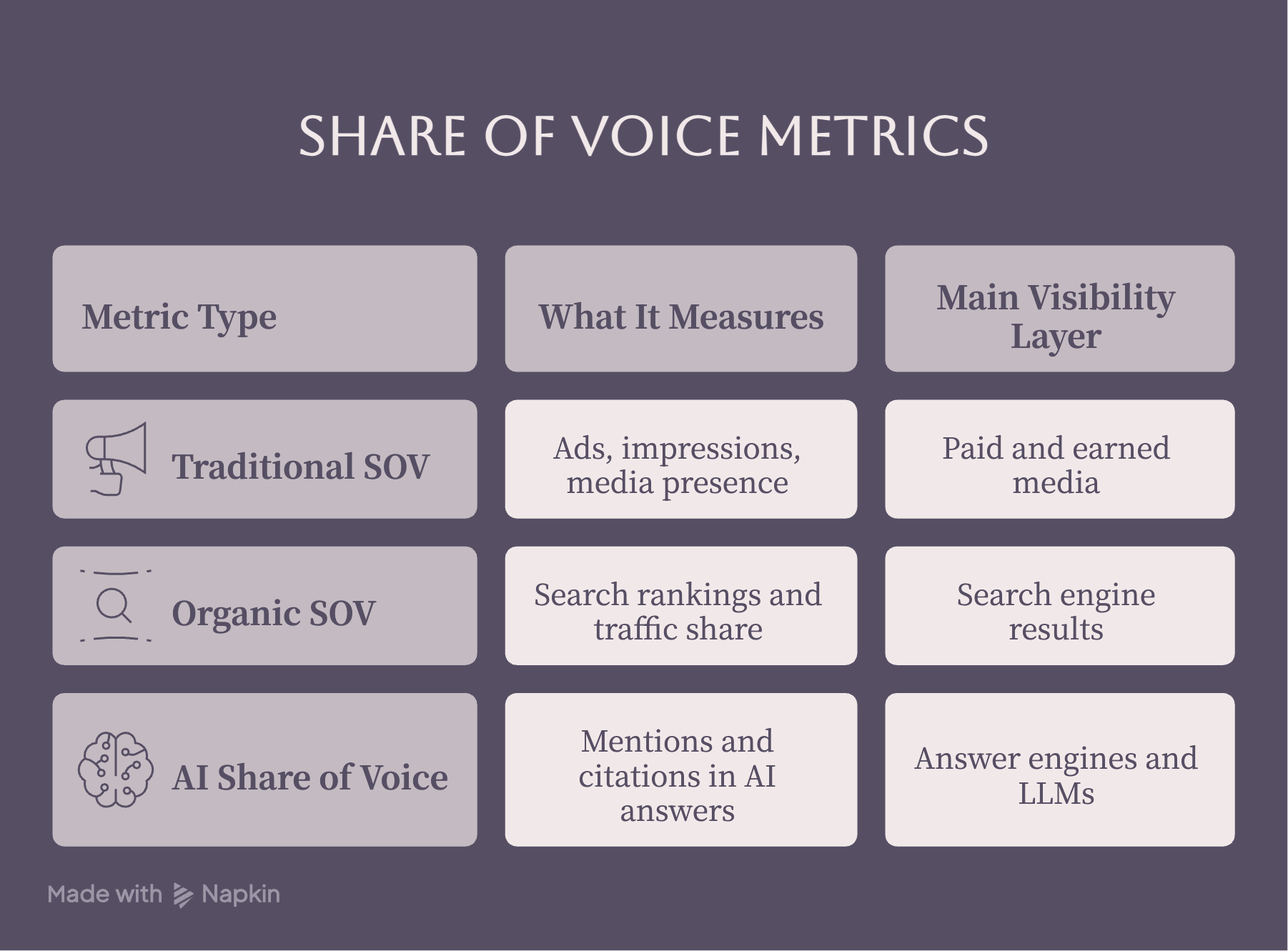
The table shows why many teams are rethinking their reporting. A brand can look strong in traditional search and still be weak in AI conversations. That is why AI share of voice is becoming a core metric for modern SEO and GEO teams.
IcyPluto’s AI Share of Voice feature helps brands see how often they appear in AI-generated answers compared with competitors. It turns a vague visibility problem into a measurable metric, so marketers can track whether their brand is being mentioned, recommended, or overlooked across AI search environments.
This feature is especially useful for teams that want to monitor category presence, compare performance over time, and understand where they are winning or losing in AI-driven discovery. Instead of guessing how AI perceives the brand, IcyPluto gives you a clearer view of your share of answers and the opportunity to grow it.
AI share of voice is one of the clearest ways to understand brand visibility in the AI era. It tells you whether your brand is being included in the answers that matter, how often that happens, and how you compare to competitors. For marketers, that makes it a powerful bridge between content strategy and business impact.
For IcyPluto, this topic reinforces the shift from traditional SEO thinking to AI-native visibility planning. Brands that track and improve their AI share of voice will be better positioned to win attention, trust, and demand in generative search. In a world where AI increasingly shapes the first answer, being present is no longer optional.
AI share of voice measures how often and how prominently a brand appears in AI-generated answers compared with competitors.
It shows whether your brand is visible in the answers buyers actually see, not just in search rankings.
It is measured by tracking brand mentions, citations, answer position, sentiment, and competitor presence across relevant prompts.
No. It complements SEO by measuring visibility inside AI responses rather than traditional search results.
Create answer-first content, strengthen brand consistency, add citations, and build topical authority around the questions your audience asks.