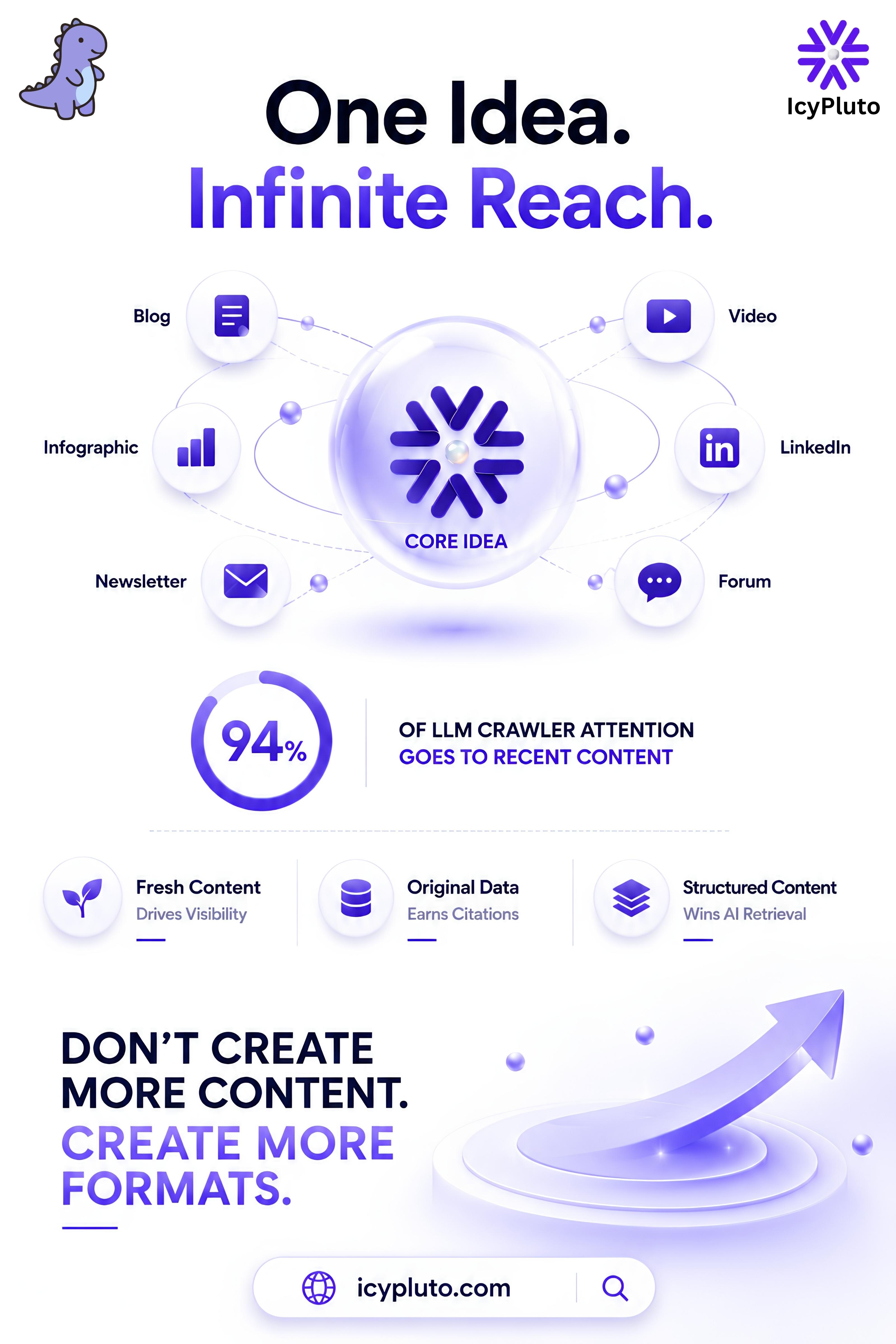
This blog reveals how to maximize visibility in tr...
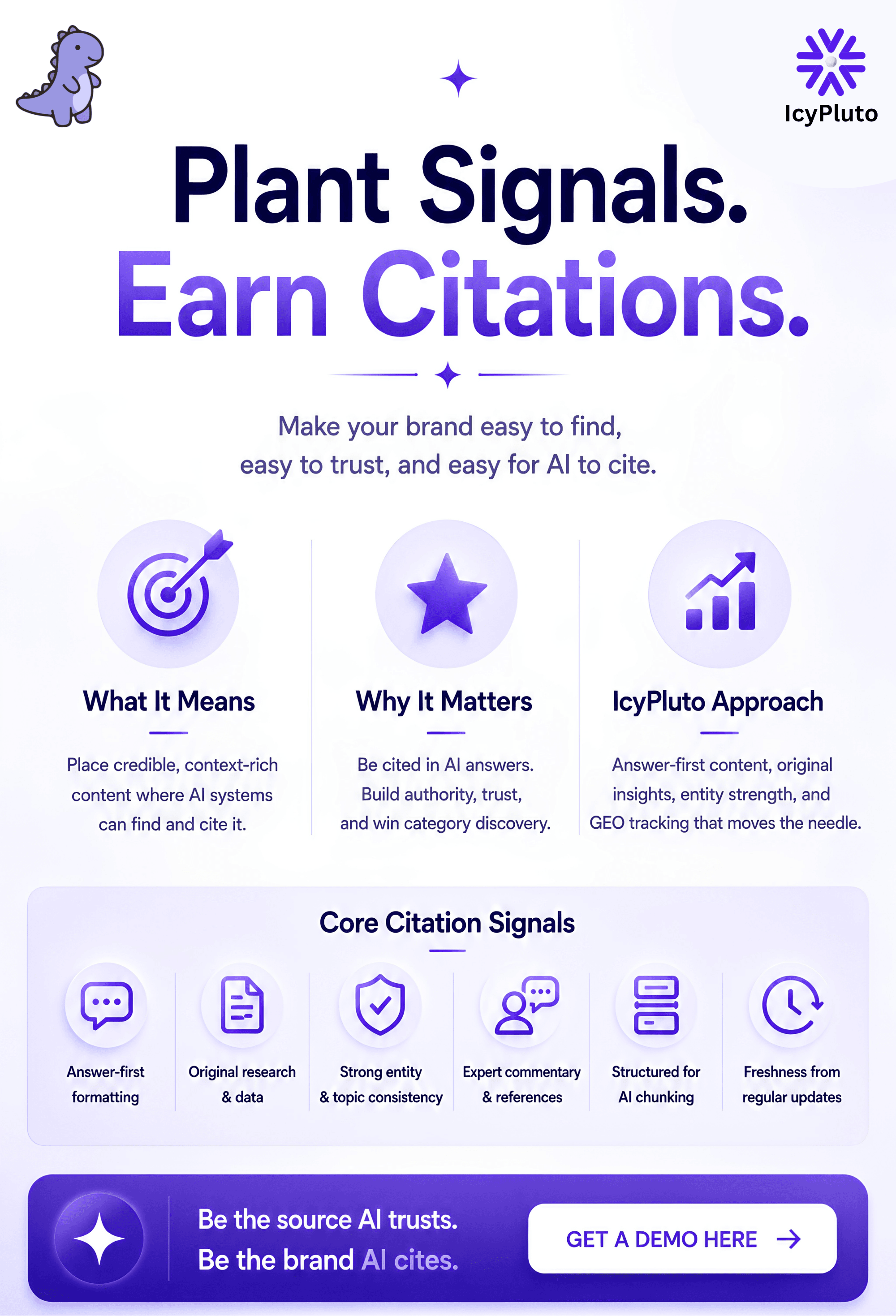
Citation seeding is becoming one of the fastest wa...
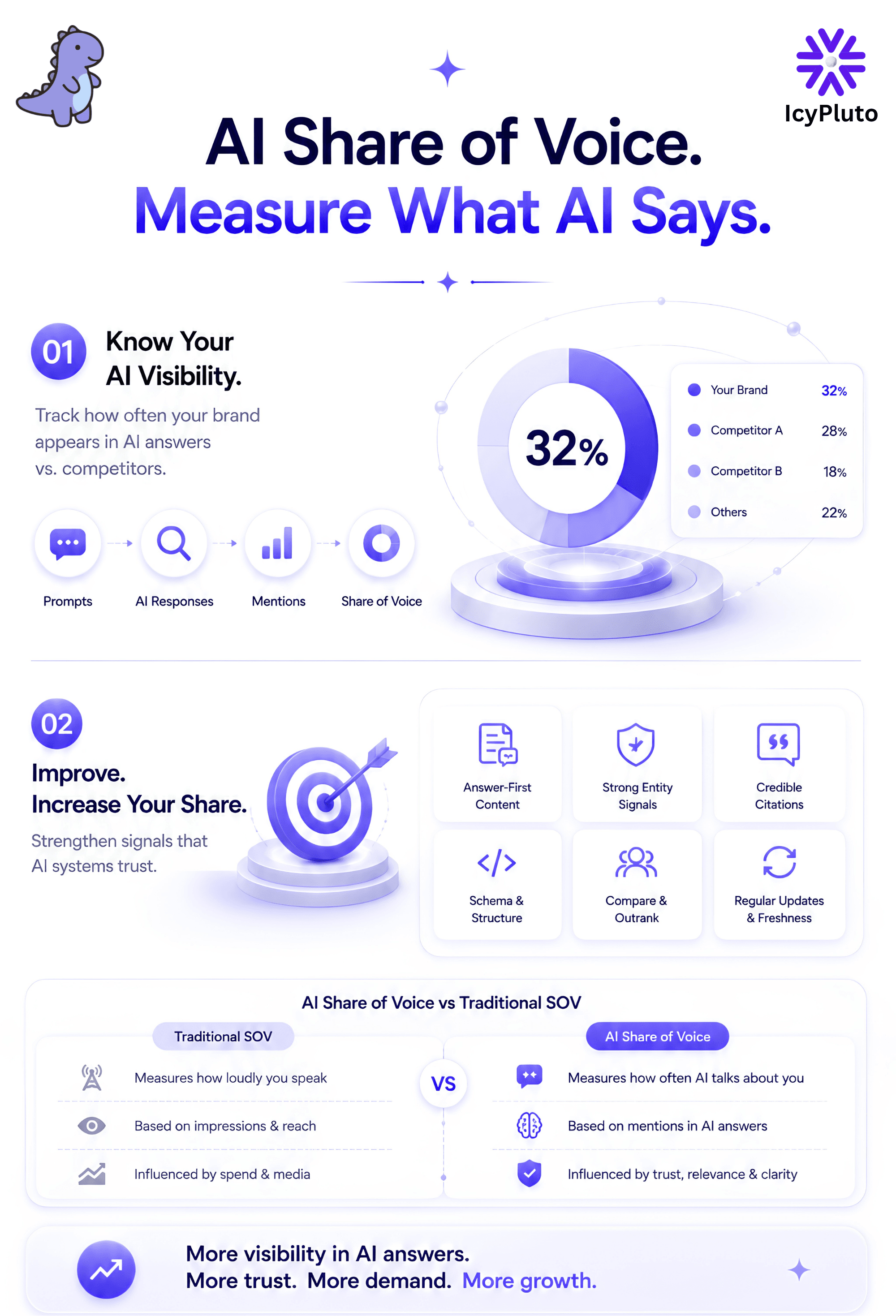
AI share of voice is the new visibility metric bra...
Search is no longer just about Google rankings. It is about being selected by AI systems.
A recent large-scale analysis of 68 million AI crawler visits reveals something most marketers are still underestimating. AI platforms are not just indexing content. They are curating, filtering, and prioritizing information differently than traditional search engines.
This shift is massive.
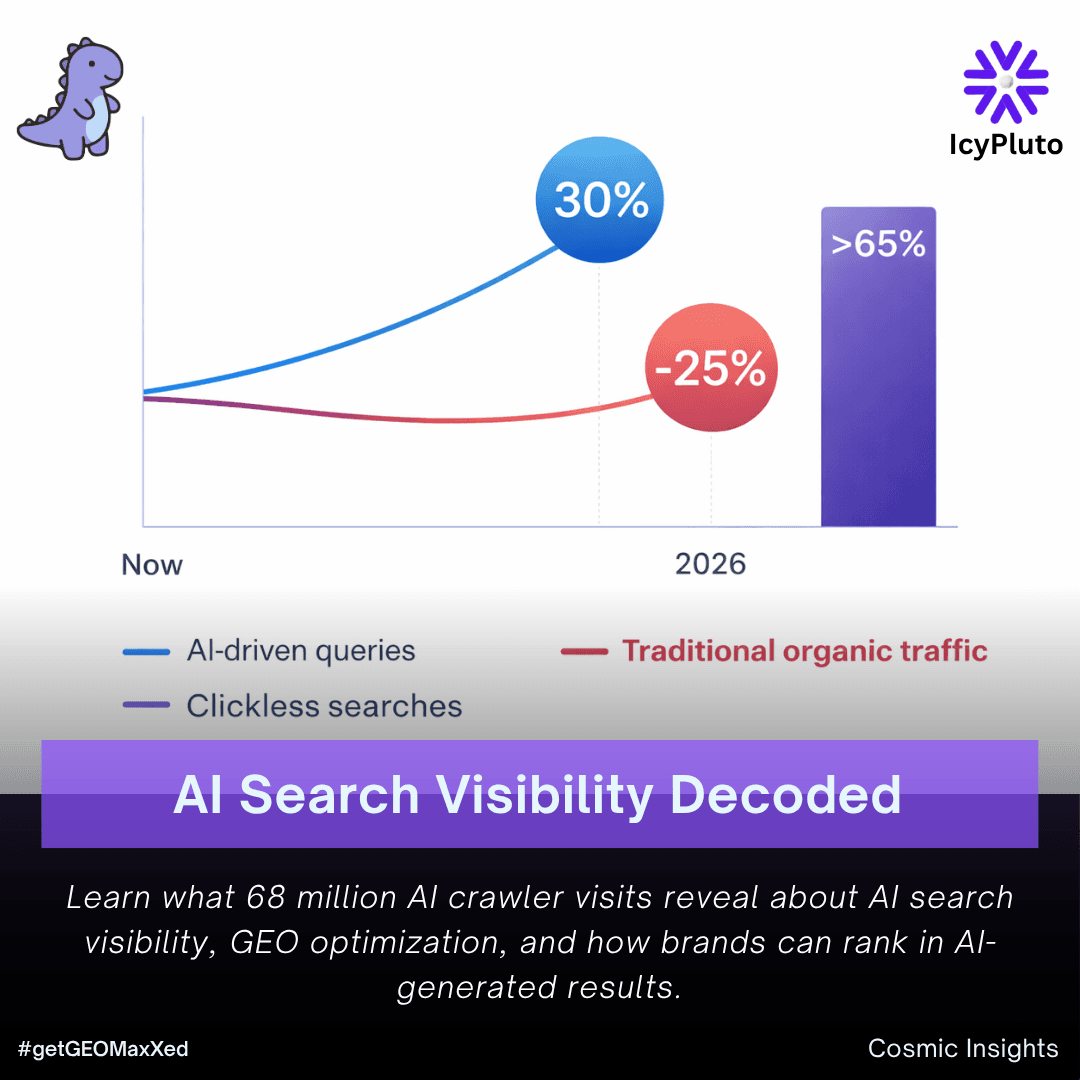
According to Gartner, 30% of all search queries will be AI-driven by 2026, while traditional organic traffic is expected to decline by 25%. At the same time, SparkToro reports that over 65% of searches already end without a click.
This means one thing.
Ranking is no longer the goal.
Inclusion in AI-generated answers is.
The dataset of 68 million crawler visits uncovers clear behavioral patterns in how AI systems discover and prioritize content.
First, AI crawlers behave differently from traditional bots like Googlebot. They are:
More selective in what they crawl
More focused on high-quality, structured content
More likely to revisit authoritative sources
Second, frequency of crawling is strongly tied to content freshness and topical authority.
Pages that are:
Regularly updated
Deeply informative
Contextually rich
are crawled significantly more often.
In fact, sites with strong topical authority saw multiple crawler visits per day, while low-value pages were ignored entirely.
This reinforces a critical insight:
AI systems do not just index content.
They continuously evaluate relevance and authority in real time.
Traditional SEO defined authority largely through backlinks.
But AI crawlers are shifting that definition.
The analysis shows that AI systems prioritize:
Contextual depth over keyword density
Entity relationships over isolated pages
Content clarity over content volume
According to a study by Google, pages with strong semantic relevance and structured information see up to 40% higher engagement.
This aligns with how AI models process information.
They do not rank pages.
They understand topics.
So instead of asking:
“How many backlinks do I have?”
The better question is:
“How clearly does my content explain and connect ideas?”
This is where Generative Engine Optimization (GEO) comes into play.
SEO was built for ranking pages.
GEO is built for influencing AI-generated outputs.
The crawler data highlights several GEO-driven factors that increase visibility:
Structured content with clear headings and hierarchy
Direct, concise answers within content
Strong internal linking between related topics
Consistent publishing across a niche
According to McKinsey, companies that adopt AI-driven content strategies see 20–30% improvements in engagement and conversion rates.
This is because AI systems favor content that is:
Easy to parse
Rich in context
Designed for answer generation
One of the most overlooked insights from the crawler analysis is the importance of content freshness.
AI crawlers prioritize sites that:
Update existing content regularly
Publish consistently within a topic
Maintain relevance over time
Websites with frequent updates saw significantly higher crawl rates, which directly impacts visibility in AI outputs.
According to HubSpot, companies that publish content 16+ times per month generate 3.5x more traffic than those that publish less frequently.
But here’s the nuance.
It is not just about publishing more.
It is about publishing intelligently within a focused domain.
Random content does not work.
Topical consistency does.
AI search is accelerating the shift toward zero-click behavior.
Users no longer need to visit websites.
They get answers directly from AI.
This creates a paradox.
Your content can influence millions of users without generating direct traffic.
According to Bain, 80% of consumers now rely on zero-click results for quick information, especially in mobile and AI-driven environments.
So the metric of success is evolving:
From:
Traffic
To:
Influence and visibility
Brands that understand this shift are optimizing not just for clicks, but for:
Mentions in AI answers
Inclusion in summaries
Authority within a topic
The crawler data makes one thing very clear.
Structure matters more than ever.
AI systems favor content that is:
Well-organized
Easy to scan
Logically connected
This includes:
Clear H2 and H3 hierarchies
Short, direct paragraphs
Contextual linking between sections
According to Nielsen Norman Group, users read only 20–28% of content on a page, which reinforces the need for clarity and structure.
For AI systems, this behavior is even more pronounced.
If your content is not structured well,
it is less likely to be:
Crawled frequently
Understood accurately
Included in responses
Tools like Semrush and Ahrefs still play a role in keyword research and performance tracking.
But they are built for a different era.
They optimize for:
Rankings
Keywords
Backlinks
They do not optimize for:
AI comprehension
Answer inclusion
Conversational queries
This is the gap modern marketers must address.
Because the future of search is not just about being found.
It is about being chosen by AI systems.
This is where IcyPluto becomes critical.
IcyPluto is designed specifically for this new search paradigm.
It helps brands:
Optimize content for GEO
Structure information for AI comprehension
Track visibility across AI platforms
Continuously refine content based on performance
According to Deloitte, brands that appear in AI-generated recommendations see up to 3x higher trust and conversion rates.
IcyPluto enables this by combining:
Strategy
Execution
Optimization
into a single Agentic AI system.
It does not just help you rank.
It helps you get referenced, cited, and recommended.
The biggest insight from the 68 million crawler dataset is this:
Search is becoming predictive and generative.
AI systems are not just retrieving information.
They are deciding what matters.
According to PwC, AI will contribute $15.7 trillion to the global economy by 2030, with search and discovery being major drivers.
This means:
The winners will not be those who rank highest.
But those who are most trusted by AI systems.
The era of traditional SEO is evolving rapidly.
AI crawlers are:
More selective
More intelligent
More focused on quality and context
To win in this new landscape, brands must:
Build topical authority
Optimize for GEO
Focus on structured, high-quality content
Prioritize AI search visibility over rankings
Because in the end, Google ranks pages. AI recommends brands.