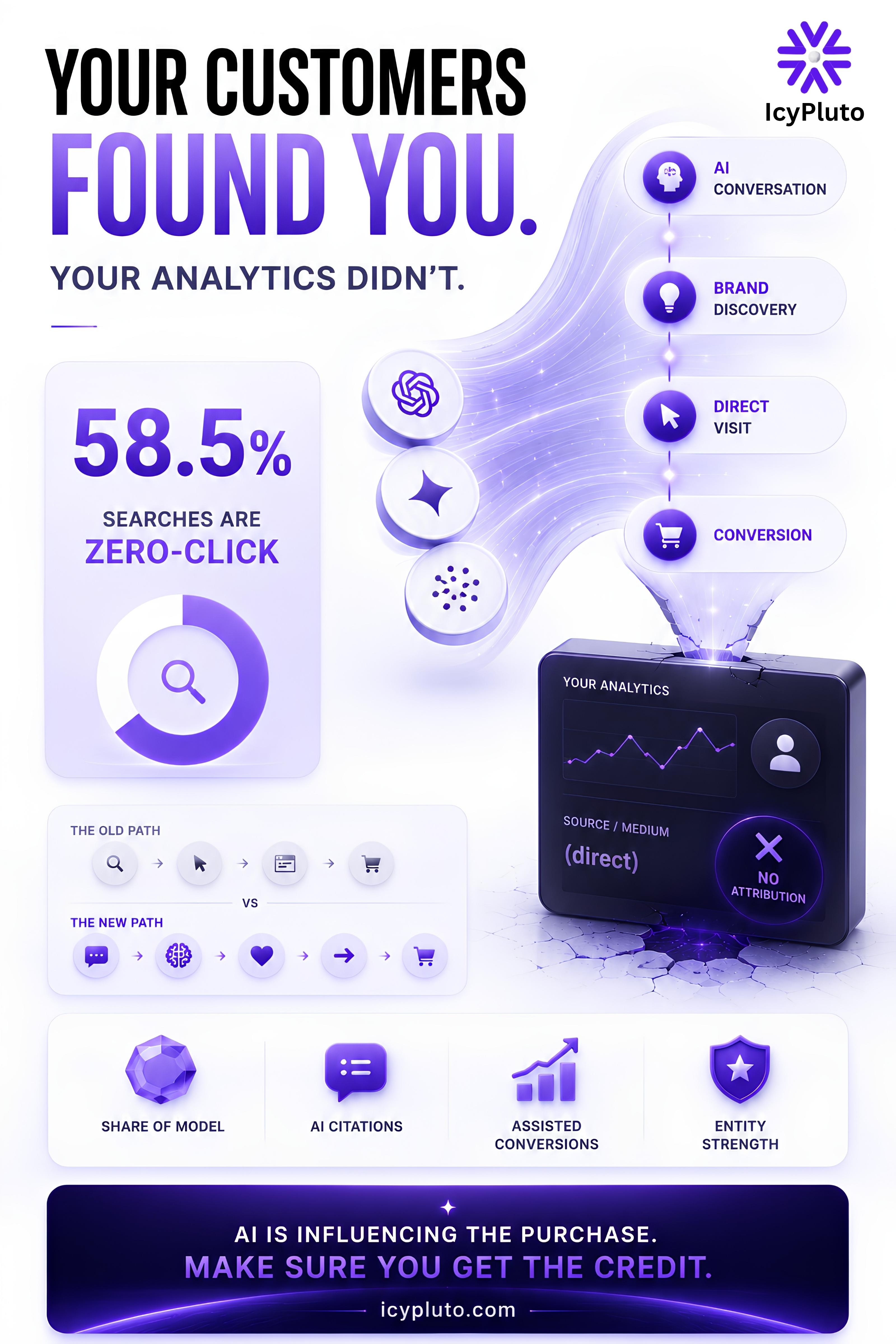
This blog reveals why traditional marketing attrib...
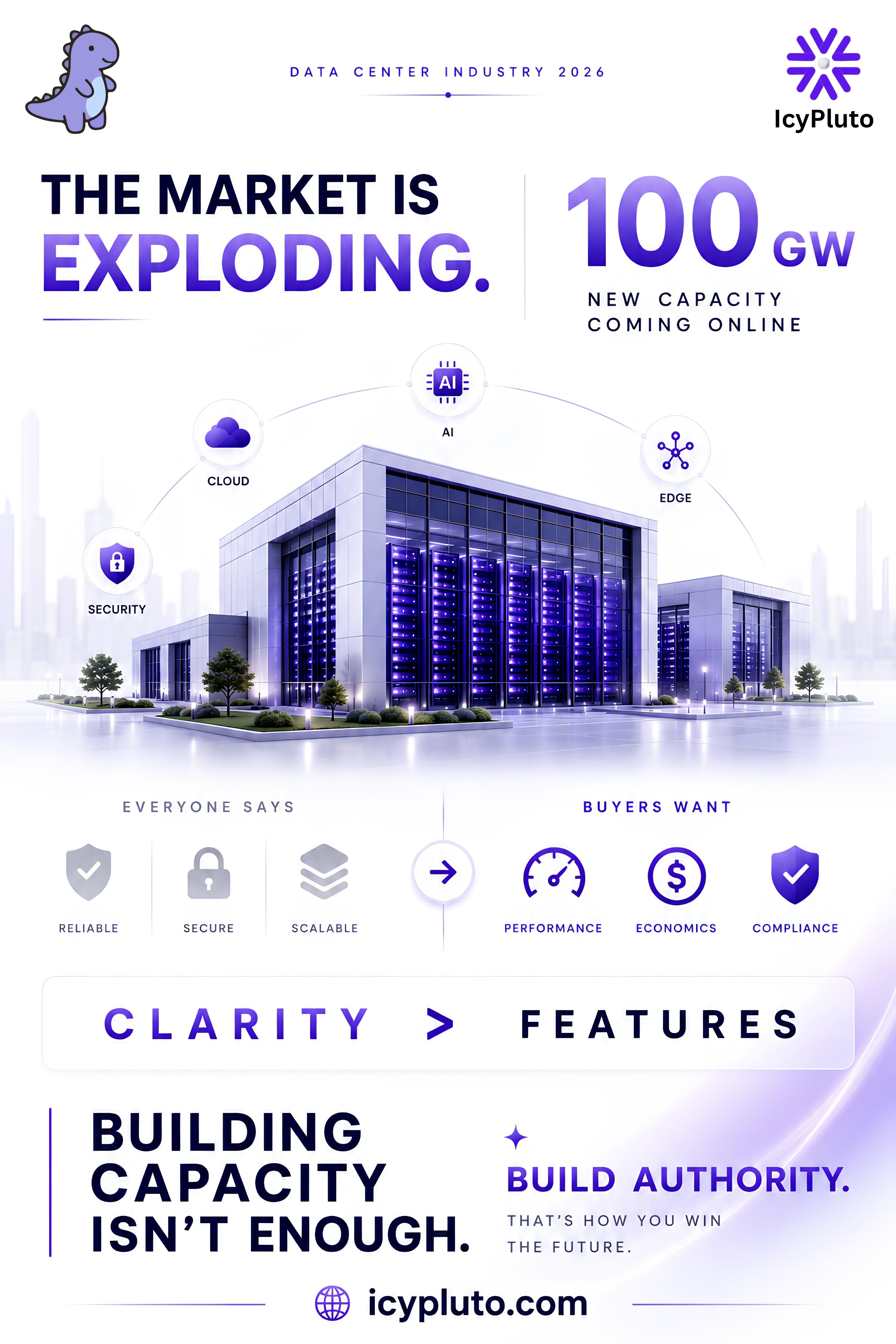
This blog explores the marketing gaps holding back...
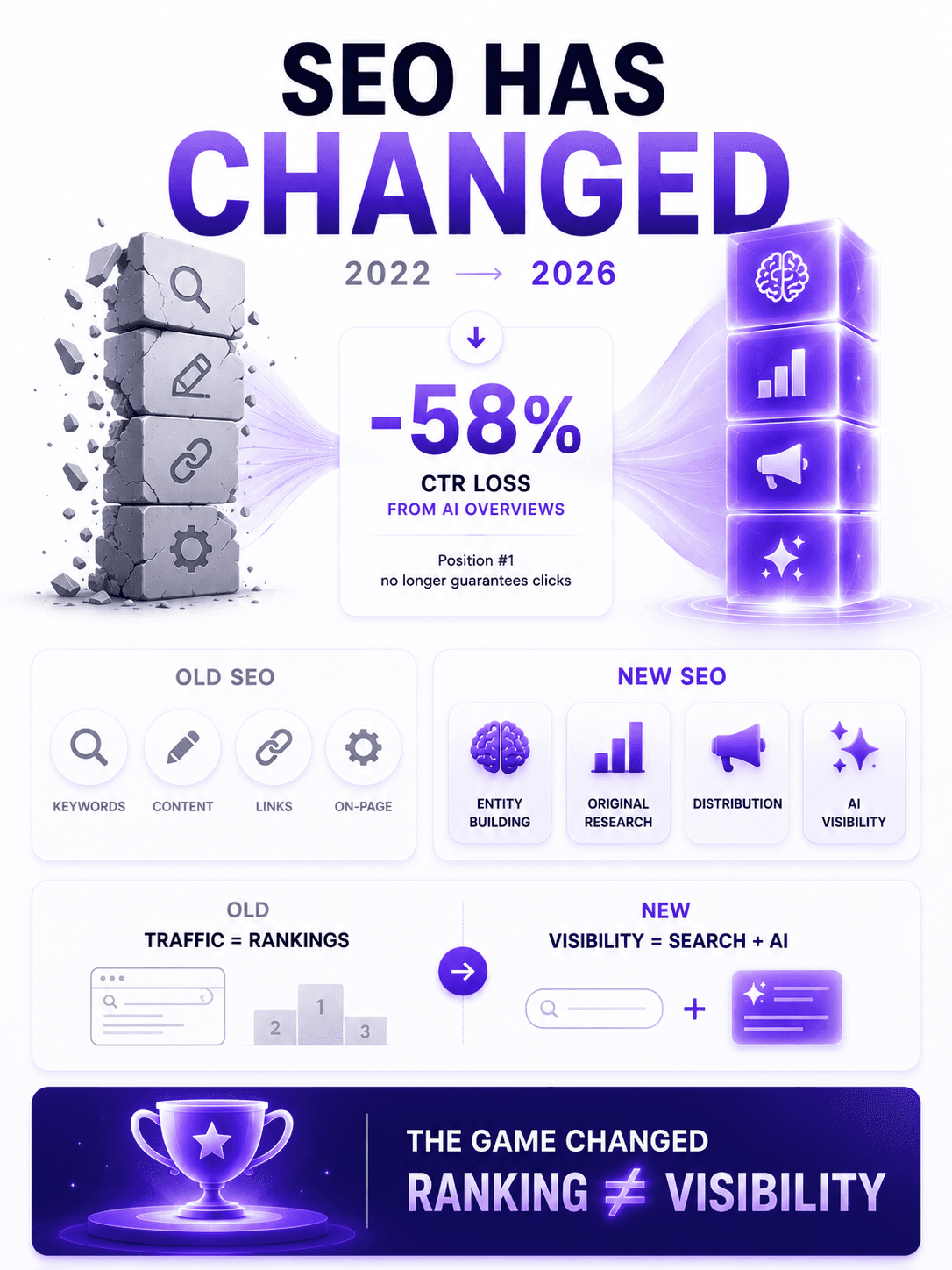
This blog reveals why traditional SEO work no long...
The internet as we know it was built by humans, for humans. Every button you click, every form you fill, every dropdown you scroll through was designed with a pair of human eyes in mind. But the year 2026 is rapidly proving that assumption obsolete. A new type of user is emerging — one that doesn't scroll, doesn't click hesitantly, and certainly doesn't abandon a cart at checkout. It reasons, it executes, and it transacts. That user is an AI agent.
Search Engine Land published an in-depth breakdown of WebMCP (Web Model Context Protocol) a proposed web standard now available as an early preview inside Chrome 146 and what it means for how AI agents interact with websites. The implications of this development extend far beyond the developer community. For brand marketers, SEO professionals, CMOs, and digital strategists, WebMCP represents the most consequential shift in web visibility since mobile-first indexing. It is not just an upgrade. It is a reinvention.
At IcyPluto, the Cosmos' First AI CMO, we've been watching this transformation unfold and building solutions in anticipation of exactly this moment. As AI-driven optimization — from GEO (Generative Engine Optimization) and AEO (AI Engine Optimization) to full-scale Agentic Optimization — becomes the new battleground for brand discoverability and revenue growth, WebMCP is the infrastructure that will decide who wins and who gets left behind. This article unpacks everything you need to know about WebMCP, why it matters for your brand, how to implement it, and how IcyPluto can help you get there before your competition does.
Before diving into strategy, it's essential to understand what WebMCP actually does — and more importantly, what it solves.
The Web Model Context Protocol is a proposed standard that exposes structured tools on websites, enabling AI agents to understand exactly what actions they can take on any given page and how to execute those actions programmatically. Rather than relying on visual inference — reading a page like a human would — an AI agent using WebMCP reads a structured manifest of available functions, inputs they accept, outputs they return, and the permissions they require.
As Search Engine Land explains it: "WebMCP exposes structured tools on websites, showing AI agents exactly what actions they can take and how to execute them." This is a clean, elegant description of a technically rich capability. Think of WebMCP as the API layer of your existing website — except instead of having to build a separate API, you're annotating what's already there.
The context here is important. AI agents are not a future technology — they are a present reality. Tools like ChatGPT Operator, Google's Gemini agents, and a growing roster of enterprise agentic platforms are already being asked to complete tasks on behalf of users. Book a hotel. Fill out an insurance form. Request a wholesale quote. Compare prices across three retailers. These are real tasks that real users are delegating to AI agents today, in 2026. The only question is whether your website is equipped to serve those agents — or invisible to them.
WebMCP, as first explained technically by Search Engine Land, operates through three core mechanisms that work in sequence:
Discovery is the first step. When an AI agent lands on a page, it asks a fundamental question: what can I do here? With WebMCP, the page responds with a structured list of tools — things like checkoutCart(), bookFlight(), searchProducts(), or requestQuote(). The agent doesn't need to guess what's available; the page tells it directly.
JSON Schemas form the second layer. Once an agent knows a tool exists, it needs to know how to use it. JSON schemas define the exact format of inputs and outputs for each tool. For example, a bookFlight() tool might specify that it accepts an origin city code, a destination city code, a departure date in ISO 8601 format, and a passenger count — and that it returns a confirmation number, a total price, and a booking status. There is no ambiguity. The agent knows exactly what to send and exactly what it will receive.
Dynamic State is the third and perhaps most sophisticated mechanism. Tools on a WebMCP-enabled page aren't static. They appear and disappear based on the current state of the page. A proceedToCheckout() tool only becomes available when a user (or agent) has items in their cart. A bookFlight() tool becomes accessible after dates have been selected. This ensures that agents only see relevant, actionable tools for the current context — making interactions far more reliable and efficient.
Together, these three mechanisms transform a website from a visual experience designed for human eyes into a functional interface designed for machine execution. The shift is as significant as the transition from physical storefronts to e-commerce websites in the late 1990s.
To appreciate WebMCP's value, you have to understand the two broken approaches that AI agents are currently forced to use when interacting with websites, as outlined by Search Engine Land.
The first is UI automation, sometimes called screen scraping. Here, an AI agent reads the visual interface, identifies buttons and form fields by their text or class names, and attempts to interact with them as a human would. The critical flaw is brittleness. Every website update — a redesigned button, a renamed field, a repositioned form, a newly launched A/B test — can break the agent's understanding of the page entirely. What worked on Tuesday may fail completely by Thursday. For brands, this means inconsistent and unreliable agent interactions that damage user trust and conversion rates.
The second approach is formal APIs. APIs are structured and reliable, but they come with a massive limitation: most websites simply don't have them, and those that do frequently omit features or data that are accessible through the UI. Building and maintaining a comprehensive public API is expensive, time-consuming, and requires ongoing engineering investment.
WebMCP is the elegant bridge between these two imperfect extremes. It takes the structure and reliability of an API and applies it directly to the existing web interface — without requiring brands to maintain a separate integration layer. As Search Engine Land puts it, WebMCP is "the missing middle ground" — and for brands trying to serve the next generation of AI-powered users, that middle ground is where revenue lives.
In the digital marketing world, we've seen sea changes before. The rise of mobile-first indexing forced brands to rebuild their websites from the ground up. The introduction of Core Web Vitals rewrote the standards for user experience performance. The emergence of Featured Snippets changed how we structure content. Each of these shifts rewarded early movers and punished those who waited.
WebMCP is not merely the next item on that list. It is a category-defining shift — one that doesn't just change how your website ranks, but fundamentally changes whether your website functions in an AI-driven web ecosystem.
Search Engine Land draws the comparison explicitly: "Just as websites optimized for search engines in the 2000s, WebMCP represents the next evolution: optimization for AI agents." The brands that became search-engine-ready in 2003 built competitive moats that lasted for years. The brands that dismissed early SEO signals found themselves paying dearly for visibility that their competitors had organically earned. History is about to repeat itself — except this time, the stakes are higher, the timeline is shorter, and the competitive advantages are steeper.
The marketing technology landscape is converging on a unified goal: making brands visible, trustworthy, and actionable across every layer of the AI-driven discovery and transaction stack. This isn't four separate disciplines anymore. It's one interconnected mission.
Traditional SEO remains essential — it ensures your content is crawlable, indexable, and authoritative in the eyes of search engines. AEO (AI Engine Optimization) extends that work into AI answer environments, ensuring that when users ask conversational questions to ChatGPT, Gemini, Perplexity, or Claude, your brand's expertise surfaces in the response. GEO (Generative Engine Optimization) takes it further, engineering your content and schema so that AI-generated results cite your brand with consistency and authority. And now, Agentic Optimization — of which WebMCP readiness is the foundational layer — ensures that when an AI agent is actively trying to complete a task on behalf of a user, your website is the one that gets called, executed, and transacted with.
At IcyPluto, this convergence isn't a future vision — it's our present operational framework. As the Cosmos' First AI CMO, IcyPluto was built specifically to navigate brands through this multi-layer AI visibility stack. Our platform already serves brands in GEO and AEO readiness through tools like IcyGeoMax, our generative engine optimization solution. WebMCP readiness is the natural and urgent next step in that journey — and it's one we are actively building for our clients right now.
One of the most important things to understand about WebMCP is that the business case for adoption isn't theoretical. The agent-driven web isn't coming — it's here. Consumer-grade AI assistants are already performing tasks on the web. Enterprise procurement teams are already deploying agents to manage vendor qualification, RFQ submissions, and logistics rate shopping. Insurance brokers are exploring agentic tools for multi-carrier quote comparison. Retail buyers are using agents to scan inventory levels and trigger purchase orders across multiple distributors.
Every one of these use cases requires the target website to be structured in a way that AI agents can reliably interact with. Today, most of those interactions are fragile, inconsistent, or simply impossible. WebMCP changes that equation. Brands that implement it first will be the ones that agents return to, learn to trust, and transact with repeatedly. Brands that don't implement it will be invisible to the fastest-growing category of web users in history.
Abstract standards become real when you ground them in concrete business scenarios. Search Engine Land's reporting on WebMCP includes a rich set of use cases that illustrate exactly how this standard transforms both B2B and B2C commerce. Let's explore them with a marketer's lens.
Industrial and Manufacturing Supply Chains are among the most immediately impacted verticals. When an industrial supplier exposes a requestQuote() tool via WebMCP, a procurement agent can submit identical RFQ (Request for Quotation) packages across dozens of vendors in seconds — without adapting to each site's unique form layout, required field format, or submission process. The vendor that is WebMCP-ready gets the quote submitted cleanly. The vendor that isn't gets skipped.
Logistics and Freight represents another high-value use case. Carriers that expose getShippingRate() and schedulePickup() tools become instantly accessible to logistics optimization agents. A buyer's agent can query ten carriers simultaneously, compare rates in real time, and execute a booking — all without a human touching the keyboard. For freight brokers and third-party logistics providers, WebMCP readiness could become a core procurement requirement within 24 to 36 months.
Commercial Insurance is equally ripe for disruption. Carriers that expose requestPolicyQuote() tools enable broker agents to submit the same client business information across multiple insurer portals in a single automated workflow, compare coverage options side by side, and present a structured recommendation — without the manual data re-entry that currently makes multi-carrier quoting so labor-intensive.
Wholesale and Distribution networks stand to see fundamental changes in how purchasing decisions are made. Distributors that expose checkInventory() and getVolumePricing() tools allow purchasing agents to query stock levels and volume pricing across their entire supplier network simultaneously, selecting the optimal combination of availability and unit cost automatically.
The common thread across all these B2B scenarios is speed, accuracy, and accessibility. The brands that are WebMCP-ready will be selected by agents not because they are necessarily the cheapest or the most well-known — but because they are the most interoperable. In an agent-driven procurement world, accessibility is a competitive advantage.
On the consumer side, the transformation is equally profound — and more immediately visible to everyday users.
Multi-Retailer Price Comparison and Automated Purchasing will fundamentally reshape e-commerce. When retailers expose searchProducts() and checkPrice() tools, a consumer's AI agent can query their entire shopping list across multiple retailers, compare prices, check availability, apply loyalty discounts, and execute purchases — all in a single conversational command like "buy me everything on my grocery list for the lowest total cost." The retailers who win this interaction are the ones whose websites speak WebMCP.
Restaurant Discovery and Reservations offer a compelling consumer-facing example. Restaurants that expose browseMenu() and reserveTable() tools enable agents to check real-time availability, search menus for dietary requirements, compare options across neighborhoods, and book a table — all without the consumer ever opening a browser. For restaurants, this means that discoverability is no longer driven purely by Google Maps rankings or Yelp reviews, but by functional agent-readiness.
Travel Planning Across Providers is perhaps the most transformative B2C use case. Airlines, hotels, and car rental companies that expose searchAvailability() and bookReservation() tools become accessible to AI travel agents that can assemble complete, personalized itineraries across multiple providers without the user ever visiting an aggregator platform like Expedia or Kayak. This has enormous implications for both direct-booking revenue and the long-term relevance of travel aggregators.
Real Estate Search and Tour Scheduling round out the picture. Property listing platforms and individual agencies that expose searchProperties() and scheduleShowing() tools enable buyer agents to search across listing platforms, apply detailed filter criteria, and schedule property tours — creating a frictionless end-to-end property discovery experience powered entirely by AI.
For brand marketers, the takeaway from these scenarios is unambiguous: in every vertical and every consumer category, WebMCP readiness will determine whether your brand gets included in the agent-driven transaction — or excluded from it entirely.
Understanding the business case for WebMCP is one thing. Knowing how to actually implement it is another. Search Engine Land's technical breakdown, drawing on Google's early preview documentation, identifies two primary implementation approaches: the Imperative API and the Declarative API.
The Imperative API allows developers to define tools directly through JavaScript, using a new browser interface called navigator.modelContext. This approach is ideal for dynamic web applications where the available actions depend heavily on the application's current state.
To register a tool using the Imperative API, developers provide four pieces of information: a name that the agent will call (e.g., searchProducts), a description that helps the agent understand what the tool does, an input schema that specifies the exact format of the data the tool accepts, and an execute function that runs the actual logic when the agent calls the tool.
Developers also have granular control over tool lifecycle management. The registerTool() method adds a single tool. The provideContext() method replaces the full set of available tools — useful when an application undergoes a significant state change, like a user completing authentication and gaining access to new functionality. The unregisterTool() and clearContext() methods remove tools when they're no longer relevant to the current page state.
The sophistication of the Imperative API makes it particularly powerful for complex applications — enterprise portals, multi-step booking flows, personalized dashboards — where the set of available actions is fluid and context-dependent.
For businesses that don't have the engineering bandwidth to implement a fully programmatic solution, the Declarative API offers a compelling alternative. This approach transforms standard HTML forms into agent-compatible tools simply by adding a few HTML attributes — making it accessible to virtually any website, regardless of the complexity of its underlying codebase.
The magic lies in three HTML attributes:
toolname: Gives the form a machine-readable identity that agents can call
tooldescription: Explains what the form does in plain language that the agent can parse
toolautosubmit: When set, instructs the browser to automatically submit the form once an agent has populated the fields
When these attributes are present on a standard HTML form, Chrome automatically translates the form's fields into a structured JSON schema that AI agents can interpret. From the agent's perspective, the annotated form is functionally identical to a programmatic tool registered via the Imperative API.
The strategic implication here is enormous: existing websites with standard HTML forms can become agent-compatible with minimal code changes. For businesses that have been reluctant to invest in WebMCP because of perceived implementation complexity, the Declarative API eliminates that barrier almost entirely.
Google's early preview documentation, as reported by Search Engine Land, includes practical guidance for designing effective WebMCP tools. These best practices are worth understanding in detail, because they separate functional implementations from truly excellent ones.
Use specific, honest action verbs in tool names. The name of a tool should reflect what it actually does — not what sounds impressive. createEvent should mean the event is created immediately upon execution. startEventCreationProcess should be used if the tool navigates the user to a UI form that requires further human interaction. This distinction prevents agents from calling tools with incorrect expectations about the outcome.
Accept raw user input without requiring pre-processing. If a user tells an agent "I want a meeting from 11:00 to 15:00," the WebMCP tool should accept those time strings directly. It should not require the agent to convert them into minutes from midnight or Unix timestamps before submission. The tool's logic should handle normalization internally. When you offload data transformation to the agent, you introduce error and unpredictability into the workflow.
Validate inputs in code, not just in schema. JSON schemas provide guidance and structure, but they are not foolproof. Agents can pass inputs that technically conform to a schema but are semantically invalid in your business context. When validation fails, return descriptive, actionable error messages that explain what went wrong and how to correct it. Agents that receive clear error feedback can self-correct and retry — dramatically improving interaction success rates.
Keep tools atomic and composable. Each WebMCP tool should do exactly one thing. Avoid building sprawling, multi-purpose tools that try to handle multiple scenarios. Avoid creating overlapping tools with subtle functional differences that confuse the agent's tool selection logic. Design each tool to be a clean, single-responsibility unit — and let the agent orchestrate the workflow by combining them.
Ensure the UI reflects completed actions before returning. When a tool finishes executing an action, the page's visual interface should update to reflect that change before the tool returns its response. Agents frequently verify success by checking the updated interface, then use that visual confirmation to plan their next step. If the UI hasn't updated when the tool returns, the agent may misinterpret the state of the transaction and take incorrect follow-up actions.
Knowing that WebMCP is coming — and understanding why it matters — is the easy part. The hard part is execution: auditing your existing web infrastructure, identifying which tools and forms need to be annotated or rebuilt, designing schemas that serve agents effectively, testing interactions across different agent platforms, and building the strategic positioning that ensures your brand is chosen by agents when options are available.
This is precisely where IcyPluto, the Cosmos' First AI CMO, enters the picture.
IcyPluto was built on a foundational insight: the rules of brand visibility are being rewritten by AI, and most brands are not equipped to keep up. When we launched our IcyGeoMax platform, we were addressing the immediate challenge of Generative Engine Optimization — ensuring that brands appear, with authority and accuracy, in AI-generated answers across ChatGPT, Gemini, Perplexity, and other large language model interfaces.
GEO was, and remains, a critical battlefield. But it is one layer of a multi-layer challenge. Being cited in an AI answer is valuable. Being called — having your website's tools actually invoked by an AI agent completing a task on behalf of a user — is a different order of magnitude of value entirely. A citation is visibility. A tool call is a transaction.
WebMCP is the infrastructure that transforms visibility into transactability. And IcyPluto is the platform that bridges your brand from where it is today to where it needs to be in the agent-driven web.
IcyPluto's approach to WebMCP readiness is built on a three-phase methodology that mirrors our broader AI marketing philosophy: Audit, Architect, Accelerate.
Phase One — Agent Readiness Audit: Before any implementation work begins, our AI-powered audit process maps your existing web architecture against the requirements of WebMCP compatibility. We identify every high-value interaction point on your website — forms, checkout flows, booking systems, search interfaces, quote request pages — and assess whether they are currently navigable by AI agents, and at what reliability level. This audit produces a prioritized roadmap that sequences implementation work by business impact.
Phase Two — WebMCP Architecture Design: Using the insights from the audit, our team designs the tool schema architecture that will make your website agent-readable. For each high-value interaction point, we define tool names, write clear tool descriptions, design JSON schemas for inputs and outputs, and specify the state conditions under which each tool should be available. We apply Google's best practice guidelines throughout this design process, ensuring that the tools we build are not just functional but optimized for agent adoption.
Phase Three — Implementation and Testing: Using a combination of the Declarative API (for existing HTML forms that can be annotated with minimal code changes) and the Imperative API (for dynamic application states that require programmatic tool registration), we implement WebMCP compatibility across your website's priority interaction surfaces. We then test using the Model Context Tool Inspector, Google's Chrome extension for verifying WebMCP implementations, and validate interactions across multiple agent platforms.
For brands that are already IcyPluto clients, WebMCP readiness integrates seamlessly with your existing GEO and AEO strategy. Your brand's authority in AI answer environments — built through IcyGeoMax — becomes the trust signal that agents rely on when selecting which WebMCP-enabled websites to interact with first. Your content strategy — developed and executed through IcyQuill, our AI content intelligence platform — ensures that the descriptive text accompanying your WebMCP tools is optimized for agent comprehension. And your brand's event presence — at landmark stages like the AI World Summit, the International Marketing Forum (IMF) Singapore, and Brands of Tomorrow Roundtables — establishes the industry authority that makes agents prefer your brand over competitors in the same vertical.
WebMCP is not a standalone technical project. It is a strategic layer in a comprehensive AI marketing architecture. And IcyPluto is the only platform designed to manage that architecture end-to-end.
WebMCP is currently available as an early preview behind a feature flag in Chrome 146. It is not yet production-ready for general web deployment, but it is fully functional for developer testing, early experimentation, and strategic planning. Here's exactly how to access it.
You'll need Chrome version 146.0.7672.0 or higher to access the WebMCP preview. You'll also need basic familiarity with Chrome flags — the experimental feature toggles that Chrome uses to preview capabilities before they reach general availability.
Setting up the WebMCP testing environment is a straightforward four-step process:
Open Chrome and navigate to chrome://flags/#enable-webmcp-testing in the address bar
Locate the "WebMCP for testing" flag in the experimental features list that appears
Set the flag to "Enabled" using the dropdown menu next to the flag entry
Relaunch Chrome when prompted to apply the configuration change
Once Chrome has relaunched with the flag enabled, you can install the Model Context Tool Inspector Extension from the Chrome Web Store. This extension is Google's official tool for inspecting WebMCP implementations in the wild.
The Model Context Tool Inspector is a developer-focused Chrome extension that provides a real-time window into the WebMCP tools registered on any page you visit. Once installed and active, it displays:
The complete list of tools currently registered on the active page
The JSON schemas for each tool's inputs and outputs
The current availability state of each tool (i.e., whether the conditions for its activation are currently met)
Beyond passive inspection, the extension also allows active testing. You can execute tools manually with custom parameter values to verify that the input and output schemas behave as expected. You can also test tools with an AI agent using Gemini API support, simulating the experience of a real agent interacting with your website.
Google has also published a live travel demo at googlechromelabs.github.io/webmcp-tools/demos/react-flightsearch/ that demonstrates the complete agent interaction flow — from tool discovery through natural language invocation to structured result processing. Walking through this demo is arguably the fastest way to develop an intuitive understanding of what WebMCP looks like in practice, not just in theory.
The window for first-mover advantage in WebMCP is open right now — but it won't stay open indefinitely. As Search Engine Land observes, WebMCP is still in early preview, and the final specification will evolve. But that evolution is a reason to start early, not a reason to wait. The brands that begin experimenting, learning, and building their WebMCP strategy today will be the ones best positioned to deploy rapidly when the standard reaches production readiness.
Here's the framework we recommend to all IcyPluto clients:
Start with a self-audit. Map every high-value interaction surface on your website. Which forms represent your highest-converting user journeys? Where do users most frequently abandon because the process is too complex? These are the exact points where WebMCP will deliver the greatest ROI — because they're the points where agents will be most eager to step in and complete transactions on behalf of users.
Test Chrome 146 with your own website. Set up the WebMCP flag, install the Model Context Tool Inspector, and visit your own website. What do you see? If the answer is "nothing" — no registered tools, no discoverable functions — then you're seeing exactly what AI agents currently see when they arrive at your site: a wall of visual elements they have to guess their way through.
Prioritize the Declarative API for quick wins. If your website has standard HTML forms — contact forms, booking forms, request-a-quote forms, lead capture forms — implementing basic WebMCP compatibility via the Declarative API may require nothing more than adding three HTML attributes. This is an immediate, low-cost action that delivers measurable agent-readiness benefits.
Partner with IcyPluto for strategic implementation. Quick wins at the form level are a starting point, not a strategy. Building a comprehensive WebMCP architecture — one that covers your entire high-value interaction surface, integrates with your GEO and AEO strategy, and positions your brand as the preferred agent-interaction destination in your vertical — requires the kind of structured, AI-native marketing expertise that IcyPluto was built to provide. Our team is already working with forward-thinking brands to design and deploy WebMCP strategies ahead of the standard's general availability rollout.
Stay engaged with the evolving specification. The Chrome team is actively iterating on WebMCP and the surrounding AI capabilities in Chrome. The version available in Chrome 146 is a starting point, not a finished product. IcyPluto monitors these developments in real time and updates client strategies as the specification evolves — so our clients never have to choose between moving fast and staying aligned with the standard.
It is tempting to categorize WebMCP as one more developer technology to add to the backlog — interesting, but not urgent. That temptation is a strategic trap. The emergence of AI agents as primary web users is not a trend that can be tracked, measured, and responded to at leisure. It is a structural shift that is already underway, already affecting brand discoverability, and already rewarding the brands that prepared for it.
Search Engine Land frames it with the clarity that the moment demands: "The websites that win in an agent-driven web will be those that make it easy for AI to complete tasks, not just find information."
This is the essential insight. For the better part of two decades, digital marketing has been organized around the goal of being found — by search engines, by social algorithms, by AI answer engines. Being found remains necessary. But in an agent-driven web, being found is no longer sufficient. Your brand must be functional — structured, predictable, and agent-executable — or it will be invisible to the users who matter most.
At IcyPluto, we have built the Cosmos' First AI CMO precisely for this moment. The brands that will dominate the next decade of digital commerce are the ones that don't just appear in AI answers — they get invoked, transacted with, and trusted by AI agents operating at scale. WebMCP is the key to that transformation. IcyPluto is the guide.
The agent-ready web is being built right now, in Chrome 146, in developer preview environments, in the strategic planning sessions of forward-thinking brands. The question is not whether your brand will need to be part of it. The question is whether you'll be there on day one — or scrambling to catch up.