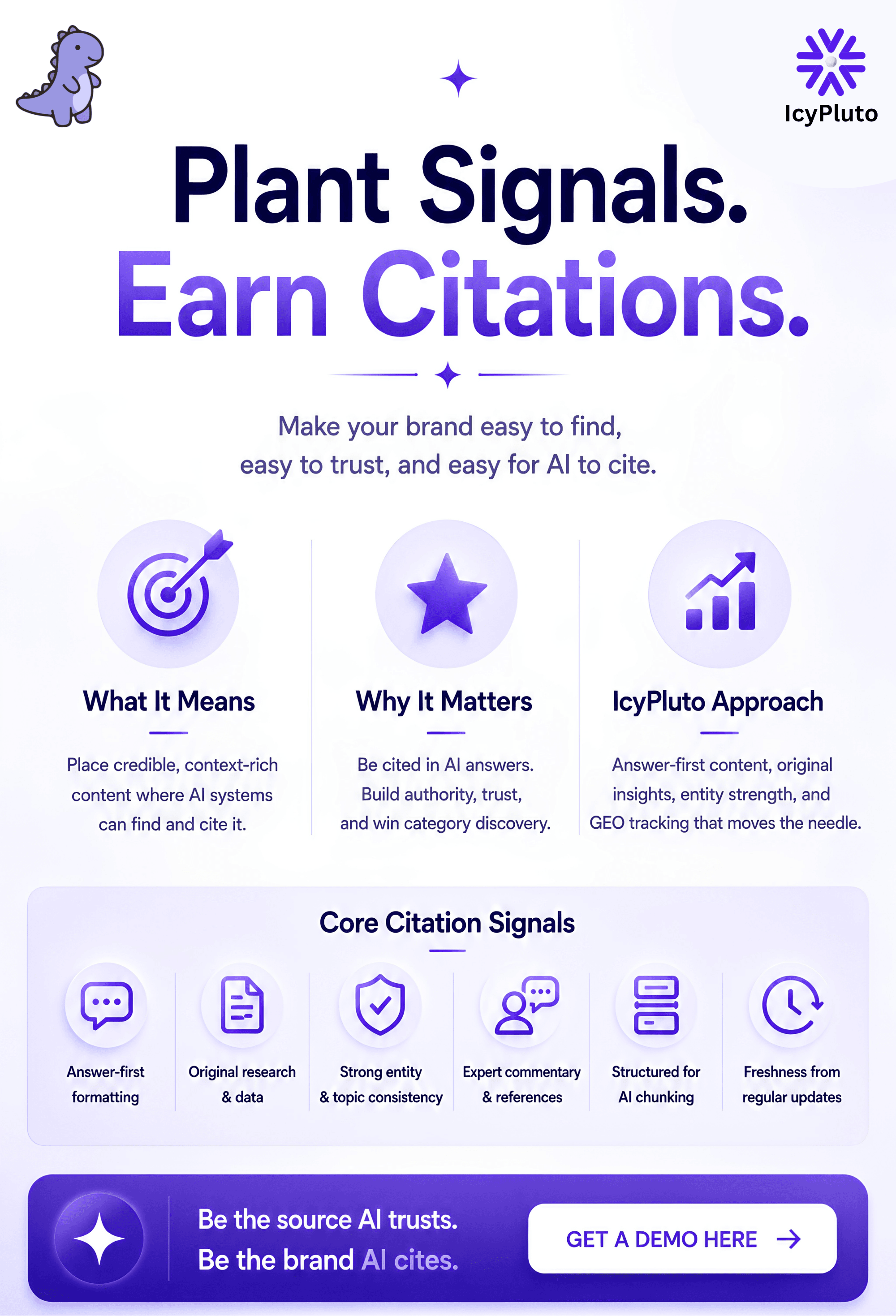
Citation seeding is becoming one of the fastest wa...
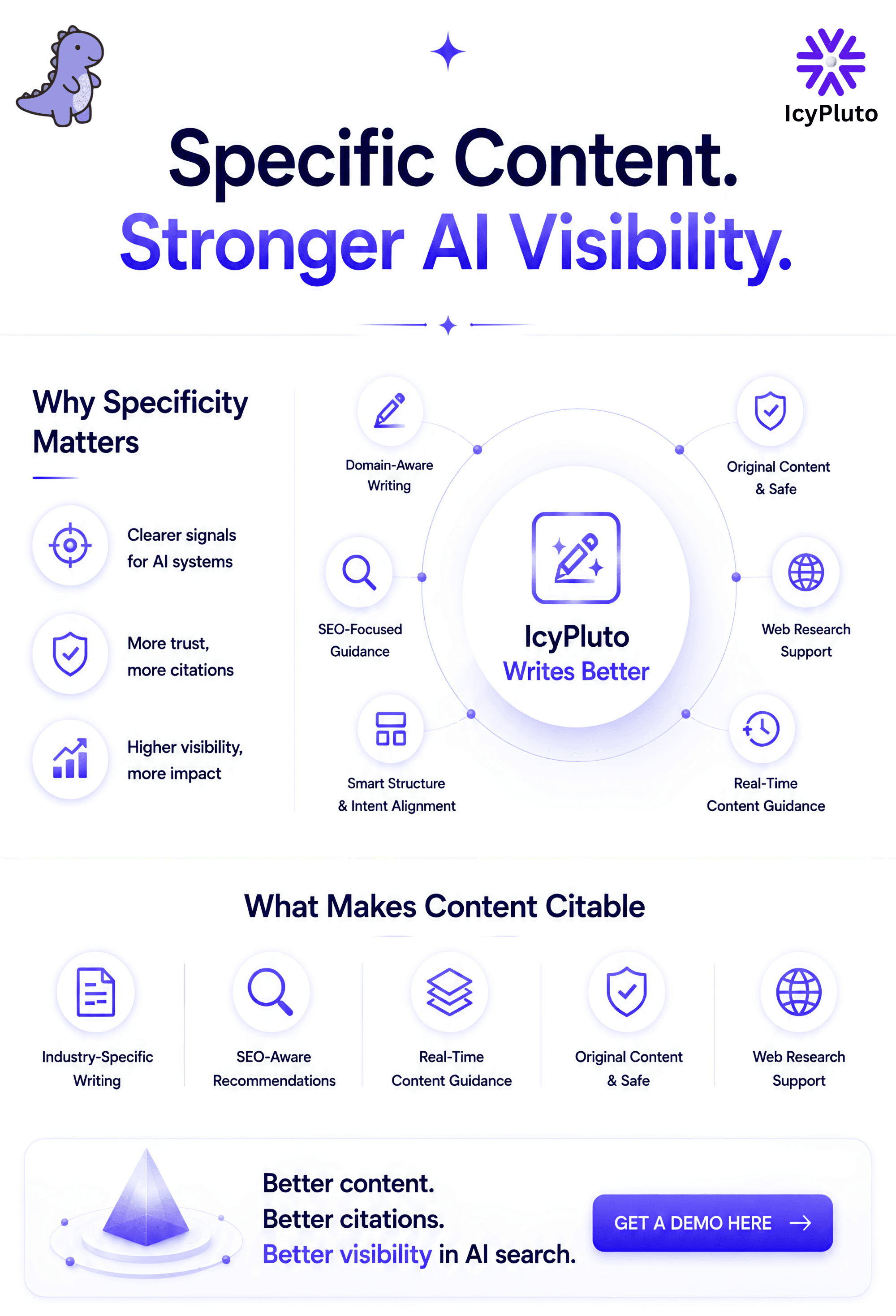
AI SEO writing is getting more specific, and that ...
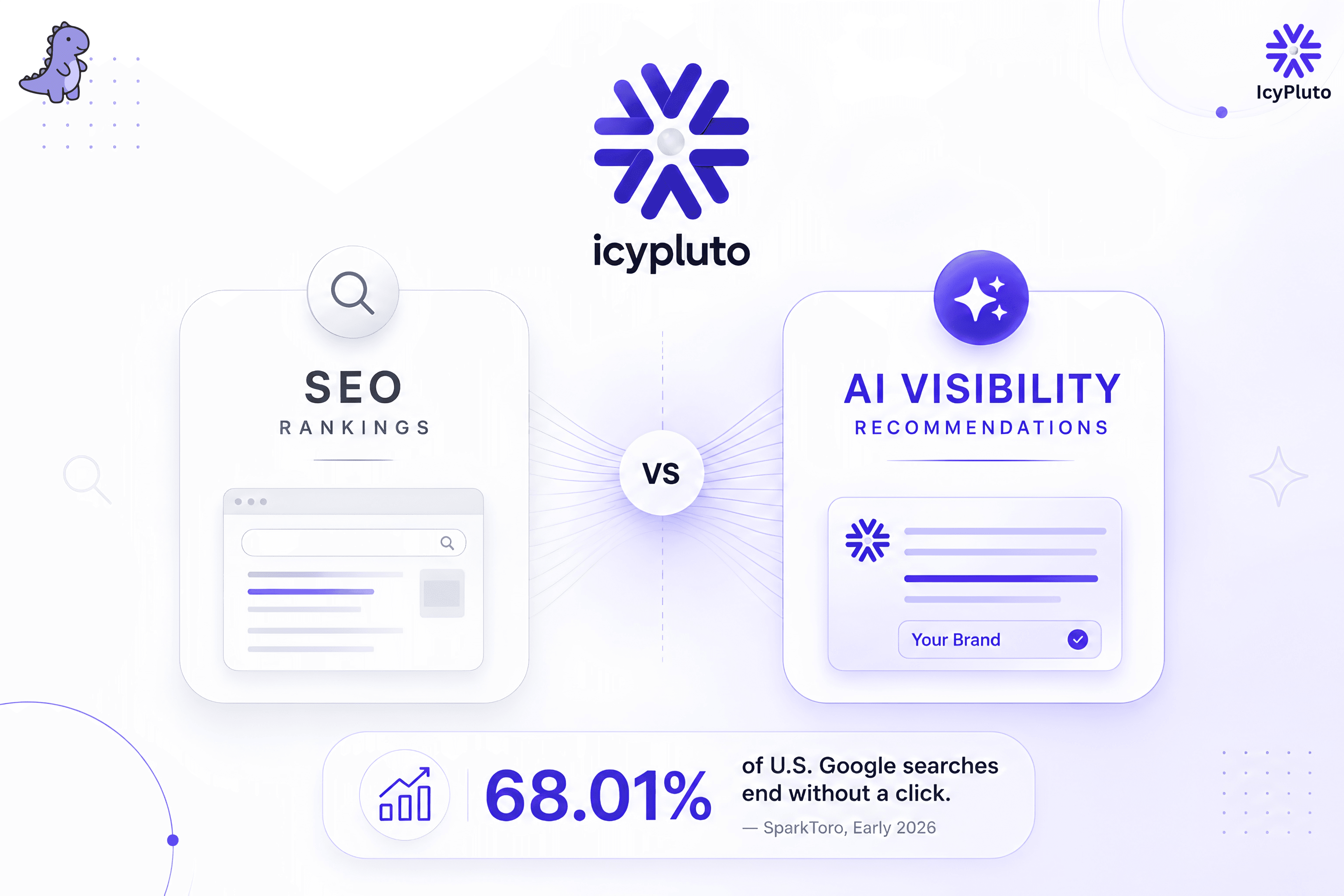
AI search is changing how brands get discovered, a...
Search is no longer just about ranking on Google.
It is about being selected by AI.
In 2026, the search ecosystem has split into three distinct layers:
Traditional SEO, focused on ranking pages
Generative Engine Optimization (GEO), focused on influencing AI-generated responses
Answer Engine Optimization (AEO), focused on becoming the direct answer
Yet, according to Gartner, over 68% of brands are still allocating the majority of their resources to traditional SEO alone.
That is a massive strategic misalignment.
Because the way people search, and more importantly, how results are delivered, has fundamentally changed.

Search Engine Optimization (SEO) has been the backbone of digital visibility for over two decades. It focuses on ranking webpages on platforms like Google through keywords, backlinks, and technical optimization.
But the dominance of SEO is shrinking.
According to Statista, organic click-through rates for top-ranking results have dropped by nearly 25% over the past few years due to SERP features, AI summaries, and zero-click searches.
At the same time, data from SparkToro shows that over 60% of Google searches now end without a click.
This means visibility without clicks is becoming the norm.
SEO is not dead. But it is no longer sufficient.
The non-obvious insight here is that SEO is shifting from a traffic acquisition strategy to a data supply strategy. Your content is no longer just for users. It is training material for AI systems.

Generative Engine Optimization (GEO) is the practice of optimizing content so that it gets picked, cited, and synthesized by AI systems.
Platforms powered by models from OpenAI and Google’s generative search experiences are changing how answers are delivered.
Instead of showing 10 blue links, AI generates a single, consolidated response.
According to McKinsey & Company, generative AI could influence up to 70% of customer interactions in digital channels by 2030.
This has massive implications.
In GEO:
Ranking does not guarantee visibility
Authority and clarity matter more than backlinks alone
Structured, high-confidence content gets prioritized
The key shift is this:
You are no longer competing for clicks. You are competing for inclusion in answers.
Answer Engine Optimization (AEO) is about becoming the final answer, not just an option.
This includes optimizing for:
Featured snippets
Voice search responses
AI answer boxes
According to Google, over 40% of searches now trigger some form of direct answer result. Meanwhile, voice search adoption continues to grow, with millions of users relying on assistants for quick answers.
AEO requires a different approach:
Concise, structured responses
Clear question-answer formatting
High semantic relevance
The deeper insight is that AEO is about trust compression. Users are outsourcing decision-making to machines. The machine selects one answer. That answer wins everything.
Most marketers treat these as overlapping concepts.
They are not.
They represent different layers of the search stack.
SEO = Get ranked
GEO = Get referenced by AI
AEO = Become the answer
According to Deloitte, companies that adapt to multi-layered search strategies see up to 2.5x higher visibility across digital channels.
Here is the non-obvious insight:
You can rank #1 on Google and still be invisible in AI search.
That is already happening.
The biggest issue is not lack of tools.
It is outdated mental models.
Most SEO strategies are still built around:
Keywords
Backlinks
Ranking positions
But AI systems evaluate:
Context
Authority
Clarity
Consistency
According to Accenture, 74% of organizations struggle to scale AI-driven content strategies because they lack alignment between data, content, and distribution.
This creates a gap.
Brands are producing content.
But they are not producing AI-consumable content.
Winning in 2026 requires a layered strategy.
Not a single-channel approach.
Start with this system:
Focus on technical health, crawlability, and keyword coverage. SEO still feeds the ecosystem.
Write content that AI can easily interpret and synthesize:
Clear structure
Authoritative tone
Data-backed insights
Include direct answers, FAQs, and structured snippets that can be extracted instantly.
According to HubSpot, long-form, high-quality content generates 3x more traffic and 4x more shares than shallow content.
AI systems favor brands that dominate a subject, not just individual keywords.
The key insight:
Depth beats breadth in AI-driven search.
Here is where most companies fail.
They react too late.
By the time a strategy becomes obvious, the advantage is gone.
IcyPluto helps marketing leaders stay ahead by tracking:
Real-time SEO and Google algorithm shifts
Emerging GEO patterns in AI search
CMO and CRO strategic movements across industries
Because in a world where AI decides visibility, timing, and intelligence matter more than execution alone.
SEO is not disappearing.
But it is no longer the whole game.
The future belongs to brands that understand:
How to rank
How to be referenced
How to be chosen
SEO gets you discovered.
GEO gets you included.
AEO gets you selected.
And in the AI era, only one of these guarantees visibility.