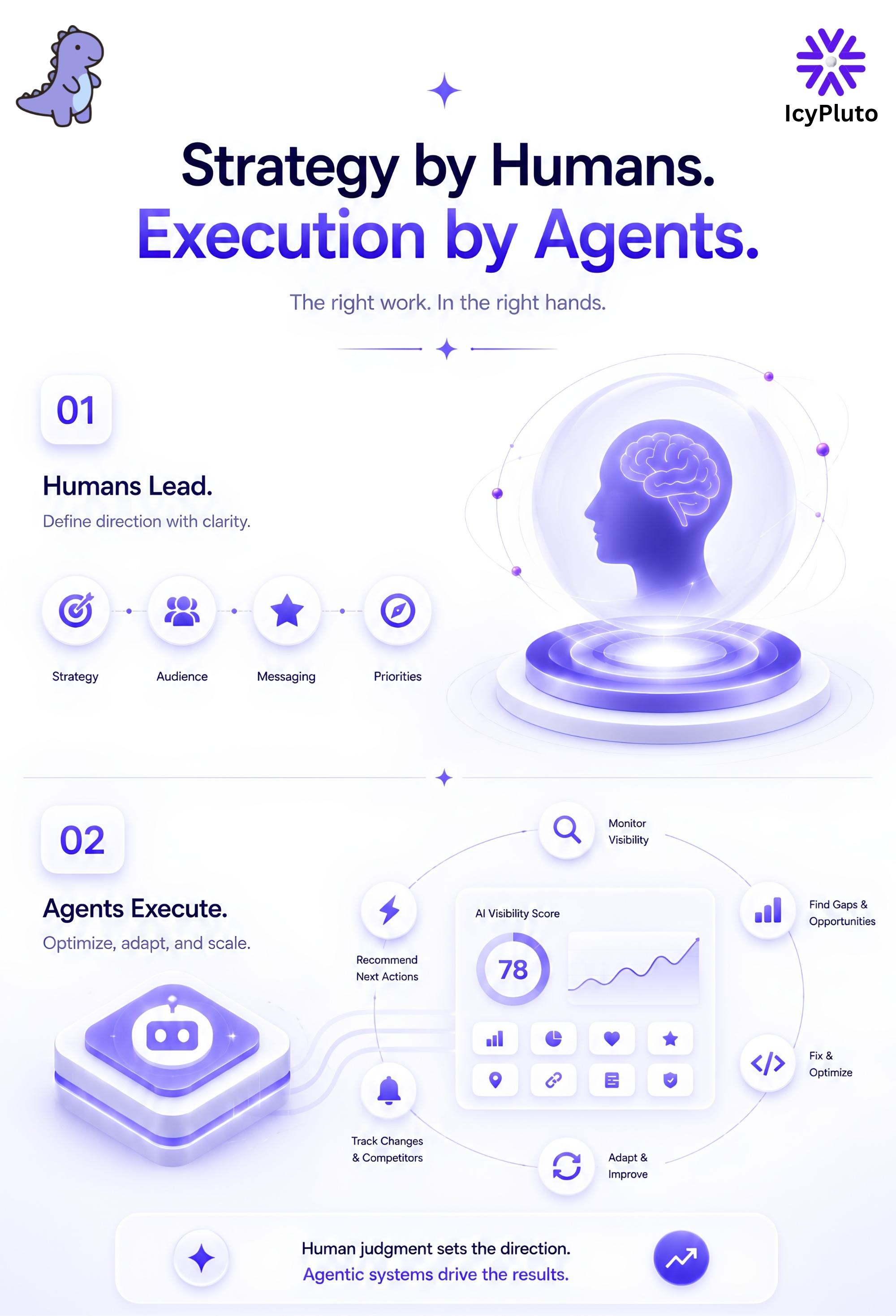
This blog explains how modern marketing teams can ...
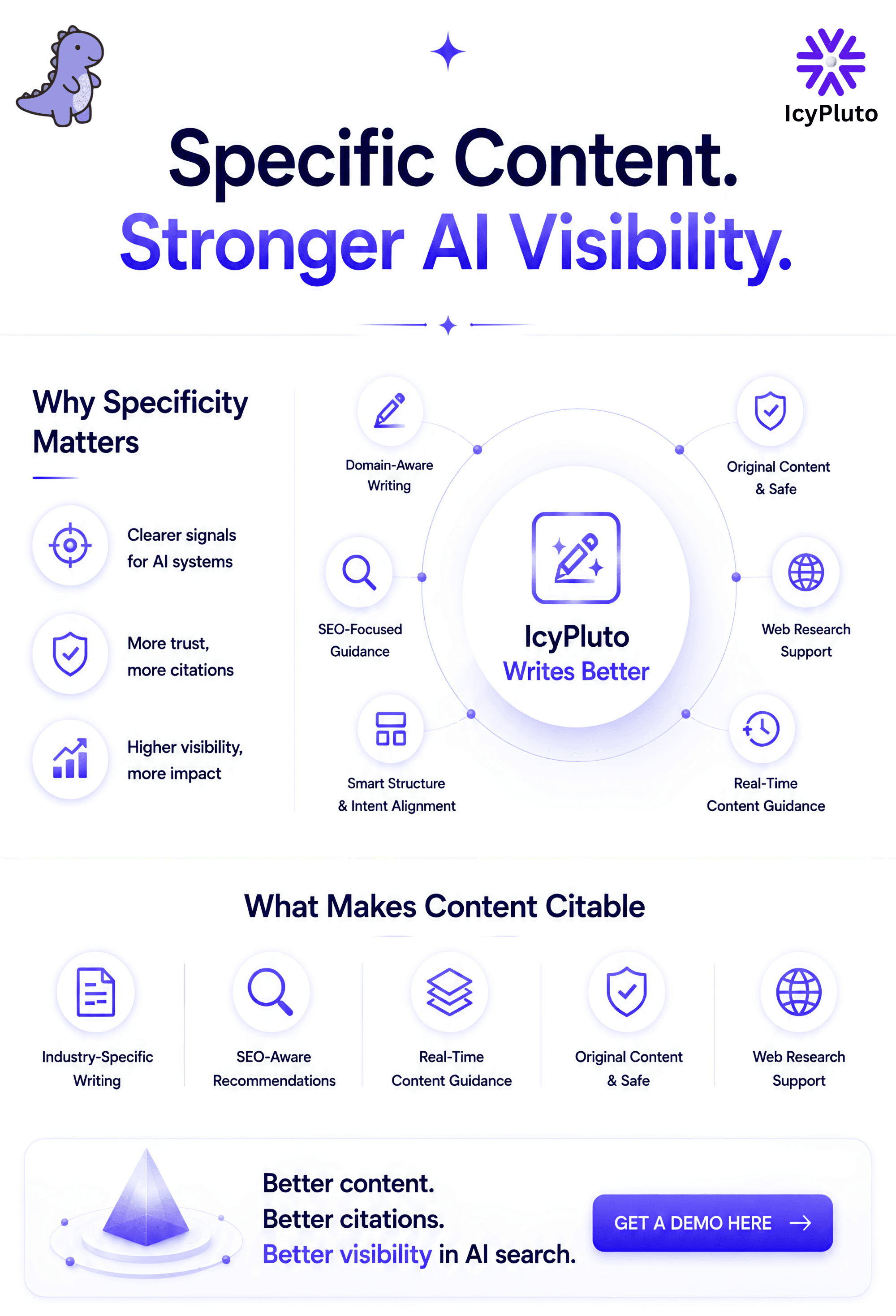
AI SEO writing is getting more specific, and that ...
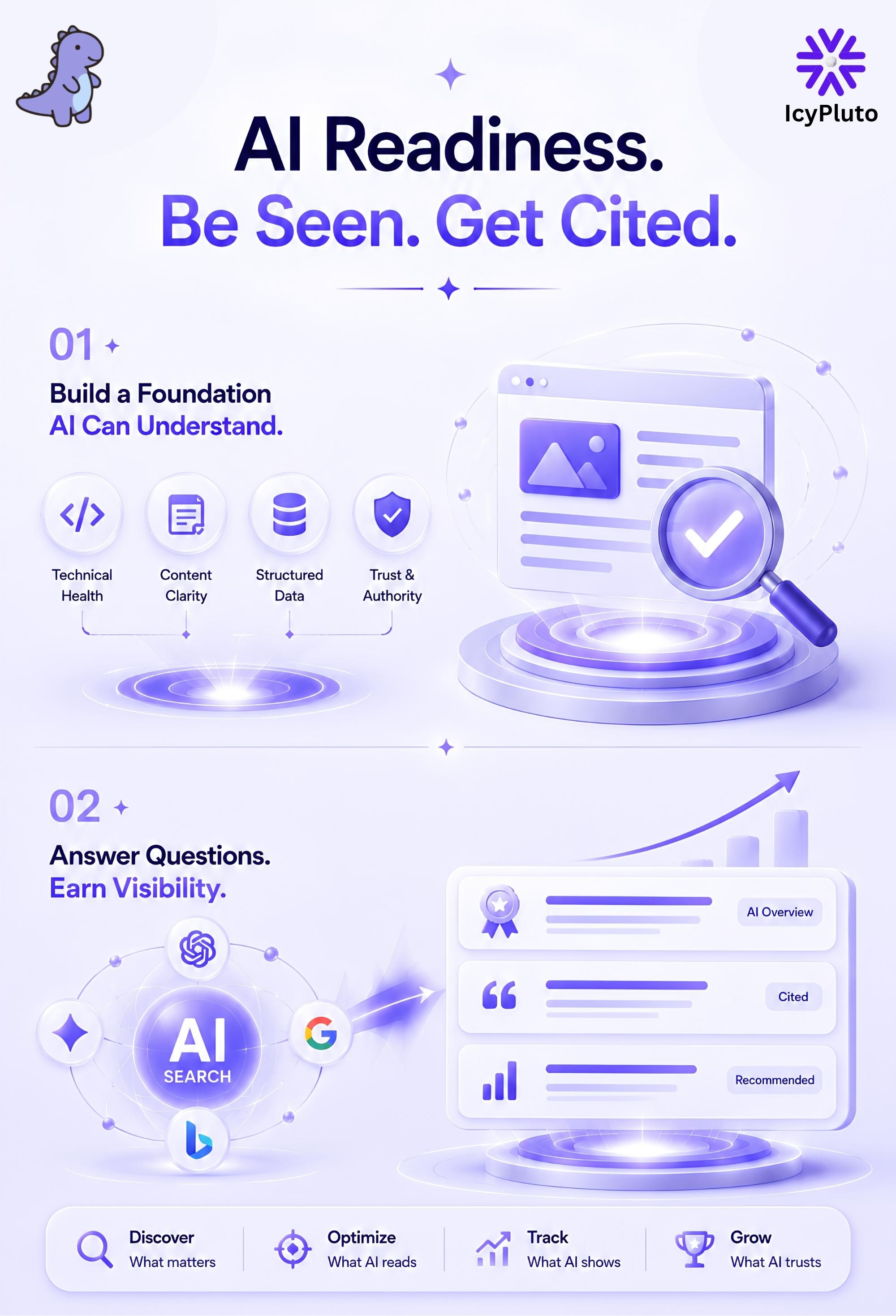
AI readiness is no longer just a technical concept...
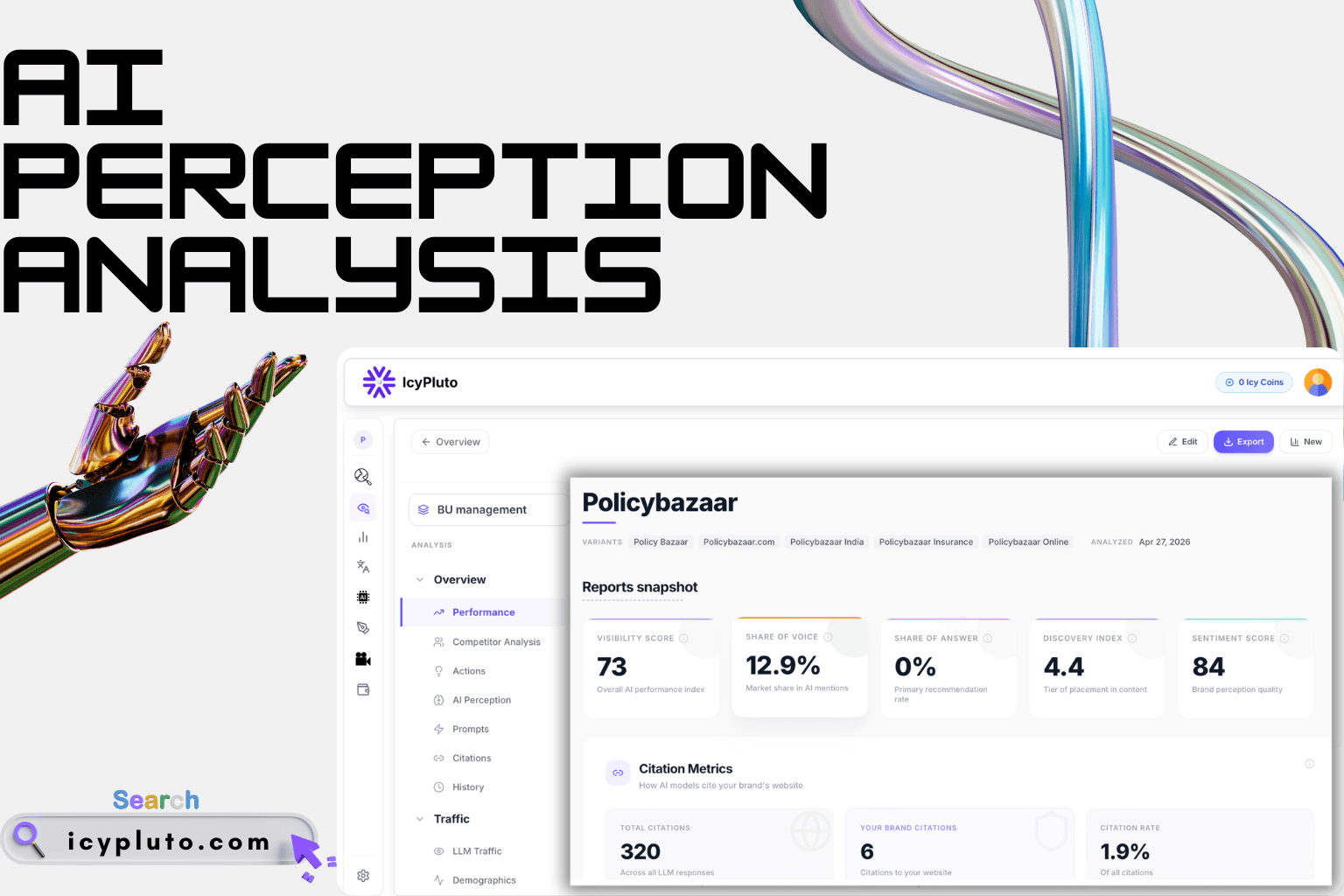
Search is no longer limited to search engines showing ten blue links. The rise of AI-powered discovery platforms, conversational assistants, and generative search experiences has completely transformed how users find information online. Consumers are now asking AI engines direct questions like “What’s the best project management software for startups?”, “Which skincare brand is best for sensitive skin?”, or “Top AI SEO tools for enterprise brands.” Instead of scanning multiple web pages, users increasingly rely on AI-generated answers to make decisions instantly.
This shift has created a new competitive battleground: AI Search Visibility.
Brands are no longer competing only for Google rankings. They are competing for inclusion inside AI-generated responses. If AI systems fail to recognize, cite, or recommend your brand, your discoverability declines — even if your traditional SEO metrics appear strong.
That is why businesses need a completely new measurement framework. Conventional SEO metrics such as keyword rankings, impressions, and backlinks only tell part of the story. They cannot accurately measure how AI platforms perceive your brand, how frequently your business appears in conversational search, or whether AI engines trust your content enough to surface it in recommendations.
This is where IcyPluto introduces a next-generation AI visibility measurement system powered by specialized KPIs designed specifically for AI-driven search ecosystems.
Instead of asking, “Where do we rank on Google?”, brands now need answers to questions like:
How often does AI mention our brand?
Are we the primary recommendation or a secondary mention?
How much conversational ownership do we have compared to competitors?
Is AI associating positive or negative sentiment with our business?
How discoverable are we for category-level prompts?
To answer these questions effectively, businesses must track five critical AI visibility KPIs:
Visibility Score
Share of Voice
Share of Answer
Discovery Index
Sentiment Score
Together, these KPIs create a complete framework for measuring AI search visibility.
For years, marketers relied on metrics such as:
Organic traffic
Keyword rankings
Click-through rates
Domain authority
Backlinks
Search impressions
These metrics still matter, but they were built for a web-search environment where users clicked through lists of websites.
AI search works differently.
Generative AI systems summarize information, synthesize sources, and provide direct answers. Users may never visit your website if AI already answers their query. In many cases, AI engines choose only a handful of brands to mention. That means visibility is becoming concentrated among businesses AI systems perceive as trustworthy and authoritative.
This creates a major challenge:
A brand may rank #1 on Google yet still remain invisible in AI-generated answers.
Traditional SEO tools cannot measure this gap effectively.
AI visibility measurement requires a completely new layer of analytics — one focused on conversational presence, citation frequency, recommendation quality, contextual relevance, and AI perception.
That is exactly what IcyPluto helps businesses analyze.
AI Search Visibility refers to how frequently and prominently a brand appears inside AI-generated responses across platforms such as AI assistants, conversational search engines, generative answer engines, and recommendation systems.
It measures whether AI systems:
Recognize your brand
Trust your content
Recommend your solutions
Cite your information
Associate your business with relevant categories
Surface your company during discovery journeys
AI visibility is becoming the new digital shelf space.
If your competitors dominate AI-generated conversations while your brand remains absent, users may never discover you — regardless of how strong your traditional SEO performance looks.
This is why measuring AI visibility has become essential for modern marketing teams.
Visibility Score measures how frequently your brand appears across AI-generated responses for relevant industry prompts.
It is one of the most important AI visibility metrics because it directly reflects your overall presence inside AI ecosystems.
Instead of tracking keyword rankings alone, Visibility Score measures how often AI systems mention your business when users ask related questions.
For example, if users ask:
“Best GEO optimization tools”
“Top AI marketing platforms”
“Best AI SEO software”
“Top enterprise content automation platforms”
Visibility Score evaluates whether your brand consistently appears in those answers.
AI engines prioritize trust, relevance, authority, and contextual understanding. If your brand repeatedly appears across multiple prompts, it signals that AI systems recognize your business as a credible source.
A strong Visibility Score means:
AI understands your expertise
Your content is contextually relevant
Your authority signals are strong
Your brand is consistently discoverable
A weak Visibility Score usually indicates poor AI discoverability, low semantic authority, weak content structure, or insufficient citation signals.
IcyPluto analyzes large sets of AI search prompts across industries and tracks:
Brand mention frequency
Citation presence
Prompt relevance
Category association
AI recommendation consistency
This allows businesses to identify:
Which prompts trigger visibility
Which competitors dominate responses
Which content areas require optimization
Where AI discoverability gaps exist
Visibility Score becomes the foundational KPI for understanding AI presence.
Share of Voice measures how much AI conversation space your brand owns compared to competitors.
Traditional Share of Voice focused on advertising exposure or organic keyword dominance. AI Share of Voice measures conversational ownership inside AI-generated responses.
For example, if AI tools mention competitors significantly more often than your brand during relevant searches, your AI Share of Voice is weak.
Even if your business appears occasionally, competitors may still dominate the majority of AI-generated recommendations.
AI search is creating winner-takes-most visibility patterns.
Users often trust the first few brands mentioned by AI systems. If your competitors repeatedly dominate those conversations, they gain stronger awareness, credibility, and customer trust.
A strong Share of Voice indicates:
High conversational dominance
Strong category authority
Greater AI trust signals
Better brand recall potential
A weak Share of Voice suggests your competitors are outperforming you in AI discoverability.
Several factors influence conversational dominance:
Brand authority
Content quality
Topical depth
Structured information
Citation signals
Review ecosystem strength
Semantic relevance
Consistent digital presence
AI engines reward brands that provide comprehensive, trustworthy, and contextually rich information.
IcyPluto compares your brand visibility against competitors across hundreds of AI-driven prompts.
It identifies:
Competitor mention frequency
Relative conversational dominance
Emerging category leaders
Visibility gaps
AI recommendation patterns
This enables brands to benchmark their AI presence accurately and improve competitive positioning.
Being mentioned once inside an AI response is not enough.
Share of Answer measures how much of the AI-generated answer is actually dedicated to your brand.
It evaluates:
Position prominence
Recommendation depth
Contextual importance
Mention quality
Response ownership
For example:
If AI says:
“The best AI marketing platforms are Brand A, Brand B, and Brand C.”
That is basic visibility.
But if AI says:
“Brand A is particularly effective because of its automation, AI visibility tracking, and predictive analytics capabilities…”
Then Brand A owns a larger Share of Answer.
AI-generated answers prioritize certain brands more heavily than others.
The brands receiving deeper explanations often gain:
Higher user trust
Better click probability
Stronger perceived authority
Increased conversions
A business with a strong Share of Answer usually becomes the “default recommendation” inside AI ecosystems.
This is critical because users increasingly rely on AI summaries rather than conducting independent research.
Share of Answer includes several dimensions:
Is your brand mentioned first or last?
How much explanation accompanies your mention?
Does AI explain your strengths clearly?
Does AI strongly recommend your solution?
Is your brand central to the answer or merely supplementary?
IcyPluto analyzes AI-generated responses to determine:
Brand prominence
Mention depth
Recommendation strength
Conversational placement
Comparative weighting
This helps businesses understand not just whether they appear — but how strongly they appear.
Discovery Index measures how easily users can discover your brand across AI-driven journeys and category-level prompts.
This KPI focuses on non-branded discovery.
In traditional search, users often searched directly for brands. In AI search, discovery frequently begins before users know which company they need.
For example:
“Best CRM software for startups”
“Top eco-friendly skincare brands”
“Best AI SEO tools for agencies”
Users may not know your brand exists yet.
Discovery Index measures whether AI introduces your business during these early-stage discovery moments.
AI is becoming the primary discovery layer for digital commerce.
Brands that fail to appear during early-stage AI conversations risk losing future customers before consideration even begins.
A high Discovery Index means:
Strong category relevance
Broad prompt coverage
High semantic discoverability
Better top-of-funnel exposure
A weak Discovery Index indicates your brand lacks sufficient contextual presence inside AI ecosystems.
Several factors influence AI discoverability:
Semantic SEO
Topic clustering
Structured content
Brand mentions across the web
Knowledge graph strength
Industry citations
Contextual authority
Cross-platform consistency
AI systems prioritize brands with broad contextual understanding rather than narrow keyword optimization.
IcyPluto identifies:
Missing prompt opportunities
Weak topic coverage
Semantic gaps
Discovery bottlenecks
Underperforming content clusters
This allows businesses to optimize for broader AI-driven discoverability rather than relying solely on traditional keyword strategies.
Visibility without trust can damage a brand.
Sentiment Score measures the tone and emotional perception AI systems associate with your business.
AI models learn from:
Reviews
Articles
Forums
Social mentions
Expert commentary
User feedback
Public discussions
These signals influence how AI describes your brand.
AI-generated recommendations are heavily influenced by trust signals.
If AI systems associate negative sentiment with your business, it can reduce:
Recommendation likelihood
User trust
Conversion probability
Brand credibility
Positive sentiment improves AI confidence and recommendation strength.
AI sentiment is influenced by:
Customer reviews
PR coverage
Thought leadership
Social media reputation
Product feedback
Industry perception
Community discussions
Even small reputation shifts can influence AI-generated responses significantly.
IcyPluto analyzes:
Tone association
Positive vs negative references
Trust indicators
Recommendation confidence
Contextual sentiment patterns
This enables brands to proactively monitor and improve AI perception before reputation issues impact discoverability.
Each KPI measures a different dimension of AI visibility:
KPIMeasuresVisibility ScoreFrequency of AI appearancesShare of VoiceConversational dominanceShare of AnswerDepth of recommendationDiscovery IndexEase of AI-driven discoverySentiment ScoreAI perception and trust
Together, they create a complete AI visibility framework.
Focusing on only one KPI creates blind spots.
For example:
High visibility with low sentiment is risky.
High Share of Voice with weak discovery limits growth.
Strong discovery without strong Share of Answer reduces authority.
The real goal is building balanced AI visibility across all dimensions.
The internet is entering a new discovery era.
Search behavior is shifting from:
Searching → Clicking → Browsing
To:
Asking → Receiving → Deciding
AI systems increasingly act as recommendation engines, research assistants, and purchasing advisors.
This changes marketing fundamentally.
Brands are no longer optimizing only for search engines.
They are optimizing for AI understanding.
Businesses that measure AI visibility early will gain a significant competitive advantage because they can:
Identify discoverability gaps
Improve conversational authority
Strengthen AI trust signals
Increase recommendation frequency
Own category-level AI conversations
This is why AI visibility measurement is quickly becoming essential for SEO, GEO, content marketing, digital PR, and brand strategy teams.
Traditional SEO metrics were designed for a world of clickable search results. AI search requires a completely different measurement framework.
Brands now need to understand:
How AI perceives them
How often they appear
How strongly they are recommended
How discoverable they are
Whether AI associates positive sentiment with them
This is exactly what IcyPluto helps businesses measure through next-generation AI visibility KPIs like Visibility Score, Share of Voice, Share of Answer, Discovery Index, and Sentiment Score.
As AI-powered search continues reshaping digital discovery, the brands that learn how to measure and optimize AI visibility today will become tomorrow’s category leaders.