
This blog explores the marketing gaps holding back...
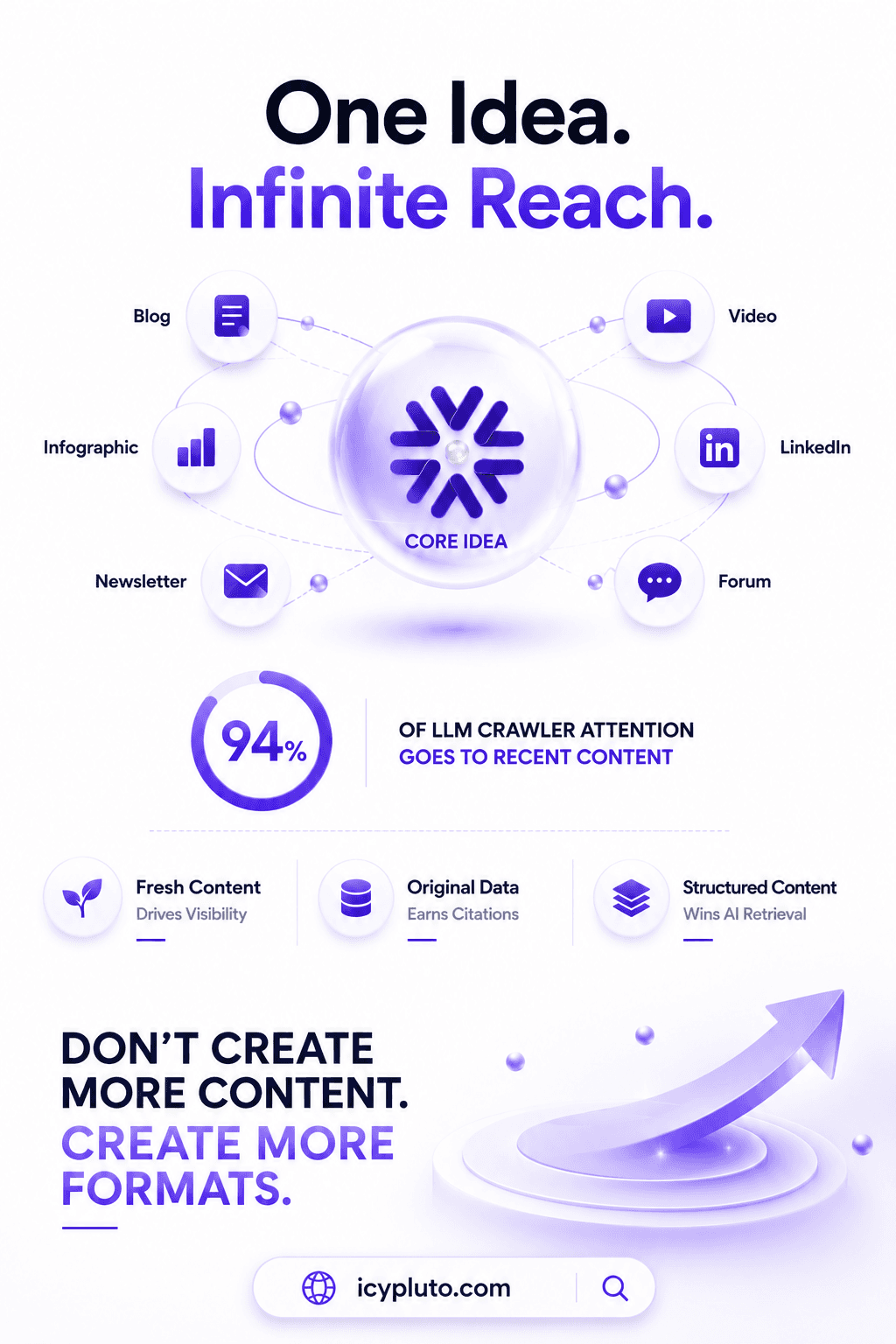
This blog reveals how to maximize visibility in tr...
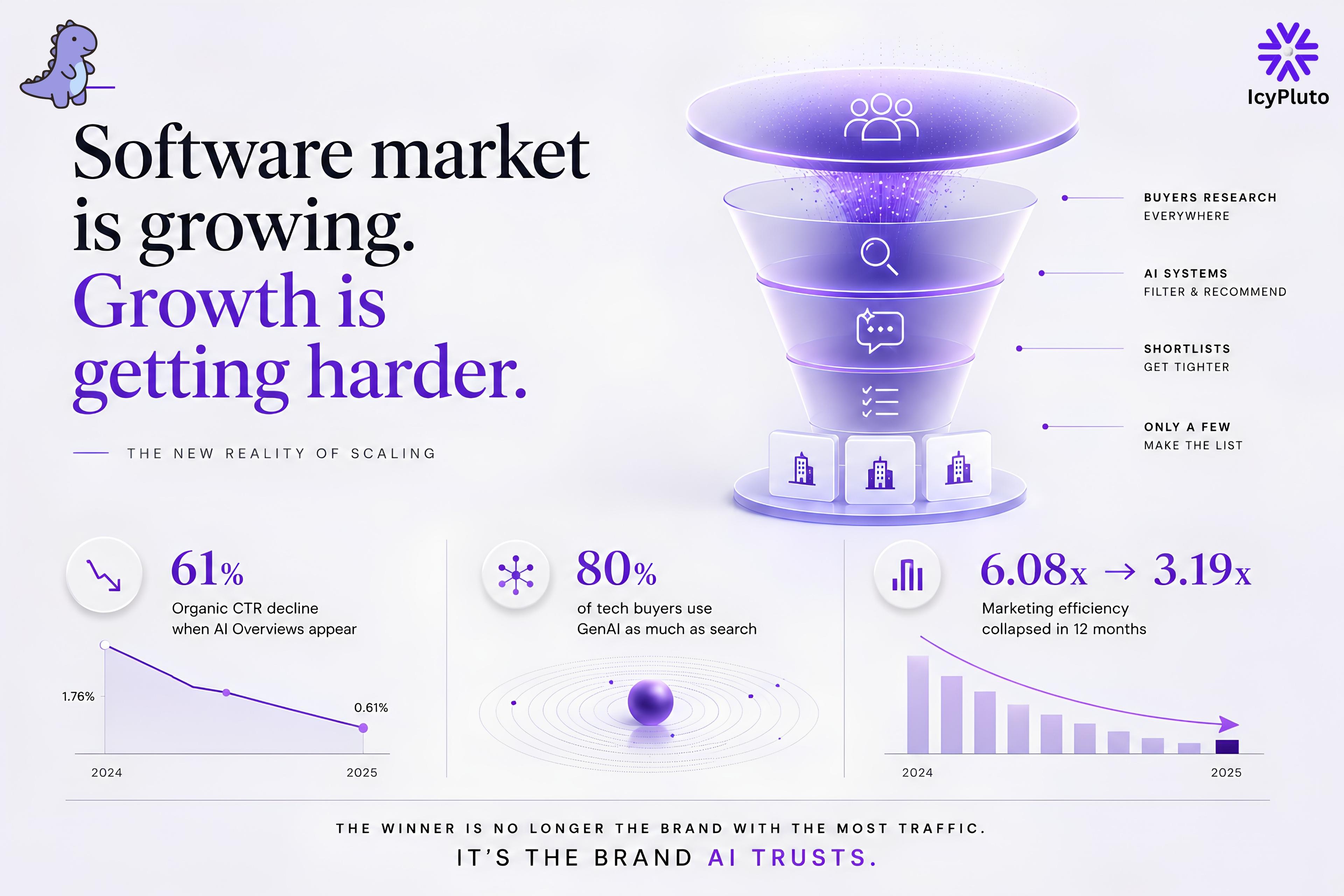
This blog explains how the old growth playbook is ...
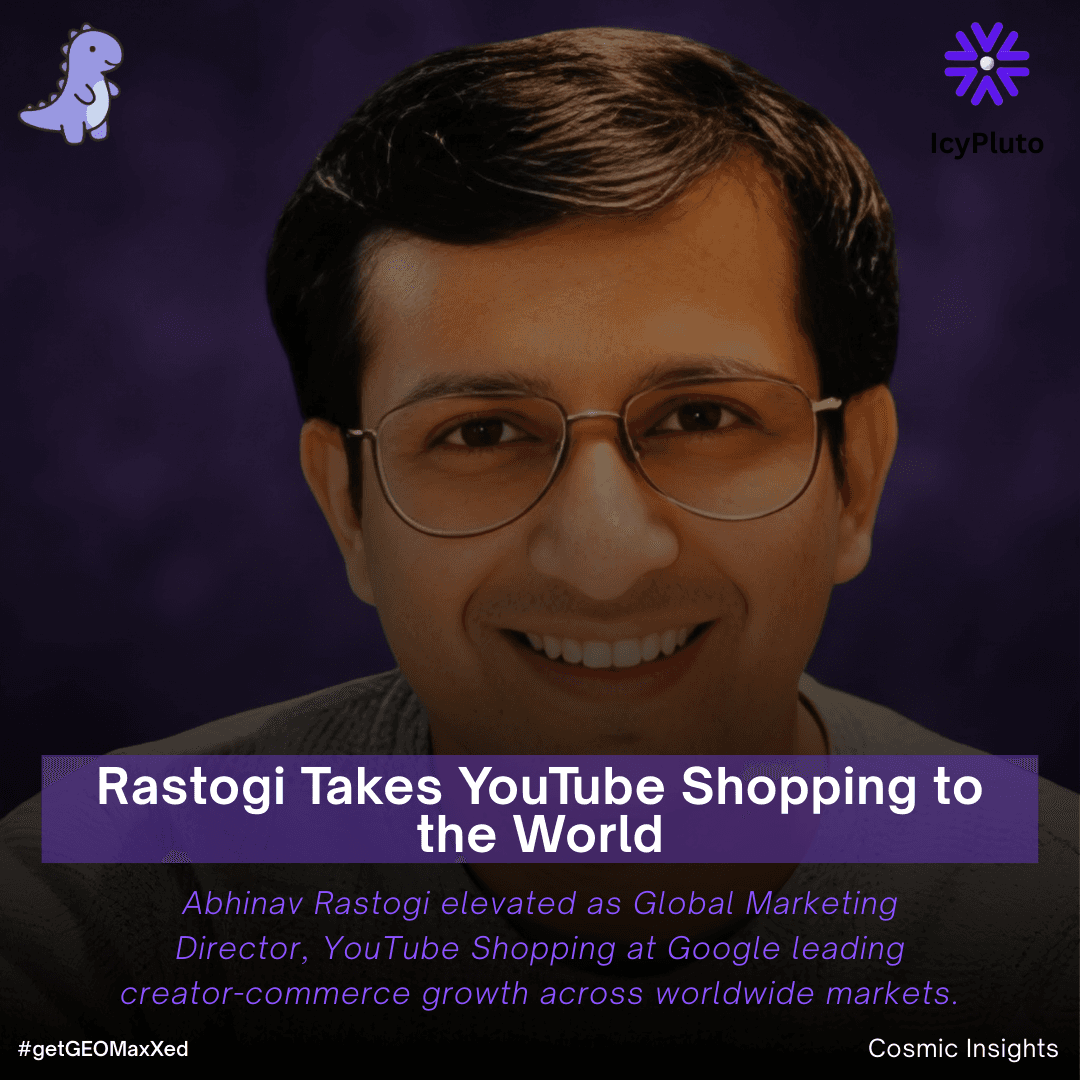
The creator-commerce space just got a powerful new global voice. Abhinav Rastogi has been elevated to the role of Global Marketing Director, YouTube Shopping at Google — a move that underscores just how seriously the tech giant is betting on the intersection of video content and e-commerce. With over a decade of experience inside Google's marketing engine, Rastogi now takes the reins of one of the most ambitious commerce initiatives in the digital world, leading teams spread across multiple markets and geographies.
This appointment isn't just a career milestone for Rastogi — it's a signal to the entire digital marketing and creator economy ecosystem that YouTube Shopping is gearing up for a new phase of aggressive global expansion. At IcyPluto, where we track the pulse of AI, marketing, and technology leadership, this development carries meaningful weight for marketers, creators, and brands alike.
Rastogi's ascent to a global leadership role didn't happen overnight. It is the product of years of strategic thinking, cross-market execution, and a rare ability to bridge brand-building with commerce at scale.
Before joining Google, Rastogi built his strategic foundation at some of the most respected consulting firms in the world. He worked at Boston Consulting Group (BCG), one of the Big Three global strategy consultancies, followed by stints at Kearney and Evalueserve — institutions known for grooming some of the sharpest analytical minds in business. This consulting background gave him a strong command of market entry strategies, go-to-market planning, and data-driven decision-making — skills that would prove invaluable when he eventually made the move into tech marketing.
His transition into Google marked the beginning of what would become a decade-long journey through some of the company's most critical consumer-facing roles. He served as Group Product Marketing Manager for Consumer Apps, gaining deep exposure to how Google thinks about positioning its products in competitive, consumer-driven markets. This role gave him early fluency in the language of user behavior, product storytelling, and scalable growth — a trifecta that's essential in the world of modern digital commerce.
Rastogi's most defining pre-global role was as Director of Marketing for YouTube Asia Pacific — a position where he didn't just manage campaigns, he helped build an entirely new commercial ecosystem. Under his leadership, YouTube Shopping was successfully launched across five key APAC markets: South Korea, Indonesia, Thailand, Vietnam, and India — the last of which holds the distinction of being YouTube's largest creator and user market globally.
Each of these launches involved complex cross-functional collaboration, navigating different regulatory environments, cultural consumer behaviors, and partner ecosystems. In South Korea, YouTube partnered with Coupang and Cafe24; in Southeast Asia, Shopee powered the commerce layer; and in India, the program launched with Flipkart and Myntra before later expanding to Nykaa and Purplle. Getting all of these pieces to fit together — on time and at scale — is the kind of execution that earns a global mandate.
YouTube Shopping is not a side feature or an experimental add-on. It has become one of YouTube's most strategically important growth levers, and under Rastogi's new global role, it is expected to accelerate even further.
The scale of YouTube Shopping's growth is remarkable by any standard. As of mid-2025, over 500,000 creators had enrolled in the YouTube Shopping affiliate program globally. Gross Merchandise Volume (GMV) grew 5x year-over-year, a number that reflects not just platform adoption but genuine commercial intent from both creators and consumers. YouTube also revealed that shopping-related watch time in India alone grew more than 250 percent year-over-year following its launch — a metric that showcases how deeply commerce is being woven into the viewing experience.
In India specifically, more than 40 percent of eligible creators are already enrolled in the affiliate program, with over 3 million videos tagged with affiliate products. These are not vanity metrics — they represent a structural shift in how people discover and buy products online.
What sets YouTube Shopping apart from traditional influencer marketing or even conventional e-commerce is the trust layer that creators bring to the experience. Viewers don't just watch product placements — they respond to them because they trust the creator behind the recommendation. YouTube CEO Neal Mohan articulated this vision clearly at the start of 2026: the goal is frictionless commerce, where a viewer watching their favorite creator recommend a product can complete the purchase without ever leaving the YouTube app.
This model fundamentally disrupts the traditional marketing funnel. Discovery, consideration, and conversion happen in a single, continuous experience — powered by a creator's authentic voice rather than a brand's paid message. Rastogi's new role is to scale this model globally, which means not just growing the number of creators and merchants involved, but also building the cultural and commercial infrastructure that makes shopping feel native to the YouTube experience in every market.
Additionally, YouTube has been investing in AI to enhance the commerce experience — using machine learning to automatically identify the optimal moment a product is mentioned in a video and displaying the product tag precisely when viewer interest is at its peak. This level of personalization and precision is what separates YouTube Shopping from every other social commerce platform trying to compete in this space.
As Global Marketing Director, YouTube Shopping, Rastogi now carries a mandate that stretches far beyond any single market or region. His primary responsibilities include leading global marketing for the YouTube Shopping program, with a specific focus on three pillars: building the creator-commerce ecosystem, expanding into new markets, and driving growth across a global network of teams.
The creator economy is still maturing, and YouTube Shopping represents one of its most commercially mature expressions. Rastogi's job is to ensure that creators — from mega-influencers to mid-tier content producers — see YouTube Shopping as their primary commerce channel, not just a supplementary income stream. This requires a deep understanding of creator psychology, monetization behavior, and the incentives that drive enrollment and product tagging at scale.
It also requires working closely with merchants and brands to ensure they see measurable ROI from their participation in the program. YouTube has already signed on major global merchants including Nike, Etsy, Best Buy, SharkNinja, Michaels, and Michael Kors in the U.S., and Olive Young and ZigZag in Korea. Expanding that roster globally — and ensuring those partnerships translate into creator-driven sales — is a central part of Rastogi's new mandate.
One of the most exciting dimensions of Rastogi's role is geographic expansion. YouTube Shopping has already proven its model in major APAC markets; the next frontier includes Latin America (Brazil was added as a market in 2025), Europe, the Middle East, and additional Southeast Asian markets. Each new market brings its own set of consumer behaviors, payment infrastructure challenges, and creator community dynamics — and Rastogi's consulting background makes him uniquely equipped to navigate these nuances.
Managing a global marketing function at Google means coordinating with country marketing leads, product teams, partnerships managers, and external agency networks across time zones and cultures. Rastogi's experience leading the APAC team — which itself spanned five markets — gives him a practical understanding of what it takes to keep large, distributed teams aligned on a shared vision while allowing them the flexibility to localize execution.
What makes Rastogi's profile particularly compelling is that his ambitions extend beyond his day job at Google. He is an active angel investor and a member of XA Network, one of Southeast Asia's most prominent angel investor communities. His investment portfolio spans consumer tech and electric vehicle (EV) startups — two sectors that are deeply intertwined with the future of digital commerce and sustainable technology.
This investor mindset isn't just a side hustle. It reflects a broader worldview about where technology, consumer behavior, and commerce are heading. As someone who actively backs early-stage companies, Rastogi brings a founder's lens to his corporate role — always thinking about growth from first principles, identifying white spaces, and building long-term moats rather than chasing short-term metrics. This blend of corporate rigor and entrepreneurial thinking is exactly the kind of leadership that the creator-commerce space needs at this stage of its evolution.
For the broader marketing and tech community, Rastogi's elevation is a reminder that the most impactful marketing leaders in this era aren't just campaign managers or brand stewards — they are ecosystem architects who understand how platforms, creators, consumers, and commerce intersect to create new forms of value.
Rastogi's appointment sends a clear message to the market: YouTube Shopping is no longer in pilot mode. It is in global scale mode. For brands, this means now is the time to build creator-led commerce strategies that are native to YouTube rather than adapted from other platforms. For creators, it signals that YouTube will continue investing in the tools, incentives, and infrastructure needed to make shopping a meaningful income stream. And for marketers, it is a masterclass in how to think about the convergence of content, community, and commerce.
The future of marketing is not about interrupting content — it is about being part of the content. YouTube Shopping, under leaders like Rastogi, is proving that this future is already here. At IcyPluto, we will continue to monitor how this leadership transition shapes the creator economy and what it means for the brands and marketers navigating this rapidly evolving landscape.