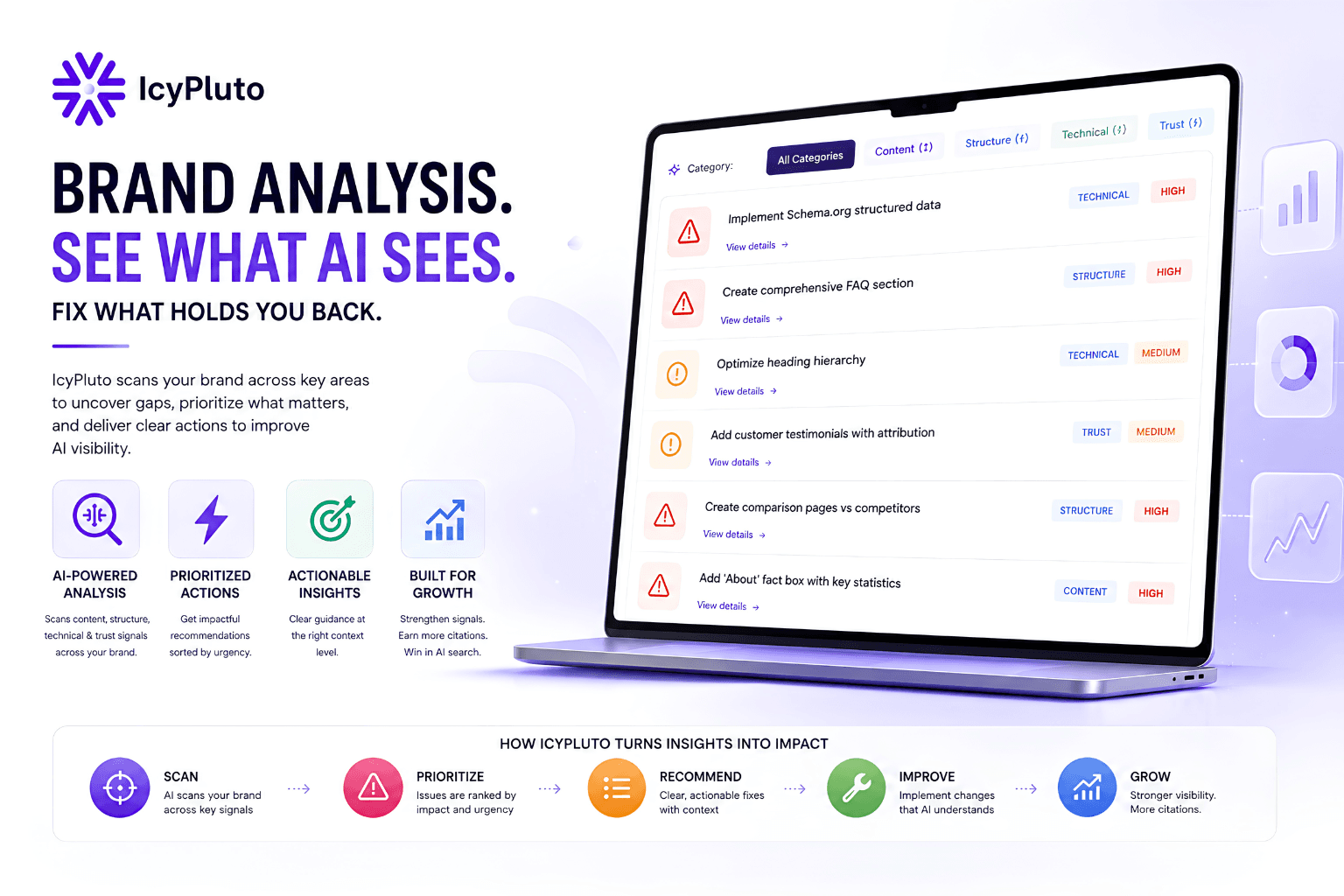
This blog explains why brands are losing visibilit...
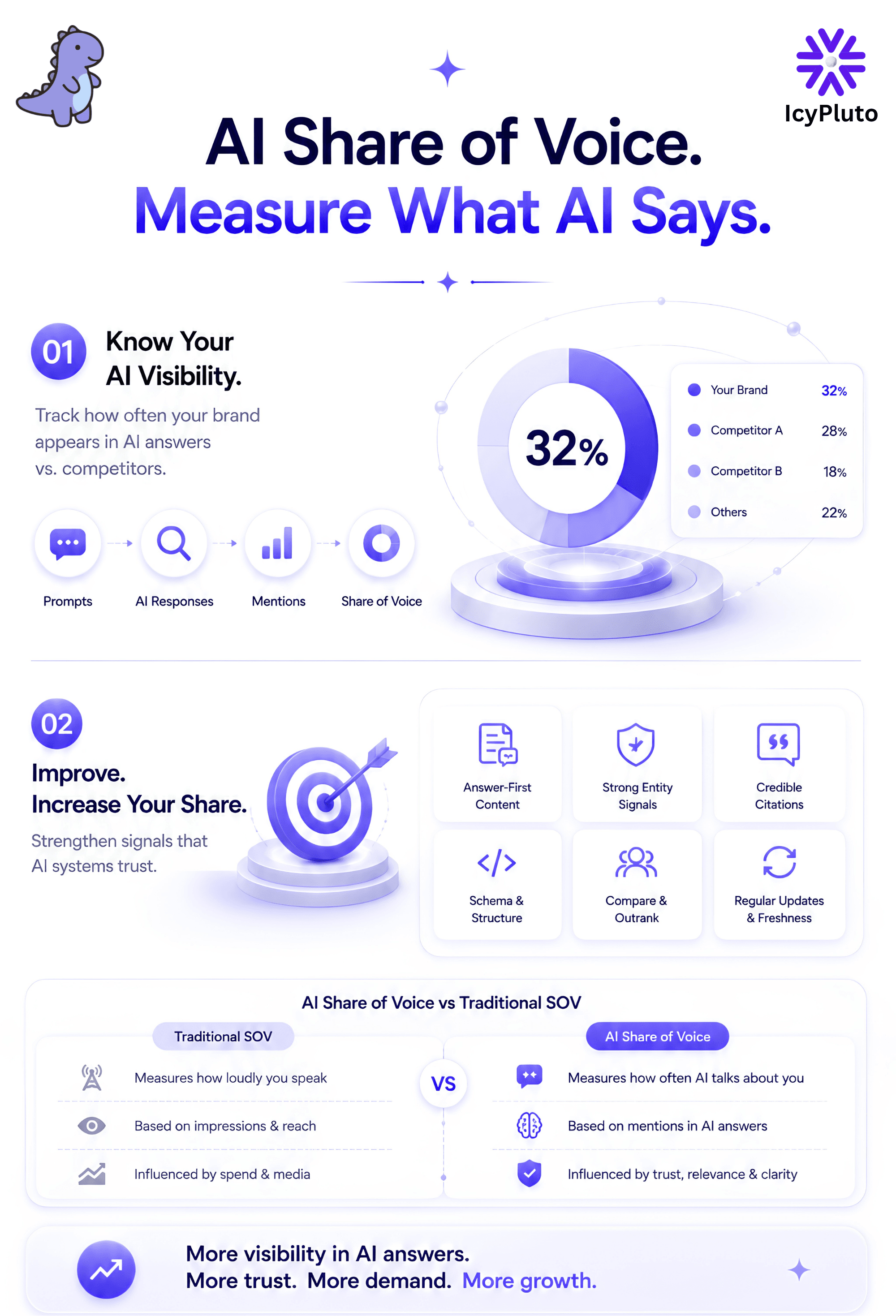
AI share of voice is the new visibility metric bra...
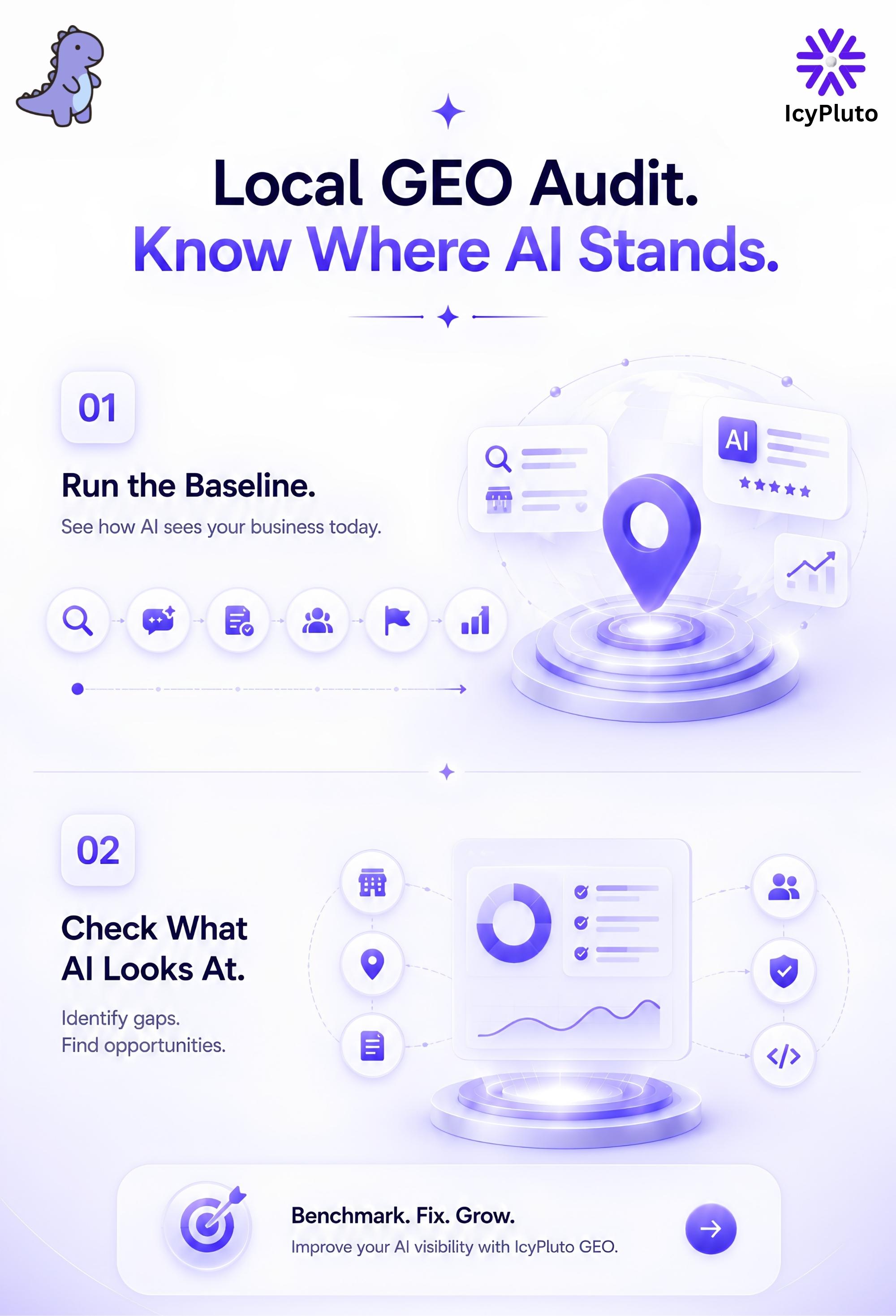
A local GEO baseline audit helps you understand ho...
The marketing world is buzzing with excitement about artificial intelligence. Teams are adopting new tools rapidly, running pilots, and celebrating productivity gains. Yet many leaders are starting to sense that something important is still missing. Despite significant investments, the expected business impact often falls short of expectations.
At Icypluto, we have been having honest conversations with marketing leaders about this gap. The difference between AI that simply saves time and AI that genuinely drives revenue and growth is becoming clearer every day. We are moving from AI 1.0, the era of efficiency and speed, into AI 2.0, the era of measurable business outcomes.
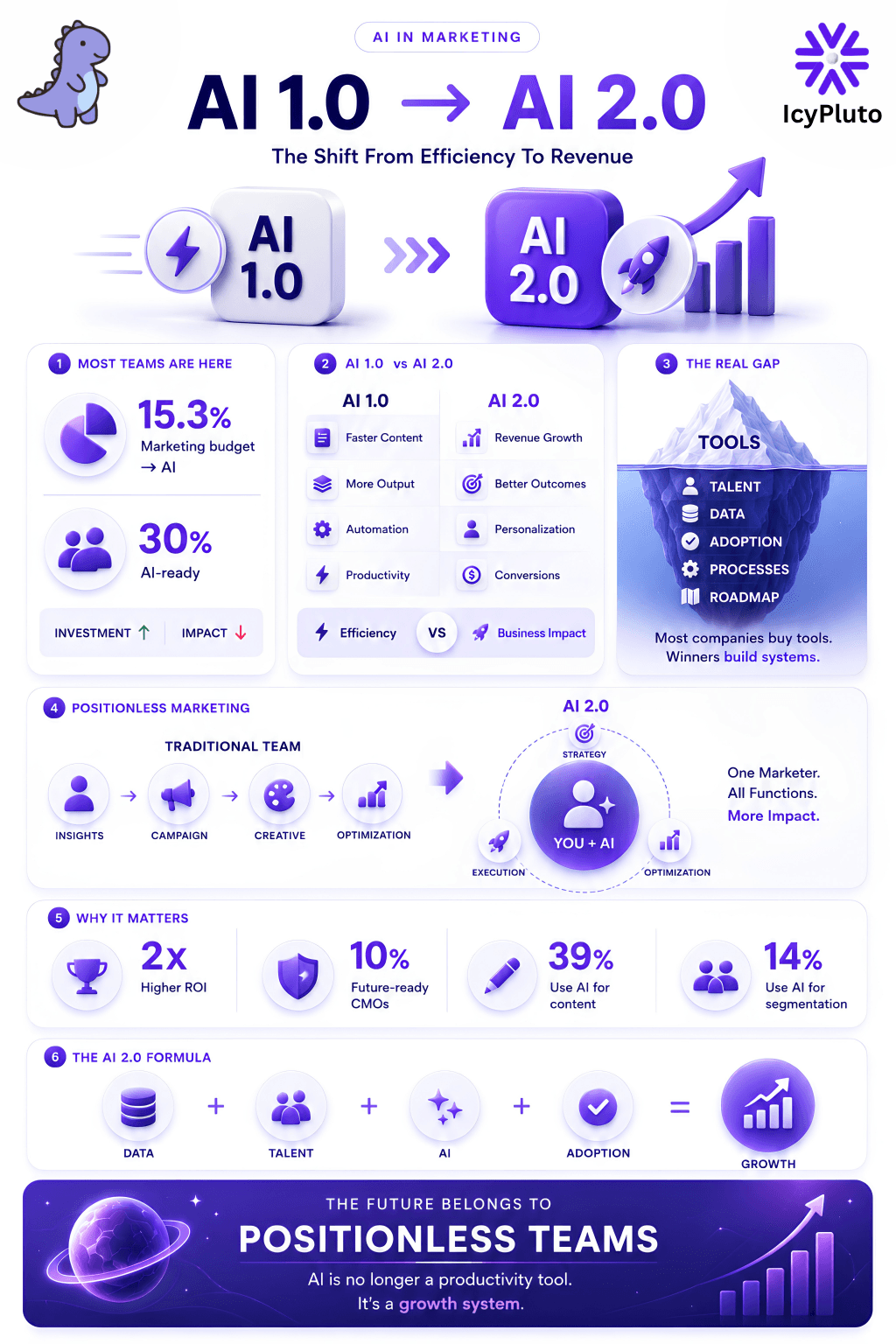
Many marketing organizations find themselves in a challenging position. Budgets for AI initiatives are increasing substantially. According to Gartner research, CMOs are now allocating an average of 15.3% of their marketing budgets to AI. However, only about 30% of marketing organizations report having mature or fully developed AI readiness.
This creates a significant mismatch. Teams have access to powerful tools, but they often lack the structures, processes, and mindsets needed to translate those tools into real results. Many are still focused primarily on using AI for faster content creation, campaign execution, and basic automation. While these improvements matter, they represent only the first chapter of the AI story.
AI 1.0 was all about productivity. It helped teams write faster, generate variations quicker, summarize research, and execute routine tasks with greater speed. For many organizations, this delivered meaningful efficiency gains. Campaigns could be launched faster. Content output increased. Teams felt more productive.
AI 2.0 takes this foundation and moves it to a much higher level. It is not just about doing things faster. It is about delivering better business outcomes. This includes higher conversion rates, improved customer retention, stronger personalization at scale, and measurable revenue growth.
The distinction is critical. Organizations that remain stuck in AI 1.0 thinking will continue to see incremental improvements. Those that successfully transition to AI 2.0 will create sustainable competitive advantages.
Leading research from McKinsey highlights six key capabilities that separate organizations successfully capturing value from AI from those that are merely experimenting. These include having a clear transformation roadmap tied to financial outcomes, building internal talent capabilities, adopting more agile operating models, creating distributed technology environments, ensuring data accessibility, and driving genuine user adoption at scale.
Most marketing teams currently have gaps in several of these areas. This explains why so many AI initiatives fail to deliver the expected returns. The challenge is not simply buying more tools. It is fundamentally rewiring how marketing teams operate.
One of the most powerful concepts emerging in this new era is Positionless Marketing. Traditional marketing structures often lock people into rigid roles. A data analyst hands off insights to a campaign manager, who briefs a creative team, who then passes assets to an optimization specialist. This waterfall approach creates delays and limits agility.
Positionless Marketing breaks these silos. It empowers every marketer to handle multiple aspects of the work with AI support. A single team member can move fluidly from strategy to execution to optimization, supported by intelligent systems that handle much of the heavy lifting.
This approach dramatically increases speed and effectiveness. Teams become more responsive to customer needs and market changes. Personalization becomes more sophisticated because the barriers between different functions disappear.
The numbers tell a compelling story. Organizations that focus on business outcomes rather than just efficiency see significantly better results. High-performing teams are twice as likely to report strong ROI from AI initiatives.
Gartner research indicates that by 2028, only 10% of CMOs who continue to focus primarily on time savings will secure the budgets needed to meet their strategic goals. In contrast, leaders who measure success through revenue impact, customer retention, and conversion improvements are better positioned for long-term success.
A study commissioned by Optimove found that while many marketers have ambitious AI goals, actual adoption in high-impact areas remains relatively low. Only 39% use AI for content creation, 37% for campaign workflows, and just 14% for advanced audience segmentation. This gap between ambition and execution represents a major opportunity for organizations willing to rethink their approach.
At Icypluto, we are fully committed to helping our clients make this transition to AI 2.0 and Positionless Marketing. We work with teams to move beyond isolated pilots and build comprehensive systems that connect strategy, data, execution, and optimization.
Our approach emphasizes building internal capabilities rather than relying heavily on external vendors. We help marketing organizations create the right operating models, ensure seamless data access, and develop talent that can operate effectively across multiple functions with AI support.
We have seen remarkable results when teams adopt this mindset. Campaign execution times drop dramatically. Personalization becomes truly sophisticated. Most importantly, marketing efforts translate more directly into measurable business growth.
If you are ready to move from AI 1.0 to AI 2.0, here are some actionable recommendations:
First, conduct an honest assessment of your current AI initiatives. How many are tied directly to measurable business outcomes rather than just efficiency metrics?
Second, start breaking down silos within your marketing organization. Experiment with cross-functional teams that can handle end-to-end campaigns with AI support.
Third, invest in building internal talent capabilities. Provide training that goes beyond tool usage to strategic thinking and judgment.
Fourth, ensure your data foundation is strong and accessible. AI performs best when it has high-quality, well-governed data to work with.
Fifth, shift your measurement framework. Move from tracking time saved to tracking revenue influenced, customer lifetime value improved, and conversion rates lifted.
The marketing organizations that will thrive in the coming years are those that fully embrace the principles of AI 2.0. They will combine powerful technology with human creativity, strategic thinking, and agile execution.
Positionless Marketing represents more than just a new way of working. It represents a fundamental evolution in how marketing creates value for businesses and customers.
The transition will not happen overnight. It requires intentional effort, leadership commitment, and willingness to rethink traditional structures. However, the rewards are substantial for those who make the journey.
At Icypluto, we believe we are at a pivotal moment in marketing history. The teams that successfully rewire their organizations for AI 2.0 will gain significant advantages. They will deliver more personalized experiences, respond faster to opportunities, and create stronger connections with their audiences.
We are excited to partner with forward-thinking marketing leaders on this journey. The future belongs to organizations that treat AI not just as a productivity tool, but as a strategic partner for driving sustainable growth.
The question every marketing leader should ask themselves today is simple: Are we still operating in AI 1.0 mode, or are we building the capabilities needed for AI 2.0 success?
The answer to that question may well determine who leads their industry in the years ahead.