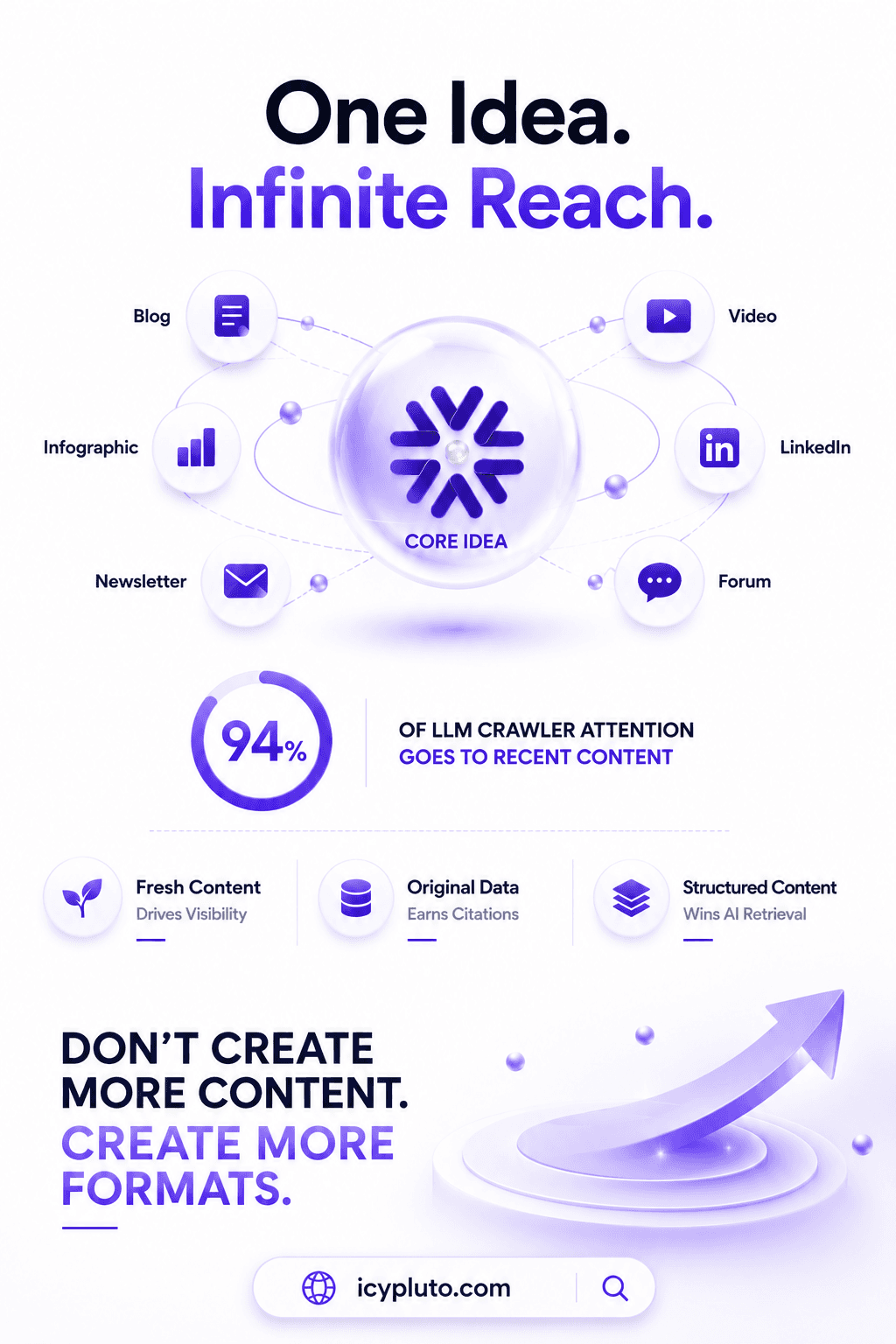
This blog reveals how to maximize visibility in tr...
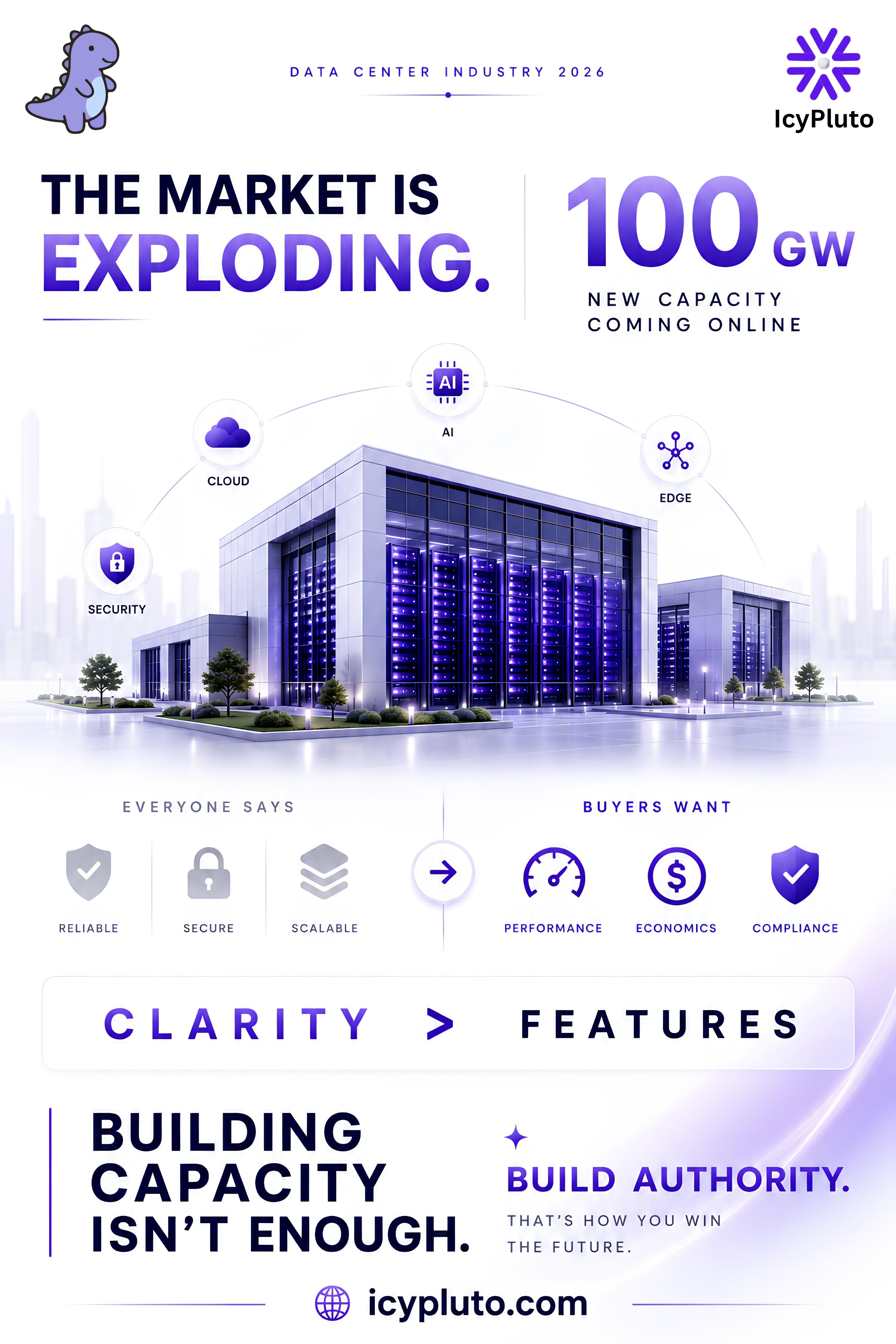
This blog explores the marketing gaps holding back...
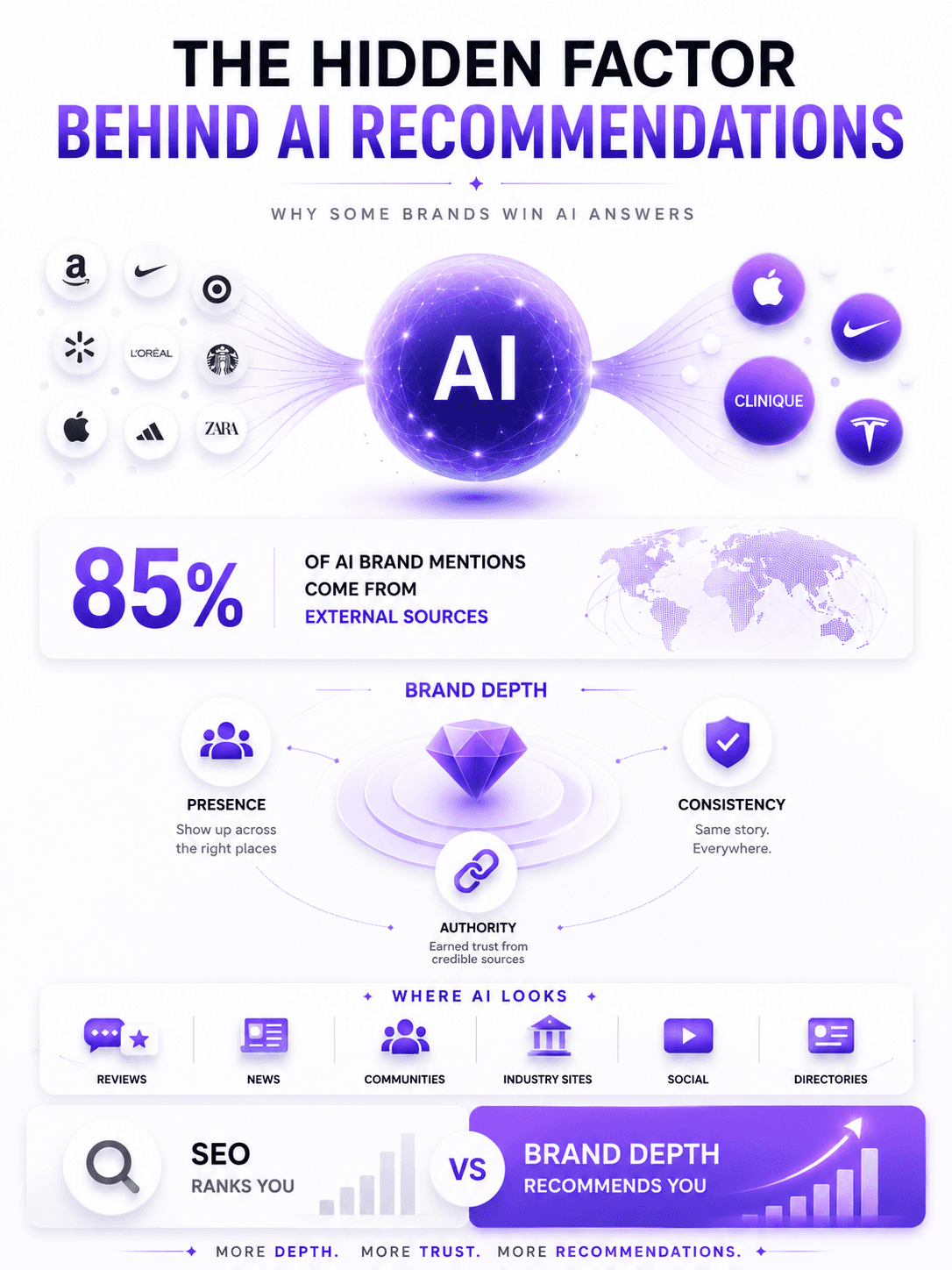
This blog post reveals why brand depth-the density...
Most content doesn’t fail dramatically.
It doesn’t get penalised.
It doesn’t suddenly disappear from Google.
It slowly fades.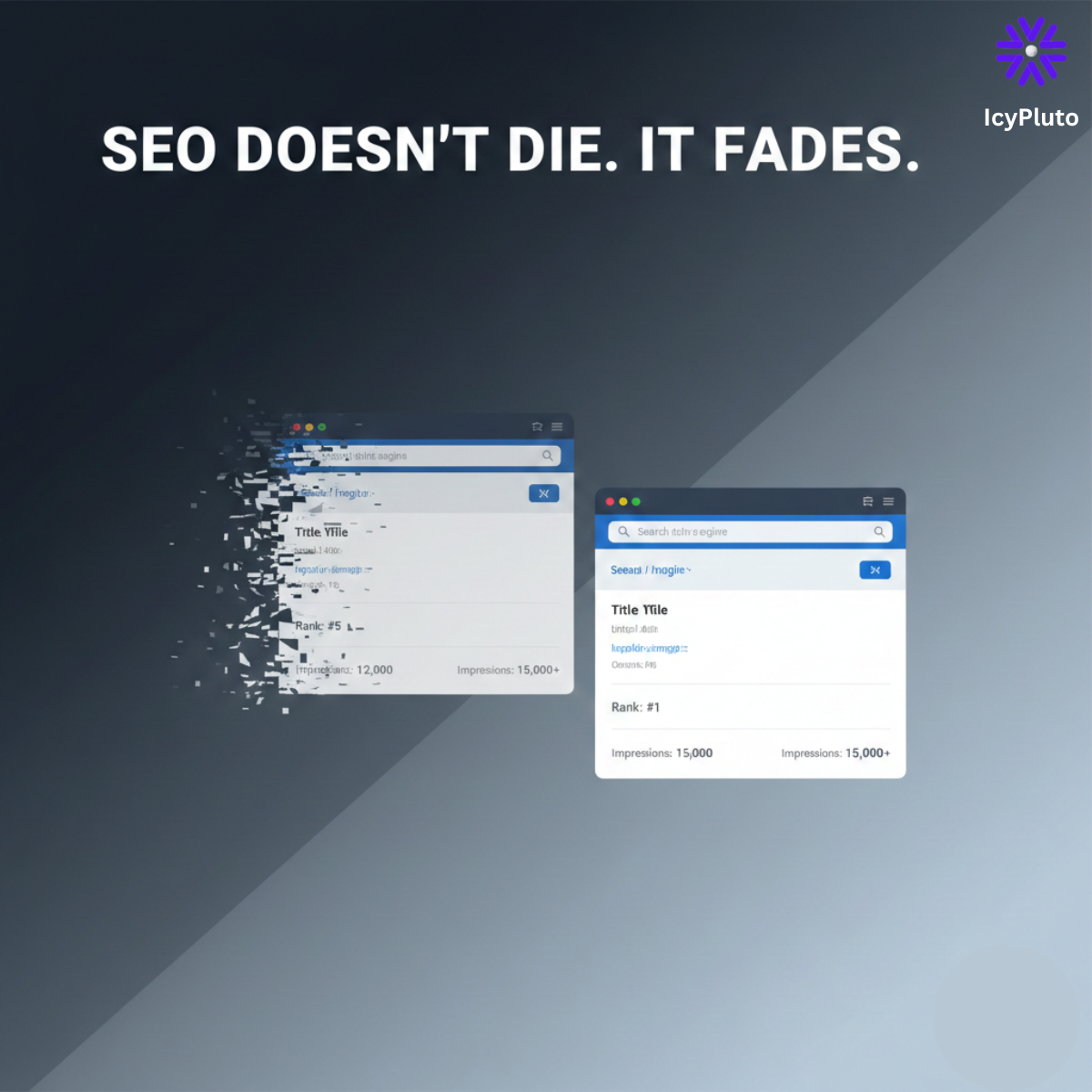
One month’s ranking.
Three months later, impressions are down.
Six months later, no one remembers it ever worked.
And the usual response?
“We need more content.”
That’s rarely the right answer.
The real problem is this: SEO today isn’t about publishing more; it’s about maintaining relevance.
And relevance is no longer static.
Search intent shifts.
Entities evolve.
AI systems change how answers are selected.
That’s why the teams winning right now don’t run SEO as campaigns.
They run it as a system.
This is the system.
A 15-minute weekly habit that compounds over time
No tools.
No plugins.
No long audits.
Just Google Search Console + AI + consistency.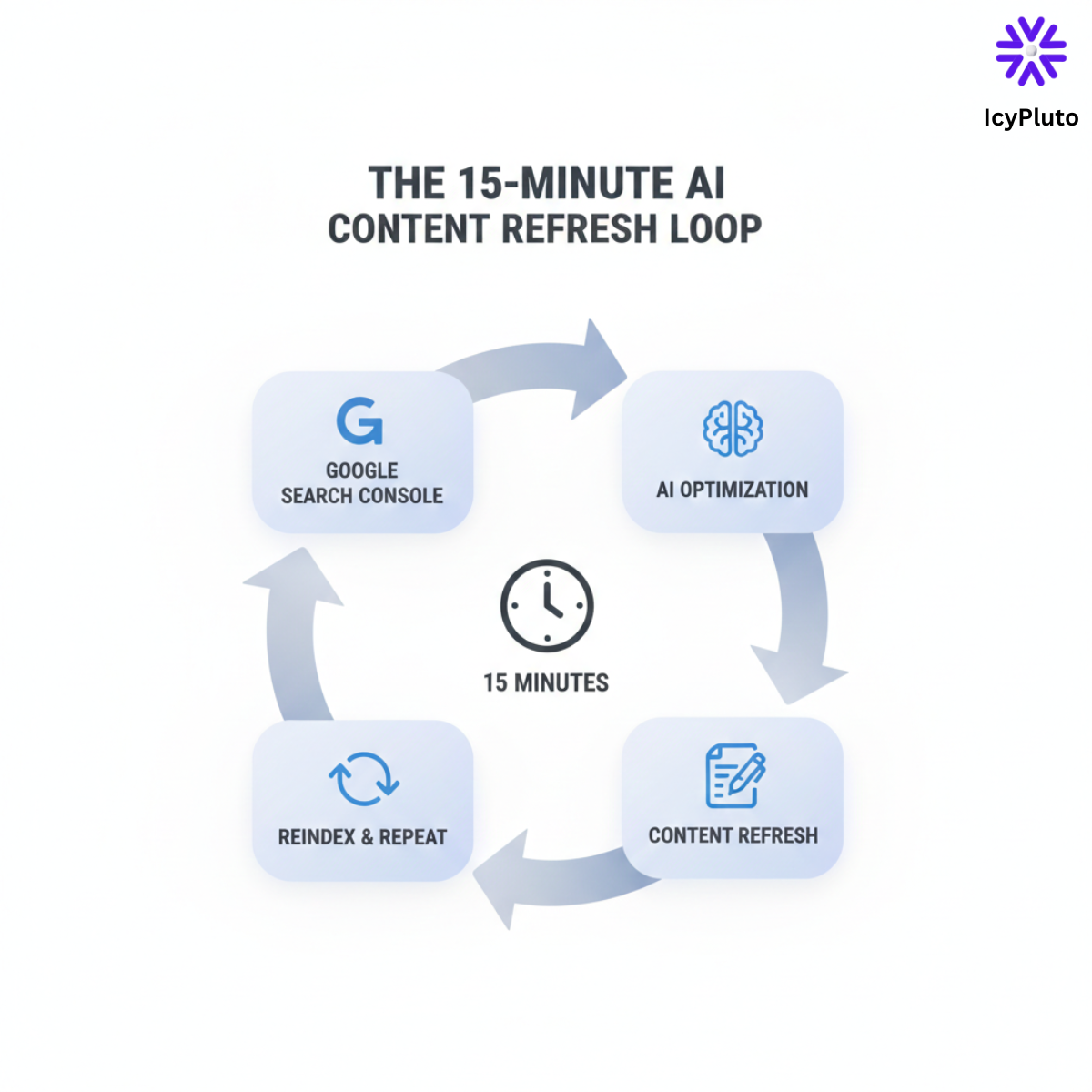
Ahrefs’ content decay studies show a simple truth:
Most traffic losses are gradual, not sudden.
Pages lose visibility because:
Search intent subtly changes
New entities enter the topic space
Competitors refresh while you don’t
Google’s understanding of the query matures
AI answers prioritise clearer, fresher content
Google doesn’t “punish” old content.
It simply finds better answers.
The solution isn’t rewriting everything.
It’s making small, strategic updates continuously.
Open Google Search Console.
Go to:
Performance → Search results
Apply these filters:
Date range: Last 28-90 days
Pages with declining impressions
Average position: 5-20
These pages are gold.
Why?
Google already trusts them.
They’re close to strong rankings.
Small changes create disproportionate gains.
This is where effort compounds.
For each page, you’ll refresh only three things.
Not the whole article.
Not a full rewrite.
Just the levers that matter most.
Feed AI:
The page URL
Top queries from GSC
Current meta title
Prompt:
Rewrite the title to better match search intent and include missing high-impression queries. Keep it natural, concise, and click-worthy.
Most pages don’t underperform because they lack keywords.
They underperform because the title doesn’t reflect why people are searching.
The opening paragraph now does more work than ever:
It shapes user engagement
It signals intent alignment
It influences AI summaries and citations
Ask AI to:
Clarify the problem faster
State the answer earlier
Remove fluff
Match current query intent
If the intro is weak, the rest barely matters.
This is the most overlooked step.
Take:
Your page
Top 2-3 competing pages
Ask AI:
What important entities, concepts, or subtopics are missing from this page compared to higher-ranking results?
Add one focused section:
Clear heading
Concise explanation
Contextual internal links
You’re not adding length.
You’re adding completeness.
Once updated:
Publish the changes
Request reindexing in GSC
Track impressions weekly
No waiting.
No obsessing.
SEO wins come from volume of correct decisions, not perfection.
This loop aligns with how modern search actually behaves:
Google rewards freshness where intent shifts
AI systems favour structured, updated answers
Internal entity coverage signals topical authority
Small updates on trusted pages outperform new content
Siege Media’s refresh frameworks consistently show:
Updating existing content often beats publishing new pages, with less effort.
This isn’t a hack.
It’s maintenance.
And maintenance compounds.
The biggest shift in SEO isn’t algorithms.
It’s a mindset.
Old model:
Research → Publish → Rank → Forget
New model:
Publish → Measure → Refresh → Reinforce → Repeat
This loop turns SEO into:
A habit
A system
A living asset
Not a campaign you revisit once a quarter.
Here’s the quiet truth most teams miss:
AI systems don’t want more content.
They want clear, current, entity-complete answers.
By running this loop weekly, your content stays:
Aligned with evolving intent
Eligible for AI summaries
Relevant for both users and machines
This is exactly how we think about visibility at IcyPluto: not as rankings, but as ongoing relevance across search and AI surfaces.
SEO doesn’t fail because teams do nothing.
It fails because they do things once.
Run this loop for 8-12 weeks, and you’ll notice:
Fewer sudden drops
Faster recoveries
More stable impressions
Less pressure to “create more”
SEO becomes calmer.
Predictable.
Almost boring.
That’s when it works best.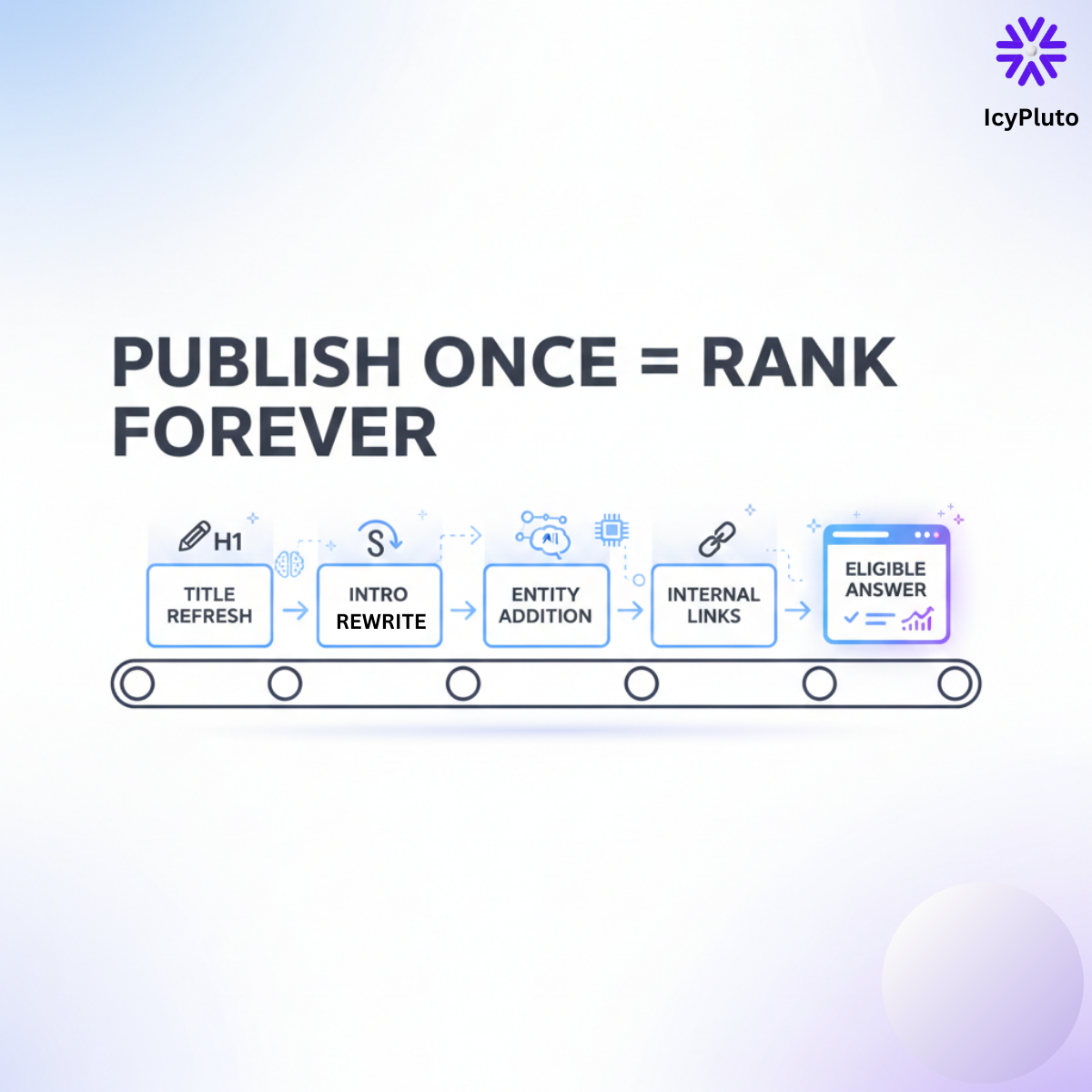
You don’t need:
More tools
More dashboards
More content
You need a system that respects how search actually evolves.
Fifteen minutes a week is enough if you spend it in the right place.