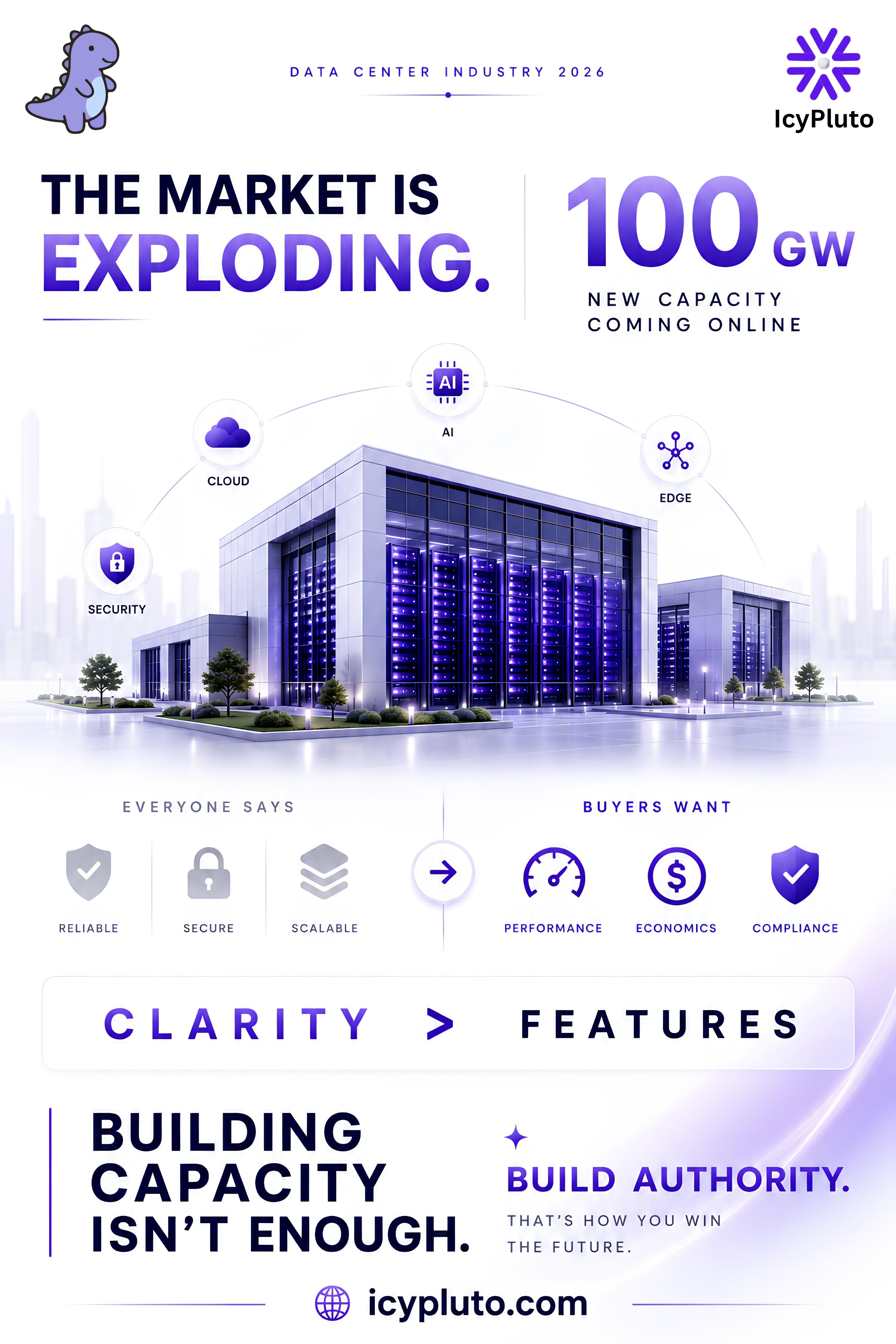
This blog explores the marketing gaps holding back...
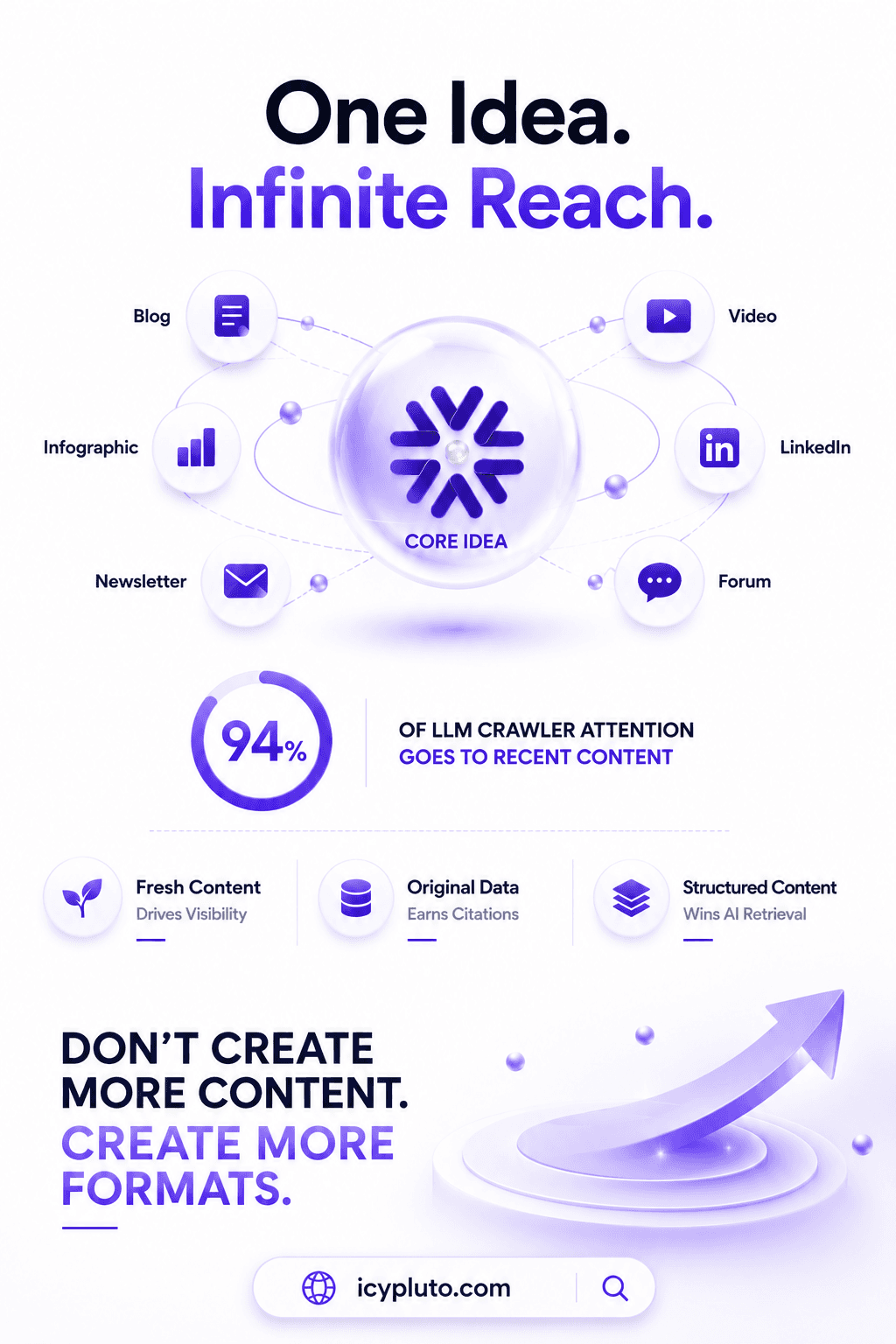
This blog reveals how to maximize visibility in tr...
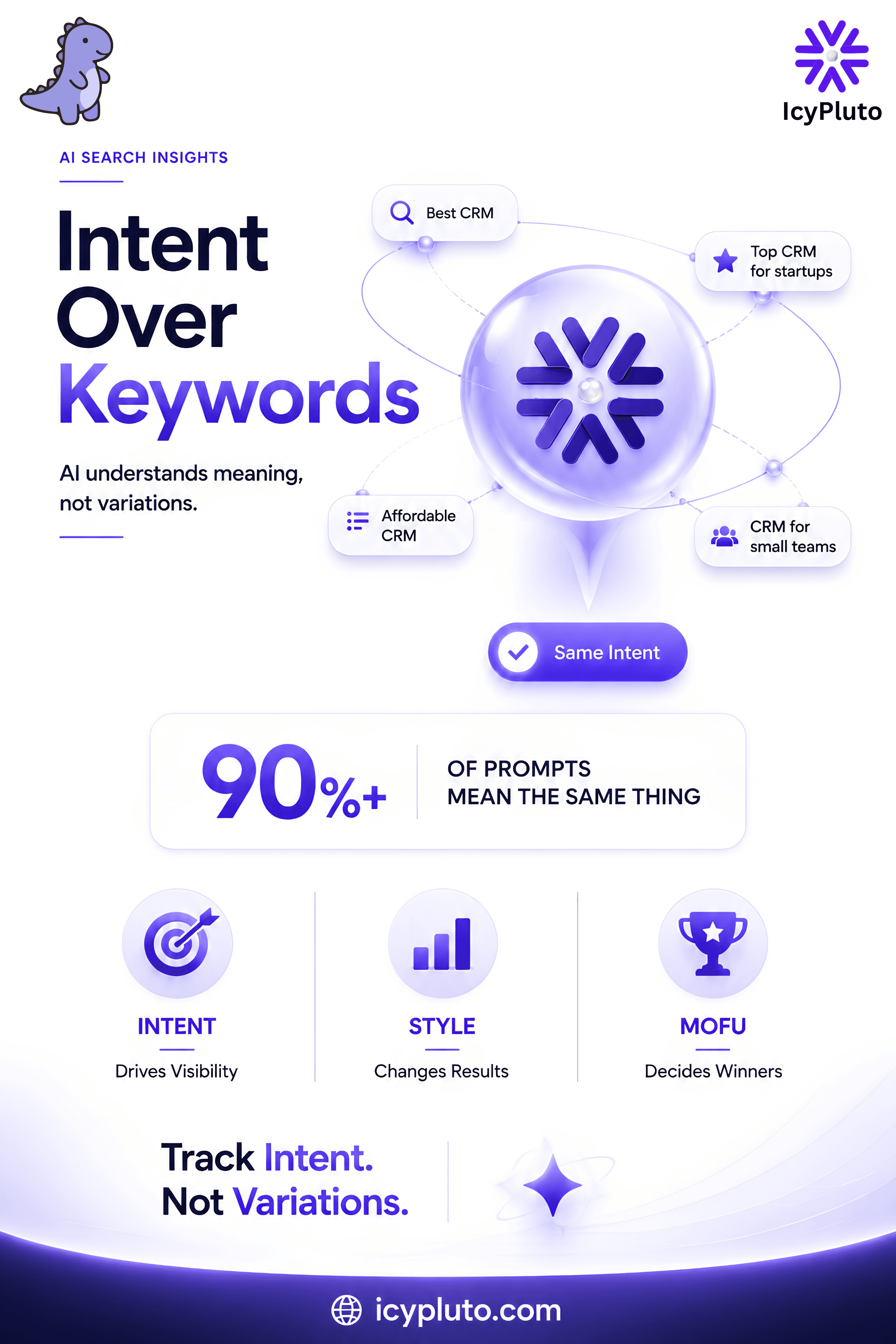
This blog reveals what a massive 37,804 AI respons...
I need to tell you something that might make you uncomfortable.
Right now, at this very moment, millions of people are asking AI assistants about products, services, and solutions in your industry. ChatGPT is recommending your competitors. Perplexity is citing your rivals' websites. Google's AI Overviews are summarizing entire markets and your brand isn't mentioned.
And here's the kicker: you'd never know it happened. No analytics dashboard shows these missed opportunities. No alert pings when Claude recommends someone else instead of you. The traffic just... doesn't arrive.
This is the uncomfortable reality of 2026. We're living through a fundamental shift in how people discover brands, and most businesses are flying completely blind.
Let me share some numbers that should get your attention:
60% of Google searches now show AI Overviews those AI-generated summaries at the top of results. A year and a half ago, this barely existed. Today, it's the dominant search experience.
800 million people use ChatGPT every single week. That's not a typo. ChatGPT alone processes over a billion prompts daily, creating an entirely parallel discovery ecosystem to Google.
But here's where it gets really interesting (and slightly terrifying): 58-60% of all Google searches end without any click. People get their answers and leave. When AI Overviews appear? That jumps to 83% zero-click outcomes.
Your beautifully optimized content, sitting at position #1 in Google? It just saw its click-through rate collapse by 61%because the AI already answered the question.
Traditional SEO focused on a simple premise: rank high, get clicks, win business.That model is broken.
Today, brand visibility begins before the click—or in place of it entirely. When someone asks ChatGPT "what's the best project management software for remote teams?" or Perplexity "which CRM systems integrate with Slack?" the answers they receive shape their entire consideration set.
If your brand isn't in that AI-generated answer, you don't exist to that potential customer. You never entered their awareness. They evaluated alternatives, made decisions, and potentially bought from competitors—all without ever knowing you were an option.
This is what we're calling Generative Engine Optimization (GEO)—the process of ensuring your brand appears in AI-generated responses across ChatGPT, Claude, Perplexity, Google AI Overviews, and every other AI platform that's reshaping discovery.
Here's a data point that blew my mind: 80% of sources cited in Google's AI Overviews don't even rank in the top 100 organic results for the original query.
Read that again.
Your #1 ranking doesn't guarantee AI visibility. In fact, even with the #1 spot, there's only a 33% chance you'll be mentioned in the AI Overview.
The rules are different:
Traditional SEO taught us to optimize our own websites. GEO teaches us that the mentions in other people's contentmatter more than our own pages.
Now, before you panic about lost traffic, let me share the other side of this story.
AI-referred traffic is insanely valuable.
Visitors who arrive from ChatGPT, Claude, or Perplexity convert at 14.2% compared to Google's 2.8%. That's a 5x improvement. One case study showed ChatGPT delivering 12,832 visits that resulted in a 127% increase in orders and $66,400 in attributed revenue.
Why? Because AI platforms pre-qualify intent. When someone asks "which email marketing platform has the best automation for e-commerce stores under $100/month?" they're not browsing. They're buying.
So yes, you might see less overall traffic. But the traffic you do get? It's gold.
Here's where I want to push back on the doom-and-gloom narrative.
Organic search still accounts for 53% of all website traffic. Google processes 13.7 billion searches daily—that's not going anywhere. A #1 ranking still achieves 27-39% CTR, which absolutely destroys every other position.
Traditional SEO isn't dead. It's not even dying.
What's happening is we're entering a blended ecosystem. Organic search provides the foundation. AI visibility provides a complementary discovery layer. Smart brands optimize for both simultaneously.
Think of it like this: SEO gets you on the field. GEO ensures you're actually in the game.
Let me paint you a picture of how this plays out across industries:
Healthcare and Education: AI Overviews now appear in 87% of relevant searches (up from 72% and 18% respectively just last year). If you're a medical practice, educational institution, or health tech company—your patients and students are already living in this world.
B2B Tech: 70% AI Overview presence (doubled from 36% last year). Nearly three-quarters of your potential buyers are seeing AI-generated comparisons before they even visit your site.
E-commerce: Interestingly, only 4% presence (down from 29%) because Google shifted to product grid formats. But for informational queries in e-commerce—"best running shoes for flat feet" or "which coffee maker makes the strongest brew"—AI summaries absolutely dominate.
The urgency varies by vertical, but the direction is clear across all of them.
Here's what excites me about this moment:
47% of brands still lack a deliberate GEO strategy.
That's not a problem—it's an opportunity.
Research shows that content optimized with GEO best practices can boost AI visibility by 30-40%. The GEO services market is projected to grow from $886 million to $7.3 billion by 2031—a 34% annual growth rate.
But right now? Most of your competitors are still figuring out what GEO even means.
Early adopters are capturing disproportionate citation share. They're showing up in AI answers while everyone else is still debating whether this matters. And because AI platforms have memory and learning patterns, early positioning creates compounding advantages.
So how do you know if you have a visibility problem?
Start simple. Open ChatGPT , Perplexity, and Google, then search for 10-15 questions your customers actually ask. Questions like:
Take screenshots. Note whether your brand appears. How you're described. Which competitors get mentioned instead.
Track this monthly. It's manual and time-consuming, but it reveals reality.
For brands that want to get serious about this, Icy Pluto has built an AI Visibility Score Tracker that monitors your brand presence across major AI platforms, benchmarks you against competitors, and identifies the specific gaps costing you citations.
Check your AI Visibility Score
Based on analysis of thousands of AI citations, here's what moves the needle:
1. Third-party authority trumps everything
Get mentioned in high-authority publications, review sites, and community platforms. Your own website is not your best GEO asset.
2. Original data is citation gold
Publish proprietary research, surveys, or compiled statistics. Pages with original data tables get 4.1x more citations.
3. Direct answer formatting
Open with a 40-60 word direct answer to the question, then expand. This structure gets cited 67% more often.
4. Schema markup is non-negotiable
FAQ, HowTo, and Article schema show 30-40% higher AI visibility. It's how AI engines understand your content.
5. Freshness matters 257% more
Content updated within 30 days gets 3.2x more citations. "Evergreen" isn't enough anymore—you need dynamic, regularly-updated content.
6. Platform-specific optimization
ChatGPT favors encyclopedic depth. Perplexity rewards freshness and community examples. Google AI Overviews prioritize existing high-authority domains. One strategy doesn't fit all.
Stop obsessing over rankings and traffic alone. Start tracking:
These metrics tell you whether you're winning in the invisible layer of search.
Look, I get it. This feels like moving the goalposts again.
You finally figured out SEO. You invested in content. You built authority. And now someone's saying "cool, but also you need to do this other thing too."
But here's the reality: 71% of Americans now use AI search to research purchases. 89% of B2B buyers have adopted generative AI as a key information source in their buying journey.
Your customers are already there. The question is whether you'll meet them.
The good news? Organic search isn't going anywhere. You don't have to abandon what works. You just need to expand your definition of "search visibility" to include the platforms that increasingly control first impressions.
If this feels overwhelming, here's what I'd do this week:
That's it. Five actions. Maybe 3-4 hours of work.
You'll immediately see where the gaps are. And you'll have a baseline to measure against as you build out a real strategy.
AI isn't killing SEO. It's not making your existing optimization work worthless.
What it is doing is creating a parallel visibility layer that operates by different rules, rewards different behaviors, and converts at dramatically higher rates.
Brands that figure out how to excel in both realms—traditional search and AI-generated discovery—will absolutely dominate their markets over the next 3-5 years.
Those that don't? They won't die. They'll just slowly fade into irrelevance as customers discover, evaluate, and buy from competitors who do show up in AI answers.
You can't afford to be invisible anymore. Especially not when you don't even know it's happening.
Want to see where you stand? Check your current AI visibility across ChatGPT, Perplexity, Google AI Overviews, and Claude using Icy Pluto's AI Visibility Score Tracker. It's one of the few tools actually built for brands trying to navigate this shift.
Not affiliated, not sponsored just a genuinely useful resource for the problem we're all facing.