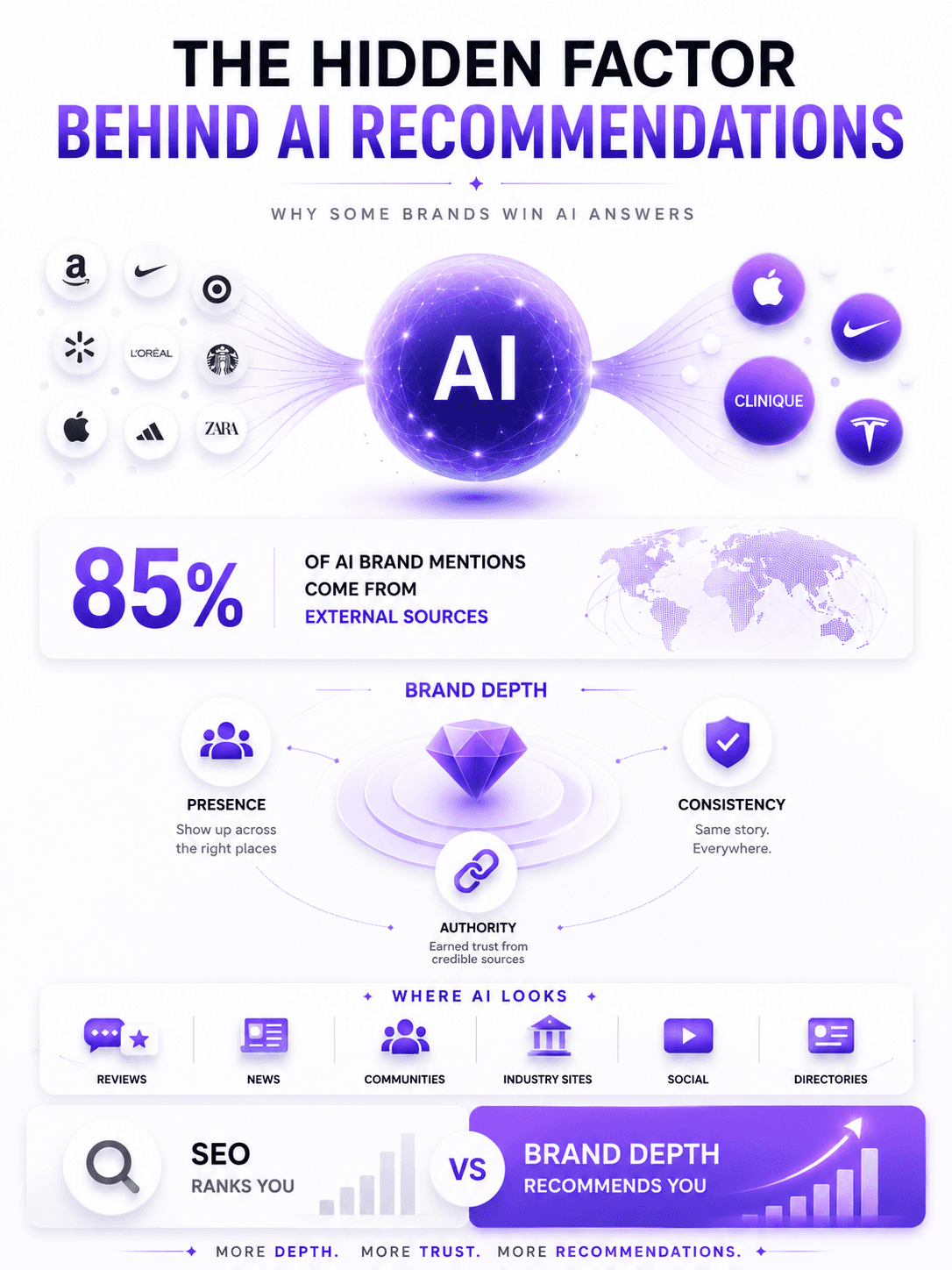
This blog post reveals why brand depth-the density...
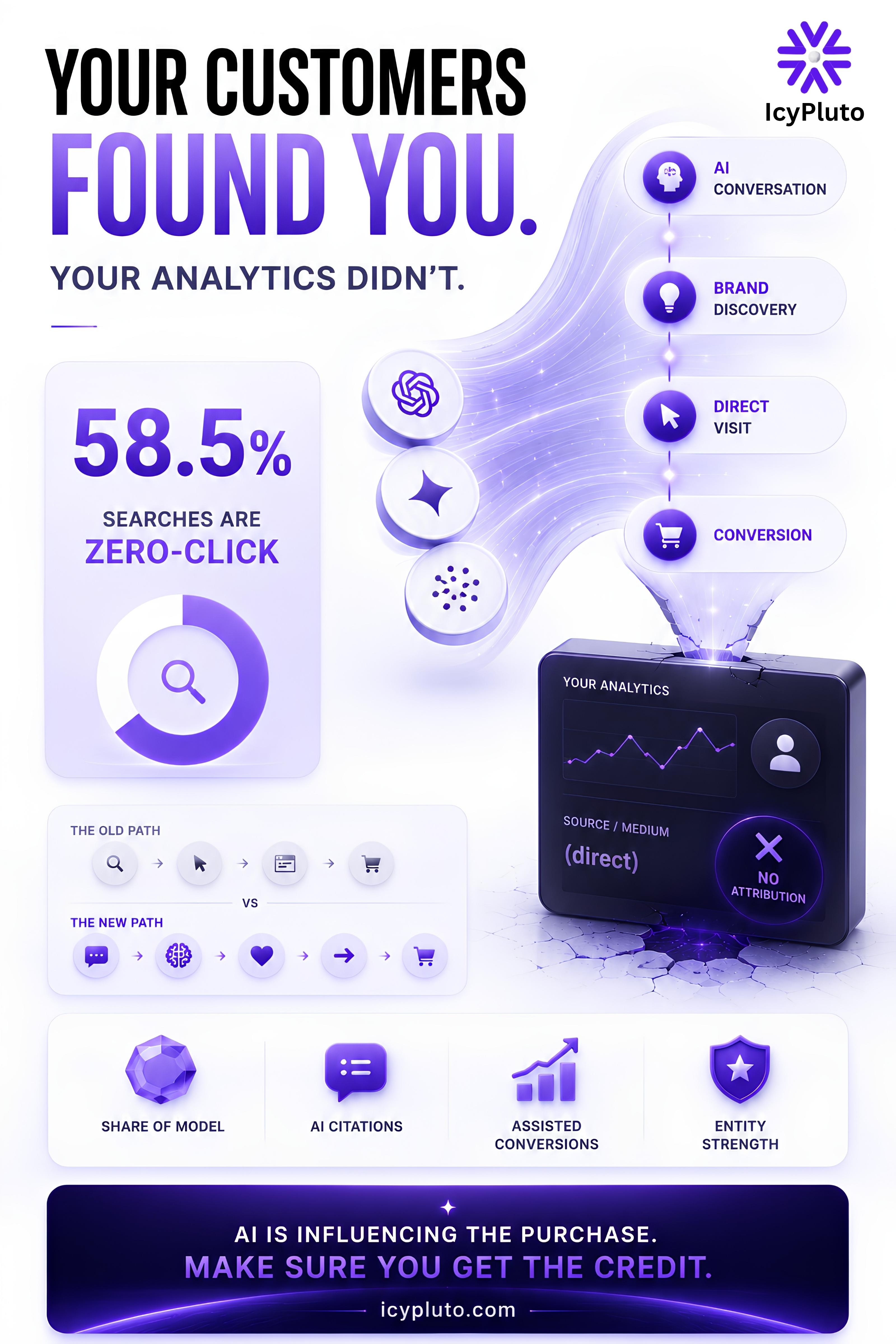
This blog reveals why traditional marketing attrib...
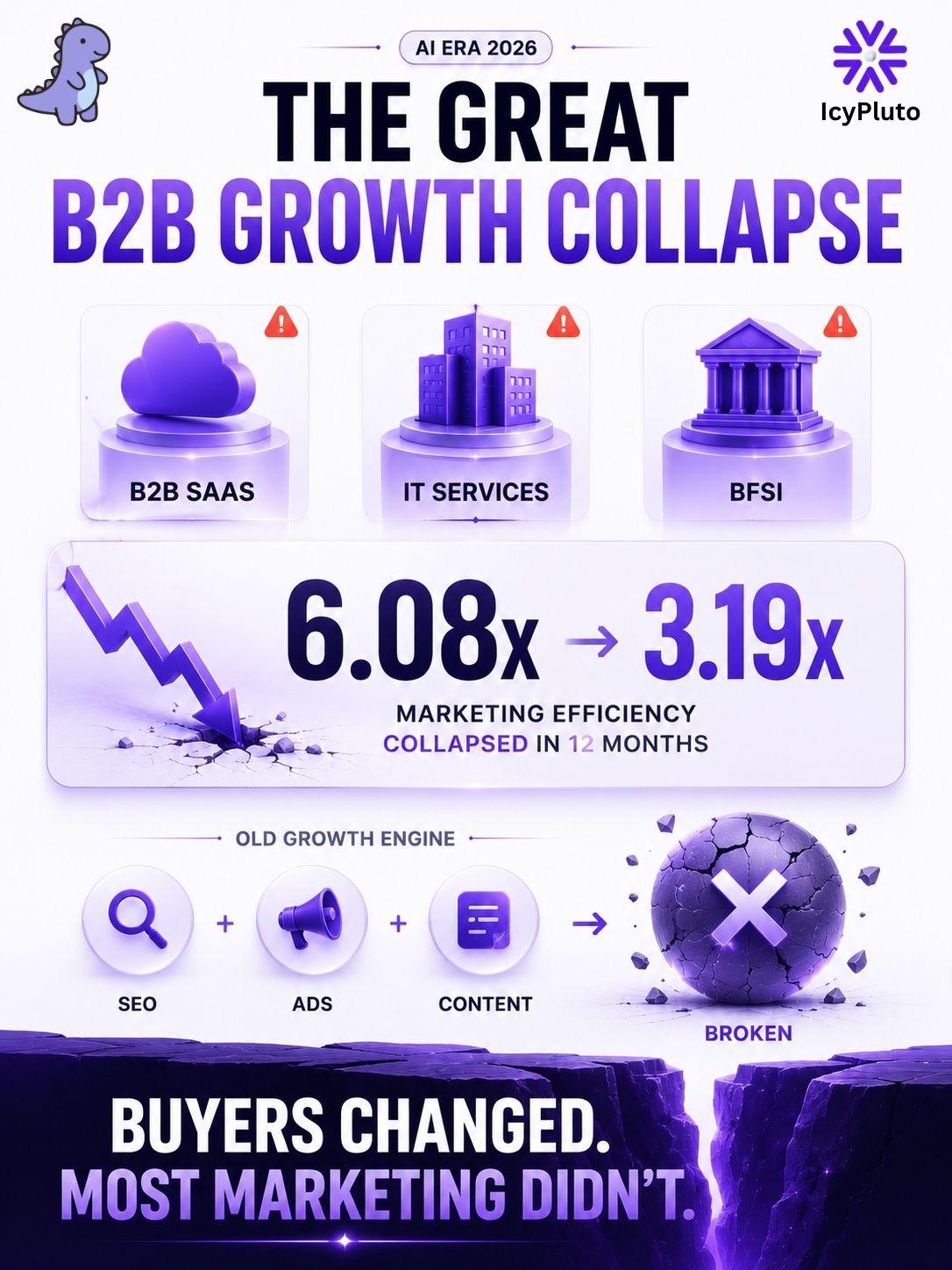
This hard-hitting blog reveals why IT, B2B SaaS, a...

When the person in charge of Google’s search, AI models and security operations says AI could “break pretty much all software,” it is more than a throwaway quote. For SEO teams, product leaders and anyone building on the modern web, it is a warning that the same AI systems we use for content, AI search and GEO can also be used to probe the foundations of our sites and apps.
In a recent conversation on the Cheeky Pint podcast with Stripe CEO Patrick Collison and investor Elad Gil, Google CEO Sundar Pichai made an unusually blunt prediction. He suggested that as AI models get better at understanding code and systems, they will be able to uncover and weaponize vulnerabilities across the entire software stack at a scale humans cannot match.
This is not an abstract security point. It sits right at the intersection of AI search, SEO, answer engine optimisation and Google’s evolving ranking systems.
During the podcast, Pichai and Collison were discussing the constraints on AI infrastructure. The usual suspects came up first: limited GPU supply, memory bottlenecks and the enormous energy demands of large models. Then Pichai shifted the conversation to a quieter but equally serious constraint: security.
He said these models are “really going to break pretty much all software out there. Maybe already we do not know as we sit here and speak.”
Elad Gil added that he had heard black‑market prices for zero‑day exploits were falling because AI tools were making it easier to find new vulnerabilities. Pichai responded that he was “not at all surprised,” although neither of them cited specific pricing numbers.
Taken together, their comments imply three things:
AI models can inspect and reason about code in a way that speeds up vulnerability discovery.
Attackers are already experimenting with AI to find and weaponize flaws.
The economics of exploits could shift as the “supply” of vulnerabilities found by AI increases.
For anyone responsible for SEO and site performance, this is not just a security team issue. A single exploited plugin or misconfiguration can wreck your organic visibility, your AI search presence and the trust signals Google’s algorithms rely on.
One conversation does not prove a trend, so it is important to look at actual data. Google’s Threat Intelligence Group (GTIG) tracked 90 zero‑day exploits used in attacks in 2025, up from 78 in 2024. Nearly half of those targeted enterprise software, which is an all‑time high.
The GTIG report specifically predicts that AI will “accelerate the ongoing race between attackers and defenders” in 2026, particularly by:
Speeding up reconnaissance and mapping of systems.
Automating parts of vulnerability discovery.
Assisting in crafting and testing exploit code.
There is some nuance. While Pichai and Gil described falling underground prices for certain zero‑days, industry reporting on commercial exploit brokers suggests prices are holding or even rising in some categories as vendors harden their products and pay higher bounties. The exact market dynamics are complex.
But the key point stands. Exploit volume is rising, AI is expected to accelerate discovery, and enterprise‑grade targets are in the crosshairs. Every CMS, ecommerce platform and analytics script used for SEO and digital marketing sits on top of that reality.
It is tempting to treat AI security as a back‑of‑house problem. However, for anyone working on SEO, AI search optimisation or Generative Engine Optimization, security is now a first‑order concern.
Every website depends on layers of software with potential vulnerabilities:
CMS cores such as WordPress, Drupal and headless frameworks.
Plugins and extensions that handle SEO, caching, forms and tracking.
Web servers and reverse proxies such as Nginx, Apache or CDNs.
Authentication systems, customer portals and payment integrations.
Third‑party scripts for analytics, ads, chatbots and personalization.
AI‑assisted exploit discovery can target any part of this stack. When something breaks, it does not just cause downtime. It can trigger a cascade of SEO and AI search problems.
A successful exploit can quickly lead to search‑visible damage, including:
Malware and phishing flags: Browsers and Google Safe Browsing can start warning users away from your site. That crushes click‑through rates from both classic search and AI‑powered surfaces.
Spam content and redirects: Attackers often inject doorway pages, spammy links or cloaked redirects. This can cause sudden ranking drops or manual actions as Google’s algorithms detect spam patterns.
Loss of crawl budget and index quality: If Googlebot and AI search crawlers encounter error pages, malware or junk URLs, your crawl budget may get wasted and your index profile can degrade.
Reputation and E‑E‑A‑T damage: Users encountering warnings, defacements or phishing attempts are less likely to trust your brand. That affects engagement, off‑site mentions and the broader signals that feed Google’s ranking systems and AI models.
In an AI search context, you also have to consider model‑layer effects. If AI systems learn from a compromised version of your site, they might propagate outdated or malicious content in summaries long after you fix the issue.
Before generative AI, vulnerability research was a niche, highly specialized skill. Tools existed, but humans did most of the creative work. AI is changing that equation in several ways:
Code understanding at scale: Large language models can read and reason about huge repositories of code, configuration and documentation. That makes it easier to spot insecure patterns or copy‑paste mistakes across many projects.
Faster hypothesis testing: Attackers can use AI to propose potential exploit vectors and then automatically test them in controlled environments, iterating faster than manual approaches.
Lower barrier to entry: AI assistants can help less experienced attackers by explaining error messages, generating proof‑of‑concept exploits or “fixing” code in ways that highlight weaknesses.
In practice, that means more eyes and more compute are probing the same software that powers your SEO stack. Even if defenders also use AI to improve patching and monitoring, the attack surface grows along with the capability.
From an AI search and SEO perspective, Pichai’s warning connects to some specific ranking and visibility issues.
While Google’s core ranking systems do not have a single “security score,” they are sensitive to signals that often accompany compromised sites, including:
Malware detection and Safe Browsing warnings.
Large spikes in spammy or irrelevant URLs being indexed.
Sudden content shifts that do not match historical patterns or user intent.
User behavior changes such as pogo‑sticking and high bounce rates on affected pages.
These issues can feed into core updates, spam systems and manual reviews. The March 2026 core update and recent spam updates are part of an ongoing effort to surface trustworthy, secure experiences. If AI is increasing vulnerability discovery speed, more sites may trip these signals in shorter windows.
AI search and answer engines also rely on underlying assumptions about source integrity. If a domain that used to be a high‑quality reference suddenly starts serving malicious or low‑quality content, models and retrieval systems need to react quickly.
For GEO and AEO, that means security incidents are not just downtime. They are training data incidents. They can affect:
How often your content is retrieved as a candidate for answers.
Whether your domain is considered a safe, high‑quality source for snippets.
How models weigh your domain when ranking or summarizing across multiple sources.
A robust security posture becomes part of ensuring your content continues to power AI search experiences in a reliable way.
You do not control the global threat landscape, but you can harden your own environment. For SEO, AI search and GEO practitioners, it helps to think of security in two layers: the technical foundation and the content layer.
Work closely with your engineering or DevOps team to make sure that:
Core platforms stay updated: Keep your CMS, plugins and themes on current versions. Many exploited vulnerabilities are months or years old by the time attackers use them.
Third‑party scripts are audited: Regularly review tags from ad networks, analytics tools and widgets. Remove anything unused and restrict permissions where possible.
Access is locked down: Use strong authentication, least‑privilege access and logging on admin areas for marketing and SEO tools. Compromised credentials are a common weakness.
Basic security controls are in place: WAF rules, rate limiting, bot mitigation and file‑integrity monitoring can catch some automated exploit attempts early.
Backups and rollback plans exist: In the event something breaks, you want to be able to restore quickly and avoid prolonged exposure of spam or malware to search crawlers.
These are not new ideas, but Pichai’s comments underline that the urgency is higher in an AI‑accelerated world.
You can also structure your site and content to help both users and defensive systems:
Be transparent about updates and incidents: If you have experienced a breach or data issue, publish clear post‑mortems and status updates. That helps rebuild trust with users and with the broader ecosystem that references your brand.
Use clear, machine‑readable structure: Strong information architecture, clean HTML and well defined structured data make it easier for AI systems to distinguish legitimate content from injected spam.
Avoid shady link practices: Aggressive link schemes or hidden content can make it harder for defenders and algorithms to tell the difference between a compromised site and one that is simply low quality.
Here, SEO best practices and security hygiene overlap. Clear structure and honest content help both Google algorithms and AI‑driven security tools.
Historically, SEO and security teams might only talk when something went wrong. In an AI‑first era, their collaboration needs to be proactive.
Consider setting up regular touchpoints to:
Review upcoming platform changes or migrations that could affect both crawlability and security.
Share vulnerability disclosures affecting SEO‑critical components such as analytics scripts, SEO plugins or A/B testing tools.
Align on incident‑response plans that include both security actions and search visibility actions, such as using Search Console tools, temporary noindex rules and status pages.
From a GEO and AEO perspective, security incidents should be treated as “model‑layer events.” The goal is not just to fix the site, but to limit how much bad data enters search indexes and AI training pipelines.
Pichai’s comments were conversational rather than an official roadmap, but they match the trend line visible in Google’s own threat reports. AI is expected to speed both offense and defense. Models that can help discover vulnerabilities can also help patch them, analyze logs and predict likely attack paths.
For SEO, AI search and Generative Engine Optimization, that means two things:
You should expect more volatility in the security environment underlying your digital properties. There will be more zero‑day headlines, more emergency patches and more pressure on keeping your stack current.
You will also have access to better AI‑powered tools to monitor, audit and respond. The challenge will be using them in time, before attackers do.
In the same way AI search is changing how users interact with content, AI security is changing how attackers and defenders interact with code. As Pichai put it, you cannot wish these risks away.
For anyone working in SEO or AI search, it is time to treat security not as a separate function, but as a core pillar of protecting your visibility, your rankings and your reputation in a world where AI sits on both sides of the equation.