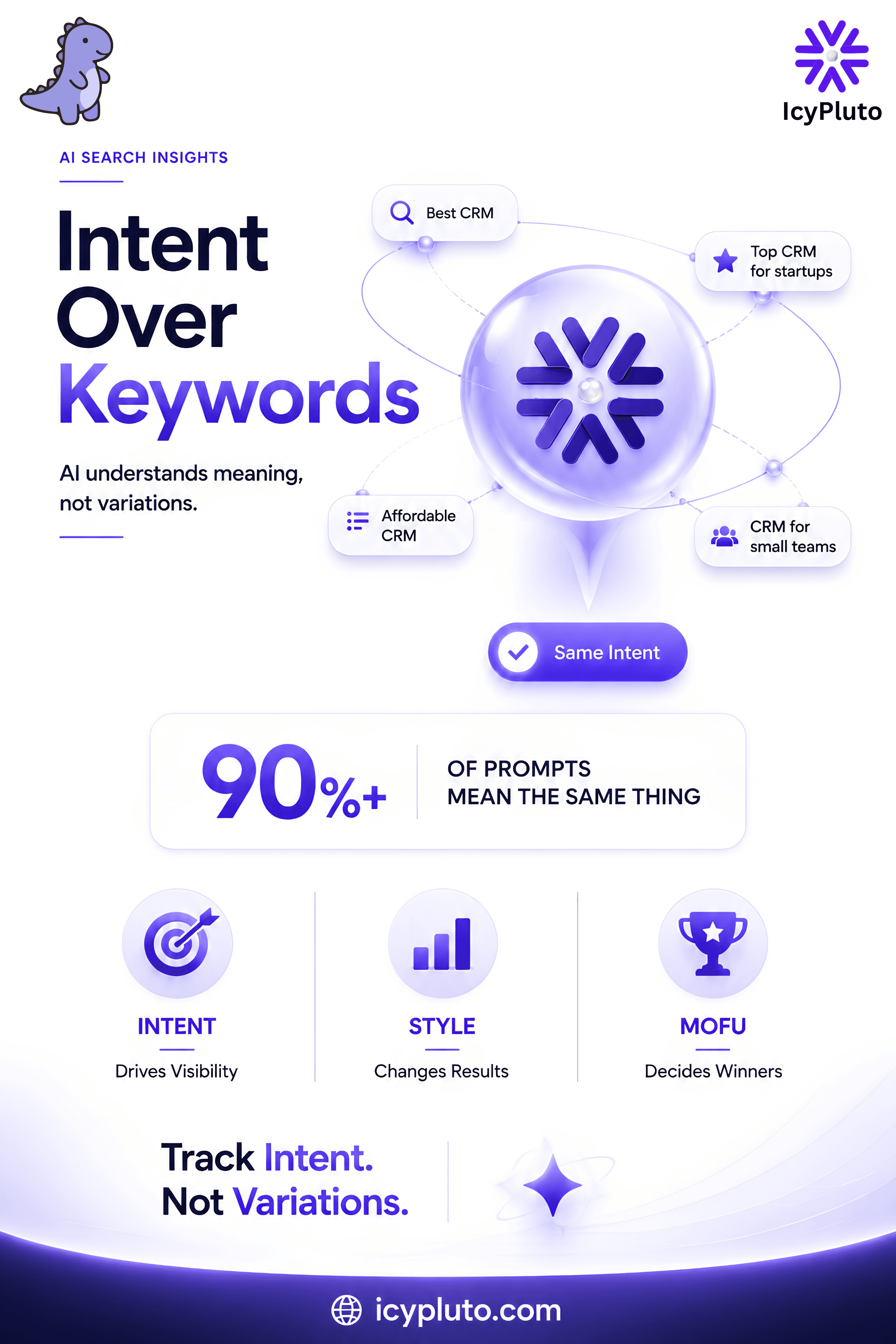
This blog reveals what a massive 37,804 AI respons...
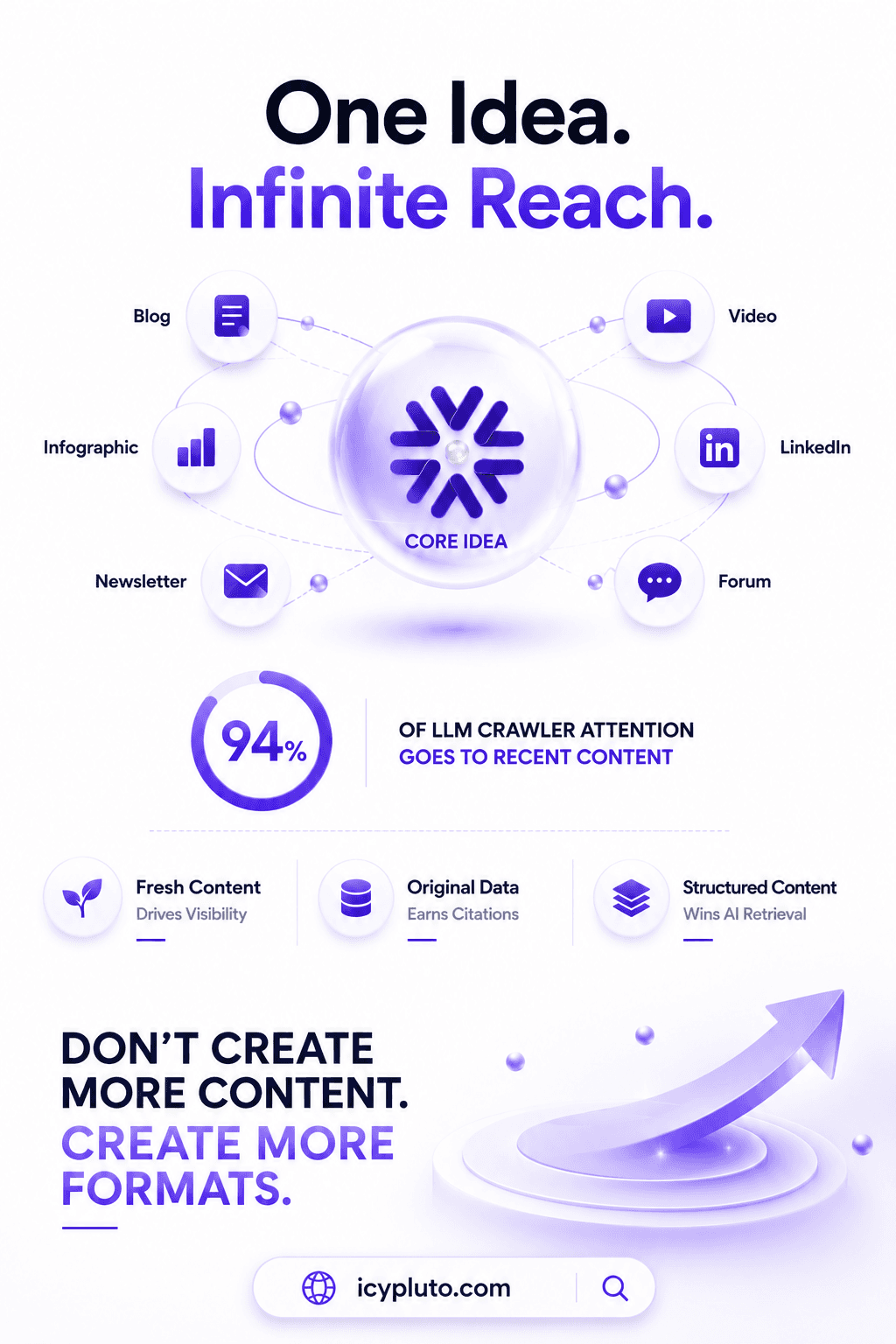
This blog reveals how to maximize visibility in tr...
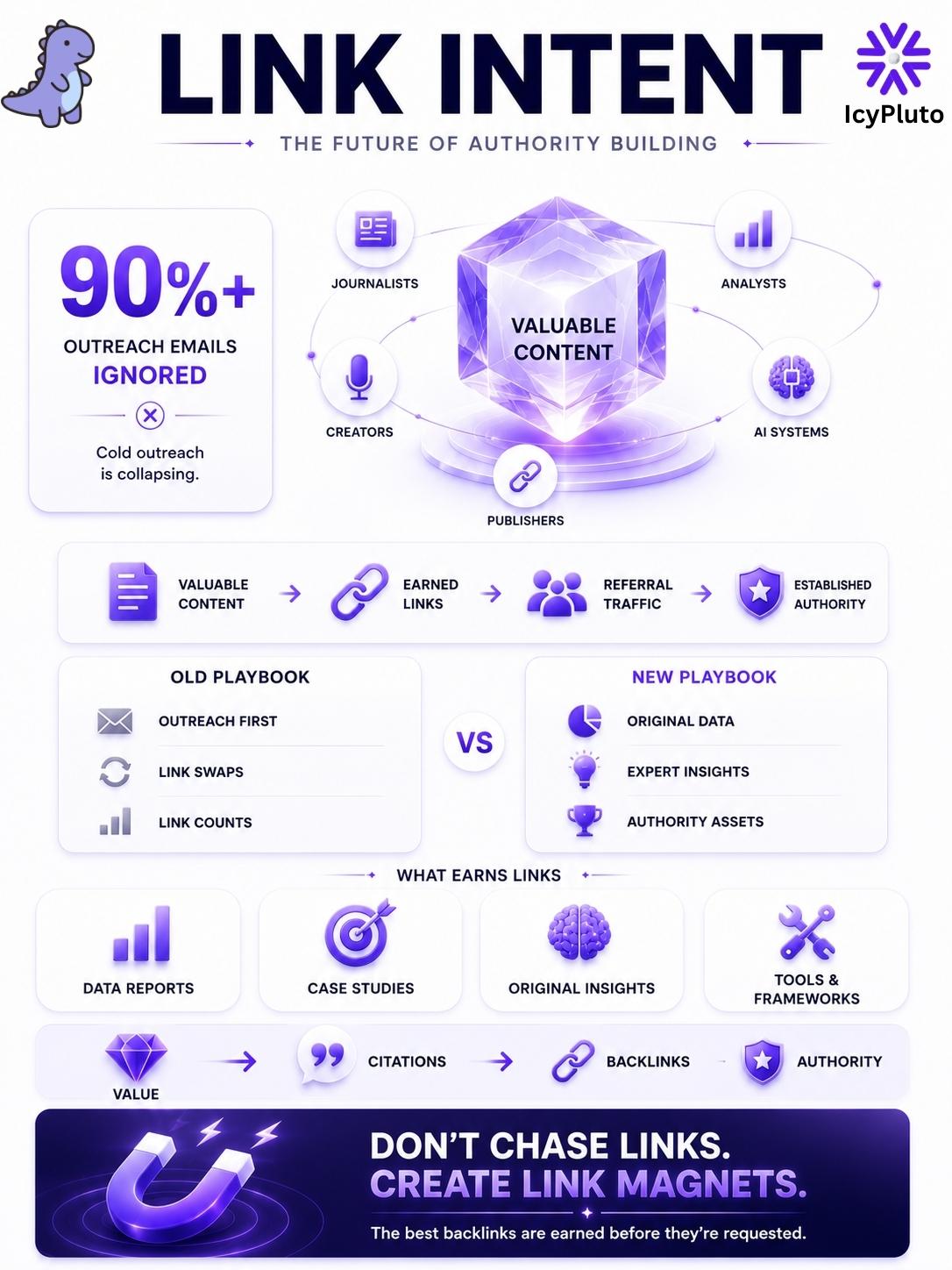
This blog explains how IcyPluto uses link intent—a...

AI assistants are no longer passive information tools. They are becoming decision layers—shaping what users see, consider, and choose.
This shift has direct implications for how brands are discovered, evaluated, and recommended.
For decades, discovery followed a linear model:
Search → Click → Compare → Decide
That model is being compressed.
Today, users increasingly rely on AI assistants to answer questions such as:
“Which product should I buy?”
“What’s the best tool for my team?”
“Which brand can I trust?”
AI does not return pages of results. It returns contextualised answers.
Those answers are generated by interpreting user intent, understanding context, and retrieving brand information that aligns with both consumer needs and brand claims.
Unlike traditional search engines, AI systems do not rank websites based solely on keywords or backlinks.
Instead, they:
Interpret intent and context
Deploy retrieval and indexing agents
Evaluate consistency of brand signals
Assess clarity and credibility of claims
Recommend options that best fit the query
In this environment, discoverability depends less on page rankings and more on how legible a brand is to AI systems.
Despite this shift, brands continue to increase investment in traditional SEO.
The global SEO market crossed $80 billion in 2024, reflecting continued reliance on ranking-based visibility strategies.
At the same time, visibility at the moment of decision is declining.
Gartner projects that by 2026, traditional search engine traffic will decline by 25%, driven by the adoption of AI chatbots and virtual agents.
This divergence highlights a structural mismatch:
SEO was built for human browsing behaviour.
AI discovery is built for decision efficiency.
AI systems do not click links. They surface conclusions.
A critical distinction is emerging.
Visibility refers to appearing in search results.
AI discoverability refers to being referenced within AI-generated answers.
Brands that lack structured, consistent signals are often absent from AI recommendations—even if they rank well in traditional search.
Conversely, brands with clearer positioning and coherent narratives are more likely to be surfaced by AI, regardless of legacy or spend.
As discovery moves into AI interfaces, brands need mechanisms to evaluate and improve how AI systems perceive them.
This is where AI visibility becomes measurable.
At Rabbitt AI, this gap is addressed through IcyPluto, an agentic AI platform designed to help brands:
Structure brand data for AI interpretation
Align claims across digital touchpoints
Improve AI-level discoverability
Monitor how brands are referenced in AI outputs
Rather than optimising for rankings, the focus shifts to reference-readiness.
As AI increasingly mediates discovery, brands need to assess whether they are:
understood by AI systems
accurately positioned
consistently referenced
With IcyPluto, brands can check their AI visibility score—a diagnostic view of how discoverable their brand is across AI-driven environments.
👉 Check your AI visibility score: https://www.icypluto.com/geomax
This transition does not signal the end of search.
It signals the absorption of search into AI.
Marketing is not becoming louder.
It is becoming structural.
The question brands now face is no longer:
“How do we rank?”
It is:
“Can AI understand, trust, and recommend us?”