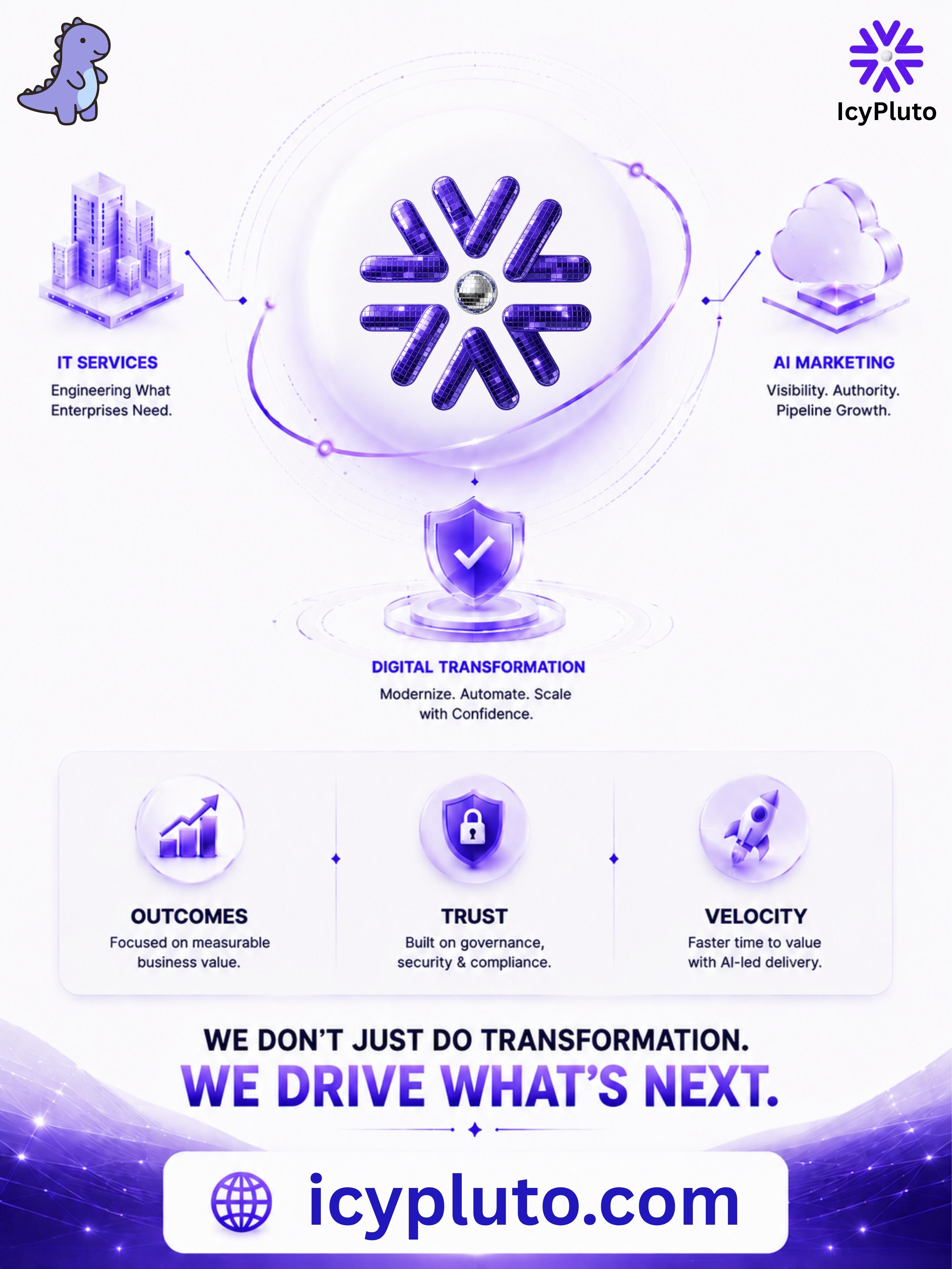
This blog explores how the IT industry is being re...
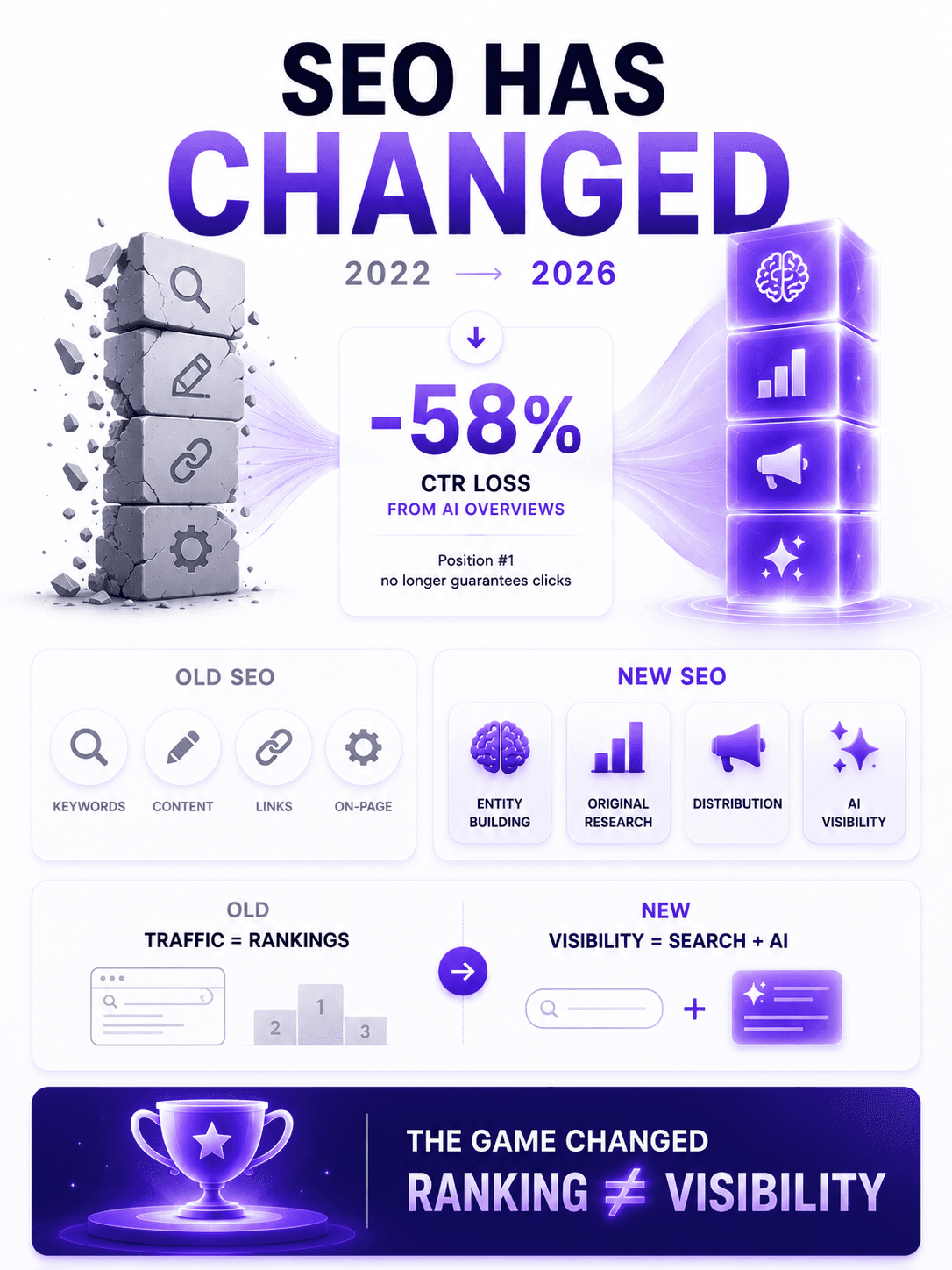
This blog reveals why traditional SEO work no long...
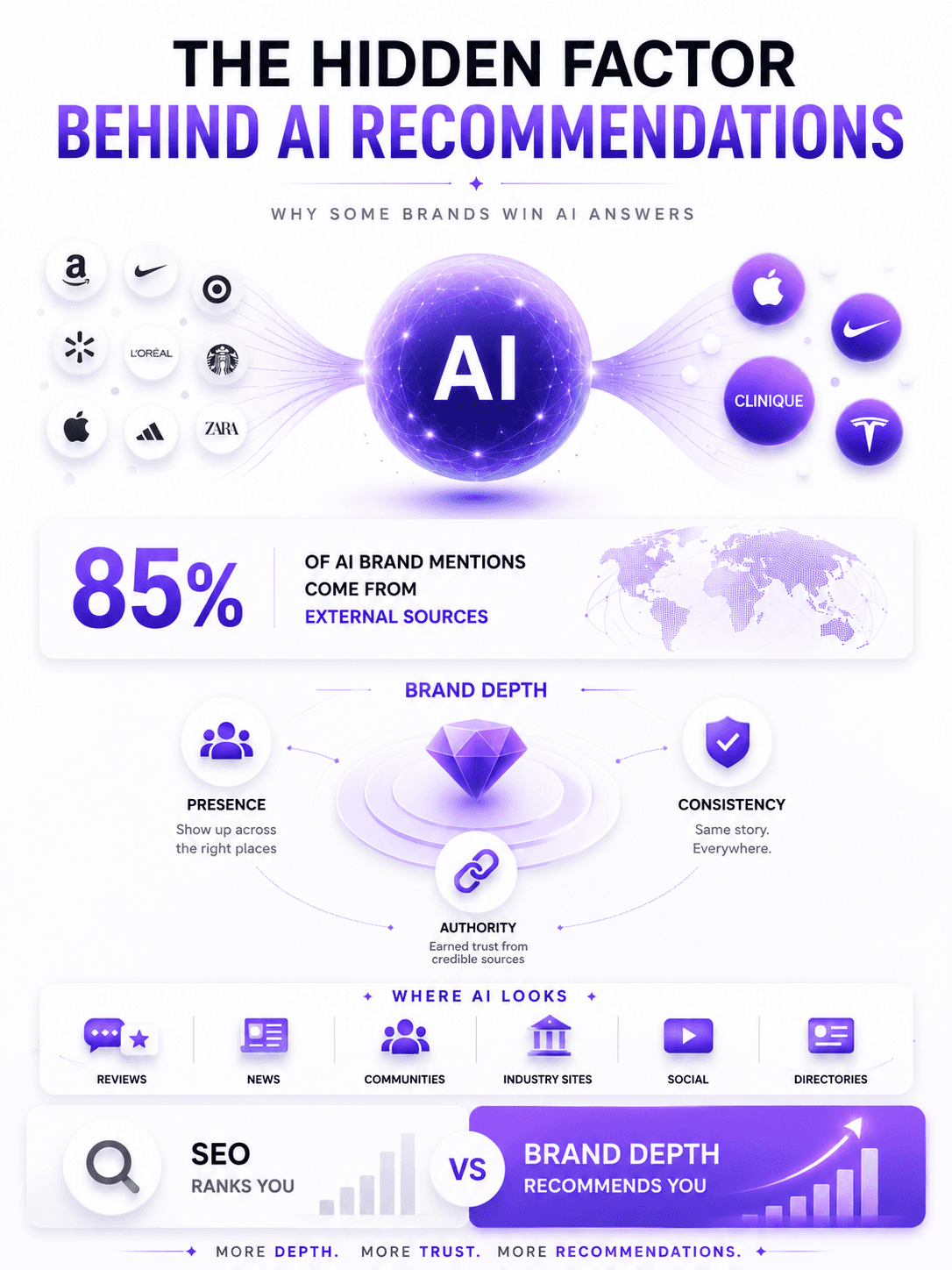
This blog post reveals why brand depth-the density...

Google has officially kicked off its first broad core update of the year, and the digital marketing world is paying close attention. The March 2026 Core Update began rolling out on March 27, 2026, at 2:00 AM PT, and is expected to take up to two full weeks before it's completely done. If your website has seen any unexpected movement in rankings or traffic over the past few days, this update is almost certainly the reason behind it.
At IcyPluto, we track these shifts closely because understanding Google's algorithm behavior is at the heart of what we do. As the cosmos' first AI CMO, IcyPluto is built to help brands navigate exactly these kinds of pivotal moments in search — and a broad core update of this scale is as pivotal as it gets.
Let's break down everything you need to know: what this update actually is, how it differs from recent Google changes, what it means for your rankings, and how to approach it strategically.
A core update is one of Google's most significant algorithmic changes. Unlike targeted updates — which might go after a specific type of content, a particular spam pattern, or a narrow technical issue — a broad core update sweeps across the entire search index. It reassesses how Google evaluates content quality at scale.
This March 2026 update was confirmed through the Google Search Status Dashboard, where it was listed as an ongoing incident affecting ranking. The description reads that the March 2026 core update has been released and the rollout may take up to two weeks to complete. Google did not publish a blog post alongside this update, nor did it reveal specific objectives for this rollout — which is pretty standard behavior for broad core updates.
Broad core updates don't target websites for punishment. They don't penalize anyone for a policy violation. Instead, they recalibrate how Google's systems assess the overall value of pages across the web. Think of it like this: Google's search quality reviewers are always updating the rubric by which websites are graded. A core update is when those new grading standards get applied across the board.
Some pages will rise. Some will fall. And in many cases, the pages that fall aren't doing anything wrong — they simply may not be meeting the newer, higher bar that Google has set for helpfulness, authority, depth, and trustworthiness.
Google's own documentation on core updates describes the goal clearly: to ensure that search results are as helpful and reliable as possible for users. The changes are meant to reward content that truly serves users best, not to punish content creators arbitrarily.
Based on the official announcement, Google anticipates the March 2026 Core Update to wrap up within two weeks — putting the estimated completion window somewhere around mid-April 2026. However, it's worth noting that recent history shows these timelines can stretch a bit. The December 2025 Core Update, for instance, ran for 18 days before completion was confirmed.
Google will post an update on the Search Status Dashboard when the rollout finishes. Until then, fluctuations in rankings and traffic are expected and should be interpreted as part of the update process rather than a sign of any deeper issue with your site.
To really understand why this update matters and what makes it different, it helps to zoom out and look at the broader pattern of Google's algorithm activity over the past few months. 2025 and early 2026 have been particularly eventful, and the March update arrives at a time when multiple changes have been stacking on top of each other.
The most recent update prior to March was the February 2026 update, which ran from February 5 through February 27. What made that update genuinely unprecedented was its scope — it was labeled as a Discover-only update. This was the first time Google publicly designated a core update as applying exclusively to Google Discover rather than to web search rankings.
For publishers and brands heavily reliant on Discover traffic, that update created some real movement. But for traditional organic search rankings, it had zero direct impact. This means that if your organic traffic remained steady through February, you haven't seen a real broad core update in several months — making the March 2026 update the first one with full web search implications since late last year.
The last broad core update before March 2026 was the December 2025 Core Update. That one rolled out starting December 11, 2025 and took until December 29 to fully complete — a span of 18 days. By most accounts, it was a significant update that produced noticeable ranking shifts across a wide variety of industries and content categories.
If your rankings shifted during December, that recovery window has come and gone. The March 2026 update is now the active variable, and any new changes you observe from here forward should be analyzed within the context of this new rollout.
Just two days before the core update launched, Google completed an entirely separate update: the March 2026 Spam Update. That update began and finished on March 24–25, making it one of the fastest spam update rollouts ever recorded in Google's dashboard history — completed in under 20 hours.
It's important not to conflate the spam update with the core update. They are two different systems targeting two different things. The spam update is specifically aimed at manipulative, deceptive, or low-quality content that violates Google's spam policies. The core update, on the other hand, is not about violations at all — it's about quality assessment.
If you saw ranking drops around March 24–25, that may have been the spam update. Drops observed from March 27 onward are tied to the core update.
At IcyPluto, our AI-powered marketing intelligence is always active, and during major algorithm events like this one, that intelligence becomes especially critical. Here's what we're tracking — and what you should be paying attention to as well.
Broad core updates don't hit all industries equally. Some sectors see intense movement; others barely register a shift. Historically, content-heavy industries like health, finance, education, and media tend to feel the strongest impact from core updates because Google's quality standards are applied most rigorously in areas where accuracy and trustworthiness are paramount.
E-commerce, local businesses, and SaaS brands also feel the effects, but often in more nuanced ways — through changes in featured snippet eligibility, shift in question-based queries, and adjustments in how Google ranks informational versus transactional content.
IcyPluto monitors ranking volatility across verticals so our clients and readers always have the clearest picture of where the algorithm is pushing and pulling.
One of the defining characteristics of recent Google core updates has been a consistent emphasis on what Google calls "helpful content." This isn't just a buzzword — it reflects a real and measurable shift in how Google evaluates web pages. Content that exists primarily to rank, rather than to genuinely help readers, has been progressively deprioritized across multiple update cycles.
The March 2026 Core Update continues that trajectory. If your site's content is thin, overly templated, padded with filler, or relying on keyword stuffing to drive rankings, now is the time to take that seriously. Conversely, if your content genuinely solves problems, answers questions thoroughly, and demonstrates real expertise, you're aligned with the direction Google has been consistently moving.
This is also deeply tied to Google's E-E-A-T framework: Experience, Expertise, Authoritativeness, and Trustworthiness. Core updates serve as a kind of stress test for E-E-A-T signals across the web. Pages with strong author credentials, clear sourcing, and demonstrated subject matter expertise tend to hold or improve their positions. Pages lacking these signals are the ones most at risk.
Google's official guidance for webmasters dealing with core updates is to wait at least a full week after the rollout completes before drawing any firm conclusions from Search Console data. This matters because the rollout is gradual — different data centers update at different times, which means your rankings may fluctuate noticeably during the rollout period and then stabilize once it's done.
When you do begin analysis, compare your post-update performance against a clean baseline period — ideally the two to three weeks immediately preceding March 27. Look at impressions, clicks, average position, and click-through rate side by side. If there's a meaningful divergence, that tells you whether the update affected your visibility and in which direction.
Whether you've already seen ranking changes or you're bracing for what might come, there are smart, strategic steps you can take right now. At IcyPluto, we always stress that the best response to a core update is not panic — it's process.
One of the most common mistakes site owners make during a core update is making sweeping changes to their website while the rollout is still in progress. This is almost always counterproductive. Since the update is still rolling out across Google's servers, your current rankings are in a transitional state. Any changes you make now will interact with an unstable ranking environment, making it extremely difficult to measure cause and effect.
Wait until the rollout is confirmed complete before making any significant on-page, structural, or content changes in response to observed ranking shifts.
Once the dust settles, begin with a focused audit of the pages that lost the most visibility. Ask yourself some honest questions: Does this page provide genuinely more value than what a user could find at the competing pages that now outrank it? Is the content original, accurate, and thorough? Does it reflect real expertise?
If the answer to any of these is uncertain, that page is a candidate for improvement. Core update recovery often isn't about quick fixes — it's about substantive content improvements that genuinely make pages more useful over time.
Core updates tend to lift content that demonstrates clear expertise and authority. If there are areas of your site where you have the deepest knowledge, the most original insights, and the most useful content for your audience, double down on those areas. Build more depth around your strongest topics. Create supporting content that reinforces your authority signals. Internal linking structures that connect your highest-quality content can also help Google understand the topical coherence of your site.
An important detail worth noting: Google confirmed in December 2025 that in addition to the announced broad core updates, the company also continuously makes smaller, unannounced core updates in between the major rollouts. This means that Google's assessment of content quality is never entirely static — it's an ongoing, living evaluation. Treating SEO as a one-time project rather than an ongoing discipline has never been more outdated.
We're at a fascinating intersection right now. Google is simultaneously refining its core ranking systems while also rapidly expanding its AI-powered search features. AI Overviews, Gemini-powered search experiences, and generative search are reshaping what SERP visibility even means in 2026.
At IcyPluto — the cosmos' first AI CMO — we believe that these two forces are not in opposition. They're complementary. The same content quality signals that help pages survive and thrive in core updates are the same signals that make content more likely to be cited in AI-generated search results. Depth, accuracy, authoritativeness, and genuine usefulness are the common thread.
Brands that invest in building real topical authority, maintaining technically sound websites, and producing content that serves users first rather than algorithms first are the brands that will win — not just in this update cycle, but across every update that follows.
The March 2026 Core Update is not a threat. It's an opportunity to pull further ahead of competitors who are still building content for the old internet. IcyPluto will continue to monitor the rollout in real time and keep you updated with the latest developments as the situation evolves.