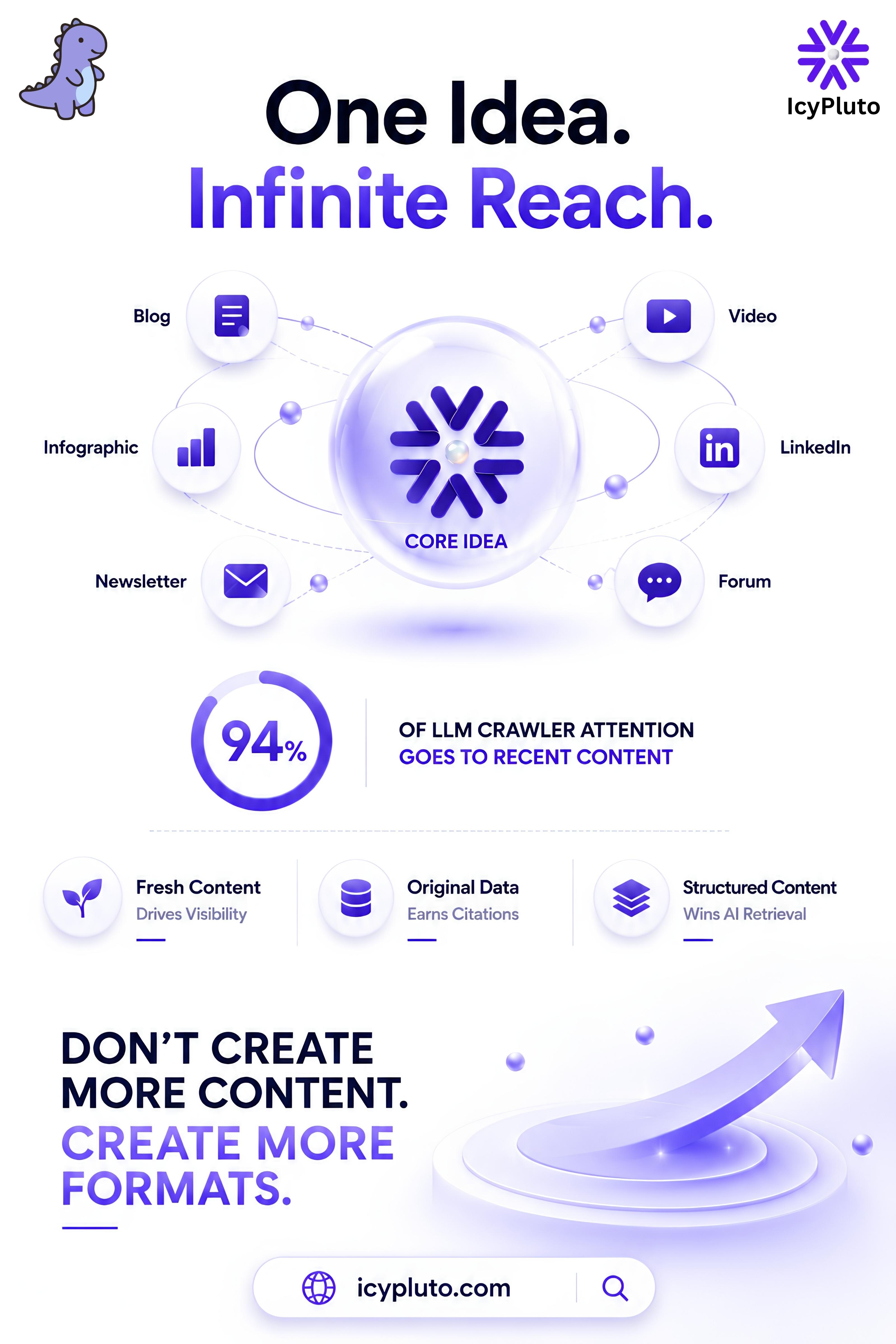
This blog reveals how to maximize visibility in tr...
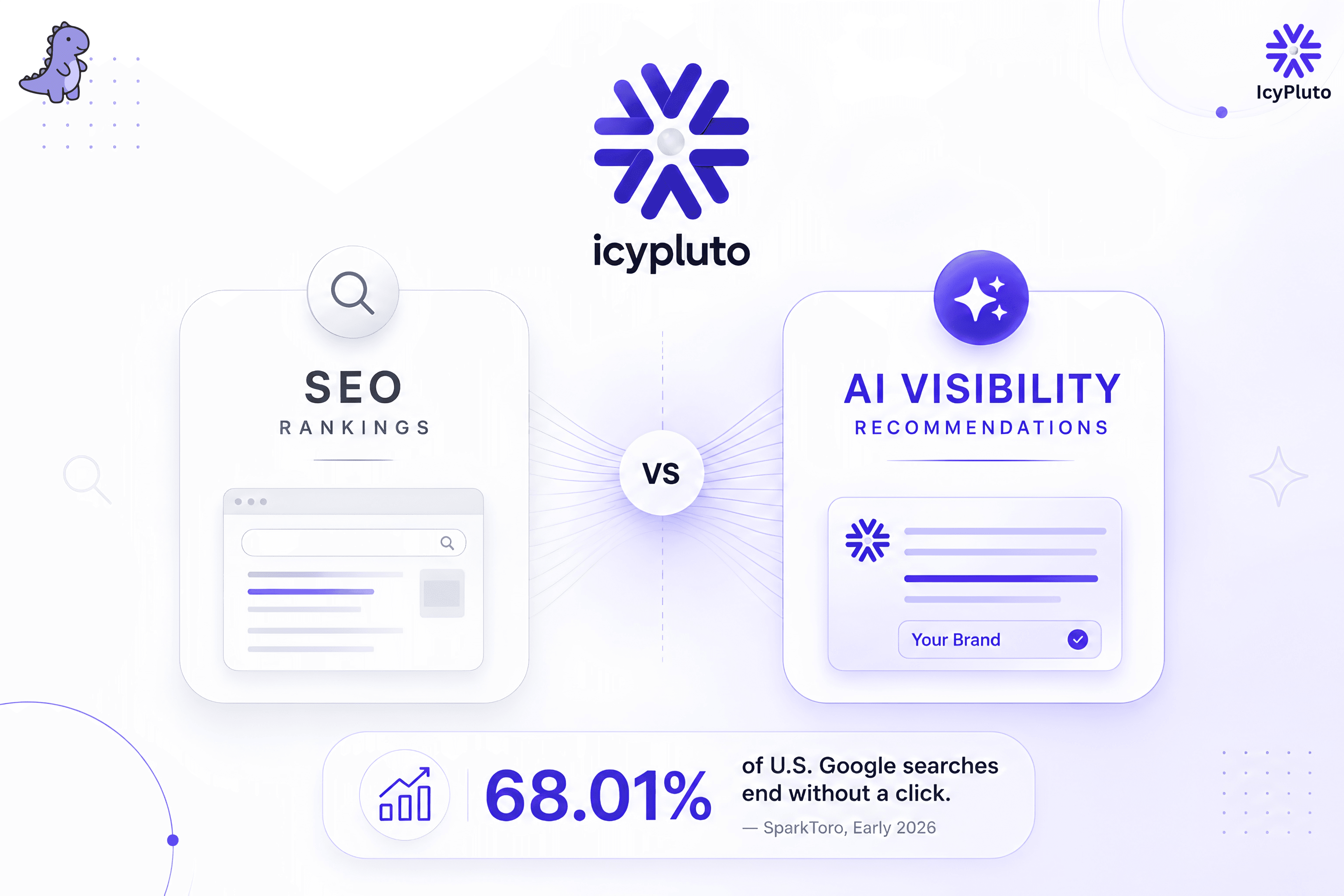
AI search is changing how brands get discovered, a...
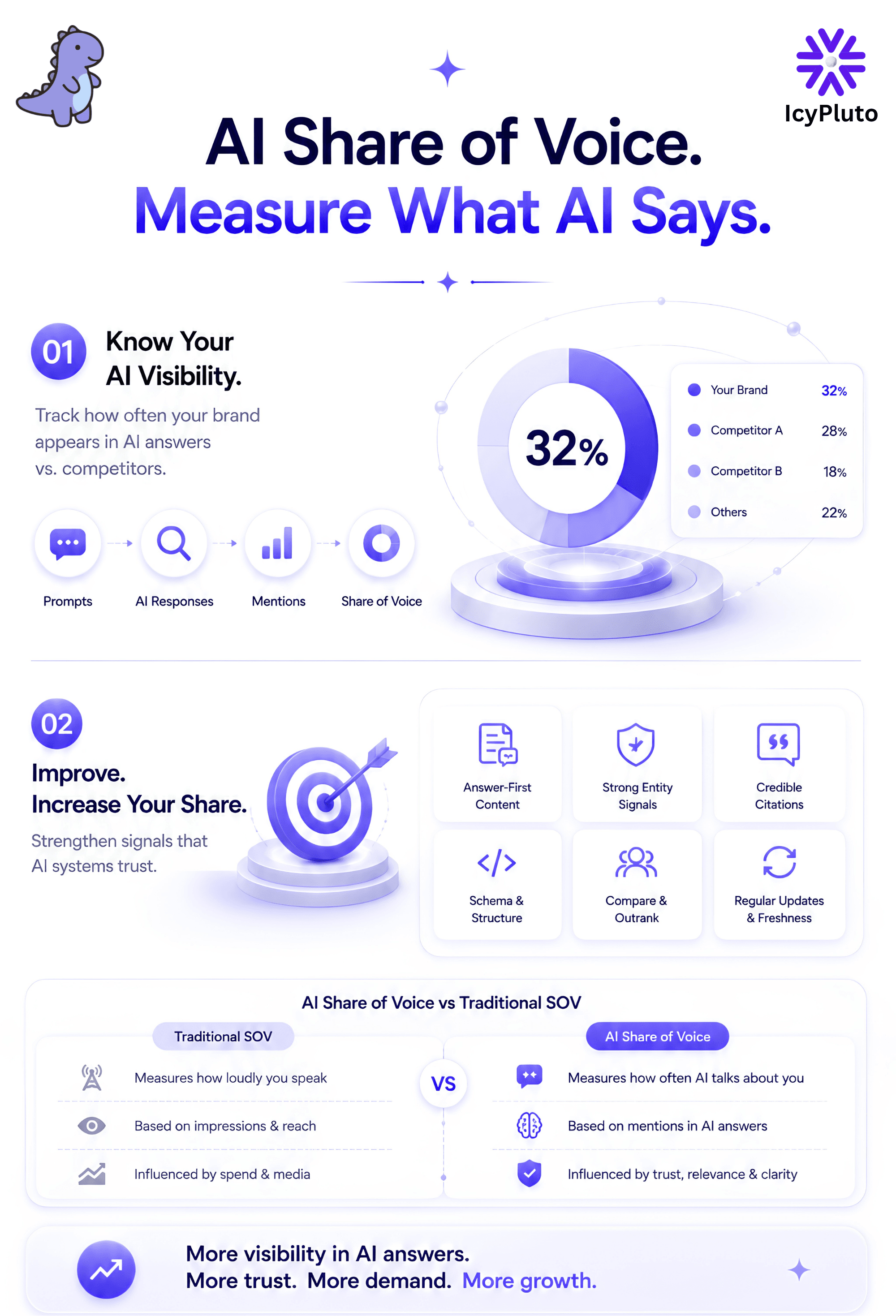
AI share of voice is the new visibility metric bra...
For years, marketers have been obsessed with one metric. Traffic. More clicks meant more opportunities, more conversions, more growth.
That model is breaking fast.
In 2026, we are witnessing a structural shift where visibility no longer guarantees traffic. AI-powered search engines, generative answers, and conversational interfaces are absorbing user intent directly within the platform. The result is what many are calling the “zero-click economy.”
According to multiple industry reports, over 65% of searches now end without a click, a number that has nearly doubled from pre-2022 levels. Google’s own ecosystem, combined with AI answer engines, is training users to consume information without ever visiting a website.
This sounds like a disaster. It is not. It is a filter.
The brands that understand this shift are not chasing clicks anymore. They are optimizing for influence, recall, and embedded presence inside AI-generated answers.
The traditional SEO playbook was built on a simple funnel. Rank, get clicks, convert traffic. That linear journey is collapsing into something far more compressed and unpredictable.
AI search engines now summarize, synthesize, and present answers instantly. This reduces the need for users to explore multiple links. According to SparkToro, nearly 7 out of 10 Google searches result in zero clicks, and with AI layers expanding, that number is accelerating.
But the deeper shift is behavioral. Users are becoming outcome-driven rather than exploration-driven. They want answers, not options.
This changes the role of content. Instead of being a destination, content becomes a source. Instead of competing for clicks, brands compete to be cited, referenced, and embedded into AI outputs.
The uncomfortable truth is this: traffic is no longer the primary indicator of content success.
Brands that still optimize purely for clicks are measuring the wrong thing. The real game is influence density. How often your brand appears in decision-making moments, even if no one visits your site.
Discovery used to be visible. Users typed queries, scanned results, and chose links. Now, discovery is increasingly invisible.
AI systems aggregate information from multiple sources and present a single synthesized response. In many cases, users do not even know which sources influenced the answer.
Gartner predicts that traditional search engine volume will drop by 25% by 2026, as users shift toward AI assistants and conversational interfaces. This is not a minor decline. It is a redistribution of attention.
This creates a new layer of competition. Not for rankings, but for representation.
If your brand is not part of the training data, citation pool, or content ecosystem that AI systems rely on, you effectively disappear from the decision journey.
On the other hand, brands that consistently publish high-authority, structured, and context-rich content are seeing disproportionate visibility. Even without clicks, they influence purchase decisions upstream.
This is what I call “invisible authority.” You may not see it in Google Analytics, but it shows up in pipeline velocity, brand recall, and conversion quality.
The smartest marketing teams are quietly shifting their KPI frameworks. Traffic is no longer the north star. Trust is.
According to Edelman’s Trust Barometer, 81% of consumers say trust is a deciding factor in purchase decisions, and AI-mediated journeys amplify this further because users rely on summarized, pre-filtered information.
This has led to a new KPI stack:
Instead of focusing only on sessions and bounce rates, leading teams are tracking:
Brand mentions across AI-generated responses
Share of voice in generative search environments
Content citation frequency
Assisted conversions influenced by AI touchpoints
Companies that adopt this approach are seeing up to 30% higher conversion rates, even with lower overall traffic.
Why? Because the traffic they do get is warmer, more informed, and closer to decision-making.
This flips the funnel. Awareness and consideration are increasingly happening before the user ever lands on your website.
Not all content survives in this new environment. In fact, most content becomes irrelevant.
AI systems prioritize content that is structured, authoritative, and contextually rich. Thin content, generic blogs, and keyword-stuffed pages are being ignored.
Research from HubSpot shows that long-form, insight-driven content generates 3x more engagement and is significantly more likely to be referenced by AI systems.
Winning content in 2026 has three characteristics.
First, depth. Content must go beyond surface-level explanations and provide original insights, frameworks, or data interpretations.
Second, clarity. AI systems prefer content that is well-structured and easy to parse. This increases the likelihood of extraction and citation.
Third, authority. Content backed by data, real-world examples, and strong perspectives is more likely to be trusted by both users and AI systems.
This is why contrarian content is rising. AI models prioritize differentiated viewpoints because they add informational value.
The era of safe, generic content is over. If your content sounds like everyone else, it gets ignored by both humans and machines.
Every major platform shift creates winners and losers. This one is no different.
The majority of brands are still operating on outdated assumptions. They are optimizing for rankings, clicks, and short-term metrics while ignoring the structural changes in user behavior.
According to McKinsey, only 23% of companies have fully integrated AI into their marketing workflows, which means over 75% are still in early or fragmented stages.
This creates a massive gap.
Brands that move early are building compounding advantages. Their content is being indexed, learned, and referenced by AI systems. Over time, this creates a feedback loop of visibility and authority.
Late adopters will find it increasingly difficult to break into this ecosystem because AI systems tend to reinforce existing trusted sources.
This is not just a marketing shift. It is a power shift.
This is exactly where IcyPluto becomes critical.
IcyPluto is not built for the old world of marketing where success depended on dashboards and delayed insights. It is built for a world where real-time intelligence, AI visibility, and decision velocity define growth.
Instead of helping you track what happened, IcyPluto helps you understand what is changing and what to do next. It monitors shifts in SEO, AI search visibility, and market dynamics while connecting them directly to leadership decisions.
In a zero-click world, the question is not “How much traffic did we get?”
It is “Where and how are we influencing decisions?”
IcyPluto answers that.
And more importantly, it operationalizes it.
The final stage of this evolution is already visible. Marketing is moving toward a world with fewer interfaces and more autonomous systems.
Users will not search. They will ask.
They will not browse. They will decide.
AI systems will handle discovery, comparison, and recommendation in a single flow.
In this world, brands do not compete for attention. They compete for inclusion.
This is why the shift from traffic to influence is not temporary. It is permanent.
The companies that understand this early will dominate the next decade of digital growth.